Before the American Revolution reached its turning point, a young woman’s personal life became entangled with the war in a way that would transform her into a symbol of the patriot cause. Jane McCrea, a young woman of about 23, found herself torn between her brother, an ardent patriot, and her fiancé, a Loyalist to the British Crown. Their story unfolded along the Hudson River, in a region that was about to become a major theater of conflict. Jane was born in Lamington, New Jersey, around 1757, to a Scottish-born Presbyterian minister.
Her mother died when Jane was young, and she was raised in a devout household with a love of literature. Descriptions of her at the time highlight her intelligence, kindness, and striking appearance, noting her dark hair and graceful figure. She was described as beloved by all who knew her. After her father’s death, when Jane was about sixteen, she moved to live with her brother John, who had established a homestead on the west bank of the Hudson River, near Fort Edward.
Their close neighbors were the Jones family, a widow and her six sons. From childhood, a deep affection had grown between Jane and one of the sons, David Jones. As the colonies moved toward rebellion, the community along the Hudson split. John McCrea was a fervent patriot and joined the Continental Army for the invasion of Canada in 1775.
David Jones, however, was a Loyalist at heart, though he kept his views largely hidden. He continued to court Jane, though her brother’s open hostility toward his family made their relationship a source of increasing tension. David Jones often met Jane at the home of Mrs. McNeil, a widow who lived near the fort.
In late 1776, as a large British force arrived in Canada, David decided he could no longer remain neutral. He made a plan to leave and join the British army, but to avoid suspicion, he pretended he was joining the American forces at Ticonderoga. After promising to stay in touch through an intermediary, David and Jane parted at Mrs. McNeil’s home.
Jane returned to her brother’s family, while David, along with his brother Jonathan and about sixty other men, traveled north. The group bypassed Ticonderoga and offered their services to the British at Crown Point. Both brothers were given commissions, and David served as a guide for the British forces. In the spring of 1777, a major British campaign was launched from Canada.
Commanded by General John Burgoyne, the army of over 7,000 men sailed down Lake Champlain. Their objective was to cut the colonies in two by seizing the Hudson River corridor. The campaign would culminate in the pivotal Battles of Saratoga, a turning point in the war. Burgoyne’s forces were accompanied by more than 400 Native American warriors from various tribes, including the Algonquin, Ottawa, and Iroquois.
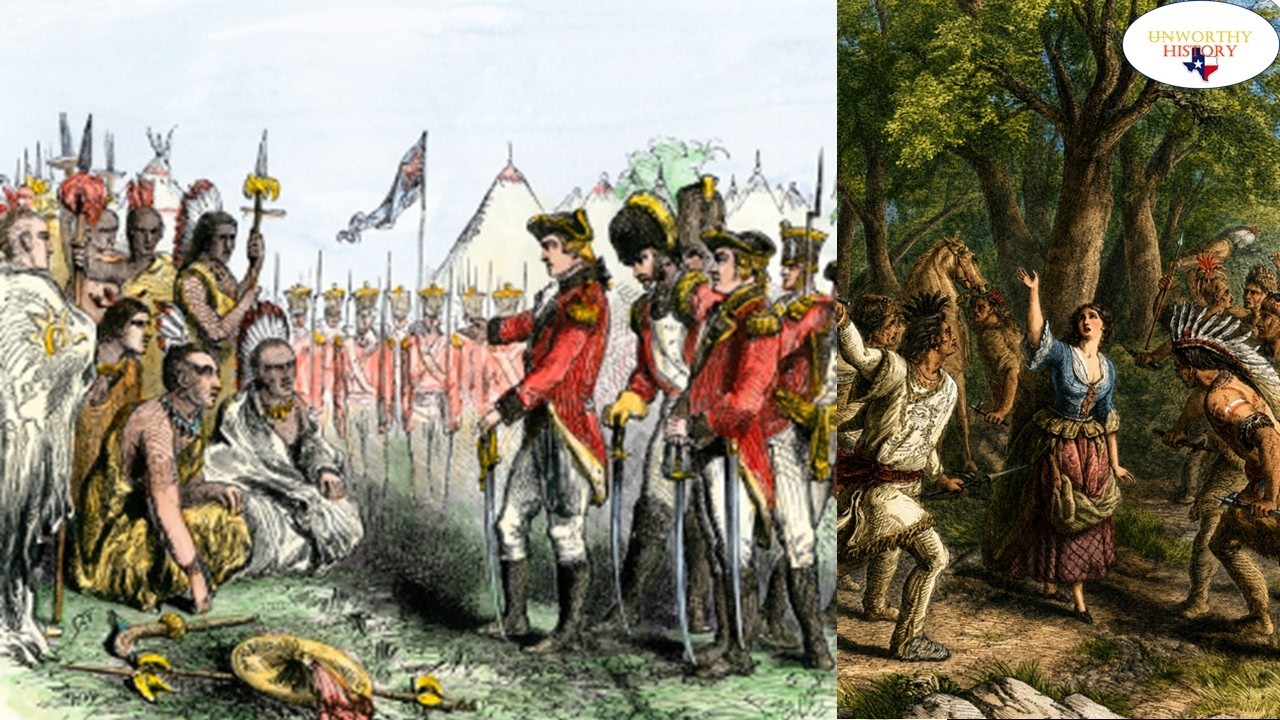
Their use was controversial, even among the British. Burgoyne, following his orders, attempted to control them with strict regulations. In a formal address, he ordered them to spare the elderly, women, children, and prisoners, and to only take scalps of enemy combatants killed in battle. On June 21, 1777, the assembled warriors performed a war dance for the British army.
Shortly after, Burgoyne issued a famous proclamation to the American people. He warned of the thousands of Indian warriors under his command and threatened severe retribution against those who continued to resist the Crown. The proclamation was met with ridicule and outrage. Despite Burgoyne’s orders, the restraint he demanded did not hold.
It was during this campaign that Jane McCrea’s life would be cut short. While the full details of what happened to her are a matter of historical account, her death became a powerful and controversial event. The story of Jane McCrea’s fate was used by patriot leaders to rally support for the war. Her name became a rallying cry, featured in propaganda and used to inflame public opinion against the British and their Native American allies.
The tragedy transformed her from a private individual into a public symbol of the revolution. The American historian Benson J. Lossing later wrote that few names from the Revolution could arouse more intense feelings than that of Jane McCrea. Her death was said to have done more to bring the people of the surrounding region to arms than any other event since the conflict began.
The incident fueled the outrage that contributed to the American victory at Saratoga. The Continental Congress had cited the British use of Native Americans as a grievance against the Crown in the Declaration of Independence the previous year. The document accused King George III of inciting “merciless Indian Savages” to wage war, whose known rule of warfare was the “undistinguished destruction of all ages, sexes and conditions. ” This charge remains part of the founding document, though it is a detail that is not commonly emphasized in standard historical education.
The story of Jane McCrea is documented in the 1853 book “The Life of Jane McCrea,” which recounts the events of the Burgoyne campaign. Her story is remembered as a tragic human cost of the war and a powerful example of how the conflict between Patriots and Loyalists divided families and communities. The final chapter of her story, and its full impact on the war, would unfold in the days following the events at Fort Edward.