That morning, most of the women went out to dig turnips, and his uncles went hunting. He stayed behind in the tipi with his grandmother, who was old and weak, and one of his uncles. He went down to the river to swim, wearing only a shirt with his hair braided. When he returned, his grandmother was frying meat over the ashes of the fire and fed them all.
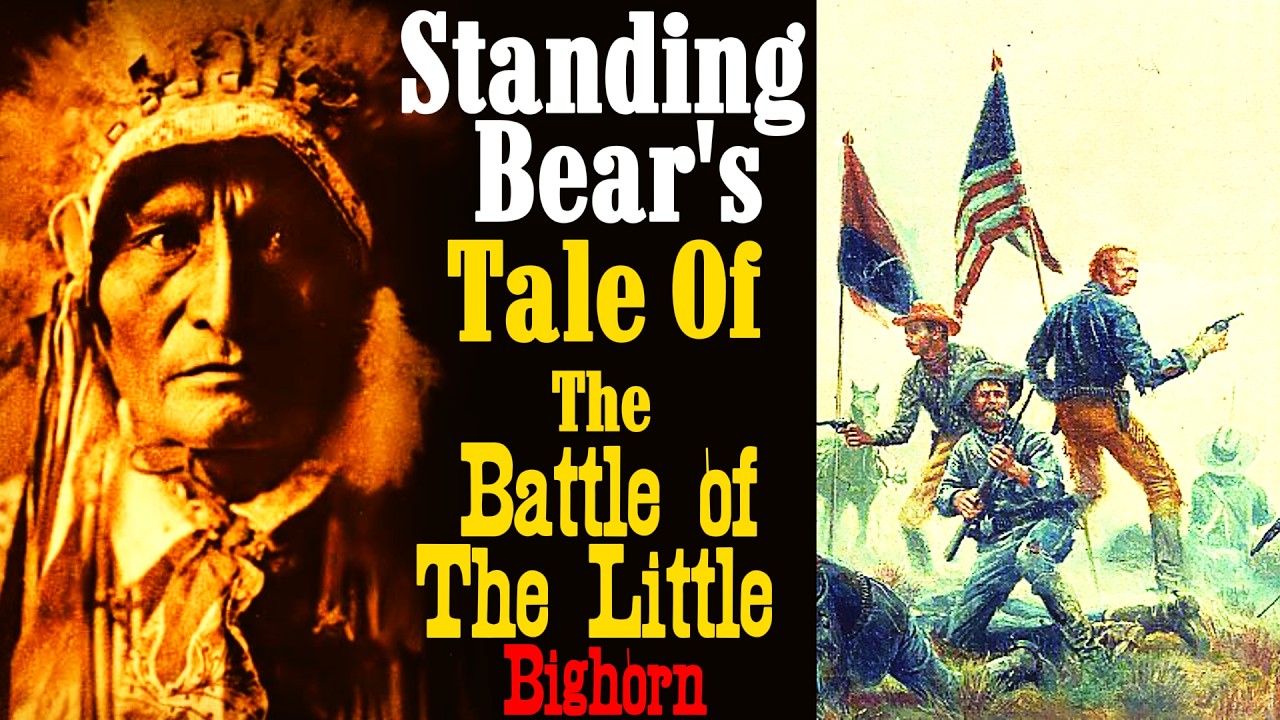
As they ate, his uncle told him that once he finished eating, he should go and bring in the horses, because something might happen suddenly and no one could predict what was coming. His older brother and another man were chasing the horses in two groups down on Muskrat Creek. Before he could finish eating, there was excitement outside. A crier announced that the Chargers regiment was coming, and that one of the two men who had gone out for the horses had been killed.
His uncle repeated his warning and told him to go immediately and bring the horses. The horses had already crossed the Little Bighorn River, so he ran toward them and waded in until the water reached his chest. From the top of the Black Hill, he looked upstream and saw soldiers beginning an attack, spread out along the ridge, crossing the Little Bighorn and moving up the plain. Those were Reno’s men.
Custer was probably coming at the same time. The hill was hard to descend because of cactus patches, and he was barefoot. He stopped, watched the troops coming from the river, and tried to find a path through the cactus. Dust rose in the distance.
Soon it came closer, and on a hill to the south he saw Custer approaching from the opposite direction. Custer stopped on top of a large hill. He went back to camp without bringing the horses. As the soldiers came down the hill, he noticed the Oglala and Hunkpapa men fleeing, and everyone was in a state of excitement.
He waited on the other side of the Little Bighorn and then entered the camp. They waited for the horses, thinking they would bring the men back. Then they saw the Indians charging close to the soldiers, and there were only Indians in the area. Voices filled the air, and everyone was talking.
It seemed all the voices were moving toward the village. At that moment the horses were brought back. He caught a gray horse, and one of his uncles told them to hurry because they were leaving. This was before the women returned.
They headed toward Custer and crossed at the mouth of Muskrat Creek. They were north of the Santee tribe at that time. When they crossed the Little Bighorn, they saw only Indians pouring down on Custer, and they could hear the guns firing repeatedly. A man was coming back with his mouth full of blood, his horse wounded and covered in blood.
He was a brave warrior named Long Elk. That was the first thing he saw as they rode up. His group was on the west side of Custer at that time. Some Indians were ahead of them.
All the bravest men were in front, and those behind were calling to the less brave ones to move forward. He caught and tied a horse. As they continued, he saw another man, dizzy and wounded, with blood in his mouth, who got up and then sank down again. He kept riding and saw a dead soldier lying on the hill, with dead Indians among them.
He did not know how they had died together because he had not been there. When he was far enough away to see clearly, he noticed the men had dismounted and were holding their horses by the reins. They were ready for them, of course. Then they opened fire, and the bullets fell like rain.
The Indians were crawling toward them, and the bullets passed over their heads. They all shouted, “Let’s go! ” and began pushing up the hill. Then he saw soldiers sitting on the hill who had taken off their hats, and the soldiers immediately started firing at them.
Custer was now on top of the hill, and they followed the ridge until they reached it. He saw an Indian rise up and shoot at a soldier, and the soldier fired back. When he stood up, a man named Sioux was on a horse behind him. Sioux asked who had been shot, and he told him it was Bear Horn.
He started down again, and around that time a man named Burst Thunder told them to come down a little way because there was a dead man there to scalp. They went, and while they were scalping him, two Cheyenne came up to them. Burst Thunder asked if the man they had scalped was an Indian or one of their own Cheyenne. One of the Cheyenne dismounted and turned the body over, and they discovered it was a Cheyenne they had scalped.
This may have been the great Southern Cheyenne war chief, Lame White Man, scalped by the Sioux in the heat of battle. It showed how crazy everyone was at that time. Three horsemen appeared carrying the body of a Cheyenne, riding with their chests exposed. As the horsemen fell, he looked over to where the soldiers were, and they fired again.
The first time he looked, there were many of them, but after the Indians fired on them again, he noticed very few of them were left on the hill. He heard some men say, “They are gone. ” When he looked, he saw the soldiers’ horses running away after breaking loose. On the north side, the boys captured the horses after they were frightened.
He looked again and saw there were very few soldiers left now. Each time he looked, the number of living soldiers was shrinking. The Indians were spread out around the hill. Right after the rush of horses, he heard them say, “They are gone,” and the soldiers were retreating down the hill toward the Little Bighorn.
Then they all shouted, “Hoka, hurry, hurry! ” and everyone charged up. He saw the Indians attacking from around him. Then he saw soldiers and Indians mixed together, and there was so much firing that he could no longer hear it.
The sounds seemed to come from above the clouds. After the soldiers moved toward the Little Bighorn, they entered a valley along the side of the hill. There was tall grass there. They were directly above the soldiers, and there was no use in the soldiers trying to hide from them.
Then he saw an Indian rush toward the men, and the Indians killed every soldier, including some of their own Indians who had advanced ahead of the rest. When they had killed the last man, they heard the women approaching. It was a terrible sight: men and horses mixed together, horses on top of men and men on top of horses. After finishing off Custer’s men, they returned to their formation coming down the hill, ten or fifteen horsemen to a row.
At the mouth of Muskrat Creek there was a small gap. Before they crossed it, they saw another group of soldiers, the men of Lieutenant Edward S. Godfrey who had returned to help Custer. They began firing at them, and everyone shouted, “Hurry!
” and started attacking them. Then the soldiers mounted their horses. As he looked again, they retreated, and he noticed two men on the hill with picks. When they got there, they fired at the soldiers but only hit one of them.
Then they all mounted up and chased the soldiers. After firing at one of them, they all dismounted and surrounded him. The soldiers fled back to Reno Hill, where their mules were. The Indians surrounded them again, and Reno’s men were digging into the hill.
They shouted, “Hokahay! ” and started firing at them again. After a while, he saw some of them going toward the creek to get water. They kept firing at them, and the rest turned back.
On the east side, there was an Indian horseman approaching the whites, showing his bravery. He was hit there, and it was impossible for them to reach his body. By that time, sunset was approaching. He smelled blood everywhere.
He had not felt hungry at first, but now he began to. The soldiers were still on the hill, surrounded by the mules. The bravest men gathered and discussed what they would do that night. They decided that some would stay while others went for food.
So they stayed there all night. They could not reach the soldiers, so they decided to starve them or dry them out. They began returning to camp to eat, and some remained there. He returned around sunset.
He was still barefoot, as he had been all day, and his weapons were a bow and arrows and a pistol. When asked whether he had killed anyone, he said it was embarrassing to tell everything, but he would tell some of it. Maybe not everyone knows exactly what they are doing in such circumstances. They fired at the soldiers, but they did not know whether they had hit them or not.
They had to lie down every time they shot because the soldiers fired back. It was hand-to-hand fighting, and the bullets came back at them every time. As they advanced up the hill while Custer was retreating, he took his pistol and hit a soldier on the head, knocking him down, then killed him. There were about four or five Indians for every white man there.
As he was doing this, he turned to retreat. He knew the Indians had killed many of their own men, so he began to pull back. As he was walking, he saw a Sioux woman coming, and there was a soldier coming toward her. The first one grabbed her dress.
The soldier jumped from his horse in great fear, and several Indians came forward and killed him. They surrounded him and went away. He was dressed only in a shirt, barefoot. Before the battle, he had shot a red bird and scalped it.
Indians were supposed to have sacred adornments, so he carried this bird on his head and vowed to make an offering if the bird helped him avoid injury in battle. After the battle, he heard a great deal about Crazy Horse. It was established that Crazy Horse had broken Reno’s left wing. Crazy Horse broke through their ranks and cut them off.
After the battle, he walked around the battlefield. In the place where Reno had attacked, he saw the body of a soldier who had been killed there. Below the brush at the valley, there was another body called Bloody Knife. They had retreated to a narrow passage.
There was another body there. On his way back, he thought they had dismantled their camp, but they had not. He was hungry and ate greedily when he returned to camp. The camp was holding together as one body.
The atmosphere was still tense, so they did not hold war dances that night. They lit fires throughout the camp. Before the next morning, he could not sleep because he kept remembering the horrors he had seen. Everyone seemed excited and moving about, and the village did not sleep for a moment.
In the morning, the crier announced that the rest of the soldiers would be killed that day. Everyone mounted their horses, ready to finish off the soldiers. He mounted his horse and rode out with them.