The letter was discovered decades later in a pile of documents that had been marked for disposal—scrap paper that someone had almost thrown away. It was written by a private in the 14th Connecticut Infantry, a 30-year-old man who had left home against his parents’ wishes to fight in the American Civil War. The soldier, Private Hubbard, had written to his brother in August 1862, just weeks before the Battle of Antietam. In the letter, he explained his reasons for enlisting: he feared the rebel army would overthrow the government, and he wrote passionately about not letting “old freedom” fall.
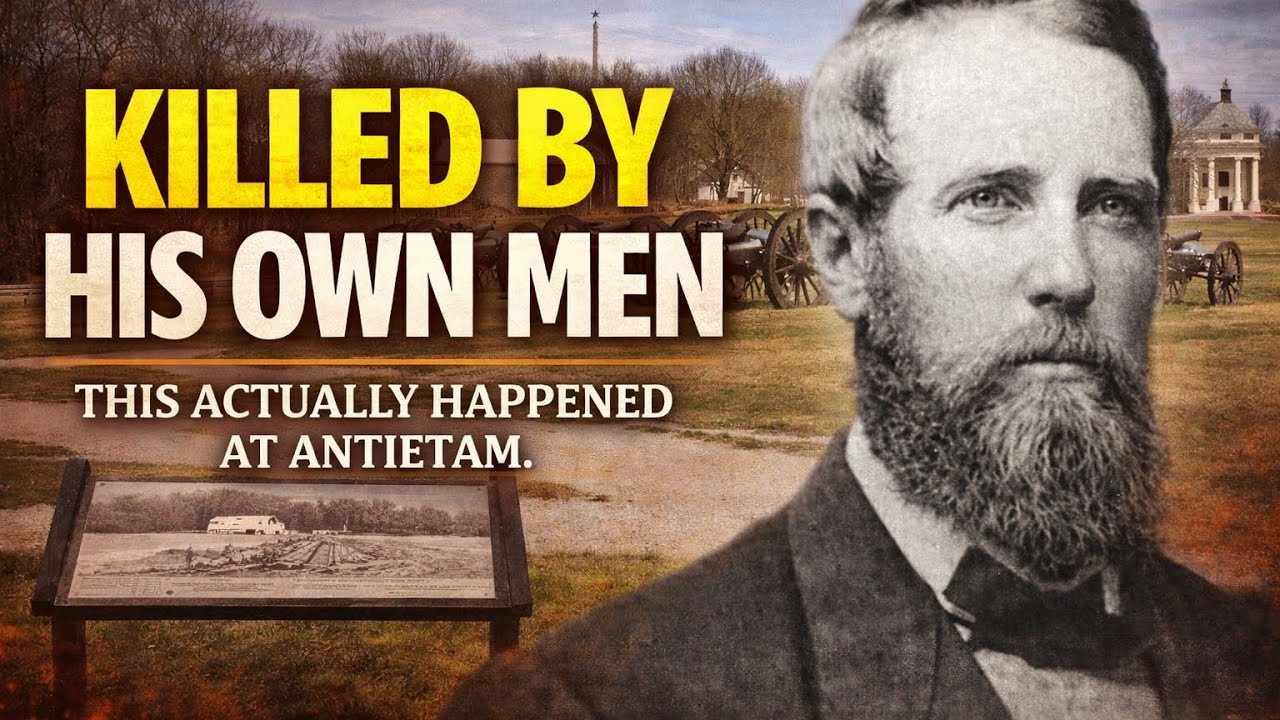
He asked his brother to stay home and care for their aging parents, even as he prepared to march into combat himself. Hubbard had lived an adventurous life before the war, traveling to California during the gold rush and later finding his way to Kansas. When he joined the 14th Connecticut, he was part of a regiment of largely inexperienced men, many of whom had never held a rifle before their hurried training. On the morning of September 17, 1862, the regiment advanced toward a sunken road that would become known as Bloody Lane—one of the deadliest positions on the Antietam battlefield.
The Confederates held a strong defensive line there, and Union troops were cut down by rifle fire and artillery as they approached. But Hubbard never made it to the fight. According to a soldier’s account, the men were warned by their officer not to mishandle their guns as they prepared to move. As they rose from the ground, a young soldier accidentally discharged his weapon.
The bullet struck Hubbard in the back. The account describes Hubbard writhing in pain as he lay on the field. He was carried off almost immediately so he could be treated, but the wound was fatal. He died on the Roulette Farm without ever engaging the enemy.
Hubbard was not the only man in the 14th Connecticut killed by friendly fire that day. Another soldier, a young man named Thaddeus, was also shot and killed when a man from his own company accidentally discharged his gun. Both deaths resulted from the mishandling of weapons by untrained soldiers. The 14th Connecticut’s monument at Antietam records the regiment’s losses: 38 killed or mortally wounded, 88 wounded, and 21 missing.
The number seems small on stone, but each figure represented a man who went to war expecting glory and found something far different. Hubbard’s family later learned what had happened. They contacted the Roulette family, who owned the farm where he was buried, and sent them $70 to have his body exhumed, placed in a coffin, and shipped home to Connecticut. The family did as asked, and the farmer wrote back with a detailed account of what the money was spent on, returning the $15 he did not use.
In that same letter, the farmer told a tragic story of his own. He had lost all of his animals and animal feed during the battle’s aftermath. Worse, his 21-month-old daughter had died just weeks after the battle, likely as a result of sickness contracted from the massive influx of soldiers and the filth left behind. The officer who had warned the men about their weapons survived Antietam but died later at the Battle of Fredericksburg.
He was buried on the same day Hubbard was laid to rest in Connecticut. Hubbard’s own father, who suffered from a mangled leg, was unable to attend the funeral. Father and son were eventually buried in the same cemetery, and the father died not long after. The Battle of Antietam remains the deadliest single day in American military history.
Thousands of soldiers were killed or wounded in the fields around Sharpsburg, Maryland, and the ground where the 14th Connecticut fought is now a National Park Service battlefield where visitors can walk the same terrain the soldiers crossed. Hubbard’s story endures because of a letter that nearly ended up in the trash. It serves as a reminder that the war was not a series of glorious charges, but a brutal and chaotic event where even the most idealistic men could be killed by their own side before ever seeing the enemy.