Born at Windsor Castle in February 1885, Princess Alice of Battenberg entered the world under extraordinary circumstances. Queen Victoria herself was present at the birth, and the child was placed in the arms of the monarch within moments of her arrival. The old queen noted in her journal how strange it was to see the baby lying in the same room and the same bed where her own daughter had been born years earlier.
Alice was born deaf, though the condition went undetected for years. Her mother, Princess Victoria of Hesse, first noticed something was wrong when Alice was slow to learn to speak. By age four, the child had developed a private language of invented words that strangers could not understand. A specialist confirmed what the family had feared: Alice was deaf in both ears, a condition present from birth.
Her mother refused to accept a silent future for her daughter. Instead of signing, Victoria insisted Alice learn to read lips. The mother and daughter spent hours face to face, with Victoria shaping words on her mouth while the child learned to watch. Through this painstaking method, Alice mastered four languages: English, German, French, and Greek. Every conversation for the rest of her life would be an act of watching.
At 18, Alice fell in love with Prince Andrew of Greece, a cavalry officer she met during a suspended summer in London. She described him as exactly like a Greek god. The wedding took place in Darmstadt in 1903, and the ceremony was not without incident. When the pastor asked Alice whether she freely consented to marry Andrew, she answered clearly, "No." Asked whether she had promised her hand elsewhere, she answered just as clearly, "Yes." The deaf bride had misread the questions. The groom fought laughter, and within the hour, she was a married woman.
Greece proved to be a world of spectacle for a woman who took everything in through her eyes. Alice learned Greek, her fourth language, by reading the lips of strangers. She had four daughters in quick succession: Margarita, Theodora, Cecile, and Sophie. Her only son, Philip, was born in 1921 on the dining room table of the family villa on Corfu.
When the Balkan Wars broke out in 1912, Alice went north to the front. At 27, she established a hospital at Elassona, requisitioning a schoolhouse and filling it with 120 beds. She worked for three days and nights, bandaging the wounded from the Battle of Sarantaporo. Her rations for those three days were one crust of dry bread and one small cup of Turkish coffee. When trained nurses finally arrived to take over, they took the work from women who had bandaged every wounded man of a battle first.
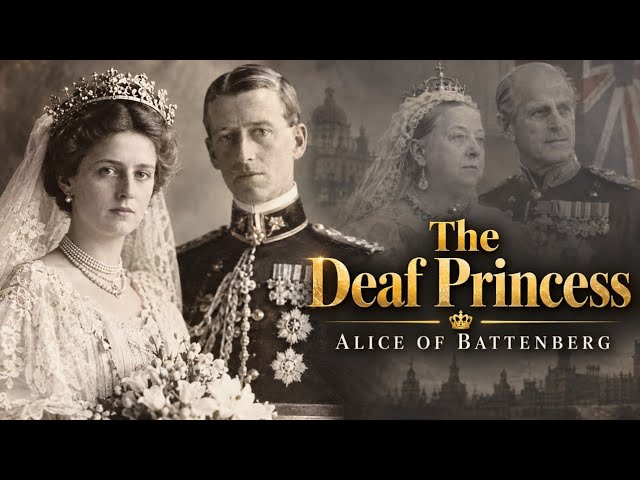
The war brought recognition. Alice received the Royal Red Cross for her service. But it also brought tragedy. King George I of Greece, who had walked his capital unguarded for 50 years, was shot and killed by a deranged man in 1913. The king had once made a promise to a Jewish member of Parliament named Haimaki Cohen, who had sheltered the royal family during floods. If ever his family could serve Cohen's, the king said, they had only to ask. That promise would lie dormant for 20 years.
The First World War tore Alice's family apart. Her father, Prince Louis of Battenberg, was forced to resign from the Royal Navy because of anti-German sentiment. The family name was changed from Battenberg to Mountbatten. In Russia, her aunts and uncles were murdered. The Tsar, who had once playfully hit Alice in the face with a bag of rice at her wedding, was shot in a cellar with his family. Her Aunt Ella was thrown down a mine shaft, singing psalms until a grenade silenced her.
After the war, Greece descended into chaos. Andrew was blamed for a military defeat and court-martialed. The family fled Greece in 1922, carrying 18-month-old Philip out in an orange box. They settled in Paris, where Alice helped in a shop selling Greek lace to support refugees.
The marriage quietly deteriorated. In 1928, Alice turned to religion, joining the Orthodox Church. She began claiming to commune with Christ and to heal the sick. She stopped eating and speaking to her family. She announced she was the bride of Christ. Her mother, Victoria, came to see her and found a stranger wearing her daughter's face.
In 1930, Alice was diagnosed with paranoid schizophrenia. Her own mother had her committed to a sanatorium in Switzerland. She was taken by force, drugged with morphine and scopolamine, and driven seven hours through the Black Forest. For two years and five months, she remained locked away. Her children were told she was ill. Philip, age eight, was at school in England and received no visits, no letters, no birthday cards from his mother for four years.
The file at the sanatorium recorded everything: her pulse, her weight, her prayers. She told the doctors she heard a voice, describing it as like reading aloud and hearing your own voice at the same time. She drafted a constitution for Greece in her neat handwriting. She gave away all her possessions and told her maid she would not be returning. She attempted to leave and was brought back by force.

In 1932, she was released. Her mother's word had held the gates closed, and Alice never wholly forgave her. She drifted through Germany, living in boarding houses, peeling potatoes in the kitchen of a small hotel run by a family named Marwitz. She wrote to her son for the first time in years, barely recognizing him in a photograph.
Tragedy struck again in 1937. Her daughter Cecile, pregnant with her fourth child, died in a plane crash along with her husband and their two young sons. The family gathered for the funeral. Alice and Andrew stood together for the first time in six and a half years. Afterward, they went their separate ways. The marriage was effectively over.
Alice returned to Greece in 1938, taking a small flat in Athens. When the Second World War came, she refused to leave. The Germans occupied the city, and famine followed. Bread prices multiplied 90 times over, and then there was no bread at all. Five hundred people died every day. Alice ran one of the largest soup kitchens in the city, feeding thousands by the handful. She lost 26 kilos at that counter.
In October 1943, the Gestapo came for the Jews of Athens. Rachel Cohen, the widow of the man who had once sheltered the royal family, and her daughter Tilda slipped through the back door of Alice's house after curfew. They were joined later by Rachel's son Michael. For over a year, three Jews lived hidden in the upstairs rooms of the princess's house.
When the Gestapo came to question Alice, she played the role she had perfected over a lifetime. She tilted her head, knit her brow, asked them to repeat themselves. She pretended not to understand. The men saw what the world had always seen: a princess not quite right. They left with nothing.
Alice never told anyone what she had done. Her son Philip learned the story only after her death. When asked about it, he said she would have considered it a totally natural human action to fellow human beings in distress.
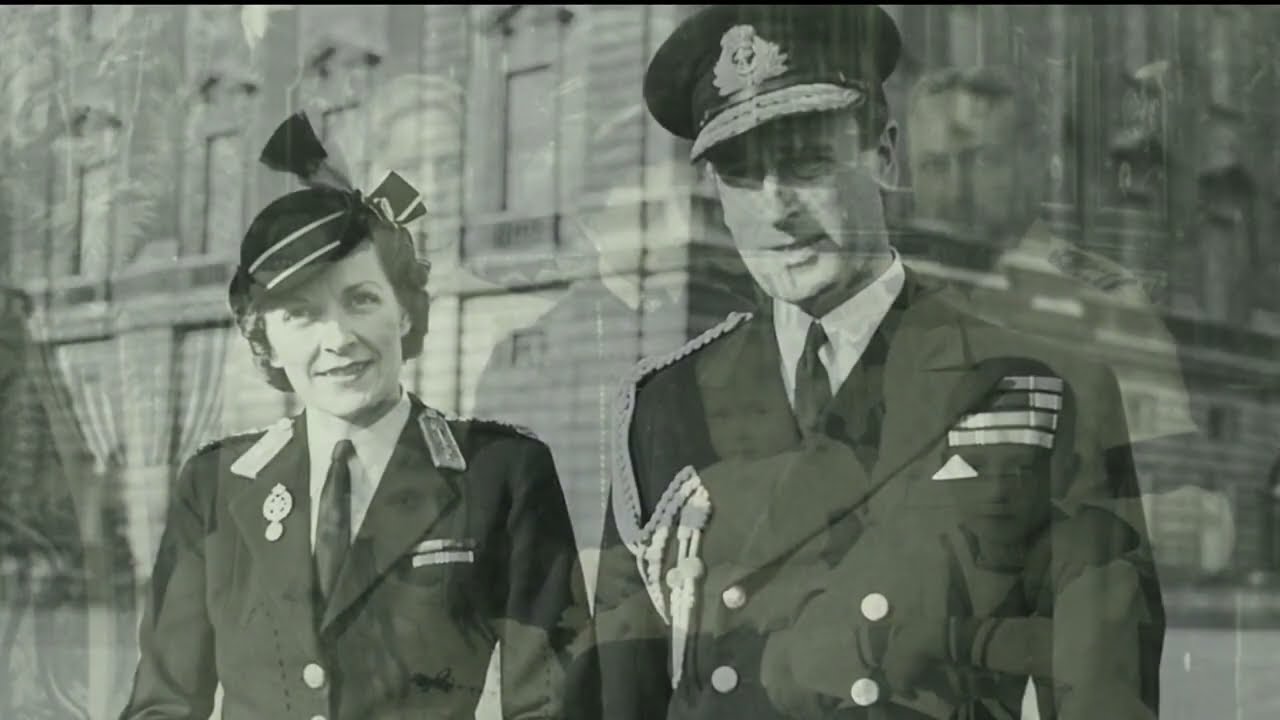
In 1947, Philip married Princess Elizabeth, heir to the British throne. Alice gave her son her diamonds to make an engagement ring. The large diamond surrounded by five smaller stones was placed on the hand of the future queen. Alice attended the wedding at Westminster Abbey, seated across from the royal family. Her three daughters, married to Germans, were not invited.
After the war, Alice founded an order of nursing sisters modeled on her Aunt Ella's convent in Moscow. She wore a gray habit for the rest of her life, though she was not technically a nun. The habit was practical, she said. It meant she did not have to worry about clothes or getting her hair done.
When the Greek colonels seized power in 1967, Alice was 82. She stayed through the coup, comparing it to the occupation. But when Queen Elizabeth herself invited her to live at Buckingham Palace, she accepted. After 46 years of rented rooms, sanatoriums, and soup kitchens, the mother was going home to her son.
She died on December 5, 1969, in her sleep. She left instructions to be buried near Aunt Ella in Jerusalem. The family protested that it was too far away. Nonsense, she said. There is a perfectly good bus service.
It took 19 years for her wish to be fulfilled. In 1988, she was laid to rest in the crypt of the Church of Mary Magdalene on the Mount of Olives. In 1993, Yad Vashem named her Righteous Among the Nations for saving Jews during the Holocaust. Her two surviving children, Philip and Sophie, traveled to Jerusalem to receive the honor in her name.
On the wall above her coffin is a short inscription: her names, her dates, and four words in Greek: "Thy will be done."