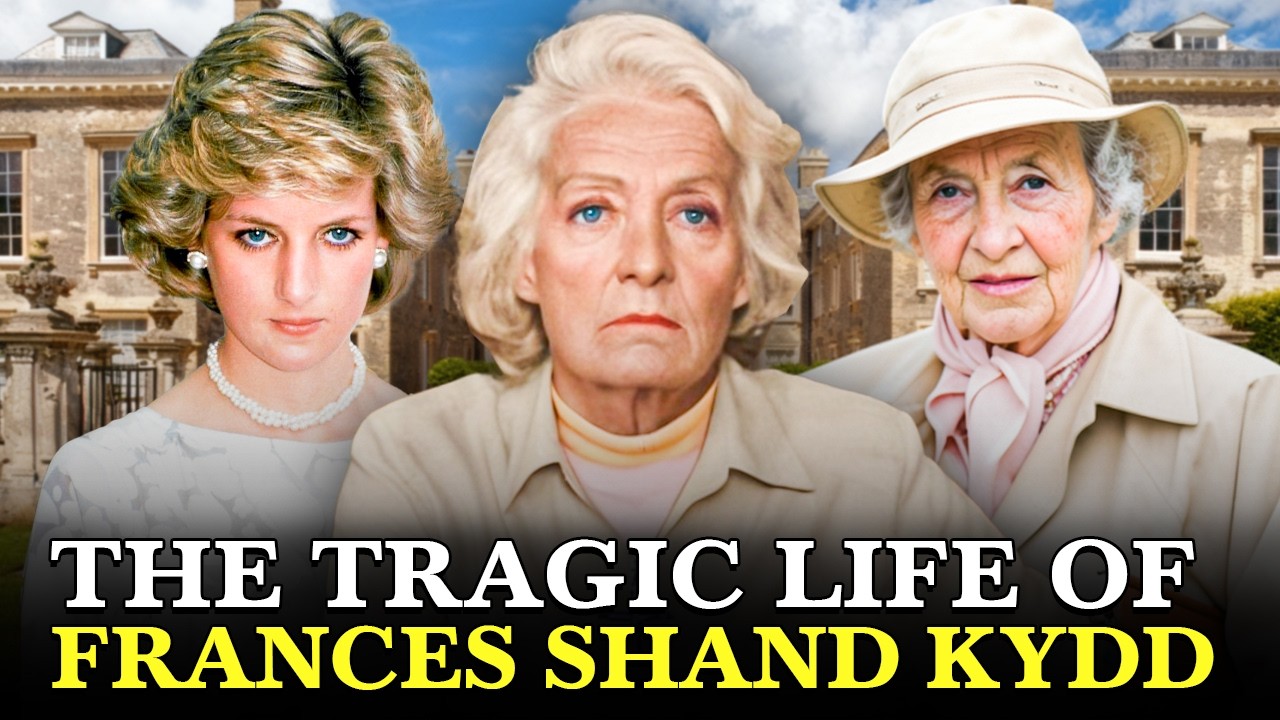
In October 2002, a woman of 66 entered the witness box at the Old Bailey in London. She leaned on a walking stick. Her hair was gray. Her hands, placed on the rail in front of her, were not entirely steady.
She had traveled from a small island off the west coast of Scotland to testify in the trial of her dead daughter’s butler. While she was away, someone would break into her home and steal her jewelry. She did not know that yet.
What she knew was that she was about to be asked a question whose answer she had carried in private for five years. Under oath, Frances Shand Kydd confirmed what the world had suspected but never heard stated so plainly. Her daughter Diana had returned her letters unopened. They had not spoken for the final four months of Diana’s life.
The most famous mother-daughter relationship in the world had ended in silence.
Frances was born into one of the most privileged households in England. She married a viscount at Westminster Abbey at 18, with the Queen in attendance. She was a Spencer, a Fermoy, a product of the innermost circle of the British aristocratic world. And that world, her mother, her class, her husband, and the courts stripped her of her children when she tried to leave it.
This is the story of Frances Shand Kydd and the Spencer dynasty across four decades. A custody battle in which a mother testified against her own daughter. A family fractured by divorce and rebuilt around silence. A fairy-tale royal wedding that disguised a generational wound. And two women, mother and daughter, who shared blood and damage and love, but who could not reach each other before the time ran out.
To understand how Frances ended up in that witness box, you have to go back to the world that made her. The world that raised her, married her, judged her, and then closed its doors against her.
The Spencers were one of the oldest and most established aristocratic families in England. Their seat, Althorp, a great honey-colored house set in over 500 acres of parkland in Northamptonshire, had been in Spencer hands since 1508. Over the centuries, the family accumulated not merely land and title, but a kind of permanent symbolic weight. Paintings by Reynolds and Gainsborough lined the galleries. The library held first editions that most museums would envy.
By the 20th century, the grandeur was partly a facade maintained under strain. Death duties had bitten deep into the Spencer fortune. But the name endured, the title endured, and the expectation that the family would continue to produce heirs and manage the estate endured most of all. In the Spencer universe, what mattered was not happiness. What mattered was permanence.
On January 24, 1924, Edward John Spencer was born. Known to everyone as Johnny, he was the only son and younger child of Albert Spencer, the seventh Earl. His godfather was the future King Edward VIII, a man who would within a dozen years abandon the throne for love. Johnny Spencer was educated at Eton, then at the Royal Military College at Sandhurst, and then at the Royal Agricultural College. During the war, he served as a captain in the Royal Scots Greys.
He was by every outward measure exactly what the Spencer system was designed to produce. But Johnny Spencer was not simply the genial, steady aristocrat the official record suggested. He was, by several later accounts, a man of considerable temper. The gossip columnist and biographer Penny Junor would later write that he could be violent and that Frances felt she and her children would be safer out of the home. Their daughter Diana would recall years afterwards seeing her father slap her mother across the face while Diana hid behind a door listening to her mother cry.
The woman he found came from the other side of the same small court-adjacent world. Frances Ruth Roche was born on January 20, 1936, at Park House, a substantial 10-bedroom Victorian residence on the Royal Sandringham Estate in Norfolk. Her birth fell on the same day as the death of King George V. Her father was Maurice Roche, 4th Baron Fermoy, an Anglo-Irish peer who had been a friend of George VI. The family’s fortune was partly American in origin. But whatever the Fermoys lacked in the deepest kind of English pedigree, they more than compensated for in proximity to the crown.
Then there was Frances’s mother, Ruth Roche, Lady Fermoy. Born Ruth Gill in Aberdeen in 1908, she had been a pianist of genuine promise in her youth. But her musical career had been curtailed when she married the much older Lord Fermoy. In the years that followed, she refashioned herself as a fixture of the royal household. Lady Fermoy served as a lady-in-waiting to Queen Elizabeth, the Queen Mother, for over 30 years. She founded the King’s Lynn Festival in 1951.
She was by every account a woman of formidable propriety, fierce loyalty to the institution of the crown, and an absolute conviction that the social order in which she operated was a framework one was obliged to uphold at any personal cost. Ruth Fermoy did not merely observe the rules of this world. She enforced them. And when the time came, she would enforce them against her own daughter with a coldness that still has the power to shock.
There is one more figure who must be introduced here, though her full entrance into the Spencer story comes later. Raine McCorquodale was the daughter of Dame Barbara Cartland, the romantic novelist. Raine married the ninth Earl of Dartmouth, became active in London politics, and moved through the establishment world with an assurance that some found impressive and others found grating. In 1976, she would marry Johnny Spencer, becoming the children’s stepmother. Diana would later call her “acid rain.”
This is the inheritance that Frances carried into her marriage. Not money alone, though there was money. Not title alone, though there was title. But a code of discretion, of duty, of public steadiness, of the absolute primacy of family continuity over personal happiness.
On June 1, 1954, Frances Roche and John Spencer, Viscount Althorp, were married at Westminster Abbey. She was 18 years old, the youngest bride to marry at the abbey since 1893. Queen Elizabeth II attended along with the Duke of Edinburgh, the Queen Mother, and Princess Margaret. It was by every measure a society wedding of the first order.
The first years were spent at Park House on the Sandringham estate, which Johnny and Frances now occupied as a married couple. There were nannies, cooks, housekeepers, gardeners. There were shooting weekends in season and church on Sundays. To an outsider looking in, it would have seemed a life of extraordinary privilege, which it was. But privilege and happiness are not the same thing.
Sarah was born on March 19, 1955, less than a year after the wedding. Jane followed on February 11, 1957. Two healthy daughters in three years. In the Spencer household, it was the beginning of a particular kind of pressure. Without a son, the Spencer inheritance would pass sideways away from Johnny and Frances’s branch entirely.
On January 12, 1960, Frances gave birth to a son at Park House. They named him John after his father. The baby lived for 10 hours. He died on the same day he was born and was buried in the churchyard at Sandringham. The grief was real and terrible, and it was also inescapably entangled with dynastic failure. Frances had lost a baby, but in the Spencer calculus, she had also lost the only thing the marriage had been designed above all else to produce.
Diana Frances Spencer was born on July 1, 1961. Another daughter, another girl when a boy was wanted. Some accounts suggest that her parents had been so certain the baby would be male that no girl’s name had been chosen for her. For the first days of her life, the child who would become the most photographed woman on the planet did not even have a name.
Charles Edward Morris Spencer arrived on May 20, 1964. He was the longed-for male heir. His arrival relieved the dynastic pressure, but by then the damage had already been done.
The marriage that had begun with such ceremony at Westminster Abbey was hollowed out from within. Frances was 28 years old, the mother of five children, one of them dead. She was living on the Sandringham estate, married to a man whose temper darkened the household. Her mother, Lady Fermoy, was a constant presence and a constant reminder of the standard Frances was expected to maintain.
Peter Shand Kydd entered the story in 1966 at a dinner party in London. He was the heir to a wallpaper fortune based in Australia. He was not titled. He was not court-adjacent. He was in virtually every respect from outside the system that had held Frances since birth. He was married with children of his own, and he was by all accounts charming, warm, and interested in Frances not as a Spencer appendage but as a woman in her own right.
In 1967, Frances left. She moved to London with the two youngest children, Diana and Charles. She took a flat as a base. For those months, the youngest children were with the parent who had left.
And then came Christmas 1967. Frances sent Diana and Charles to Park House for the school holidays, expecting them to return to London when the break ended. When the holidays were over, Johnny Spencer refused to let the children go back. He had the house, the staff, the means, and crucially, the backing of a legal system and a social class that viewed the departing wife as the party at fault.
From that moment, the separation was no longer a private negotiation between two unhappy people. It was a custody war.
Frances was named as the other woman in Janet Shand Kydd’s divorce proceedings against Peter. The scandal was public, messy, and devastating. The custody case that followed was the crucible in which the family’s future was forged. Johnny Spencer made his case with the full weight of his name and his position. And he had something else, something more devastating than any of those advantages. He had Frances’s own mother.
Lady Fermoy testified against her daughter in the custody proceedings. The precise content of her testimony has never been made fully public, but its effect is a matter of settled record. It helped Johnny Spencer win. The courts granted him custody of all four children.
Frances was not forbidden from seeing them, but she had lost the daily, irreplaceable life of motherhood. She had lost them because she had left a marriage in which she was unhappy and afraid, and because the world in which she had been raised had decided that leaving was worse than staying, no matter what staying cost.
Frances and Peter Shand Kydd were married on May 2, 1969, shortly after Frances’s divorce was finalized in April. They moved to the Scottish island of Seil, a small windswept place off the west coast near Oban, and bought an 18th-century farmhouse called Ardnacaple. They also kept a sheep farm in New South Wales, and divided their time between Scotland, Australia, and London.
It was a life that offered Frances something she had never had in her first marriage: freedom and choice. But it did not offer her what she had lost.
The children absorbed a new reality in different ways. Sarah, the eldest, channeled her distress into a fierce independence. She would later develop anorexia. Jane, quieter and more contained, retreated into the steadiness that would define her adult life. Diana was old enough for the wound to settle into the deepest foundations of her personality. And Charles, the youngest, would grow up in a household shaped by his mother’s absence.
The narrative that formed within the Spencer household was shaped by the parent who stayed. In that narrative, Frances had “bolted.” The word carried a particular cruelty in the lexicon of the English upper class. Once it attached itself to Frances, it stuck for decades.
In June 1975, Johnny’s father died and Johnny became the eighth Earl Spencer. The family moved from Park House to Althorp. Diana was 14. On July 14, 1976, Johnny married Raine, Countess of Dartmouth. The children were not consulted. They called her “acid rain.” They united in hostility with a ferocity that went beyond ordinary step-family difficulty. None of it was really about Raine. It was about Frances.
In September 1978, Johnny suffered a massive cerebral hemorrhage. He was hospitalized for eight months. Raine took charge of his care with a tenacity that even the children grudgingly acknowledged. When Johnny recovered slowly and incompletely, it was Raine who had pulled him through.
Frances on Seil maintained what contact she could. The children visited, and some of those visits were genuinely restorative. Diana’s bodyguard, Ken Wharfe, later described a week on Seil in August 1989 as one of the finest holidays the princess and her sons ever took, painting a picture of Frances as humorous, intelligent, and kind.
But the visits were visits. They were not daily life. And Frances knew the difference.
The turn came when Diana entered the royal orbit in the late 1970s. Sarah Spencer had a brief relationship with the Prince of Wales. Before it ended, Sarah introduced Charles to her younger sister. Diana was 17. She met the prince at a shooting weekend at Althorp in November 1977. It would take another three years for the connection to reignite.
Frances watched all of this from a distance. She had concerns about Diana’s readiness for royal life. She had lived inside a constraining marriage herself and knew what it cost a young woman to be installed in a role that demanded public composure and private self-erasure.
The engagement was announced in February 1981. On July 29, 1981, Diana Frances Spencer married Charles, Prince of Wales, at St. Paul’s Cathedral in a ceremony watched by an estimated 750 million television viewers worldwide. It transformed not only Diana, but every person connected to her into figures of global interest, including Frances.
For Frances, Diana’s royal marriage was a double-edged development. On one side, it brought vindication of a kind. On the other side, it intensified the scrutiny of Frances’s own past beyond anything she had experienced during the original divorce. The British press reframed her story as backstory for the fairy tale. The mother who left. The childhood marked by rupture.

Frances attended the wedding. But she was there as a guest, not as a central figure. Johnny, as the bride’s father, walked Diana up the nave.
What followed the wedding belongs to the wider history of the monarchy, but its relevance to Frances’s story is precise and devastating. Diana’s marriage was unhappy almost from the beginning. The private reality, which Diana herself would eventually make public, was of loneliness, eating disorders, self-harm, and a husband whose emotional attention was directed elsewhere.
Diana’s marriage, in other words, reproduced the essential structure of her parents’ marriage. A public performance of unity covering a private reality of isolation and pain.
During the 1980s, Frances was supportive of her daughter in private. The holidays on Seil, the long telephone conversations, the gentle urging to try to save the marriage for the sake of the boys. Frances knew better than most people alive what it cost a mother to leave a marriage and lose her children. She counseled patience, endurance, hope.
But Frances’s own life was also shifting. In June 1988, Peter Shand Kydd left her. The man for whom she had left Johnny, for whom she had sacrificed custody and reputation and her place in the Spencer world, eventually moved on. In 1993, he married Marie-Pierre Palmer, a French woman who ran a champagne importing business in London.
Frances was left on Seil alone. The romantic rescue narrative was stripped away. The man she had given up everything for had not stayed.
Johnny Spencer died of a heart attack on March 29, 1992, at the Wellington Hospital in London. He was 68. Charles became the ninth Earl Spencer and inherited Althorp. Within weeks of Johnny’s death, Raine’s belongings were removed from Althorp with a swiftness that spoke of old grudges finally given room to act.
Frances attended Johnny’s funeral. The man she had married at Westminster Abbey in 1954, the man she had left in 1967, the man who had taken her children, he was gone.
Diana’s separation from Charles came in December 1992. The divorce followed in August 1996. In the space between those two dates, the relationship between Diana and Frances, already complicated, would fracture for the final time.
The strain between mother and daughter did not come from a single cause. It accumulated layer upon layer over years of interactions that were never quite right. Frances could be critical. She had opinions about Diana’s choices, her relationships, her public behavior. Diana, for her part, was a woman whose emotional responses were shaped by the childhood wound of maternal absence. She could interpret even well-meant criticism from Frances as a repetition of the original rejection.
The specific trigger for the final devastating breach came in May 1997. Frances gave an interview to Hello magazine in which she said it was “absolutely wonderful” that Diana had lost her title of Her Royal Highness following the divorce from Charles. The remark was intended by some interpretations as a comment on Diana’s freedom from royal constraint. But Diana did not receive it that way. She experienced it as a public betrayal.
The result was a rupture so complete that Diana stopped taking her mother’s calls and began returning her letters unopened. The letters came back sealed.
That detail, the physical image of correspondence posted, received, and sent back without being read, is the most devastating single image in the entire story. It is a mother reaching out and a daughter refusing even to look at what was written.
They were not speaking when Diana left for Paris in August 1997. They had not spoken for four months. The most famous mother-daughter relationship in the world had ended. Not with a dramatic confrontation, but with silence.
On the evening of August 30, 1997, Diana, Princess of Wales, and Dodi Fayed left the Ritz Hotel in Paris in a black Mercedes. Shortly after midnight, in the Pont de l’Alma tunnel, the car struck a pillar at high speed. Dodi Fayed and Henri Paul were killed almost instantly. Diana was alive when the emergency services reached her but suffered massive internal injuries. At 4:00 in the morning Paris time, she was pronounced dead. She was 36 years old.
Frances on Seil learned that her youngest daughter was dead. She did not lose a daughter with whom she was at peace. She lost a daughter with whom she was estranged. The letters were still returned. The telephone was still silent. The last four months of Diana’s life had been lived without her mother in them. And now those months were the final months, and the silence was permanent.
The funeral was held at Westminster Abbey on September 6, 1997. Charles Spencer’s eulogy was extraordinary. He spoke of Diana as “the most hunted person of the modern age.” He pledged on behalf of the Spencer family that William and Harry would be raised with the freedom to pursue their mother’s legacy. It was a statement of defiance against the institution that the Spencers had been adjacent to for generations.
Frances was in the congregation. She described the day with a restraint that belied its emotional charge. She called it “strangely and movingly the proudest day of her life.” Proud of Diana, proud of her elder daughters who were rock steady in their readings, and proud of her son who gave the ultimate tribute of brotherly love.
In the years after Diana’s death, Frances retreated further into the life she had built on Seil. She converted to Roman Catholicism, a significant step for a woman raised in the Church of England tradition, and devoted herself to Catholic charities. She attended mass regularly. She walked the lanes of Seil with the slow, deliberate pace of someone who had decided that the world beyond the island had nothing more to offer her.
But the world would not leave Frances alone entirely. In 1996, before Diana’s death, she had been banned from driving after a conviction for drunk driving. Frances denied she had a problem with alcohol.
And then came October 2002 and the Paul Burrell trial. Burrell, Diana’s former butler, had been charged with stealing 310 items from Diana’s estate, valued at an estimated £4.5 million. Frances at 66 made the journey from Seil to London to give evidence.
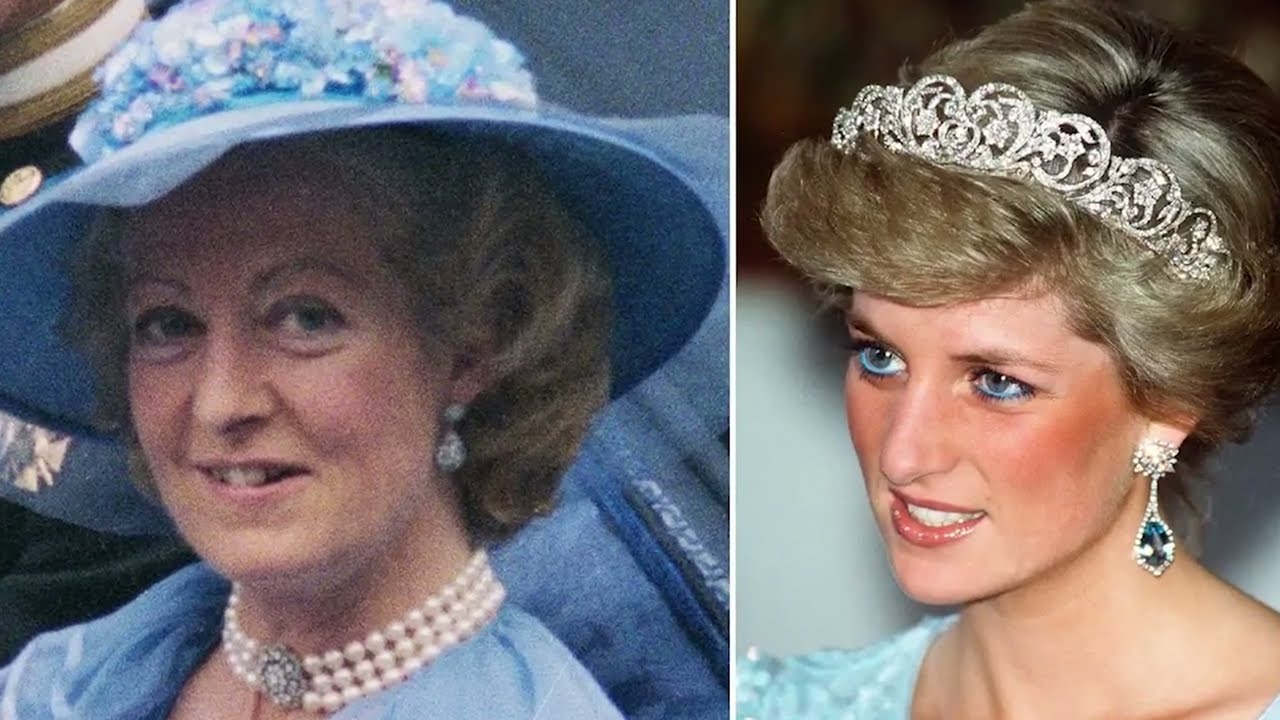
Her testimony lasted nearly two hours. From the witness box, leaning on the walking stick she now needed to support herself, Frances confirmed what the tabloids had long suspected, but what had never been stated so plainly under oath in a public forum. She and Diana had been estranged at the time of Diana’s death. They had not spoken for four months. Diana had returned her letters unopened.
Frances rejected the suggestion put to her by the defense barrister, Lord Carlile, that the estrangement had been caused by a disagreement about Diana’s private life and the company she was keeping. She did not elaborate on what had caused it. She simply confirmed the fact of it.
While Frances was in London giving this testimony, burglars broke into her home on Seil and stole her jewelry. The detail is almost too cruel to belong to reality. The mother travels to London to testify about her dead daughter’s estrangement. And while she is gone, someone enters her house and takes what little of value she has left.
The Burrell trial itself collapsed days later after the Queen intervened with a recollection that Burrell had told her he was holding Diana’s items for safekeeping. The legal outcome was in the end irrelevant to Frances’s story. What mattered was the testimony. What mattered was the elderly woman in the witness box confirming under oath what the most famous daughter in the world had done. Sent the letters back, refused the calls, died without making peace.
Frances returned to Seil. She would not return to the public eye. The final years were marked by declining health. She had been diagnosed with Parkinson’s disease and there were reports of brain cancer. The walks grew shorter. The world grew smaller.
On June 3, 2004, Frances Shand Kydd died at home. She was 68 years old. The long illness was over. The longer story of love and loss and duty and defiance and the terrible irreversible consequences of leaving was over too.
Her funeral was held on June 10 at St. Columba’s Cathedral in Oban, the Roman Catholic cathedral that served the community Frances had joined when she converted. The congregation included her surviving children, Sarah, Jane, and Charles, and her grandchildren, including Princes William and Harry. William gave a reading. Harry was present.
Prince Charles was not there. He was traveling to Washington to represent the royal family at the state funeral of former American president Ronald Reagan. The absence was logistical rather than hostile, but it carried its own symbolic weight.
Frances was buried at Pennyfuir Cemetery on the outskirts of Oban. Not at Althorp where Diana lay on her island in the ornamental lake. Not at Great Brington where generations of Spencers rested in the churchyard. Frances was buried in Scotland in the community she had chosen, among the people who had known her not as a Spencer or a bolter or a royal mother-in-law but as a local woman who attended mass and walked her dogs and kept a beautiful garden.
The relationship between Diana and Raine Spencer underwent an unexpected transformation during these years that is worth noting. In the early 1990s, Diana began to soften toward Raine. The woman she had once pushed down the staircase. The woman she had called acid rain. Raine became in Diana’s later years something approaching an ally. They lunched together. They spoke on the telephone.
The reconciliation was not complete and it carried the scars of the years of hostility. But it was real. Diana was capable of revising her judgment of Raine. She was not, it seemed, capable of revising her judgment of Frances. Not in time.
That asymmetry is one of the cruellest details in the story. The stepmother was forgiven. The mother was not. And the reason, if there was a single reason, lay in the depth of the original wound. Diana could forgive Raine because Raine had never been her mother. She could not forgive Frances because Frances was her mother. And the betrayal of a mother is experienced as an injury of a different order entirely.
The surviving Spencer siblings moved forward in the ways that people do when the last parent dies. Sarah McCorquodale continued the quiet private life she had maintained since her marriage in 1980. Jane Fellows, whose husband Robert had retired from his position as the Queen’s private secretary, maintained a similar discretion. She was created Baroness Fellows of Shottesham in 2022, a life peerage that placed her in the House of Lords.
Charles Spencer remained at Althorp. His memoir, A Very Private School, published in 2024, described the trauma of his childhood at Maidwell Hall boarding school, the physical and sexual abuse he alleged, the culture of cruelty, the devastating loneliness of an 8-year-old boy sent away from a household that was itself a place of emotional damage. The book was a bestseller. It also functioned as a kind of indirect reckoning with the Spencer family story.
The cultural afterlife of the Spencer-Fermoy story has been substantial, though it has rarely centered Frances herself. The Crown brought the family into popular circulation with considerable force. The film Spencer, released in 2021 and starring Kristen Stewart as Diana, went further into the psychological territory of the family’s dysfunction. Maxine Riddington’s 2001 biography, Frances: The Remarkable Story of Princess Diana’s Mother, remains the only book-length treatment of Frances as a subject in her own right.
What remains now, more than two decades after Frances’s death, is not reconciliation. It is structure. Althorp remains. The Spencer name continues. The earldom passes as it has passed for centuries through the male line. Diana’s global symbolic power remains immense.
William and Harry, Frances’s grandsons, have become public figures in their own right. Their own lives shaped by the same forces that shaped their mothers and their grandmothers. The weight of expectation. The hunger of the press. The impossibility of being both a private person and a public symbol.
Frances herself survives in fragments. Wedding photographs from 1954. Courtroom testimony from 2002. A few lines in the obituaries. The farmhouse on Seil which still stands. The cemetery at Pennyfuir where her grave lies far from Althorp, far from Park House, far from Westminster Abbey, far from everything she once was and everything she lost.
The strongest pattern in this story is the one that nobody planned and nobody escaped. Women punished for stepping outside the assigned role. Francis for leaving. Diana for refusing to remain inside the royal marital script. Another pattern running alongside the first is maternal fracture passing downward. Frances loses custody. Diana grows up defined by that loss. Adult Diana then dies estranged from Frances.
The damage was not inherited like a title. It was inherited like a wound. Invisible, cumulative, and never treated in time.
This family story is not really about whether Frances was a bad mother or Diana an unforgiving daughter. It is about what happens when inheritance passes down not only houses, titles, land, and names, but silence, role-playing, and injuries nobody is allowed to name in time.
The Spencer world endured. Althorp endured. The public image endured. What did not endure, at least not intact, was the ordinary private bond between a mother and a daughter. A bond that required only honesty and time and a willingness to sit with discomfort, and that was denied all three by a family system that valued permanence above everything and paid for it with the people inside.
There is no neat moral to extract from this. There is only the small unbearable fact of the letters that came back unopened and the silence that followed them and the years that did not come.