Roy DeMeo was waiting inside a Brooklyn grocery store’s meat department on the night of Friday, June 13th, 1975. As a teenager, he had trained as a butcher, learning how to break down an animal carcass into manageable pieces. That skill was about to be applied to a human being. Andre Katz, 22, had been lured to a woman’s apartment complex with the promise of a date.
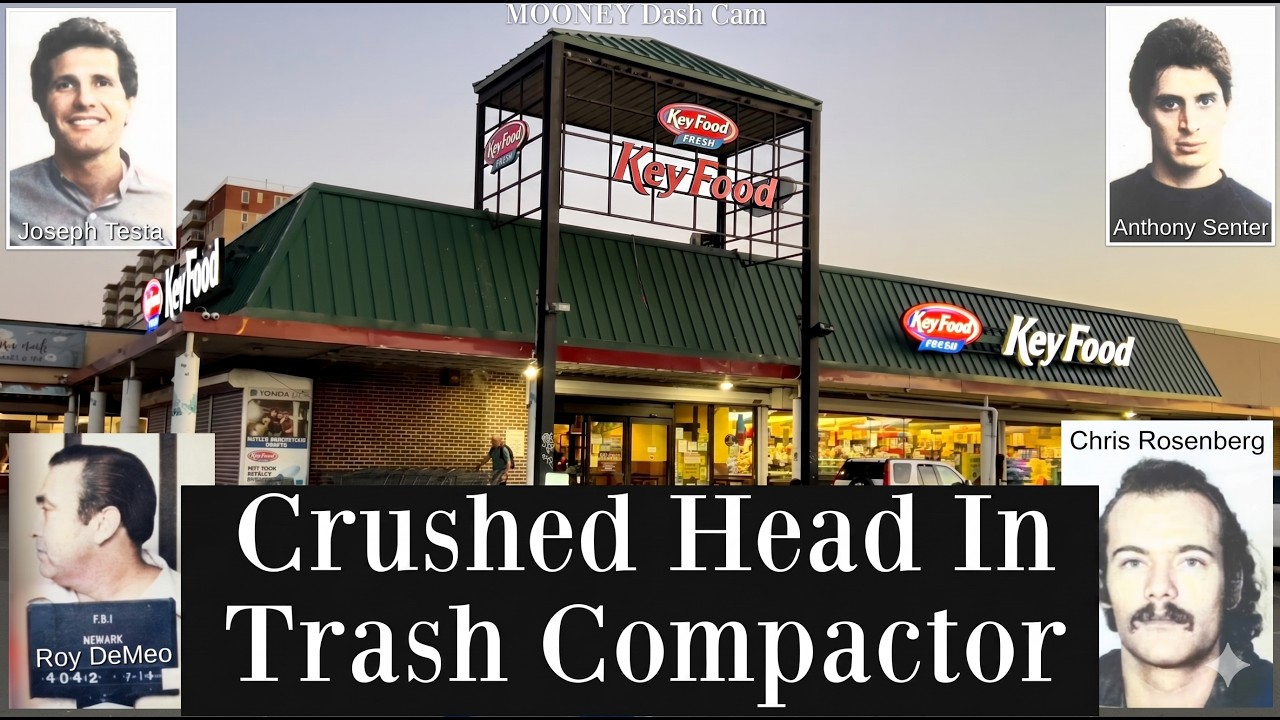
Instead, he was abducted by four men and driven to the supermarket. According to later forensic evidence and testimony from crew members who cooperated with the government, Katz was stabbed multiple times in the heart. After he was dead, he was stabbed more than a dozen additional times in the back. His body was stripped, dismembered, and his head was put through a machine used to compact cardboard boxes.
The remains were wrapped in plastic and placed in the store’s dumpster. A pedestrian walking a dog found one of the legs on the curb, and police recovered eight packages from the dumpster. The remains were so badly damaged that dental records were required to confirm they were Andre Katz. Katz was the son of Holocaust survivors who had emigrated from Romania to Brooklyn in 1956.
Months before his death, he had been severely beaten by members of the same crew and, from his hospital bed, swore to his brother Victor that he would get revenge on Chris Rosenberg and the others. He never got it. The murder is considered the first known killing by dismemberment carried out by the DeMeo crew. Between 1975 and 1982, the group is believed to have killed between 100 and 200 people, many of them processed in the back apartment of the Gemini Lounge in Canarsie, Brooklyn, using a method that came to be known as the Gemini method.
Roy DeMeo was born in Brooklyn in 1940, the son of Italian immigrant working-class parents. He graduated from James Madison High School in 1959, the same graduating class as Bernie Sanders. As a teenager he worked in a grocery store, training as a butcher, while also running small-scale loan-sharking operations. His operation attracted the attention of Gambino family soldier Nino Gaggi, who invested in DeMeo’s loan-sharking and connected him to the wider organized crime infrastructure.
By the early 1970s, DeMeo had assembled a crew of young men from his Brooklyn neighborhoods: Chris Rosenberg, the twins Joseph Testa and Anthony Senter, and Henry Borelli. They stole cars, sold stolen vehicles, dealt cocaine and Quaaludes, and ran loan-sharking operations. Profitable as they were, they had not yet crossed the line into murder. The events that led to Katz’s death began in August 1974, when he purchased a stolen van from the crew.
The false vehicle identification number was poorly made. When a friend bought the van from Katz and was stopped by police, it was quickly identified as stolen, and Katz was arrested. Police pressured him to name his source. He refused, made bail, and was furious at Chris Rosenberg.
That anger turned violent when Katz was pulled from his car and severely beaten. His brother Victor later testified that Andre identified the attackers from his hospital bed as Joseph Testa and Anthony Senter, and that Andre vowed revenge on Rosenberg and the others. In January 1975, Katz walked into the Brooklyn District Attorney’s office and voluntarily gave information about Rosenberg’s involvement in auto theft. DeMeo learned about it the same day.
He had a corrupt detective on the auto crimes unit on his payroll, and the detective kept him fully informed of everything the unit learned. The law enforcement system Katz trusted was already working against him. Katz testified before a Brooklyn grand jury in May 1975. DeMeo convened his crew to decide what to do.
A direct attack would attract scrutiny, so they planned something more elaborate. Henry Borelli had a female acquaintance who agreed to contact Katz and lure him to a meeting. She initially backed out, then was convinced again. On June 13th, 1975, Katz arrived at the woman’s apartment complex expecting a date.
Rosenberg, Borelli, Testa, and Senter were waiting. He was grabbed, driven to the meat department, and killed. The immediate investigation led to the arrests of Borelli and Testa. The woman who served as bait confessed her role but could not specifically identify Rosenberg as one of the abductors.
At trial in January 1976, a defense attorney discredited the prosecution’s key witness, and both men were acquitted. Rosenberg and DeMeo were never charged. The case resurfaced in the late 1980s as part of a federal-state task force prosecution of the crew’s surviving members. According to later testimony, the Katz murder taught DeMeo and his crew a lesson about disposal.
Chris Rosenberg reportedly told Dominick Montiglio, Nino Gaggi’s nephew, shortly after the killing that future conflicts would be settled by dismemberment to make victims disappear. The Katz disposal had been careless: one location, one dumpster, a leg found on the curb because they had not waited for the garbage truck. DeMeo methodically refined the procedure. The refined method, which became known as the Gemini method, was described in detail by cooperating crew members and in the book Murder Machine by Gene Mustain and Jerry Capeci.
Victims were typically lured to the back apartment of the Gemini Lounge. DeMeo was almost always the first to act, approaching with a silenced pistol in one hand and a towel in the other. One shot to the head, followed by a towel wrapped around the wound and a simultaneous stab to the heart to stop blood from pumping out. The body was stripped and hung in the bathtub to drain.
Then, plastic sheets were laid out, and the dismemberment began. DeMeo described the procedure in language quoted in nearly every account of the operation: “Just like taking apart a deer. No real difference. ” The body was reduced to six pieces, wrapped in plastic and butcher’s paper, and each package was dumped in a different location.
The primary disposal site was a massive garbage dump near the Starrett City apartment complex in East New York, which closed in 1985 and was converted into parkland. A plan to excavate sections of it during a federal investigation was abandoned as too costly and unlikely to yield evidence. DeMeo reportedly told his crew that if they did not kill at least three people a week, they would be depressed. The crew is believed to have killed between 100 and 200 people between 1973 and 1982, most of them never found.
Roy DeMeo’s own end came in early January 1983, when he was summoned to a meeting with members of his own crew. His body was found ten days later in the trunk of his Cadillac outside the Verrazano Boat Club in Sheepshead Bay. He had been shot multiple times. He was 42.
The widely accepted account, based on testimony and law enforcement intelligence, holds that Joseph Testa and Anthony Senter, with Paul Castellano’s approval, arranged the hit. His drug dealing and out-of-control killing had made him a liability to the Gambino family. He was disposed of by the same calculus he had applied to others. His son, Albert, later wrote a memoir, For the Sins of My Father, about growing up as Roy DeMeo’s son.
His wife sold the family house. The Gemini Lounge is gone, and the East New York dump has been parkland since 1985. Andre Katz’s parents, Holocaust survivors who had come to Brooklyn to build a life, buried the remains that could only be identified through dental records. His brother Victor testified at two trials.
In the late 1980s, Joseph Testa and Anthony Senter were convicted on numerous counts and sentenced to life in prison.