In June 1844, Captain John Coffee Hays crouched in the mesquite brush above the Guadalupe River west of San Antonio, watching roughly 70 Comanche warriors form a slow, deliberate circle in the low ground below. He had fought the Comanche for six years, yet something still unsettled him: their silence. A single note from an eagle-bone whistle rose across the river, and Hays understood he would not be the one attacking. The episode was not merely a battle.
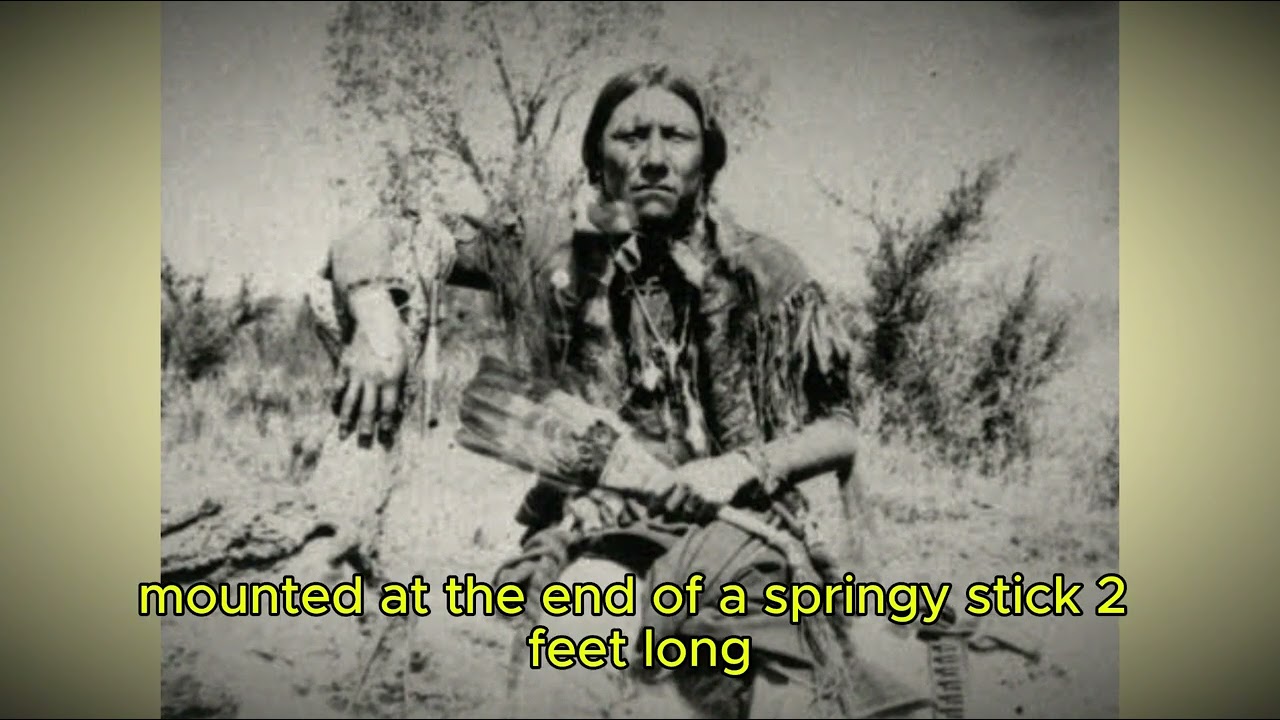
It was a lesson written in a language that white settlers had failed to read for 40 years. For nearly a century, the Comanche dominated a quarter-million square miles of the southern plains. They did so with a system of weapons, skills, and knowledge that allowed a nomadic people from the cold highlands of Wyoming to repel four empires in 150 years. When military officers, Texas Rangers, Spanish mission records, settler letters, and Comanche elder testimonies recorded at Fort Sill in the 1890s are combined, a clear inventory emerges: 20 tools of warfare that made the Comanche the most feared fighting force on the southern plains.
The first weapon was the horse. The Comanche rode the mustang, a small, sturdy, short-legged animal descended from Spanish stock left behind when the empire retreated north in the 1680s. Within about 50 years, as many as two million wild horses roamed from the Rio Grande to the Arkansas River, and the Comanche were the first to master them. By the 1750s, the average Comanche man owned about ten horses; by 1840, some war leaders owned 150 to 300.
A boy was placed on a horse at age three, rode bareback at full speed by six, could pick a grown man off the ground from horseback at twelve, and became a warrior at fifteen. The second weapon was the bow. It was not primitive. A Comanche bow was about three feet long, made from a single piece of Osage orange or bois d’arc, reinforced with buffalo sinew, and left to cure for months.
Designed to be drawn and released while lying flat against the neck of a running horse, it was deadly at 40 yards. Colonel Richard Irving Dodge, who fought the Comanche in the 1860s, wrote that a warrior held five to ten arrows in his left hand and fired them so fast that the last was in the air before the first touched the ground. The third weapon was the arrow itself, made from dogwood or wild currant branches, straightened by fire, and fitted with three turkey or hawk feathers. An iron-tipped arrow fired from a sinew-backed bow at 20 yards could pass through a man and lodge in the horse behind him.
Mexican War records describe soldiers pinned to their saddles by a single arrow. The fourth weapon was the lance. At 14 feet long, it carried more force than any rifle bullet of the era. The rider would drive the head into his target and release the shaft so the momentum of the struck enemy would not pull him from his horse.
Only the Kiowa, Cheyenne, and Comanche used the long lance in real combat, and only the Comanche preferred it from the back of a full-speed horse. US cavalry officers in the 1850s wrote home that they would rather face a squad of regular Mexican soldiers than a single Comanche lanceman in close combat. The fifth weapon was the shield. Cut from the thickest part of an old buffalo bull’s hump, soaked, stretched, dried, and hardened over fire, a properly made shield could reach half an inch in thickness and the hardness of maple.
Two layers were sometimes glued together with buffalo adhesive and a filling of human hair between them. Bullets striking at an angle from beyond 50 yards glanced off. Arrows bounced away. At the Council House fight in San Antonio on March 19, 1840, accounts describe Comanche warriors carrying shields marked with dozens of old scars from arrows and bullets.
The sixth weapon was the war club. A polished stone the size of a fist, wrapped in wet rawhide and fixed to a two-foot flexible handle, it was decorated with fur and horsehair and did not look dangerous. Swung from horseback, it could crack a Spanish soldier’s helmet with one blow. Reports from the 1840s describe men found after battle with skull holes that could be covered by a silver dollar.
The seventh weapon was the knife. Every Comanche man carried one for skinning buffalo, cutting meat, repairing gear, and making arrows. In the early years it was a flint blade in an antler handle; after trade opened, it was a butcher knife or a Green River blade made in Massachusetts. In battle, the knife was used last, when the distance closed to arm’s length.
Settlers carried the same blades; knives were common tools on the frontier, not symbols of savagery alone. The eighth weapon was the rawhide rope. Called a riata, after the Spanish term, it was braided from four to six strands of buffalo or horse hide, each strand soaked, cured, and rolled by hand for weeks. The finished rope could reach 40 feet, flexible as a snake and strong enough to control a bull.
It was used to capture loose horses during raids, to pull fleeing riders from their saddles, and to bind captives. Comanche raids were not primarily about killing; their goal was horses. A band that seized a thousand horses in one raid became wealthy for a generation, and driving that many animals across 400 miles of open country required many ropes. The ninth weapon was the trade gun.
From around 1750, French traders came through the Red River from Louisiana, trading smoothbore muskets, powder, and lead for Comanche horses and buffalo hides. By 1820, most war parties carried a number of these muskets. They were inaccurate and slow to load, but deadly at close range and loud enough to spook an enemy’s horse. The Comanche generally preferred the bow, because a man could loose ten arrows in the time it took to reload a gun, but they kept and used firearms.
When Texas Rangers fought the Comanche in the 1840s, they were fighting a horse culture that possessed firearms and used them selectively, not a primitive people with sticks. The tenth weapon was captured arms. Every raid on a farm, wagon train, village, or army camp added guns, swords, powder, and lead to the Comanche arsenal. One documented example involved a war leader the whites called “Iron Jacket,” who led the Kotsoteka band in the 1850s.
He wore a genuine Spanish scale armor breastplate, captured or inherited from an old Mexican raid, still shiny and serviceable three centuries after it was made in Toledo. His warriors believed he was bulletproof. On May 12, 1858, at the Battle of Little Robe Creek, a Texas Ranger scout named Jim Pockmark, a Delaware, shot Iron Jacket from long range with a rifle bullet that found a gap between the plates. Iron Jacket fell, and the Spanish armor was taken.
Its later fate remains disputed. The eleventh weapon was the Comanche moon. Every Texas farm wife between 1830 and 1870 knew what it meant when the full moon rose fat and yellow over the mesquite in September. Raids were coming.
No fires would be lit that night; horses were brought into the pen; a gun stayed across the knees. The Reverend Lucius Hardman wrote in his diary in October 1860: “On the night of the Comanche moon, no fire was lit, no songs were sung. We slept with guns and rosaries in our hands. ” The Comanche used moonlight like modern forces use night vision, riding as much as 60 miles between dusk and dawn and lying in the brush at dawn, watching who came out to milk the cow.
The moon was a schedule, a calendar, a weapon of war. The twelfth weapon was the land itself: the Llano Estacado, the Staked Plains. A high, dry, treeless region roughly the size of Indiana, its surface as level as a table and almost without surface water. The Spanish refused to cross it.
Even the Apache did not stay there. The Comanche knew every spring, alkaline lake, and rain pool. For nearly two centuries, the Llano Estacado served as a fortress built of distance. No American army could cross it in summer without a supply train, and a supply train on the plains was helpless.
Raiding parties fleeing toward it with a thousand stolen horses were not escaping to a hiding place; they were escaping to a homeland the size of a European country that no white man could enter without dying of thirst. Only in September 1874 did Colonel Ranald Mackenzie finally ride into Palo Duro Canyon at the eastern edge of the Llano and destroy the great winter camp of the Quahada band. He did what no white commander had dared before: he killed the horses, 1,400 of them, executed in a single afternoon in a place still known as Tule Canyon. The thirteenth weapon was the wheel formation.
The war party formed a broad wedge that widened and curved into a large, rotating circle as it approached the enemy. Warriors inside the circle poured a continuous stream of arrows, each man firing, dropping back to the far edge of the circle to reload, then surging forward again for his turn at the nearest point to the enemy. It was a moving arrow factory with no pause, no reloading gap, no place to attack. Anthropologists Wallace and Hoebel, who studied the tactic for decades in the twentieth century, wrote that the circle wound around with machine-like regularity, drawing closer with every turn.
The fourteenth weapon was the riding trick now called the Comanche drop. In the wheel attack, as a warrior passed through the nearest arc to the enemy, he slid to the side of his horse, right leg hooked over the animal’s back, left leg tucked under its belly, and fired arrows from beneath the horse’s neck, using the animal as a moving shield. To the enemy, the horse appeared riderless, or worse, seemed to be shooting arrows itself. An 1854 report from Camp Belknap describes soldiers firing at what they thought were riderless horses, then being surprised as the horses passed and revealed warriors clinging to their sides who had already fired and were climbing back into their saddles.
A young man who could not perform this trick was not yet considered a warrior, and training began at about age eight. The fifteenth weapon was horse rotation. A warrior on a long raid rode two or three horses: one to ride, one spare tied to the saddle, one for baggage. He would ride the first for an hour, jump to the second, and let the first follow riderless until it rested.
This allowed him to travel at a fast pace for 18 hours without exhausting any single animal. A US cavalryman on one grain-fed horse could cover about 35 miles in a hard day; a Comanche band on rotating grass-fed mustangs could cover 90. Over a week, the Comanche were three times faster than any force sent after them. This is also why raids 400 miles south of the Rio Grande were routine, and why every pursuit party eventually turned back, its horses spent.
The sixteenth weapon was silence. Nearly every survivor account mentions that they did not hear the Comanche coming. Rachel Plummer, captured in the Fort Parker raid of 1836, wrote that she was drawing water from a well on a clear May morning and saw the riders already inside the gate, with no warning, no dust, no sound. The Comanche approached through low ground, downwind, using dry creek beds and shallow valleys.
Every warrior wrapped his gear so nothing clinked; no metal struck metal. Bows were carried across the lap, arrows fixed in the back quiver so they did not rattle. Horses were trained from colthood to move quietly on soft ground. Part of it was also a kind of patience: lying in grass for six hours in July heat, waiting for the man in the house to come out to the barn alone.
Silence was a decision, made every time a war party left camp. The seventeenth weapon was war paint. On the real plains, war paint was closer to camouflage mixed with a psychological weapon. The Comanche painted themselves with red ocher, yellow ocher, white clay, charcoal, and green from crushed berries.
Each pattern had a specific meaning: a warrior’s vision, his charm, his lineage, his intention. When a raiding party painted before an attack, they were declaring what they intended to do and what they were prepared to lose. For the target, the moment painted riders emerged from the trees, all peaceful contact, trade agreements, and treaties became worthless. The visual shift from unpainted to painted was often the last warning a target ever received.
In 1842, the town of Bastrop lost more than half its population within three weeks after two painted riders were seen crossing the Colorado River at dawn – even though they may not have been Comanche at all. The rumor spread faster than horses. The eighteenth weapon was rapid shooting. A modern Olympic archer can fire one arrow every four seconds while standing still.
A Comanche warrior riding at full speed, holding the reins in his teeth, could fire one arrow per second: six arrows in six seconds, then six more from his back quiver, twelve arrows in twelve seconds, each aimed and deadly at 40 yards. The average Texas Ranger of 1842 carried a single-shot pistol and a rifle; he could fire two rounds at most before stopping to reload. Reloading a rifle took 30 seconds even when skilled. In the time a Ranger fired two shots, a Comanche warrior could fire 25 arrows.
That arithmetic haunted Texas. When Samuel Colt’s revolver arrived in 1847, the gap began to close, but for a generation before that, any equal-numbered fight in open country favored the Comanche, and they knew it. The nineteenth weapon was the war whistle. In the narrative of Captain Hays, that single note in the stillness was command and control.
The four-inch hollow eagle-bone whistle, hung by a cord around the war leader’s neck, was how a Comanche leader coordinated battle from horseback without radio, bugle, or flag. One long note meant wheel formation. Two short notes meant close the circle. A rising melody meant scatter and regroup at the far hill.
Every warrior knew the code and obeyed the whistle. The enemy could not locate the leader, could not target him, often could not even see him, yet the enemy formation flowed around his flank like water, and he found himself surrounded on three sides. The whistle, simple technology made from a bird’s wing bone, was more effective in the hands of a Comanche war leader than a steam-powered command tent was for an European general. The twentieth weapon was the ambush itself, the asymmetrical warfare of raids.
The Comanche did not fight pitched battles when they could avoid them. They did not hold ground or besiege forts. Everything was designed for attack, seizure, and disappearance, and for making the pursuit as costly as the raid. A typical raid went like this: a small scout party identified the target three days ahead, counted the men at the home place, noted where the horses grazed, and chose the escape route.
Then the main force arrived in darkness, silently surrounded the target from three sides, took the horses, and vanished before sunrise. Any pursuit fell into the hands of a rear guard already positioned on rough ground the Comanche had chosen days earlier. The pursuers took losses and turned back; the raiders rode home. This was not something the Comanche invented; it was a style of warfare inherited from a thousand years of nomadic life, sharpened by two centuries of practice against the Apache, Spanish, Mexicans, and Anglo-Texans.
It worked so well that into the 1860s, the Comanche were still expanding and, in a strictly military sense, still undefeated. The Comanche were human beings, not a nightmare or a legend. At their peak they were a nation of about 25,000 people spread over a country the size of France, defending their homeland with everything they had. They had families, grandmothers, elders who told stories of the time before horses, when their ancestors walked and dragged their belongings on wooden sleds.
They had losses and grief, and burial rites that included cutting the tail of a favorite horse and burying it with its owner. The settlers were human too, as were the Rangers, the soldiers, and the Mexican villagers along the Rio Grande who endured the worst raids for a generation. The conflict on the Texas frontier between 1830 and 1875 was one of the longest and most brutal collisions of cultures in North American history. Both sides fought with courage, both committed acts they later regretted, and both lost more than they ever admitted.
By 1875, the Comanche had lost. Quanah Parker, the last free leader, whose captive white mother was Cynthia Ann Parker, entered Fort Sill on June 2 of that year and surrendered his remaining 400 warriors. He was about 30 years old, born free on the plains. He died 46 years later on an Oklahoma reservation, having become a cattle rancher, a religious leader, a friend of Theodore Roosevelt, and a father to many descendants who carry his name today.
He never denied what he was or what his people had been, and he never apologized for how they fought. He simply recognized that the world had changed and that his people would have to change with it or die. The 20 weapons that terrorized Texas were not weapons in the modern sense at all. They were a way of life: the horse, the bow, the moon, the silence, the riding formations, the eagle-bone whistle, all of it a coherent system of survival and defense built piece by piece over centuries.
It finally broke not because the settlers were better fighters, but because the buffalo were killed, because the horses were shot in the canyon, because the railroads came, because barbed wire came, because the open land became a country divided into squares. A bow cannot fight a wire fence. A mustang cannot outrun a locomotive. The Comanche lost not to a better army but to a different world.
The 20 tools that made them the terror of the southern plains for a century became museum pieces almost overnight. The Comanche people still exist. About 15,000 enrolled tribal members live today, most in Oklahoma. Their language is being taught again to young people, and their songs are being sung.
Quanah Parker’s descendants still ride horses. The old weapons hang on the walls of the tribe’s museum in Lawton, cared for by people who know what they were and what they cost. And on the Llano Estacado, on a quiet September night when the moon rises big and yellow over the mesquite, an old rancher sometimes stops and looks across his fence, remembering what his great-grandfather told him about the sound of a whistle echoing across the river 180 years ago, about the way the horses moved in a circle, about the way the world was before the wire, the wagons, and the trains.