The fluorescent lights in Broadmoor Hospital hummed the same way they always did on March 15th, 1995. The corridor smelled of disinfectant and stale cigarette smoke. Behind one of the heavy green doors sat a 61-year-old man in slippers and a hospital-issue dressing gown. He weighed close to 18 stone. His hands, which once beat men unconscious in the back rooms of East End pubs, trembled slightly from years of antipsychotic medication.
His name was Ronnie Kray, and in 48 hours, he would be dead. Not in a shootout or a blaze of criminal glory, but in a hospital bed 25 miles from the East End he once ruled. The real story is not how he died. It is what the last 30 years actually looked like. It looks nothing like the movie.
If you have seen the film *Legend*, you remember Tom Hardy’s Ronnie: sharp suits, dark charisma, dangerous glamour. But the real Ronnie Kray spent his final 16 years shuffling down a psychiatric ward in slippers, heavily medicated, sometimes unable to finish a sentence. How did the most feared gangster in Britain end up as just another patient? And then there was Reggie, the so-called sane twin, who insisted he had changed, found God in prison, and married a woman 30 years younger than him behind bars. When they finally let him out, he had weeks of real freedom. What he did with them breaks your heart or makes you furious. Maybe both.
Ronnie and Reggie were born 10 minutes apart on October 24th, 1933, in Hoxton, East London. Their father, Charlie, was a costermonger and part-time gambler. Their mother, Violet, was the fixed point of a chaotic household. The twins worshipped her. By their 20s, they were running the East End, owning clubs like Esmeralda’s Barn and the Double R, and running protection rackets that kept an entire community in line.
Ronnie Kray craved respectability. He cultivated friendships with lords, actors, and politicians. He called himself a businessman. On the other side of that fear were ordinary people: shopkeepers who paid protection money every Friday because the alternative was a broken jaw, pub landlords who smiled when the twins walked in and locked the door when they left. A former publican later put it plainly: "They weren't heroes to me. They were bad for business, but people forget that. They only remember the stories where they gave someone's mum a turkey at Christmas."
In 1966, Ronnie walked into the Blind Beggar pub in Whitechapel and shot George Cornell in the head at point-blank range. Witnesses saw it happen. Nobody talked. A year later, Reggie stabbed Jack "the Hat" McVitie to death at a party in Stoke Newington, repeatedly in the face and chest. These were not calculated hits. They were explosions of rage dressed up as business.
In May 1968, Detective Nipper Read, born the same year as the twins, finally arrested them both. Read dismantled their empire not with violence, but with patient police work, persuading terrified witnesses to speak for the first time. In March 1969, at the Old Bailey, a judge sentenced them to life with a recommendation they serve at least 30 years. The twins were 35 years old. The judge was not sentencing them to prison. He was sentencing them to their entire adult lives.
Prison split them. Reggie went into the category A system, rotating through high security blocks where he was watched around the clock. He adapted. He followed the rules. An officer who spent years on Reggie’s wing recalled: "He never gave us much trouble. He knew the rules, but you could see in his eyes that he still thought of himself as someone special." That gap between who Reggie believed he was and what he had become ate at him.
Ronnie’s path was darker. Through the 1970s, his mental health collapsed. The paranoia took over. He heard things. He accused guards of conspiracies. He attacked other inmates without warning. In 1979, prison medical officers certified him insane. The diagnosis was paranoid schizophrenia. The Home Office signed off, and Ronnie was transferred to Broadmoor Hospital, a high security psychiatric institution. He would never leave.
For 16 years, from age 45 until his death at 61, Ronnie Kray lived behind Broadmoor’s high brick walls. His days were governed by medication schedules and the clatter of keys. The man who had rubbed shoulders with lords and film stars was now a patient in a secure ward. The suits were gone. The glasses were gone. All that was left was a man in slippers on a linoleum floor.
Reggie, meanwhile, served his time year after year in standard prisons. His first wife, Frances Shea, had died young before the conviction, taking her own life. People close to Reggie said it broke something inside him that never healed. In 1991, still behind bars, Reggie married again. Roberta Jones was decades younger, a working-class woman who had written to him in prison. The ceremony was held inside the prison walls.
By the mid-1990s, Reggie had been inside for more than 25 years. He told a documentary crew: "The first year, you think you can beat this place. 10 years in, you know you can't. 30 years in and you're not the same man who walked through the gate." That is not the voice of a movie gangster. That is the voice of a man who has been ground down.
Throughout the 1980s and 1990s, Reggie made a deliberate choice to cooperate with writers, journalists, and biographers. In one letter to a writer, he reportedly wrote: "If they're going to tell my story, I'd rather they heard it from me." He shaped the narrative, emphasizing codes of honor and loyalty. He framed himself as a man of principle who had made mistakes. He helped create the legend that became the film *Legend*. The myth he helped build bears almost no resemblance to the reality of his last days.
Broadmoor Hospital sits in Crowthorne, Berkshire, surrounded by woodland and quiet roads. From the outside, it looks almost peaceful. But behind those walls, every patient is there because they were judged too dangerous for a normal prison. Ronnie’s daily life bore no resemblance to the world the movies depict. Antipsychotic medication left him sluggish, heavy-limbed, with dry mouth and visible tremors. The man who had once terrorized East London could barely finish a sentence some days.
A nurse later wrote: "We were not there to punish him. We were there to treat him." Some of the younger staff were awed by his name, but after you've cleaned up after a man, you don't see him as a legend anymore. Even in Broadmoor, Ronnie held on to pieces of who he had been. He told a visiting journalist: "They've got me doped up in here, but my mind's as sharp as ever. I remember every face, every place. Don't you forget that."
The medication was relentless. Weight gain pushed him to nearly 18 stone. His cardiovascular system deteriorated under the combined assault of the drugs, his weight, and decades of institutional living. By the early 1990s, Broadmoor medical staff were documenting worsening heart disease: high blood pressure, angina, minor cardiac episodes. The most feared gangster in Britain was being killed by his own heart.
On some evenings, Ronnie would hold court on the ward, telling stories about the old days. A nurse remembered the edge beneath the charm: "He loved to tell stories about the East End, but if someone laughed at the wrong moment, his eyes would go dead and the whole room would go quiet. You never forgot who he was." Even in Broadmoor, surrounded by men committed for the most severe violent offenses, Ronnie’s name carried weight.
Outside Broadmoor’s walls, the East End was transforming. Docklands was being redeveloped. The old terraced streets were being gentrified. The world the twins had built their identity around was disappearing while they sat in institutions unable to see it go. The Krays did not just die. Their entire world died with them.
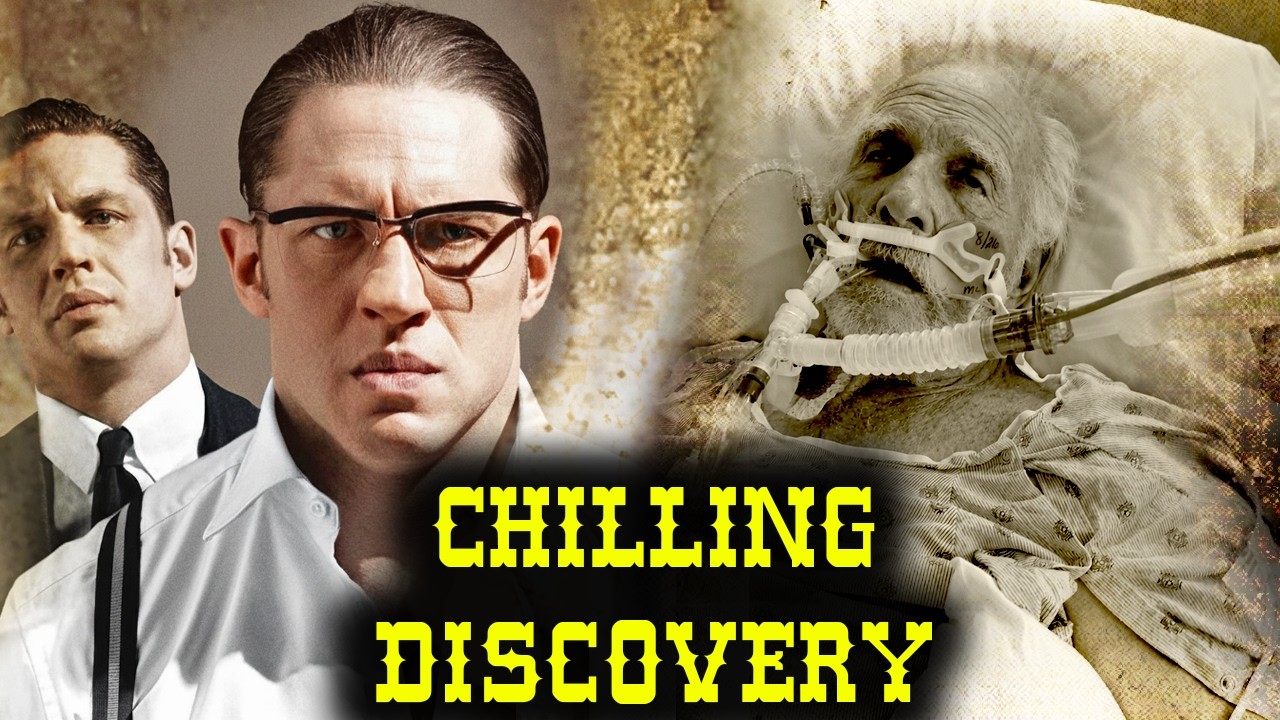
Throughout 1994, Broadmoor medical staff noted the worsening pattern. Ronnie’s heart disease was accelerating. The angina episodes were more frequent. On the morning of March 15th, 1995, Ronnie Kray’s heart stopped working. Staff initiated emergency procedures, but Broadmoor is a psychiatric facility, not a cardiac unit. The decision was immediate: stabilize him and get him out.
Ronnie had once told a fellow patient: "When I go, I want to go from the East End, not some bloody hospital." He did not get what he wanted. He was loaded into an ambulance under armed escort and driven 25 miles southwest to Wexham Park Hospital in Slough. The journey took about 40 minutes. A man who once walked into a crowded pub and shot another man in the head now lay on a stretcher in the back of an NHS ambulance, oxygen mask over his face, a prison guard sitting beside him.
Most people believe Ronnie Kray died in Broadmoor. He did not. He died in Wexham Park Hospital, a general NHS hospital in Slough. There is nothing cinematic about it. At Wexham Park, Ronnie was admitted to a cardiac ward. A security officer was stationed at his bedside around the clock. Even dying, the state considered him a risk. For two days, Ronnie lay in that bed.
On the morning of March 17th, 1995, Ronnie Kray suffered a second massive cardiac arrest. This time, the medical team could not bring him back. He was 61 years old. The official cause of death was myocardial infarction with underlying chronic heart disease. Long-term antipsychotic medication was listed as a contributing factor. He died in a hospital bed, under guard, alone in every way that mattered.
25 miles east of Wexham Park Hospital, Reggie Kray received the news. He was in prison. He could not go to his brother’s bedside. He could not hold his twin’s hand. Reggie later told his wife Roberta: "Ron was my other half. People don't understand that. When he went, it was like half of me died, too. We were born together. We should have died together." That is grief. Raw, unperformable grief.
After Ronnie’s death, the narrative shifted to Reggie. In 1997, two years after burying his brother, his own body turned against him. He was diagnosed with bladder cancer, advanced and inoperable. Medical reports gave him months rather than years. Outside the walls, a campaign was building for compassionate release. Supporters, some members of parliament, and newspaper columnists began calling for it.
But not everyone agreed. The families of the men the Krays had killed opposed it. One woman, whose father had been intimidated by the firm for years, told a newspaper: "He showed no compassion. Why should we?" That question hung over the entire debate. It still does.
The Home Secretary, Jack Straw, signed the papers. In late August or early September 1999, after approximately 30 years of continuous imprisonment, Reggie Kray was released on compassionate grounds. Nipper Read gave a measured response: "He's an old man now, a sick man. Justice has been served. Whether society owes him anything more is a matter for politicians, not policemen."
Reggie was transferred directly from prison to a hospice in Norfolk. He was too frail for a public homecoming. Roberta later wrote: "The Reggie I knew at the end was not the swaggering gangster of the 1960s, but an old, tired man who wanted peace." She recalled him saying quietly: "I never thought I'd see the sky without bars again." It is the most human thing Reggie Kray ever said.
His final weeks were spent in a small room. A drip stand. An oxygen concentrator humming in the corner. Visitors described him as thin, weak, but occasionally lucid. He reached for a glass of water with a shaking hand. He had about 13 months of freedom. Most of that time was spent under medical care. He was free in the legal sense. In the physical sense, he had simply traded one set of walls for another.
On October 1st, 2000, Reggie Kray died of cancer at the age of 66. He died in Norwich, far from the East End, in a quiet room with medical equipment and the low sound of an oxygen machine. He had served three decades behind bars. He had been free for just over a year.
Both funerals were held at St. Matthews, Bethnal Green, in the heart of the East End. Ronnie first, in March 1995. Reggie five years later in October 2000. The same route, the same rituals, the same church. Ronnie’s funeral drew hundreds. An elderly man from Bethnal Green told a reporter: "When the hearse came round the corner, it was like the old days. People came out their doors, stood on the pavement. Some bowed their heads. Some just stared. It was like saying goodbye to the last bit of the old East End."
At both funerals, the men being buried were convicted murderers. Ronnie shot George Cornell in the head. Reggie stabbed Jack McVitie to death. These are not disputed facts. And yet hundreds of people lined the streets to pay their respects. The Krays had become something bigger than their crimes: a symbol, a story, a version of the East End that people wanted to believe in.
Both men are buried in Chingford Mount Cemetery in a family plot that also holds their mother Violet. One of the last things Reggie ever said to a friend visiting him in Norwich cuts through every layer of the legend: "In the end, it's not worth it. All the money, all the flash, and you die in a little room with tubes in your arm."
The Kray industry did not die with the Krays. It accelerated. Dozens of books have been written about them. At least three major films have dramatized their lives. East End walking tours take visitors past the Blind Beggar pub and past Vallance Road. Thousands of people take these tours every year. The firm is gone. The business of the firm is booming.
Nipper Read offered perhaps the most clear-eyed assessment of the legend: "They were violent men who terrorized their community. The legend of gentleman gangsters is a comforting fairy tale people tell themselves about their youth."
Most people believe Ronnie Kray died in Broadmoor. He did not. He died in Wexham Park Hospital, a perfectly ordinary NHS hospital in Slough. And Reggie’s freedom amounted to barely a year of life, most of it spent in a hospice bed or a small house in Norwich under constant medical care. The glamorous last act that people imagine simply did not happen.
The real ending was fluorescent lights, oxygen tubes, and the slow failure of the body. The movies gave us the legend: two dangerous, charismatic men in sharp suits ruling London from the shadows. The truth gave us something harder to watch: two aging brothers separated by institutions, broken by time, dying far from home in rooms that smelled of disinfectant and latex. The legend is more exciting. The truth is more important.