In 1530, a royal banquet at Hampton Court Palace produced hundreds of dishes for the court of Henry VIII. The spectacle was grand, but the reality of the food was grim.
Meat arrived at the palace in barrels of salt. It sat in stone larders without refrigeration. Cooks had to trim away spoiled edges before the rest went to the fire. What reached the table was masked with expensive spices and presented on gold plate to look like abundance.
The Great Hall at Hampton Court was vast and loud. Tapestries covered the stone walls. Hundreds of beeswax candles burned in iron sconces. Smoke from the central hearth hung in the upper reaches of the room. Minstrels played from the gallery while servants moved in coordinated lines.
Near the center of the high table sat a large ornate salt cellar made of silver. It was not decorative. It was a boundary. To be seated above the salt meant you were of high rank. You sat near the king and received the first servings. To be below the salt meant you were farther from power and your food had traveled farther.
The subtleties arrived as sculptures made of marzipan, sugar paste, and pastry. They depicted castles, saints, and coats of arms. One showed a lion and a dragon locked in combat. These pieces were not meant to be eaten. They existed to be admired and to demonstrate expense and artistry.
The Great Kitchens at Hampton Court were a complex of specialized chambers. The largest space contained fireplaces over 6 feet high. A grown man could stand inside them. They burned constantly during a banquet, fed with oak and charcoal. The air was thick with smoke that stung the eyes and coated the throat.
Everything cooked over open flame with no temperature control. A joint of beef roasted on a spit, turned by a boy for hours. The meat's surface blackened. Fat dripped into the coals and ignited. Smoke rose and clung to the flesh.
In the boiling house, copper cauldrons large enough to hold a sheep simmered over fire pits. The metal was difficult to clean. Residue from previous meals lined the interior. The water inside turned gray with scum.
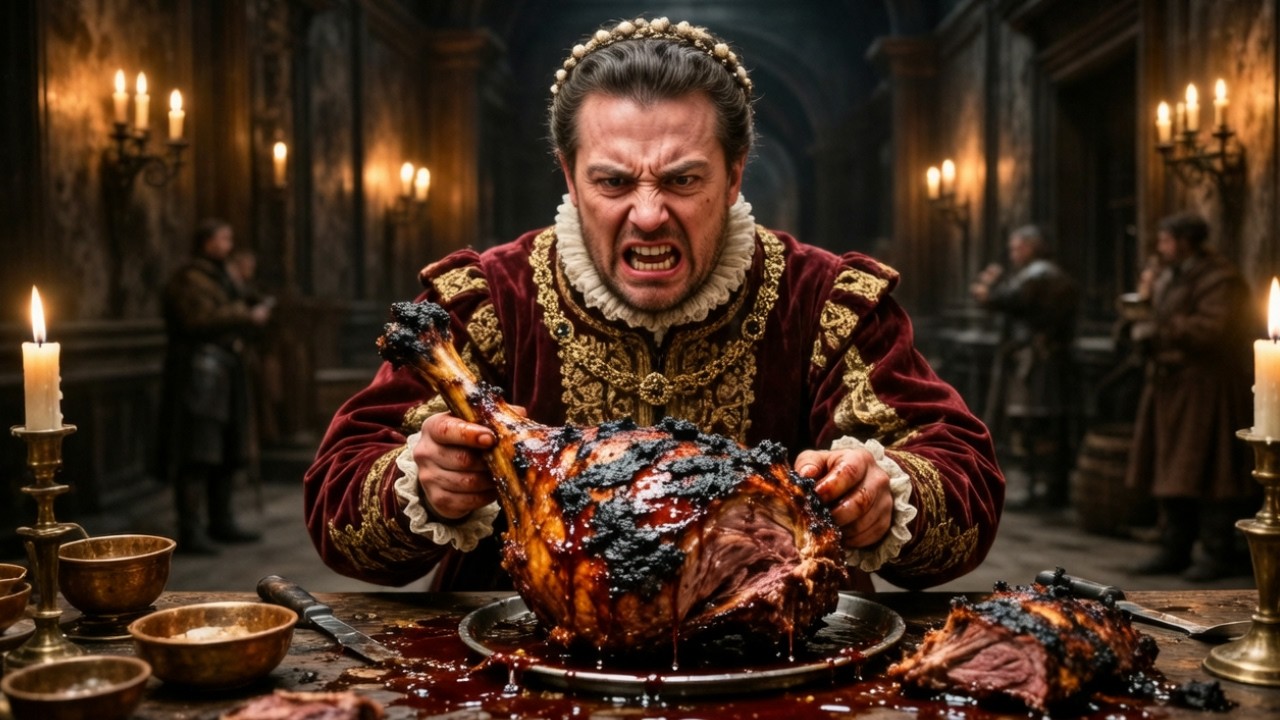
More than 200 workers operated this system. At the top was the master cook. Below him were specialized cooks for roasting, boiling, and baking. At the bottom were scullions, young boys sometimes as young as eight or nine. Their hands were raw from scrubbing in cold water because hot water was reserved for cooking.
Every piece of meat that entered Hampton Court was already in decay. The process began the moment the animal was slaughtered. Without refrigeration, salt was the only defense. Meat sat in barrels of salt for weeks, sometimes months. The salt drew out moisture and hardened the flesh.
Before cooking, the meat had to be soaked in cold water for hours to leach out enough salt to make it edible. Even after soaking, the taste was overwhelming. The texture was tough, almost leathery.
The larder was stone-walled and built on the north side of the palace where sunlight never reached. It was cooler but not cold. Sides of venison hung from iron hooks. Whole fish lay on slate shelves. The air smelled of smoke, brine, and the faint sweetness of rot.
Spices arrived in locked chests, worth more by weight than the meat they seasoned. They were symbols of wealth and status. But they served another purpose. A heavy dose of ginger could mask the faint sourness of meat that had been in the larder too long. Pepper burned the tongue enough to distract from an off-flavor.
Below the salt, a servant placed a trencher in front of you, a thick slab of stale bread that functioned as your plate. The first dish was a meat pie with minced pork, currants, sugar, cinnamon, and orange peel. The taste was confusing. The meat was savory and heavily salted, but the sugar was aggressive. The flavors collided.
The bread beneath the pie contained grit. Flour was ground between millstones, and fragments of stone broke free during grinding. No sieve caught all of it. Everyone at the table experienced it.
A platter of roasted peacock arrived at the high table. The bird had been skinned before roasting, then redressed in its own feathers afterward. The effect was magnificent. Courtiers applauded. But by the time a piece reached the lower tables, it was lukewarm and dry. The flesh was stringy and difficult to tear.

Pottage was what most people below the salt ate in quantity. It was a thick stew of barley, peas, onions, and scraps of meat boiled together for hours. Every ingredient lost its individual texture. The taste was uniform, salt, smoke, and a faint bitterness from over-boiling.
The ale was thick, slightly sour, and warm. It had been sitting in wooden barrels with sediment at the bottom. People drank it anyway because water was unsafe and wine was reserved for those above the salt.
The king ate first. Henry VIII received cuts from the center of the roast where the meat retained some moisture. The fish on his plate was swimming that morning. A servant tasted every dish before it reached him. His bread was manchet, fine white flour with no grit, baked fresh in a separate oven.
Ten feet from where the king sat, the food was already different. A platter of roasted lamb left the high table after the best portions were removed. Lesser nobles received shoulder cuts that were fattier and closer to the bone. The meat had been sitting exposed and had begun to cool.
The platter moved again to gentleman ushers, clerks, and higher servants. They received end cuts near the joint where the meat was tougher and threaded with sinew. The fat had solidified into a white film. They scraped it aside and chewed carefully.
Further still, the platter reached the lower tables. They received scraps, small fragments trimmed from around the bone, bits of crackling, and cartilage. The lamb was now cold. They soaked their bread in the remaining juices and chewed in silence.
One animal, one roast, was divided into five different experiences based purely on proximity to power.
When the meal ended, the food did not disappear. Platters that still held anything edible were carried back toward the kitchens. Bones with meat still clinging to them went into one barrel. Bread trenchers soaked with grease went into another.
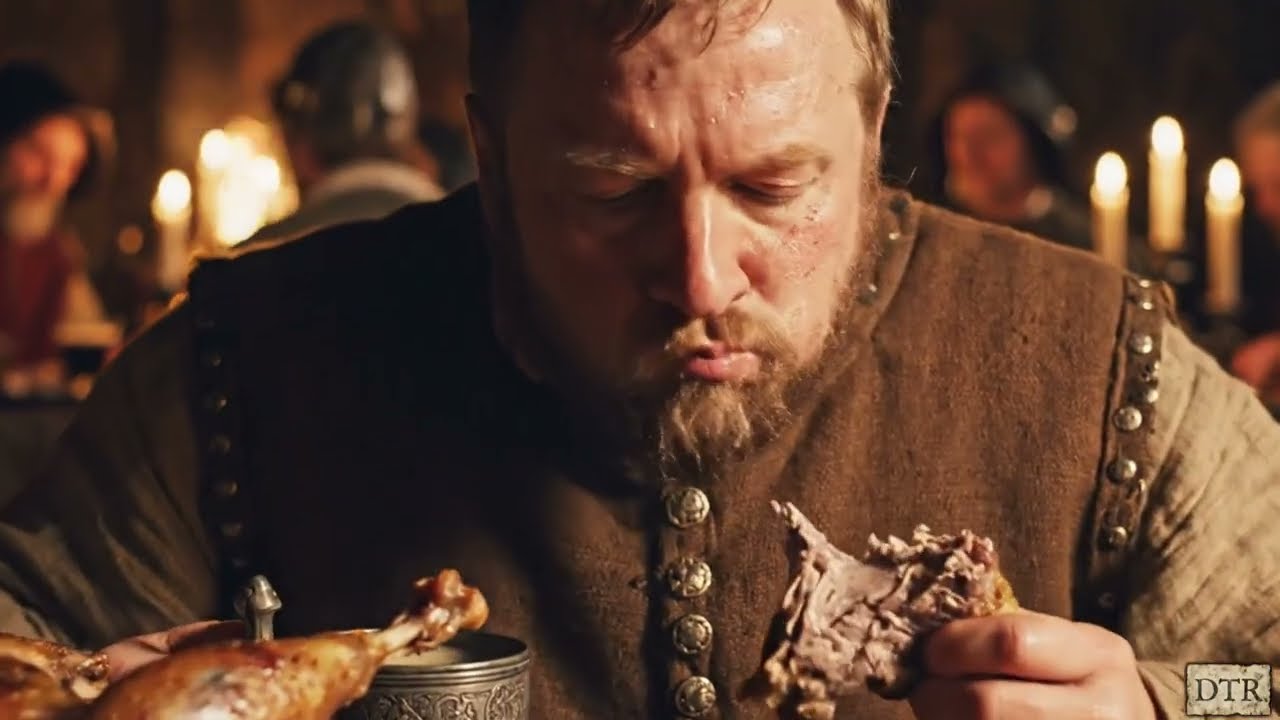
Outside the palace gates, people waited. Poor laborers, the elderly, the sick, and mothers with children stood in the cold because they knew what was coming. A servant appeared carrying a large basket of broken meats. Chicken bones gnawed nearly clean. Bread so soaked with fat it fell apart. Pottage that had gone cold and separated into gray sludge.
The basket was set down and the crowd surged. A woman clutched a piece of fat-soaked bread. A man pulled a bone from the pile and began scraping it with his teeth. A child received a chunk of trencher bread, heavy and rancid, and ate it without hesitation.
The same pig that began as a symbol of abundance on the king's table traveled through every level of society. Its prime cuts fed royalty. Its tougher portions sustained nobles. Its scraps filled servants. Its bones boiled a second time became pottage for the kitchens. What even the kitchen staff would not eat fed the destitute outside the gates.
The Tudor banquet was never about feeding people well. It was a demonstration of control over resources so vast that waste itself became a form of power. The king could afford to eat only the best and discard the rest. The poor outside could afford nothing, so they waited for garbage and called it charity.
The grand feast ended in the mud with strangers fighting over a bone that had already been boiled twice. The food you ate was a direct measure of your worth. For most people in the system, that measure was cold, spoiled, and barely edible.
The spectacle existed to mask a supply chain built on salt, smoke, and rot. The heavy spicing was not sophistication, it was necessity. The spectacular presentation was not artistry, it was misdirection. The quantities were not generosity, they were a buffer against the rot that claimed a portion of every shipment.
The feast ended not with celebration, but with desperate hands pulling apart greasy bread in the mud. Food was hierarchy made visible, where even garbage retained value because it could feed someone lower than you.
The Tudors ate this way not because they lacked knowledge, but because they lacked alternatives. Preservation meant salt and smoke. Cooking meant open flame and guesswork. Storage meant accepting loss. The banquet was their solution, a spectacle large enough to absorb the waste, loud enough to drown out the taste, and cruel enough to turn spoilage into a symbol of status.