Prince Andrew of Greece and Denmark and Princess Alice of Battenburg were born into a world of royal privilege, but their lives became a saga of war, exile, and personal collapse. Their story is often overshadowed by that of their son, Prince Philip, but the events that shaped their marriage also shaped the man who would later stand beside Queen Elizabeth II.
Andrew was born on February 2, 1882, in Athens. He was the fourth son of King George I of Greece and Queen Olga, a granddaughter of Tsar Nicholas I of Russia. As a younger son, he was considered a spare among spares, with little expectation of inheriting power. His upbringing was aristocratic but emotionally distant, and he was steered toward a military career in the Hellenic Army.
Alice was born on February 25, 1885, at Windsor Castle. She was the daughter of Prince Louis of Battenburg and Princess Victoria of Hesse, making her a great-granddaughter of Queen Victoria. From an early age, it became clear that Alice was different. She was born profoundly deaf, a condition that went undiagnosed for years. Through determination, she learned to lip-read in multiple languages and became an adept speaker.
Despite her disability, Alice was known for her beauty and quiet intelligence. She was drawn to religion and mysticism from a young age, finding court life tedious. Rumors of visions and prophetic dreams followed her, tendencies that would resurface with devastating effect later in life.
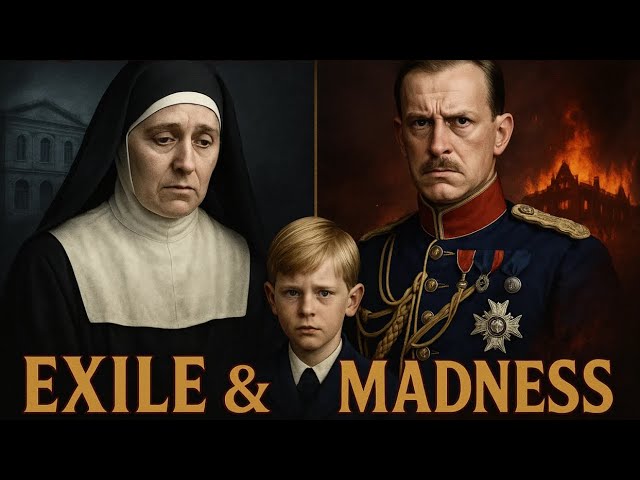
Andrew and Alice met in 1902 at the coronation of King Edward VII in London. Alice was 17, and Andrew was 20 years her senior. He was a dashing military officer with a reputation as a flirt, but he appeared genuinely taken with Alice’s gentle demeanor. Their engagement was announced within a year, and they married on October 6, 1903, in Darmstadt, Germany.
The wedding was a grand affair, attended by Europe’s most powerful monarchs. But the marriage was not a fairy tale. Alice struggled to adapt to life in Greece, where the court was smaller and less sophisticated than the British one. Her deafness made court life isolating, and Andrew’s growing interest in gambling, affairs, and military politics left her increasingly alone.
Between 1905 and 1921, the couple had five children: four daughters and finally a son, Philip, born in 1921. By the time of Philip’s birth, the world around them was unraveling. The Balkan Wars had destabilized the region, and World War I had shaken the foundations of Europe’s monarchies. Greece was divided between pro-German and pro-British factions, and the royal family’s German ties placed them under suspicion.
During the war years, Alice’s mental health began to deteriorate. She claimed to hear the voice of God, believed she had healing powers, and became consumed by religious mysticism. Modern interpretations suggest she may have suffered from schizophrenia or bipolar disorder, but at the time, such conditions were poorly understood. Andrew, increasingly detached, sought distraction elsewhere.

The political situation in Greece reached a boiling point in the early 1920s. Andrew served as a high-ranking officer in the Greco-Turkish War of 1919 to 1922, a campaign that ended in disaster. After the Greek army’s catastrophic defeat, a revolution erupted in Athens. The monarchy was overthrown, and Andrew was arrested and charged with dereliction of duty.
His trial was swift. Though he was spared execution, likely due to pressure from Britain, Andrew was stripped of his military titles and banished from Greece for life. The family was evacuated by a British Royal Navy ship, HMS Calypso. Legend has it that the infant Philip was smuggled aboard in an orange crate to protect him from revolutionary mobs.
The family settled briefly in France, but the marriage was already beyond repair. Andrew retreated to gambling dens and mistresses, while Alice’s religious fervor deepened into delusions of grandeur. In 1930, she was diagnosed with paranoid schizophrenia and forcibly institutionalized in a sanatorium in Switzerland.
Philip was left without a stable home. His mother was in a clinic, his father had abandoned the family, and his sisters married into German aristocracy. As Philip later recalled, “The family broke up. My mother was ill. My sisters married. My father went off to the south of France. I was left to it.”
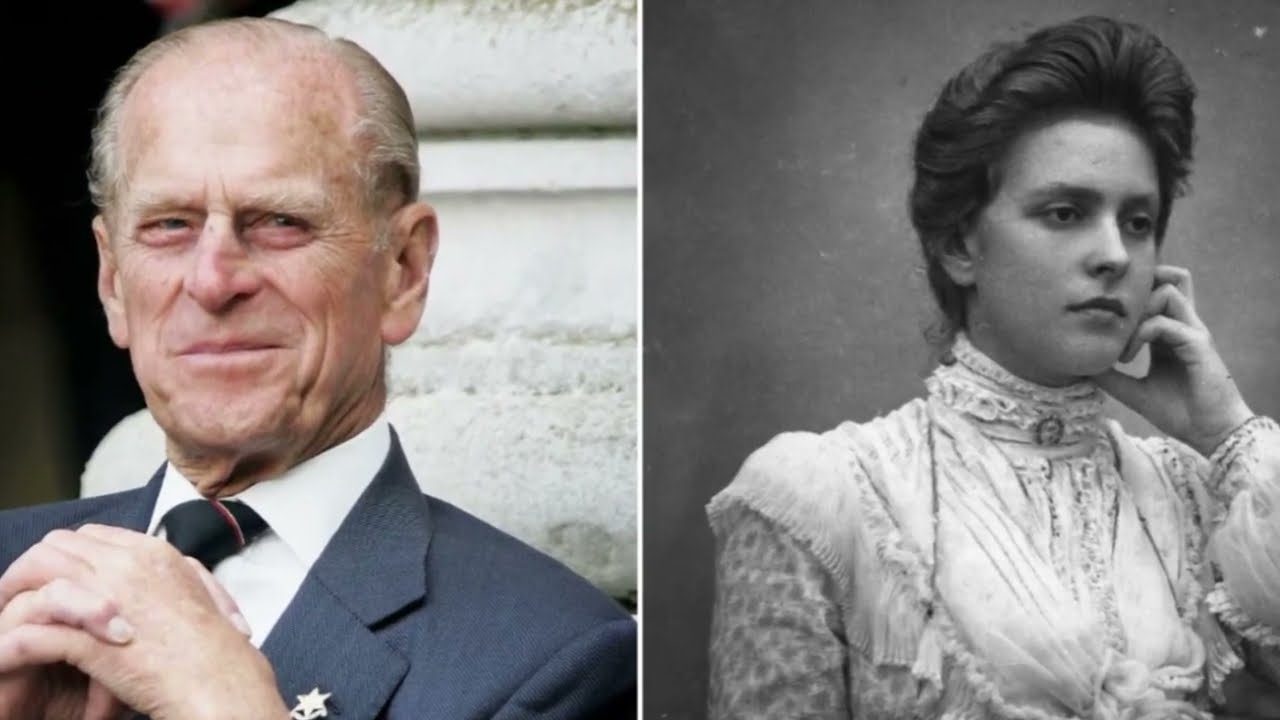
Alice spent nearly two years in the sanatorium, where she endured treatments including ice baths and electric shock therapy. In 1932, she insisted on leaving, rejecting the diagnosis and turning her back on the psychiatrists. She returned to Greece, where she dedicated herself to charitable work, dressing in austere gray habits and tending to the sick and destitute.
When Nazi Germany invaded Greece in 1941, Alice remained in Athens. The occupation brought terror, and by 1943, the Gestapo began rounding up Greek Jews for deportation. Among those at risk was the Cohen family, prominent Greek Jews known to the royal household. Alice took them in, hiding them in her modest apartment, directly under the noses of the Nazi occupiers.
Her deafness became an unlikely shield. When Gestapo officers searched her residence, Alice played the role of a confused, frail aristocrat, speaking only in French and pretending not to understand their questions. The Cohen family remained hidden in her home until the liberation of Athens in October 1944.
Prince Andrew died in 1944, a lonely and largely forgotten figure. Alice, however, found redemption in her final years. She lived long enough to see her son marry Princess Elizabeth and to witness the birth of her grandchildren. She died in 1969, having spent her last years at Buckingham Palace.
The story of Prince Andrew and Princess Alice is one of duty, betrayal, madness, and quiet heroism. Their marriage crumbled under the weight of war and personal demons, but their son carried their legacy into the heart of the British monarchy. In the end, it was Alice’s courage during the darkest days of the occupation that defined her, not the scandals that once consumed her life.