The story of Al Capone has been told so many times that it has hardened into myth. You know the image: the sharp suit, the cigar, the scar, and the cold stare. You know the legend of Eliot Ness taking him down. You know the story of the criminal mastermind who ruled Chicago.
The problem is that much of what you know was made up. The real man was more complicated, more tragic, and in some ways more disturbing than the character Hollywood created. Here are the facts that tear down the legend.
Nobody dared call Al Capone "Scarface" to his face. The famous nickname was created by Chicago newspapers, not the underworld. On the streets, anyone who said that word near Capone would likely leave in a coffin. Capone hated the term. He preferred telling reporters the marks on his face were war wounds from fighting in World War I. That was a lie. Capone never wore a uniform.
The truth was simpler and more humiliating. In 1917, at 18 years old, he was working at a bar in Brooklyn and made a crude comment about Frank Galluccio's sister. Galluccio pulled out a pocket knife and slashed his face three times. Capone carried that shame for the rest of his life.
Despite becoming the symbol of the Italian Mafia in America, Capone never set foot in Italy. He was born on January 17, 1899, in a working-class neighborhood in Brooklyn, New York. His parents were immigrants from the Naples region, but Alphonse was American on paper, raised on the streets of New York. He spoke fluent English with a thick Brooklyn accent and barely knew the Italian he heard at home.
Prosecutors and newspapers painted him as a foreigner on purpose. It was easier to convict a dangerous Italian than to admit that the country's biggest criminal had been born and raised inside the United States.
The man who moved millions never finished elementary school. Capone dropped out of public school PS 133 in Brooklyn at 14 after slapping a teacher in the face. He was expelled that same day and never returned to a classroom.
When the FBI finally got their hands on his accounting books, government experts were stunned. They said Capone's financial organization was comparable to a Fortune 500 company. A kid with no diploma ran an empire that would put many Wall Street executives to shame.
At the height of his empire in 1927, Capone ran 100 speakeasies across Chicago, plus 35 betting houses, 14 casinos, and a number of brothels that nobody could count properly. A thousand men worked for him directly, with hundreds more depending on the operation on the side. The IRS calculated his income at $60 million a year, close to $1 billion in today's money.
Capone did not report a single cent of it to the government. That arrogance planted the seed of his downfall.
Everybody knows the story of Eliot Ness and his Untouchables taking down Al Capone. It became a movie, a TV series, and an American legend. But the person who actually put Capone behind bars was a man almost nobody knows: Frank Wilson, an IRS agent who spent his days going through receipts and accounting books.

Capone was convicted in October 1931 for tax evasion, not bootlegging or murder. Ness and his team never managed to prove a single crime directly tied to Capone. In fact, Ness was left out of the IRS investigation because they thought his group was too loud for work that required silence and patience. When Ness wrote his book in 1957, the IRS refused to review the manuscript. They considered it fiction.
When the Depression wrecked the American economy in 1930, millions of families had nothing to eat. One of the most wanted criminals in the country showed up to help. Capone opened a soup kitchen on Chicago's South Side that served up to 3,500 meals a day, all paid for out of his own pocket. He spent between $70 and $100 a day, a fortune back then.
Most newspapers treated it as a publicity stunt. But Capone grew up going hungry in Brooklyn. He knew that reality up close. Historians who studied the case later confirmed there was something genuine there.
After the St. Valentine's Day massacre in 1929, something changed inside Capone. The man who ran Chicago started living with one constant fear: being poisoned. He hired someone just to taste every meal before he ate it. He only drank from bottles opened right in front of him. When he traveled, he brought his own cook.
When he was arrested in 1931, one of the first things Capone negotiated was permission to receive food made by his own wife, Mae. America's most feared gangster wasn't afraid of shootouts or the police, but he couldn't sit down to dinner without wondering what was on his plate.
Before February 14, 1929, much of Chicago tolerated Capone. He handed out soup to the unemployed and kept the city running behind the scenes. But that day, seven men connected to Bugs Moran were executed in a garage. Internal records suggest Capone did not directly authorize the attack. His subordinates acted on their own.
Public opinion turned against him overnight. President Herbert Hoover personally called J. Edgar Hoover and gave a direct order: take Capone down. One single day of violence destroyed years of careful strategy and turned a businessman of crime into a national target.
Between 1920 and 1930, Capone was arrested six times. None of those arrests led to anything serious. It wasn't because there wasn't enough evidence. It was because Capone had judges, prosecutors, and police chiefs in his pocket. In 1931, government estimates said he spent around $75 million just on bribes. That was more than the entire annual revenue of the Chicago Police Department.
It took the federal government getting involved for someone to finally pin something on him. And even then, it wasn't for murder or bootlegging. It was for income tax.
Capone considered himself a practicing Catholic and made a point of going to mass every Sunday, often with a pistol hidden under his suit. He had images of saints all over his house and office. He consulted a numerologist before making business decisions. The number 13 was his personal nightmare. He refused to attend any meeting with exactly 13 people in the room.
Once, he received information that he would be assassinated on a Thursday. He stayed locked in his room all day. The attack never happened. To him, that proved the superstition worked.
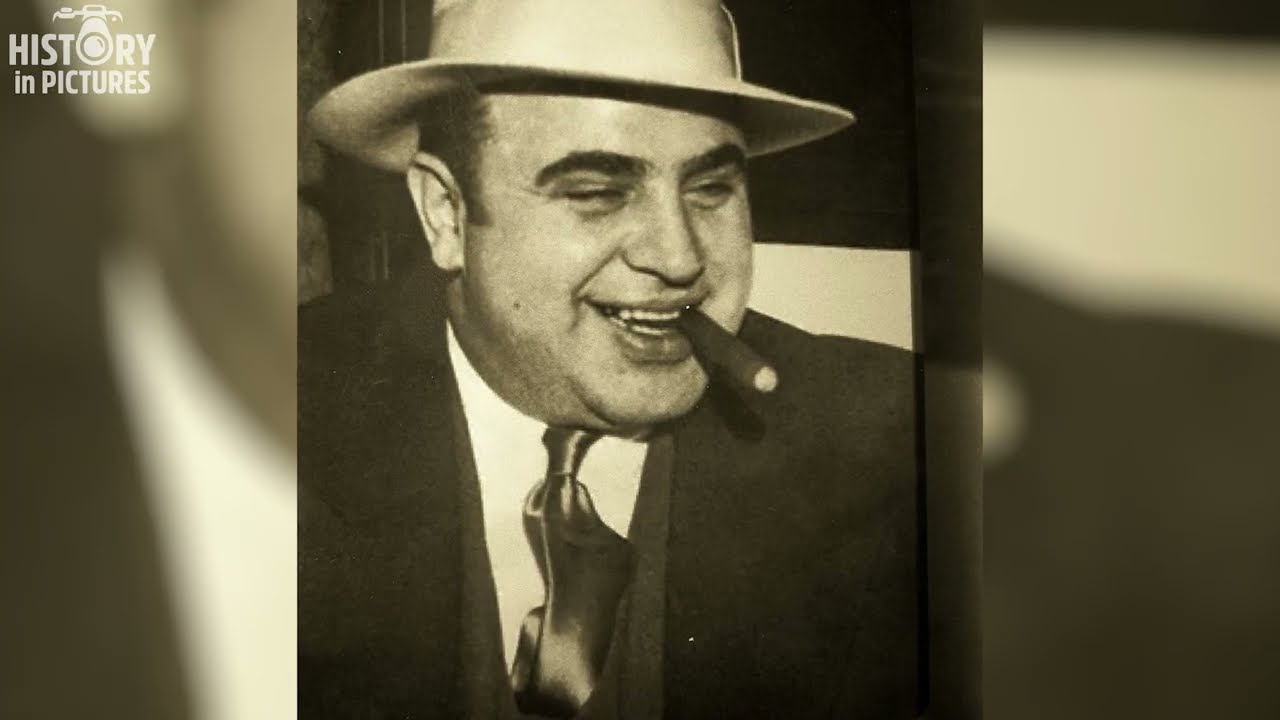
Capone caught syphilis in the very brothels he controlled, probably sometime between 1920 and 1925. Treatment existed back then, arsenic-based, but he refused to get treated, partly out of pride and partly out of shame. The disease kept advancing silently until it reached his nervous system.
By around 1930, his own men could already tell something was wrong. They started acting on their own without asking for permission. The boss who ruled Chicago was becoming unable to rule himself. It wasn't the police, his rivals, or prison that started destroying Capone. It was a disease he could have treated and chose to ignore.
Frank Wilson started digging through Capone's finances back in 1926, half a decade before the trial. Wilson and his team spent endless nights going through more than 2 million documents by hand, with no computers. They found 12 transactions showing money going into the boss's accounts with no explanation. Wilson also managed to flip three of Capone's former associates who agreed to testify.
In October 1931, the verdict came down: 11 years behind bars and an $80,000 fine, the largest ever handed down for a tax crime in the country up to that point.
When Capone arrived at the federal penitentiary in Atlanta in 1932, he put together a band made up of other inmates called the Rock Islanders. Capone played the banjo and took rehearsals seriously, three times a week. The prison warden described him as a model inmate during his first two years.
In 1934, he was transferred to Alcatraz. There, everything changed. His money and fame meant nothing inside those walls. Other inmates saw him as a chance to build their own reputation. Capone, who had once run all of Chicago, now had to watch his own back just to survive another day.
At Alcatraz, Capone found out that money couldn't buy anything. Zero privileges, zero special treatment. In 1936, another prisoner stabbed him. But what really destroyed Capone wasn't the physical violence. The syphilis he had been carrying for years started slowly eating away at his brain.
Guards began reporting disturbing scenes. Capone would talk to himself in his cell, arguing with people who weren't there. He believed he was still in Chicago running his crime empire. In 1938, at just 39 years old, he was transferred to a prison hospital. The diagnosis left no doubt: advanced dementia.
In November 1939, Capone walked out of prison with no fanfare. He was released early because his health was destroyed. He went straight to a mansion on Palm Island, Florida, where he spent the last eight years of his life, practically hidden from the world. At times, Capone didn't recognize the people around him and acted like a 12-year-old child. America's most feared gangster ended his days fishing in a swimming pool, completely lost inside his own mind.
On January 25, 1947, Al Capone took his last breath at 48 from cardiac arrest made worse by pneumonia. The man who once moved millions a week in Chicago died with less than $100 in cash to his own name. Everything that was left was tied up in real estate in Florida. His former partners rode the wave of prohibition's repeal in 1933, became legal liquor distributors, and got rich without having to hide anything.
You have probably heard the quote: "You can get further with a kind word and a gun than with a kind word alone." Capone never said it. Not once. The quote only appeared in 1967, 20 years after Capone was already buried, in a play. A screenwriter needed a hard-hitting line for the character and made it up. The world bought the story.
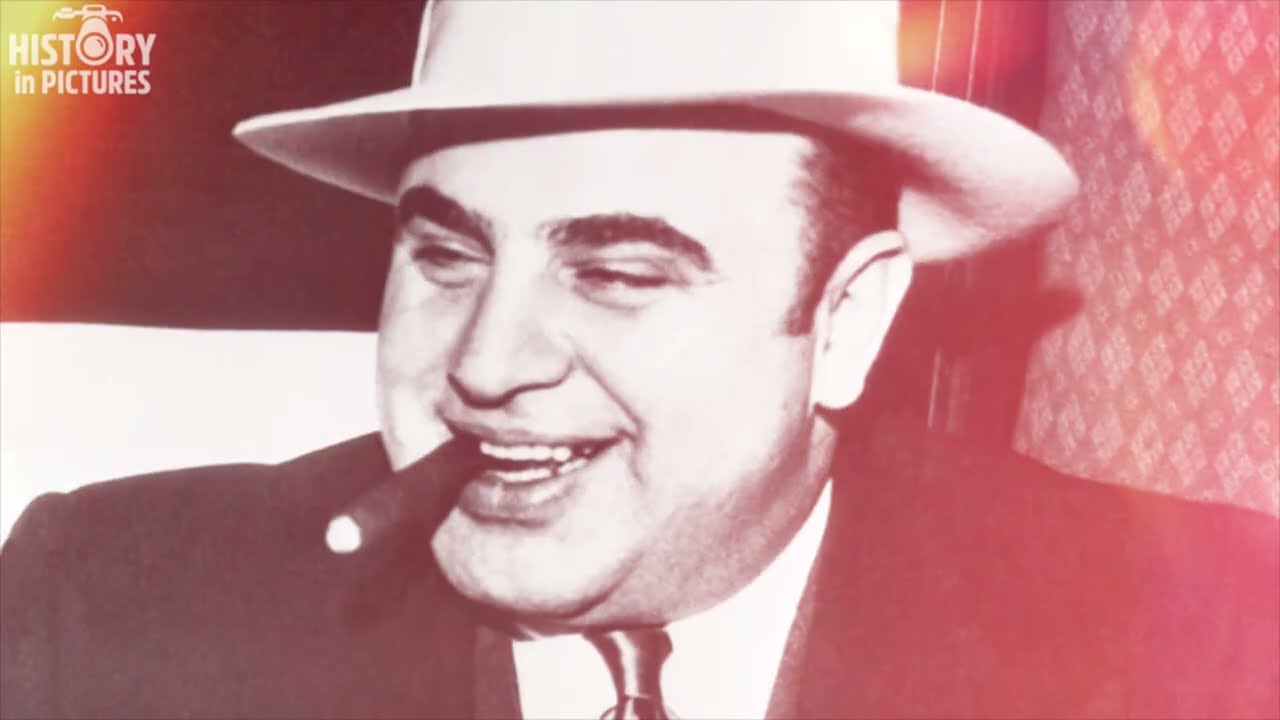
The St. Valentine's Day Massacre was set up by Capone with one clear goal: to wipe out Bugs Moran, his biggest rival in Chicago. On that freezing morning, seven men from Moran's gang were lined up against the wall of a garage and gunned down. But Moran never walked into that building. He showed up late, saw what looked like a police raid at the door, and turned around on the sidewalk.
Later, he told a reporter, "Only Al Capone kills like that." The strangest part? Capone was in Miami with an alibi on paper while his men were doing the dirty work more than a thousand miles away.
Since 1921, the federal government already had detailed files on Al Capone. Bootlegging, extortion, links to murders, bribing politicians. It was all documented. For 10 years, it sat there collecting dust. Almost everything Capone did was a state crime, not a federal one. At the state level, he had judges, cops, and prosecutors in his pocket.
It took IRS agents coming up with an idea no one had tried before: arguing that money from illegal activity was still taxable income. America's biggest criminal didn't fall because of violence or bootlegging. He fell because he didn't pay taxes.
In May 1929, Capone brought together bosses from seven different cities at a seaside hotel in Atlantic City. Nobody had ever done that before. For three days, these men negotiated operating zones, agreed on prices, and created rules for settling conflicts without bloodshed. Capone, at just 30 years old, ran the table. That meeting laid the groundwork for what the FBI would decades later call the American Mafia.
Two days after the meeting, Capone was arrested in Philadelphia for illegal possession of a firearm. The man who had just redrawn the map of crime in the US went down for carrying a revolver in his pocket.
Mae Coughlin married Capone in 1918. She was 21, he was only 19. They had a son, Sonny, who was born partially deaf because of congenital syphilis passed on by his own father. While Capone lived surrounded by violence and money, Mae stayed behind the scenes in silence.
When he got out of prison with his mind destroyed, Mae was the one who took care of him for eight straight years, day after day, until his death in 1947. She never gave a single interview, never wrote a book, never sold a story. She lived until 1986, reaching 89 years old, and still refused to speak publicly about her husband.
When Capone died in January 1947, the New York Times buried the news on page 14. The Chicago Tribune devoted only three paragraphs to the story. The man who dominated Chicago for a decade died forgotten, demented, and irrelevant.
In the movies, Capone shows up as a criminal genius who built an empire on his own. Scarface, The Untouchables, and Boardwalk Empire all tell the same story: an extraordinary man who challenged America. The reality was very different. Capone wasn't an exception. He was a consequence.
Prohibition made something illegal that millions of Americans still wanted. Politicians voted for the ban and kept drinking behind the scenes. Cops took bribes because their salaries couldn't compete with bootlegging money. Poor Italian immigrants with no access to decent jobs found in organized crime the same path rich families took behind the scenes of politics.
A Capone who is a genius becomes entertainment. A Capone who is inevitable becomes a mirror. Hollywood always chose entertainment because the mirror is way too uncomfortable.