The 1930s public enemy era was not a game of hide and seek. It was a brutal test of human endurance, where staying alive required back-alley mutilations and field medicine that defied belief.
The stakes became life or death after the bloody 1933 Kansas City Massacre. That shootout shocked the nation and gave J. Edgar Hoover the federal mandate to hunt down the underworld. From that moment on, if you were running, your body was the front line.
Months before FBI agent Melvin Purvis closed the dragnet outside Chicago’s Biograph Theater on July 22, 1934, John Dillinger understood that escaping the law meant changing the one thing they used to track you: your identity.
He paid a disgraced, narcotics-dealing former physician named Dr. Wilhelm Loeser $5,000 to physically redesign his face inside a hidden safe house. Loeser sanded off three of Dillinger’s moles and aggressively tightened the skin under his cheekbone. That does not get done without cutting.
Then Loeser attempted to fill the cleft in Dillinger’s chin with hot paraffin wax. During the surgery, Loeser accidentally gave Dillinger an overdose of ether, causing the skin to turn blue and nearly killing him on the operating table before they could clear his throat.
The very next morning, Dillinger went further to beat the system. He had Loeser pour raw acid and scrape his fingertips, attempting to permanently erase his fingerprints. The process caused immense pain and deeply scarred the tissue, but it failed to destroy the deep-set dermal ridges.
When the FBI later took his prints after his death, the outer ridge patterns were still easily readable.
Dillinger’s inner circle understood this survival math all too well, especially after their narrow escape from the FBI ambush at the Little Bohemia Lodge.
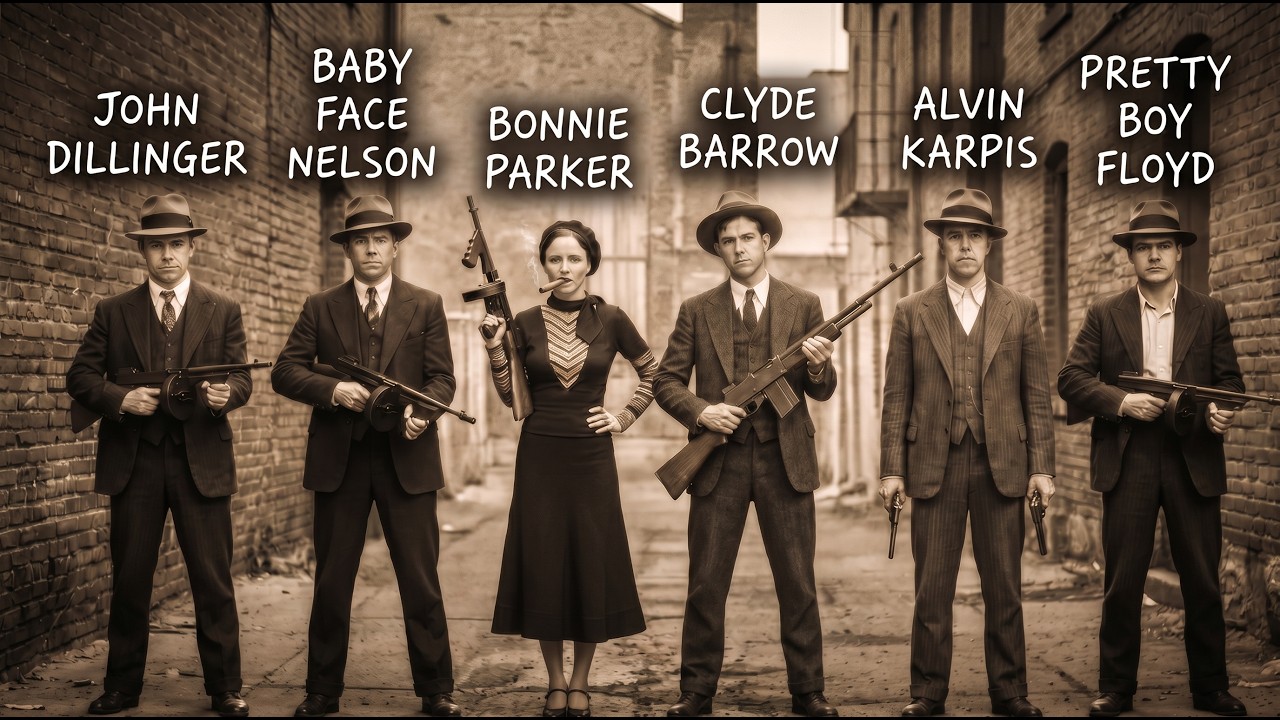
John “Red” Hamilton, Dillinger’s unluckiest lieutenant, was shot in the back during a chaotic getaway. Safe houses refused to take a bleeding, high-profile fugitive, so Hamilton spent his final days trapped in a back room, slowly rotting from gangrene while his crew watched him slip away.
When Hamilton finally died, Dillinger faced a brutal logistical reality. Leaving the body intact meant giving Hoover’s men a definite tracking lead.
Dillinger and his associates drove the corpse to a gravel pit. They used a hacksaw to chop off Hamilton’s right hand, the one missing two fingers from a childhood accident that earned him the nickname “Three Finger Jack.” They did this to throw off federal investigators.
Then they poured ten cans of raw, flesh-eating lye over his face and chest before burying him in the rapidly dissolving remains. Survival did not stop at your own skin. It meant erasing your friends, too.
Further south, Ma Barker’s boys and the rest of the Barker-Karpis gang were taking the same physical gamble. Alvin “Creepy” Karpis paid a notorious underworld surgeon named Dr. Joseph Moran to permanently remove his fingerprints.
Unlike Loeser’s acid method, Moran used a scalpel to physically slice the skin on the ridges of Karpis’s fingertips. The agony was immense, and the procedure was botched. The healing process left Karpis with smooth, sensitive scar tissue that made everyday tasks painful.
While outlaws like Machine Gun Kelly relied on clever disguises and the devastating firepower of a Thompson machine gun, the Karpis crew relied on raw mutilation. Moran’s medical failures eventually drove the gang to absolute paranoia. Believing the doctor knew too much and was becoming a liability, they executed him and dumped his body into Lake Michigan.
But fixing a face or a finger was nothing compared to the daily physical trauma endured by Bonnie Parker and Clyde Barrow. For them, survival meant keeping a broken squad moving at all costs.

In June 1933, Clyde rolled their stolen Ford V8 into a river basin in the Texas Panhandle. The car battery cracked open, pinning Bonnie underneath and bathing her right leg in raw acid.
The chemical burn was so severe that it ate down to the muscle, causing her leg to permanently curl inward and turning her toes into a claw. She could never walk on her own again.
To keep her alive and escape police search parties, Clyde carried her in his arms for eleven straight months, moving her to motels and across state lines. When they had to stand in public to blend in, Bonnie used sheer willpower to lean hard against car doors, fences, or people so locals would not realize she was a crippled fugitive.
Clyde’s own survival required extreme measures. To escape the brutal field work at Eastham Prison Farm, he used an axe to chop off two toes on his left foot. It got him off the fields, but it left him with a permanent limp for the rest of his life.
Clyde drove getaway cars strictly in his socks because wearing shoes hurt too much.
While Dillinger was altering his face and Clyde was driving in his socks, Pretty Boy Floyd was running his own desperate escape across the Midwest, pushing his body to the absolute limit.
But even Floyd’s endurance could not match the Barrow gang’s survival instinct, which reached a terrifying peak during a police siege at a Missouri tourist court.
Clyde’s older brother, Buck Barrow, took a bullet directly through the head. The round entered his left temple and exploded out the right side. By all medical logic, he should have died right there.

Instead, his wife, Blanche, bandaged his open head and loaded him into the car. They kept driving.
Five days later, while hiding out in an Iowa park, a posse cornered them again. Buck was completely incapacitated from severe blood loss and infection, but the rest of the crew actively traded gunfire with police to buy time.
When doctors finally captured Buck, they noted they had never seen a human being survive that long with that level of catastrophic brain trauma. He kept himself alive for nearly a week before finally succumbing to his wounds and a severe case of pneumonia.
Then there was Lester Gillis, known to the papers as Baby Face Nelson. He took the concept of fighting to survive to its absolute limit during a furious road chase outside Barrington, Illinois, on November 27, 1934.
Nelson went toe-to-toe with FBI inspectors Herman Hollis and Samuel Cowley. He was shot repeatedly by a devastating blast of federal buckshot and rifle rounds but refused to stop firing his weapon.
He killed both federal agents in a hail of gunfire, but his own lower body was completely shredded. The subsequent coroner reported nine separate entry wounds across his torso, seventeen total counting the one that went through his pancreas and liver.
Yet Nelson did not fall. Somehow, he climbed back into the car stolen from the agents he had just killed. John Paul Chase and Helen drove him all the way to his safe house in Wilmette, Illinois.
Every drop of his remaining life force went to getting his family to safety before he finally bled out on a bedroom floor hours later.
Even after his death, his crew’s survival protocols remained cold and calculated. Helen stripped his corpse and dumped him in a ditch, taking his clothes to burn the evidence and delay the Bureau from identifying his body.
That was the raw, terrifying reality of the 1930s underground. They did not just run from the law. They mutilated and tortured their own broken bodies to keep moving, because stopping meant a date with the electric chair.
The history books remember the fast cars and the Tommy guns. But the real story was written in blood and acid, at the absolute limit of what a human body could endure to stay free for one more day.