On January 30, 1933, Berlin witnessed the rise of a new chancellor. Adolf Hitler looked over the city from a window above the crowds, and the Nazi regime began to divide the nation into those who belonged and those who did not. The persecution of Jews, Roma, disabled people, and political opponents would be heavily documented on film. But one world the Nazis were about to destroy left behind very few images.
Not far from the marching columns, in the bars, cabarets, and crowded basements of the city, lived a community of men who loved other men. Within a few years, they would be hunted across Germany, arrested by the tens of thousands, and sent to prisons and concentration camps to wear the pink triangle. This is the story of gay men under the Nazi regime.
The law used against the gay community was Paragraph 175 of the German Criminal Code. Established in 1871, it made sexual relations between men a punishable offense. Despite this, gay communities formed, and by the years of the Weimar Republic, they were more visible than anywhere else in the world. Reformers campaigned publicly to abolish the anti-gay paragraph.
The Institute for Sexual Science, founded by German physician Magnus Hirschfeld in 1919 and based in Berlin, conducted pioneering research and lobbied for decriminalization. An active gay press also built a sense of community across the country. For a time, the Weimar Republic was a world of unusual freedom. It was precisely this freedom that the Nazis condemned as decadent and degenerate.
When Hitler was appointed chancellor, the dismantling of that world began almost immediately. One of the regime’s first actions was closing gay bars. Berlin’s famous Eldorado club was shut down within weeks, and Nazi posters were pasted over it. Gay newspapers and magazines were suppressed. Gay associations were forced to dissolve.
In May 1933, Nazi student mobs ransacked Hirschfeld’s institute and took its library to the street for public book burnings. Hirschfeld, who was abroad at the time, never returned to Germany. He died in exile in France in 1935. The networks built over decades were shattered within months of the Nazis taking power.
For a time, the regime’s hostility coexisted with an awkward fact. One of the most powerful men in the regime was openly gay. Ernst Röhm, head of the SA, the Nazi brown-shirted paramilitary force, did not hide his sexuality. Hitler defended his old comrade as long as it served his interests. Then, during the summer of 1934, in the purge known as the Night of the Long Knives, Hitler ordered Röhm and other SA leaders killed to settle political scores.
Afterward, Nazi propaganda used Röhm’s sexuality to justify the killings, exploiting a prejudice deeply rooted in German society. His death removed the last barrier to the campaign that was about to begin. That campaign was built on new tools.
In June 1935, the regime redrafted Paragraph 175, expanding its scope to cover a wide range of behaviors between men and raising the maximum penalty to ten years of hard labor. In 1936, Heinrich Himmler, head of the SS, established a central office within the criminal police to combat homosexuality and abortion. The Gestapo and the criminal police hunted gay men through bar raids, suspect lists, and above all, denunciations.
Neighbors, colleagues, or even relatives provided information about gay men. Under interrogation, which was often brutal, men were forced to name their partners and friends. In this way, the police dismantled entire networks, confession by confession. The scale was enormous. Around 100,000 men were arrested under Paragraph 175 during the Nazi years, and about half, nearly 53,000, were convicted.
Most served fixed prison sentences and were then released. The courts also introduced castration into Nazi law. Since late 1933, certain sex offenders could be castrated, and gay men held under Paragraph 175 could sometimes buy their freedom early by volunteering for the procedure. Many men were forced into it, although they were officially presented as volunteers.
One of them, Friedrich Paul von Grotheim, was among 230 men arrested by the SS in January 1937 in Lübeck. He was imprisoned for ten months. Shortly after his release, he was re-arrested, insulted, and tortured. The Nazis finally released him, but on one condition: he had to agree to castration. Friedrich Paul underwent the procedure.

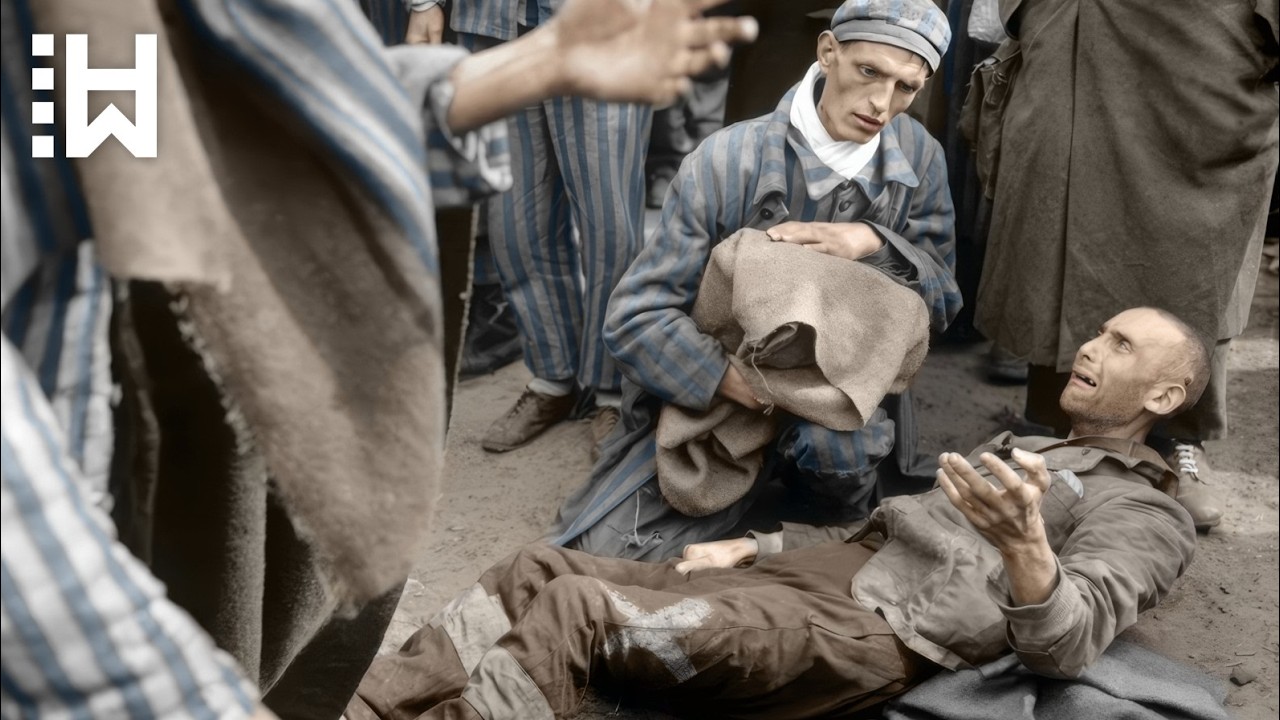
Some men were not sent to prison but directly to concentration camps as “guilty of homosexuality.” Between 5,000 and 15,000 men were imprisoned in the camps for this reason. They were marked with a pink triangle sewn onto their clothing. According to survivor testimonies, they were at the bottom of the camp hierarchy and among the most abused groups.
They were assigned the most grueling work, including the notorious Klinkerwerk brickworks, a subcamp of Sachsenhausen concentration camp. Gay men in the camps were beaten and humiliated. Even other prisoners shunned them, fearing association, and these prisoners controlled the small mutual aid networks on which survival often depended.
A young Austrian named Josef Kohout, arrested in 1939 at age 24 after a postcard he sent to his lover was intercepted, left one of the few direct accounts of this isolation. He recalled how men in his unit at Sachsenhausen were forced to sleep with their hands outside the blankets in freezing cold. Those who disobeyed had water poured on them and were left standing outside. Many prisoners fell ill after such treatment, and few survived. He described Sachsenhausen as “Auschwitz for homosexuals.”
The death rate matched this kind of treatment. The exact number of gay men who died in the camps is unknown, but some sources estimate that about 60 percent of pink triangle prisoners did not survive. Some died from overwork. Some were shot. Others were used in inhuman Nazi medical experiments.
At Buchenwald concentration camp, Danish SS doctor Carl Vaernet, working under Himmler’s personal patronage, performed surgeries on gay prisoners among others. He implanted capsules intended to release testosterone and cure their sexual orientation. As expected, the experiments achieved nothing, and many of these men died. Starting in November 1942, camp leaders could issue orders for forced castration of pink triangle prisoners directly. Vaernet himself was never tried by the Allies. After the war, he fled to Argentina and died in Buenos Aires in 1965.
Within this system of persecution, gay men adapted in any way they could. Those with money or influence hid their lives, cut ties with friends, moved away, or entered marriages of convenience with women. Their options depended heavily on how the regime classified them. A gay man classified as “Aryan” had more options and a better chance of survival than a gay Jewish or Roma man targeted for death on racial grounds.

Some gay men joined the resistance against the Nazi regime. Willem Arondeus, a gay artist in the Dutch resistance, helped lead the March 1943 attack on the Amsterdam population registry. His group set fire to the records to destroy the files used by the occupiers to identify Jews and other persecuted people. Although the attack succeeded and the resistance destroyed part of the German records, Arondeus’s group was soon betrayed and arrested.
To protect the others in the group, Willem Arondeus took full responsibility and was sentenced to death. Before his execution in July 1943, the 48-year-old’s last words were: “Tell the people that homosexuals are not cowards.”
In the spring of 1945, Allied soldiers liberated the concentration camps and freed the prisoners, including those wearing the pink triangle. But the end of World War II in Europe in May 1945 and the defeat of the Nazi regime did not necessarily bring a sense of liberation for gay men. They remained marginalized in German society even after the war. Sexual relations between men remained illegal in Germany for most of the 20th century.
This meant that many men serving sentences for violating Paragraph 175 remained in prison after the war. Many others were convicted in the postwar era. Homosexuality was decriminalized in East Germany in 1968 and in West Germany in 1969. But the paragraph was not fully removed from the books until 1994.
For decades after the war, gay victims of Nazi persecution remained largely unrecognized. The German state did not acknowledge them as victims until the 1990s. Their wartime convictions were not overturned until 2002. The story of gay men under Nazism is therefore not just a story of persecution, imprisonment, and death. It is also a story of silence.
The Nazis destroyed a world that had begun to imagine a different future, and postwar Germany refused for decades to see the men destroyed with it. Their suffering did not fit easily into the stories nations wanted to tell about liberation, resistance, and reconstruction. Many survived the concentration camps only to return to a society that still treated them as criminals.
The pink triangle, once sewn onto their clothes as a mark of shame, became a symbol of remembrance and defiance. But that remembrance came late. It asks us to remember not only those who perished, but also those who lived long enough to discover that even after the fall of the regime that persecuted them, justice could be delayed for nearly a lifetime.