A 24-year-old TikTok comedian was shot and killed on August 4, 2026, while live streaming a harmless social media challenge with two friends outside a KFC in the Tres Ríos neighborhood of Culiacán, Mexico. The victim, Sar Gastélum, known online as César, had built a following of more than 650,000 people through comedy videos and live streams. According to Mexican media and Reuters, a motorcycle passed the group at around 8:15 in the evening. Gastélum noticed it and expressed concern on camera, telling his friends, “They scare me.
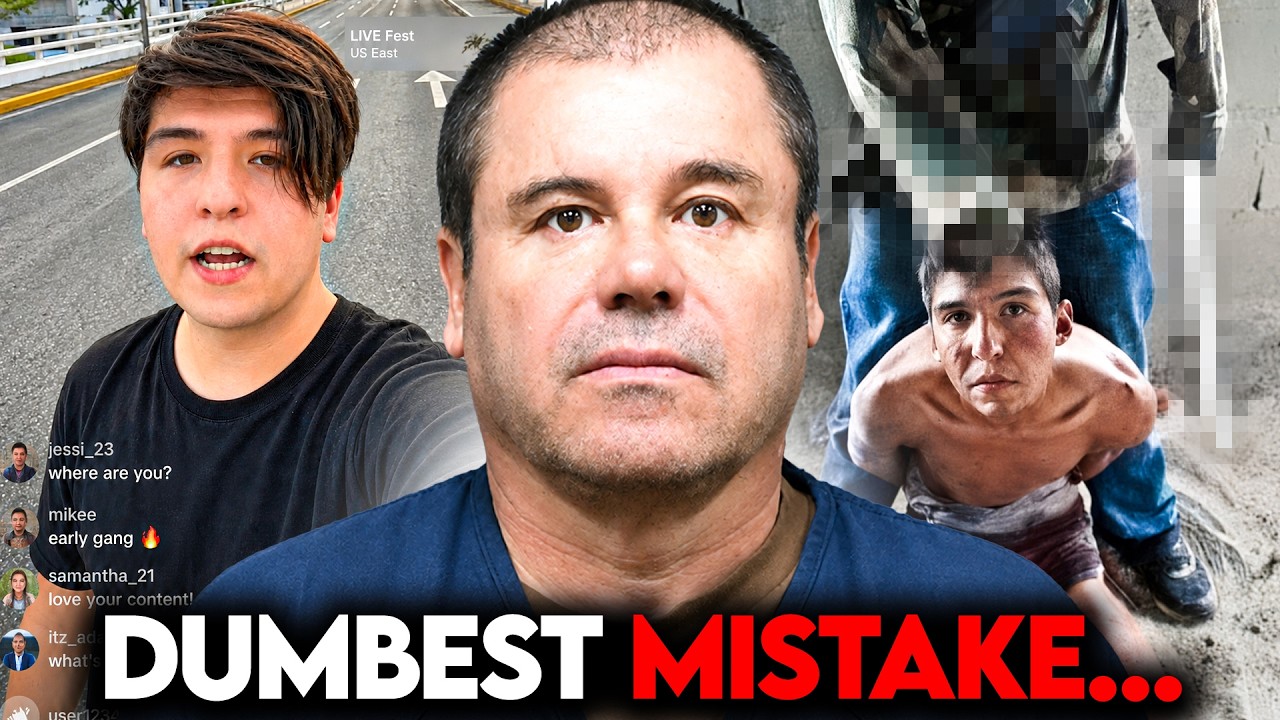
” The motorcycle returned, and the passenger stepped off, pulled out a pistol, and shot Gastélum in the head at point-blank range on camera. His friends were not physically injured, but Gastélum died from his wounds. The live stream, which had been showing an ordinary evening in Culiacán, became the visual record of his killing. The following morning, candles were placed near the spot where he was killed, and soldiers stood guard while forensic technicians worked the scene.
Mexico’s federal security cabinet said authorities were investigating whether the attack may have been related to posts Gastélum had published on social media, some of which they said made reference to a faction of a criminal group. Federal authorities were working alongside Sinaloa state officials on the investigation. Culiacán has been the center of an intense internal conflict within the broader Sinaloa cartel landscape, specifically between the Los Chapitos faction associated with the sons of Joaquín “El Chapo” Guzmán and the MZ faction associated with Ismael “El Mayo” Zambada. The conflict has generated widespread violence across the city and the broader Sinaloa region since the rupture between the two sides following the surrender of El Mayo Zambada to US authorities in July 2024.
Authorities saying they are investigating whether Gastélum’s posts referenced a criminal faction is not the same as establishing that he was a cartel member or that his killing was definitively ordered by a specific organization. What investigators were saying publicly was that they were looking at whether his online content had made him a perceived partisan in a conflict that has killed hundreds of people. Gastélum’s case is especially striking not just because of the circumstances of the killing itself, but because it happened in front of his audience, turning his last moments into a permanent digital record. A case that became the first truly international signal of this pattern occurred in May 2025 and involved 23-year-old Valeryia Márquez, who ran a beauty and lifestyle platform on TikTok with more than 113,000 followers and maintained an Instagram presence with more than 220,000.
She had built her public profile beginning in 2021 after winning the Miss Rostro beauty pageant and had since grown into a creator known for makeup tutorials, personal care content, fashion, and glimpses of her travels. She owned and operated a beauty salon called Blossom the Beauty Lounge in Zapopan, Jalisco, a municipality on the outskirts of Guadalajara. On May 13, 2025, she was inside her salon doing what she did regularly: going live on TikTok for her audience. Hours before the attack, two men had arrived at the salon claiming they had an expensive gift that needed to be delivered to Márquez personally.
She was not there at the time. They left when she began her live stream later that evening. She mentioned on camera that she was worried about why those men had appeared with that story. According to accounts of the live stream reviewed by multiple news organizations, her concern was visible and real.
Then the men came back. A voice off camera addressed her by name. She answered yes. Seconds later, she was shot once in the chest and once in the head by a masked gunman who had entered the salon.
Prosecutors said she died instantly. The gunman fled on a motorbike with an accomplice. Her audience, watching a beauty live stream, witnessed the attack without any warning or ability to intervene. Mexican President Claudia Sheinbaum extended condolences to Márquez’s family and said her administration was working with local prosecutors to track down the killer.
Jalisco state prosecutors investigated her death under femicide protocols, which under Mexican law apply when a woman is killed because of her gender. The Jalisco New Generation Cartel maintains firm control over much of Jalisco, which ranks among the most violent Mexican states. The same day Márquez was killed, a former congressman was shot dead just 2 km away. In late July 2026, Mexican authorities arrested Ramiel Lárraga Ayala, known as LR1, described in reporting as a major figure associated with the cartel.
The alleged connection investigators established was that Márquez had been romantically involved with Francisco, the son of LR1. According to investigators cited in public reporting, Francisco had allegedly threatened Márquez before he allegedly sought his father’s involvement in the escalating situation. This remains an investigative allegation that will ultimately be tested through the legal process, but it transformed the public understanding of her case. What had seemed like a cartel attack on a beauty influencer turned out, in the investigative narrative, to involve a personal relationship and family dynamics that her online audience had no way of knowing about.
Rafael Lozano Rosales, known by the nickname El Penadito, represents a different profile within this pattern. He described himself on his social media accounts as a businessman, farmer, marathon runner, and world traveler. His content was built around luxury vehicles, high-end shopping, global travel, and the visual language of wealth. He was shot on June 4, 2024, outside a car dealership in Culiacán.
According to the CNN media database, he was the first of nine influencers identified in Sinaloa by that review, which means his killing was in some sense the opening chapter of the pattern that eventually culminated in Gastélum’s death more than two years later. The exact circumstances of his killing and the specific motivation behind it have not been publicly established with the same level of investigative detail as the Márquez case. What is established is that he was killed outside a car dealership in the city that would become ground zero for influencer-targeted violence over the following two years. Gael Castro had a different kind of connection to the influencer world.
He was the brother of Marcos Castro, better known online as Marquitos Toys, one of the most prominent regional YouTubers in Mexico. With a channel approaching 5 million subscribers built around luxury cars, extravagant lifestyle content, and the social circle that surrounded him in Sinaloa, Marquitos Toys became one of the most discussed and most controversial figures in discussions about the intersection of social media and cartel proximity in Mexico. He has consistently denied any criminal connections. Gael Castro was killed in Ensenada, Baja California, in March 2025.
According to reporting, he was shot more than 15 times in the stomach and chest outside a luxury hotel, dying in front of members of his family. A suspect was later linked to the case through judicial proceedings. Whether his killing was related to his brother’s online profile, to other circumstances, or to something else entirely has not been definitively established in the public record. Juan Carlos López, known as El Chilango, was a local social media personality in Sinaloa who combined comedy with regional cultural aesthetics.
He was among a series of creators in Sinaloa who were targeted in the period following September 2024. The circumstances of his death, as with several of the others in this group, were reported by local Mexican media but have not received the same level of international investigative detail as the Gastélum and Márquez cases. José Miguel Vivanco Gara, known online as El Kasper; Leonardo Ispuro, known as El Gordo Peruchi; and Agustín Paul Duarte, known as El Pinky, were also part of the nine influencers documented in Sinaloa since 2024. According to reporting by El País and CNN, several of these victims were not killed in public or during live streams.
They were abducted directly from their homes or workplaces. Their bodies were later abandoned in public spaces, and reporting indicated that many showed signs of torture before death. These were not drive-by shootings or attacks of opportunity in public locations. They were targeted operations that involved locating the person, taking them, and making a deliberate statement.
Beyond those three, the CNN media review also documented three additional influencers among the nine killed in Sinaloa since 2024: Alberto P, known as El Tata; Víctor Manuel, known as El Brasileño; and Gerardo Moya, known as El Jerry. Each of them was part of the regional content ecosystem in Culiacán, and each became a name on a list that kept growing across a two-year period. What connects these cases is not a single organization, a single motive, or a single type of content. What connects them is visibility.
Each of these people had built some kind of public platform in a region where criminal organizations have a specific interest in knowing who has influence, who has relationships, and what those people are saying. In several cases, that visibility became a factor in their deaths. The phrase “messed with the cartel and found out” is internet language, not investigative language. It carries an implication that the victims did something that deserved a consequence, which is a morally dishonest framing of what actually happened.
Some of these people may have posted content that was interpreted as partisan within a factional conflict, as authorities alleged in Gastélum’s case. Some may have been killed because of private relationships that intersected with criminal organizations, as the Márquez investigation suggests. Some may have been killed for reasons that investigators and the public still do not fully understand. The role that TikTok live streams specifically played in two of these cases transformed them from local tragedies into international incidents.
When Gastélum noticed the motorcycle and expressed concern on camera, his audience was watching that concern. When Márquez heard the men arriving at her salon, her audience was watching her fear. And then in both cases, the live stream continued for seconds or minutes after the violence while the audience tried to understand what they had just seen. Within hours of a killing, users begin searching through archived posts, old videos, tagged photographs, and past live streams looking for explanations.
Sometimes, this process surfaces genuinely useful context. More often, it produces theories that spread faster than any official investigation. In the Gastélum case, theories about which faction his content supported circulated widely before authorities had released any statement. In the Márquez case, theories about cartel connections preceded by months the arrest that actually linked the case to a specific individual through an alleged personal relationship.
The flyers reportedly dropped from small planes over Culiacán earlier in the conflict listed names, including names of influencers and content creators, as though the conflict’s organizers were making lists and checking them against the public record that social media provides. The pattern of killings in Sinaloa between 2024 and 2026 also changed the behavior of other creators working in the region. Some became significantly more cautious about what they posted and who they tagged. Some stopped creating content in certain categories.
Some limited their public appearances. Some relocated. The violence against influencers functioned, whether intentionally or not, as a form of social pressure on anyone with public visibility in the region. The Sinaloa killings were documented by CNN, by the organization ACLED, and by local investigative journalists.
Conflict monitoring data cited by CNN identified at least 20 targeted attacks against influencers in Sinaloa since 2024, with at least 14 people killed. A CNN media database review identified nine prominent local influencers killed in Sinaloa alone since 2024. The cases summarized here are not connected by one single cause. None of the victims were the same kind of creator.
None of their cases are identical. What they share is a collision between online life and real-world violence that cannot be fully explained by any one theory. Sar Gastélum was 24 and made comedy. Valeryia Márquez was 23 and made beauty content.
They were people. They built something, and then they were killed in circumstances that investigators are still working to fully understand.