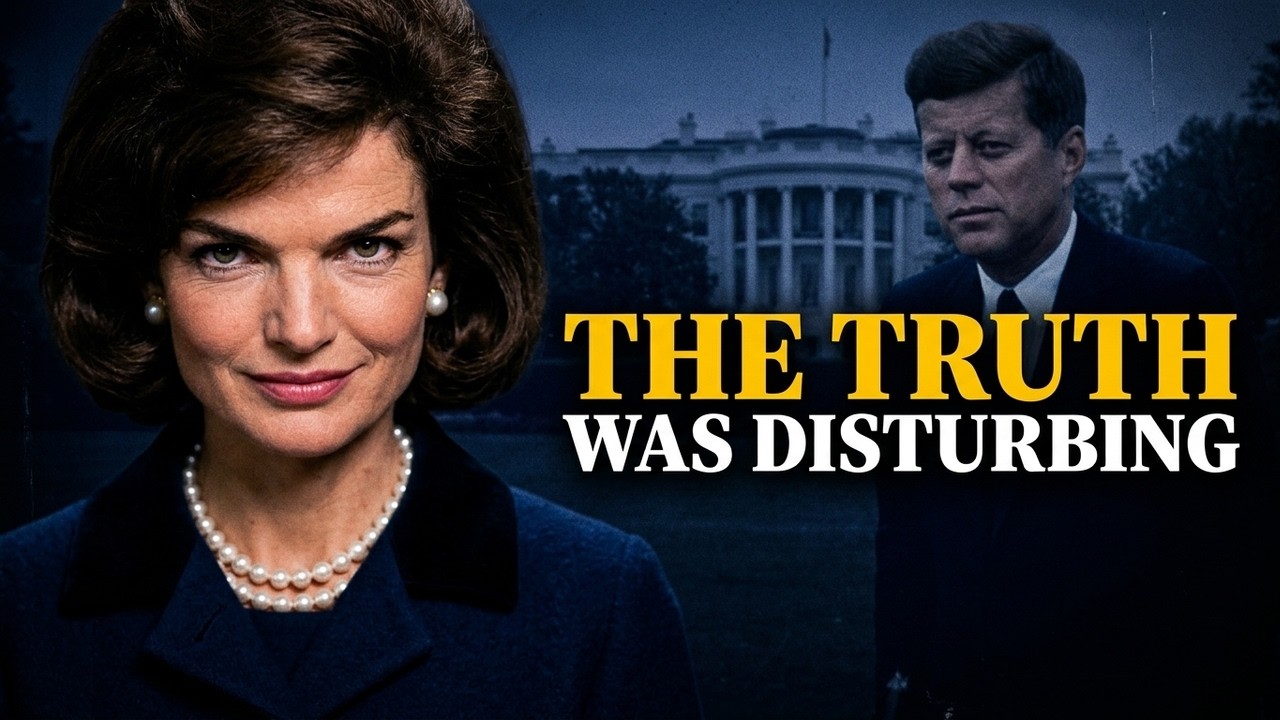
Jacqueline Kennedy’s public image was nearly indestructible. She was elegance under pressure, the widow who carried herself with a dignity that felt almost regal. But in 1964, just months after Dallas, she sat down with historian Arthur Schlesinger Jr. and recorded seven hours of interviews. The tapes were sealed for decades, with instructions that they not be released until long after her death.
When portions finally surfaced in 2011, they revealed a voice no one had heard before. She spoke about her marriage with a coldness that startled listeners. She discussed political rivals with calculated contempt. She admitted to manipulations, to performances, to a lifetime spent constructing the woman the world wanted to see while someone else entirely lived behind her eyes.
To understand what those recordings truly revealed, we have to go back to where it all began. East Hampton. Jacqueline Bouvier spent her summers there, where the Bouvier estate sat on Lily Pond Lane among the highest tier of New York society. Her father, John Vernou Bouvier III, was called Blackjack for his year-round tan and dark good looks. He made $50,000 a year as a stockbroker in the 1930s, when most families survived on $1,600.
The money bought riding lessons, French tutors, and debutante gowns. But inside the house, her mother Janet’s voice cut through rooms like a blade. Blackjack would disappear for days, then return with lipstick on his collar and the smell of perfume that wasn’t Janet’s. Jackie was eight years old when she learned to pretend she hadn’t noticed.
The divorce came in 1940, vicious and public. Janet cataloged every affair in court documents, and the society pages ran with it. Jackie and her sister Lee watched their mother transform overnight, hardening into something sharp and strategic. She remarried within two years to Hugh Auchincloss, whose family fortune dwarfed the Bouviers.
Blackjack showed up drunk to Jackie’s wedding rehearsal in 1953. Not tipsy, but fully incoherent, weaving through the church while 200 guests watched. Her mother made the call. He wouldn’t walk her down the aisle. Jackie went through with the ceremony the next day, smiling for photographers while her father sat alone in a hotel room 12 blocks away.
Throughout her teenage years, she had watched him show up late to pick her up from school, slurring excuses. She had seen him pour attention on women half his age at country club dinners while her mother’s friends whispered. By 16, she had learned to call ahead to wherever he was staying to gauge how drunk he was before agreeing to visit.
Other daughters might have broken under that weight. Jackie did something different. She studied him. She watched how he charmed his way out of consequences, how he performed vulnerability to earn forgiveness, how he wielded his good looks and family name like shields. She cataloged which lies worked and which ones didn’t.
She enrolled at Vassar in 1947 with grades good enough to impress and a wardrobe calculated to stand out. While other girls studied, Jackie studied them. She watched which gestures made men lean in, which silences created intrigue, which questions made someone feel clever. Her junior year abroad at the Sorbonne wasn’t about art history. It was about acquiring a European polish that American money couldn’t buy.
Back in Washington, finishing her degree at George Washington University, she took a job as the inquiring camera girl for the Times Herald, earning $42.50 a week to ask strangers questions and photograph their answers. But the real education was watching senators and congressmen perform for her lens, seeing how power moved through rooms, learning who mattered and who only thought they did.
She turned down a stockbroker in 1951. Comfortable family, predictable future, a life her mother would approve of. Jackie said no without hesitation. She wasn’t looking for comfort. And then she met someone who could give her exactly what she wanted, if she could survive him.
The dinner party was in May 1952, hosted by journalist Charles Bartlett and his wife. John F. Kennedy was 34, a congressman angling for the Senate and already famous for two things: his war hero story and his inability to stay faithful to anyone for longer than a weekend. Jackie was 22. She had done her research.
She knew about the actresses, the models, the Senate secretary he had been seeing. She knew his father had bankrolled his entire political career and expected a return on investment. She knew Jack’s back injury left him in constant pain, that he popped pills to get through the day, that his health was worse than the family admitted.
The courtship lasted 16 months, but calling it romance misses the point. It was negotiation. He needed a wife who could smooth his reputation, photograph well, and not complain about the parts of his life she wouldn’t be invited into. She needed access to a kind of power her beauty alone couldn’t buy. When he proposed in June 1953, she accepted in under 10 seconds.
The September wedding drew 800 guests and 3,000 spectators outside the church. The wedding photos looked perfect, but the honeymoon revealed a truth she would spend decades managing. They were in Acapulco for six days. On day three, Jack disappeared for seven hours with no explanation. He came back sunburned and distracted, smelling like someone else’s perfume.
Jackie unpacked her suitcase in silence, then repacked it with the same methodical calm she would use for the rest of her marriage. She didn’t cry. She calculated.
The affairs weren’t subtle. There was a journalist in 1954, an actress in 1955, a campaign volunteer in 1956. Jackie knew their names. Sometimes she knew before they did. Watching Jack’s pattern, the way his attention would snag on a woman across a room and lock, his staff learned to seat pretty girls far from the senator at dinners. It didn’t matter. He would find them after.
She could have left. Her mother begged her to during the first year, offered to quietly arrange everything and protect her reputation. Jackie refused. Divorce meant returning to her mother’s world, to the East Hampton circuit, to men like the stockbroker she had already turned down. Staying meant power. It meant access. It meant she could build something bigger than her father’s failures or her mother’s compromises.
So she made a choice that looked like surrender but wasn’t. She would tolerate the humiliation in private. In public, she would be flawless. She would make herself so essential to his image that he would need her more than any of the women he discarded.
On August 23rd, 1956, Jackie went into labor at Newport Hospital five weeks early. Jack was on a yacht in the Mediterranean with his friend George Smathers and a rotating cast of women. The baby, a girl they would have named Arabella, was stillborn. Jackie woke from emergency anesthesia alone. No husband at her bedside, no explanation.
Her mother had to track Jack down through three countries before he agreed to fly back. By the time he arrived, three days later, the baby had already been buried in an unmarked grave. She didn’t cry when he walked into the hospital room. She watched him fumble through an apology, watched him touch her hand like he was fulfilling an obligation, and something inside her went cold and sharp.
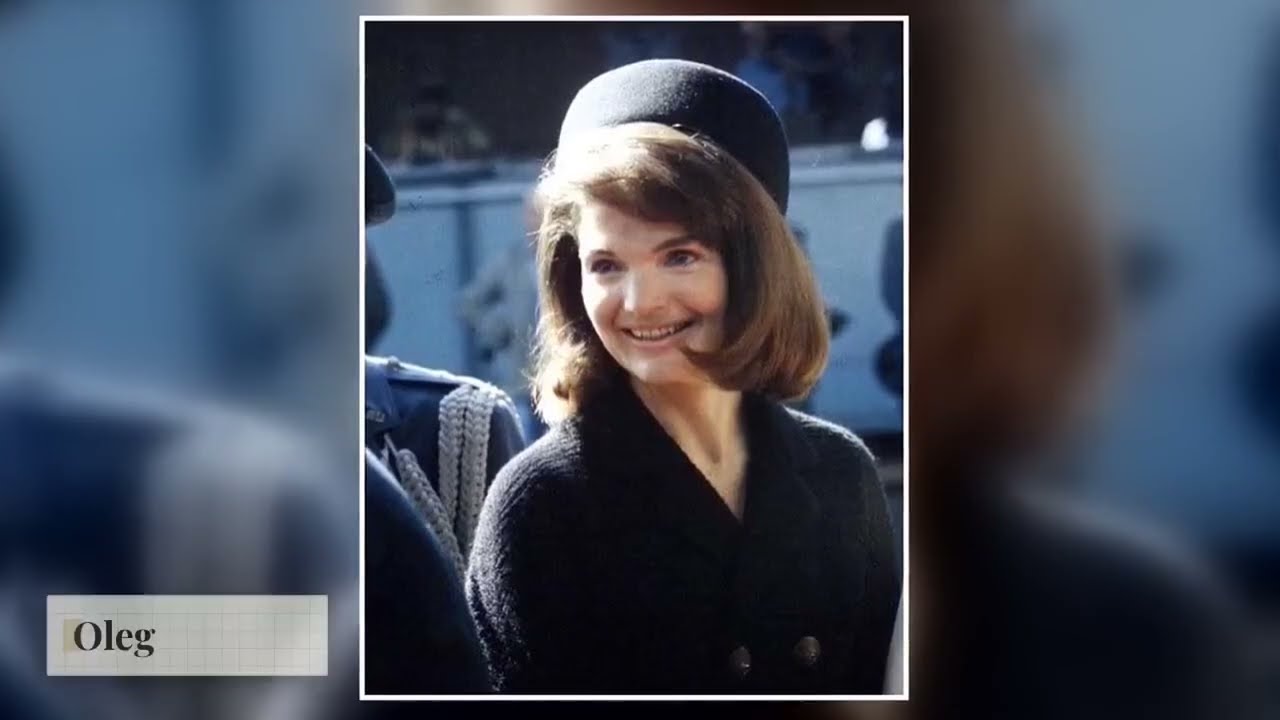
Within six months, Jackie hired a voice coach. Her breathy debutante whisper, the one that made her sound like a child, was refined into something softer, more enigmatic. She studied the way Grace Kelly moved on camera, the way Audrey Hepburn held silence. Her wardrobe became a weapon. She abandoned the fussy prints and pearls every politician’s wife wore and built a uniform: clean lines, bold colors, pillbox hats.
Oleg Cassini designed most of it. But Jackie controlled every detail. She understood that if she looked like no one else, people would remember her and not the scandals swirling around Jack. She gave interviews in French, hosted salons with writers and artists, made herself into an intellectual ornament. But she was careful. She never overshadowed Jack, never spoke about policy, never hinted at the transactional core of their arrangement.
The 1960 campaign started in January and didn’t stop. Forty-four states, 200 events, handshakes until her fingers went numb. Jackie hated every mile of it. She found the crowds suffocating, the small talk degrading, the other political wives shallow and mean. She called the campaign a traveling circus and refused to pretend otherwise in private.
When an event bored her, or the schedule felt punishing, she would develop a headache, a pulled muscle, anything plausible. Her doctor would confirm it. She would stay at the hotel, read, paint, disappear. Jack’s team fumed, but they couldn’t force her. She had learned that the more elusive she was, the more the press wanted her.
She showed up for the moments that mattered. The televised debates, the big rallies, the photo ops that would run in Life magazine. She smiled, waved, played the devoted wife with surgical precision. But in the car between stops, she would light a cigarette and stare out the window in silence, counting the days until it was over.
She walked into 1600 Pennsylvania Avenue in January 1961 and saw a tired museum decorated like a mid-tier hotel. Within 48 hours, she had assembled a committee of curators and historians. The project wasn’t restoration. It was resurrection. She hunted down original Monroe furniture in government warehouses, convinced wealthy collectors to donate pieces from the Lincoln and Madison administrations, and strong-armed Congress into creating permanent protections for White House artifacts.
In February 1962, she invited CBS cameras in for a televised tour. Fifty-six million people watched her walk through the Blue Room, explaining the provenance of a French settee. Her voice was soft but precise. She wasn’t decorating. She was building a stage where American power could perform European sophistication, where her taste became indistinguishable from national identity.
She hosted Pablo Casals, invited Nobel Prize winners to state dinners, and made the White House a place where intellectuals mattered as much as senators. It was strategic, ruthless cultural warfare dressed as hospitality.
But while she was staging perfection for the public, the private chaos was accelerating. Marilyn Monroe called the private line. Judith Campbell Exner carried messages between Jack and a Chicago mobster, sleeping with both. The Secret Service logged models, socialites, and White House secretaries slipping into the residence while Jackie was traveling, which she did constantly, and not by accident.
In the spring of 1962, she returned early from a trip to find a woman’s stockings in their bedroom. She didn’t scream. She walked into his office, dropped them on his desk, and asked one question. His answer was five words: “I’m never going to stop.”
She could have left. She could have leaked, divorced, destroyed him. Instead, she bought a weekend estate in Virginia horse country, a place he rarely visited. She traveled to India, Pakistan, Italy, Greece, always with photographers, always looking serene. The humiliation became fuel.
On August 7th, 1963, she went into premature labor at 34 weeks. Patrick Bouvier Kennedy was born by emergency cesarean, weighing 4 pounds 10 ounces. His lungs were not fully formed. They rushed him to Boston Children’s Hospital and placed him in a hyperbaric oxygen chamber. Jack stayed at the hospital, pacing outside the chamber, pressing his hands against the glass. For 39 hours, he didn’t leave.
On August 9th, Patrick died of hyaline membrane disease. Jack broke down in a way none of his aides had seen before. He cried openly, canceled meetings, and sat with Jackie in silence for hours. She watched him grieve and felt something crack. Not forgiveness exactly, but recognition. They both had spent years performing different versions of themselves. And here, finally, was something real.
They talked more in those two weeks than they had in years. He was gentler, more present. She let herself imagine a different future, one where Patrick’s death became the turning point, where shared loss rebuilt what ambition had destroyed. That moment of shared sorrow would haunt her for one specific reason. What came exactly three months later.
Dallas was 80 degrees and bright. The motorcade crawled through Dealey Plaza at 11 mph. Jackie, in her pink Chanel suit, waved at crowds who had waited hours in the sun. At 12:30 p.m., the crack of gunfire echoed off the buildings, and in eight seconds everything collapsed.
She cradled his shattered head in her lap as the limousine raced to Parkland Hospital, blood soaking through the pink wool. The Secret Service tried to clean her up, offered her fresh clothes. She refused. “Let them see what they’ve done,” she said, and wore that bloodstained suit for the next five hours through the oath of office aboard Air Force One.
Within 24 hours, Jackie was planning the funeral with the precision of a Broadway director. She sent an assistant to the Library of Congress to pull every detail of Abraham Lincoln’s funeral procession. The horse-drawn caisson, the riderless horse with boots reversed in the stirrups, the eternal flame at Arlington, the lying in state under the Capitol rotunda. Nothing was accidental.
She insisted on walking the eight blocks from the White House to St. Matthew’s Cathedral. No closed car. Foreign dignitaries and heads of state trailed behind her in the street. Two hundred twenty million Americans watched on television. John Jr. saluted his father’s casket on his third birthday, a moment Jackie had quietly rehearsed with him the night before.
A week later, she gave Theodore White a single interview for Life magazine and handed him the narrative whole. Camelot. The shining moment. The president who loved musical theater and Arthurian legend. White wrote it down exactly as she dictated. She had transformed a philandering politician into a martyred king in six days.
In March 1964, just four months after Dallas, Jackie sat down with historian Arthur Schlesinger Jr. in her Georgetown living room and started talking. For eight hours across multiple sessions, she recorded oral history interviews meant to cement Jack’s legacy. Schlesinger asked careful questions. She answered with startling candor.
The agreement was ironclad, sealed for 47 years, not to be opened until 2011, long after she would be gone. She talked about Jack’s rivals, about Lyndon Johnson, about the women, about her own marriage. The bitterness came through, unfiltered.
In the 18 months after Dallas, Robert Kennedy visited Jackie’s Georgetown home almost daily, sometimes staying until 2 or 3 in the morning. They would walk together, talk for hours, and the staff noticed something nobody dared speak about out loud. Letters between them, released decades later, carried an intensity that went beyond grief. He signed them “with all my love.” She wrote that he was the only person who understood her.
Then Bobby announced his run for president in March 1968. The visits slowed, then stopped. His focus shifted to crowds in California, strategy sessions in hotel suites, a future that didn’t need a widow clinging to the past.
Aristotle Onassis had been circling since 1963. The Greek shipping tycoon, 23 years older than Jackie, owned a fleet of tankers, a private island, and a fortune estimated at $500 million. He had invited the Kennedys onto his yacht, the Christina, in October 1963, just weeks before Dallas. After Jack died, Onassis sent flowers every week.
In 1967, the courtship intensified. He flew her to Skorpios, showed her the pink villa overlooking the Ionian Sea, and made an offer that had nothing to do with romance. What Jackie wanted wasn’t love. It was escape, money that couldn’t be controlled by the Kennedys, and a fortress no American tabloid could penetrate.
Bobby died on June 6th, 1968, 26 hours after Sirhan Sirhan shot him in a Los Angeles hotel kitchen. Jackie flew to the hospital, stood in another waiting room, and watched another Kennedy widow collapse. Two funerals in five years. The pattern was unbearable, but her grief was tangled with something colder. Bobby’s death meant the last Kennedy brother who could shield her was gone.
Three months later, in September 1968, she told Ted Kennedy she was marrying Onassis. He begged her to wait, warned her it would destroy the mystique, even offered to increase her trust fund. She refused.
On October 20th, 1968, Jackie married Aristotle Onassis on his private island of Skorpios. She was 39. He was 62, short, jowled, and one of the richest men alive. The world reacted with visceral disgust. The Vatican newspaper called it a public sinner marrying a divorced man. A Swedish paper ran the headline, “Jackie, how could you?” The London Evening Standard was blunter: “America has lost a saint.”
But Jackie had signed a prenuptial agreement 170 pages long. It guaranteed her $3 million upfront, plus $1 million for each of her children. If the marriage lasted five years, she would receive another $200,000 annually for life, regardless of who filed for divorce. The prenup stipulated separate bedrooms from the start. Jackie would maintain residences in New York and Paris. Onassis would cover all expenses, clothing, and staff with no upper limit. There was no fidelity clause.
Aristotle Onassis had been in love with Maria Callas since 1959. The opera singer was volcanic, dramatic, everything Jackie was not. He had ended their public relationship to marry Jackie, but he never ended the affair. In 1970, Jackie arrived unannounced at Onassis’s Paris apartment and found Callas there. She didn’t scream. She didn’t leave. According to one household staff member, she poured herself a drink, sat down, and asked Callas about her upcoming performance schedule.
Onassis flaunted Callas at Athens restaurants while Jackie was in New York. He seated Callas in Jackie’s usual chair on the Christina. When reporters asked Jackie about the affair, she smiled and said, “Ari is Greek. They need more than one woman.”
In the first two years of the marriage, Jackie burned through $5 million on clothes alone. Valentino suits at $8,000 each, 40 pairs of shoes from Gucci in a single afternoon, jewelry from Van Cleef that required armored transport. Ari’s accountant tracked every invoice. When he confronted her in Paris with a stack of bills totaling $12 million for a six-month period, Jackie looked at him and ordered another fur.
Christina Onassis called her “the black widow” to her face. Ari’s daughter was 18 when the marriage began, and she made her hatred clear at every family gathering. She would seat Jackie at the far end of the table on Skorpios, exclude her from conversations in Greek, tell servants to ignore her requests. When Christina attempted suicide in 1970, she told doctors it was because of what Jackie had done to their family.
Jackie worked on Ari in private, whispered concerns about Christina’s stability, questioned her judgment, slowly turned father against daughter. By 1973, Christina wasn’t speaking to her father. The staff on Skorpios called it the war between the wives.
Myasthenia gravis destroys the connection between nerves and muscles. By January 1975, Aristotle Onassis couldn’t hold a pen or lift a glass. His eyelids drooped, his speech slurred, and the man who had commanded shipping empires needed help to walk. He was in the American Hospital in Paris, and Jackie was in New York. She spent 38 of his final 45 days shopping on Madison Avenue.
When friends asked why she wasn’t with him, she said Christina was there, that the family needed space. But she told her sister something colder. She said she was waiting. He asked for her twice in those final weeks. She didn’t come.
On March 15th, 1975, Aristotle Onassis died with Christina holding his hand. Jackie was at lunch at La Côte Basque when she got the call. She finished her meal.
Christina Onassis wanted Jackie gone from the family fortune. Jackie wanted everything she could take. The prenup gave her $200,000 a year. She demanded $20 million immediately. Her lawyers pointed to Greek law, which entitled a widow to 12.5% of the estate regardless of any contract. That meant nearly $125 million.
The negotiations stretched for 18 months. Jackie’s team made it clear she would use every weapon, including her status as Kennedy’s widow, to pressure the family publicly. Christina finally broke. The settlement came to $26 million, plus another $6 million for immediate taxes and expenses. Jackie signed the papers in September 1977.
In 1975, while still married to Ari, Jackie had walked into Viking Press and asked for a job. Not a ceremonial position, a real editorial role. Four days a week, $10,000 a year. She got a desk, a phone, and a pile of unsolicited manuscripts. She moved to Doubleday in 1978 and stayed for 16 years.
She acquired books on dance, Russian culture, photography. She edited Michael Jackson’s autobiography, though the collaboration famously fell apart. She championed Gelsey Kirkland’s memoir and brought in authors who never imagined Jacqueline Kennedy Onassis would fight for their work in editorial meetings. Her colleagues described someone meticulous, curious, surprisingly willing to defer to other editors when she didn’t know something.
She took the subway to work. She ate lunch at her desk. The woman who had spent decades as an object of fascination had found a role where she could be the one asking questions, shaping narratives, deciding what mattered.
Maurice Tempelsman was a Belgian-born diamond merchant, financially comfortable, politically connected, and married. He had known Jackie socially for years. By 1980, he had quietly separated from his wife, though he never divorced, and moved into Jackie’s orbit in a way that felt more like partnership than romance.
He managed her investments, turning the Onassis settlement into a fortune estimated at $100 million by the time she died. They traveled together, attended events, spent weekends at her estate on Martha’s Vineyard. He was Jewish, an intellectual, uninterested in the spotlight. The relationship lasted 15 years. There were no wedding rumors, no media frenzy, no performance.
On July 19th, 1986, Caroline Kennedy married Edwin Schlossberg in a ceremony Jackie orchestrated down to the napkin fold. He was 41. Caroline was 28. And Jackie had opinions about everything. The dress, the guest list, the flowers, the timing. She wanted it perfect, which meant she wanted it controlled.

In 1992, John F. Kennedy Jr. started dating Madonna. She was the biggest pop star on the planet, photographed in her underwear, built on provocation. Jackie was horrified. This wasn’t some society girl she could charm or intimidate. This was a brand, a spectacle. Everything Jackie had spent 30 years keeping away from the Kennedy name.
Friends were deployed to talk sense into John. Invitations were extended, then quietly withdrawn when Madonna’s name came up. Jackie played the long game, the guilt card, the legacy card. She reminded John what the name meant, what his father would have thought, how certain choices closed certain doors. It worked. By early 1993, the relationship was over.
Carolyn Bessette was everything Madonna wasn’t. Blonde, elegant, from Connecticut by way of Calvin Klein’s publicity department. She looked like she belonged, but Jackie saw through it. Carolyn wasn’t from their world. Didn’t have the background, the education, the easy fluency in the codes that mattered. The chill was instant and surgical.
Jackie was polite, never rude, just cold enough to register. At a family dinner in 1993, Carolyn mentioned a book she was reading. Jackie smiled, corrected a small detail about the author, then steered the conversation elsewhere. It was nothing. It was everything.
In January 1994, Jackie felt swollen lymph nodes in her neck. The biopsy came back non-Hodgkin’s lymphoma, already advanced. She was 64 years old. She insisted on privacy. No public announcement. No press briefings, no updates. Her doctors at New York Hospital tried aggressive chemotherapy, but the cancer had spread to her liver and brain.
She attended the American Ballet Theater gala in March, visibly thin, but perfectly dressed. Friends whispered that she looked frail. Jackie smiled and made small talk. Performed the role one more time. By April, the doctors stopped treatment. There was nothing left to try.
Jackie spent her final weeks in her Fifth Avenue apartment, the one she had filled with books and paintings and carefully chosen objects. She couldn’t walk without help. The pain required constant medication. Maurice later said she never complained, never asked why this was happening to her.
She said goodbye to friends one by one, brief visits she controlled down to the minute. To some she was warm, to others formal. She decided what each person would remember. She told Caroline and John she was proud of them. She told Maurice she loved him. She did not, according to those present, talk about Jack. She did not revisit Dallas or the White House or any of it.
On her last day, she slipped into unconsciousness. Maurice, Caroline, John, and a priest were there. She died on May 19th, 1994, and the obituaries wrote her as a saint. But the real story was still sealed away.
The funeral was held on May 23rd at St. Ignatius Loyola Church on Park Avenue, the same church where she had been baptized. President Clinton attended. So did 1,200 invited guests. Outside, thousands stood in silence. Caroline gave the only eulogy. She spoke of her mother’s grace, her love of privacy, her devotion to family. She did not mention Onassis, barely mentioned her father.
Jackie was buried at Arlington National Cemetery next to JFK and their two infant children. The eternal flame flickered over all of them. America canonized her instantly. The woman who saved the White House, the widow who survived, the icon of elegance. Her children protected the myth. No tell-all books, no messy revelations, no cashing in. For 17 years, the image held.
In September 2011, the Kennedy Presidential Library unsealed eight hours of interviews Jackie gave to Arthur Schlesinger in 1964, four months after Dallas. The tapes had sat in a vault for 47 years. When the library released them, the first shock was her voice. Cigarette-raspy, Boston Brahmin vowels flattened by grief. The second shock was the tone. Not the dignified widow, not the grieving icon. Bitter, sharp, unforgiving.
She called people names. She settled scores. She dismissed allies and eviscerated enemies with a precision that suggested she had been rehearsing these judgments for months. The woman on those tapes wasn’t the woman the world had canonized. She was angrier, pettier, more ruthless, more human, more dangerous.
On Lyndon Johnson, the man who took the oath on Air Force One with Jackie’s bloodstained suit still in view, she was merciless. She called him crude, vulgar, incapable of understanding Jack’s vision. She accused him of maneuvering for power even before Dallas, of using her husband’s death as a political opportunity. She mocked his Texas accent, his manners, his wife.
On Martin Luther King Jr., the civil rights leader Jack had supported, however cautiously, she was even more cutting. Jackie called him a phony and a demagogue. She questioned his motives, his morals, his integrity. She said the FBI wiretaps on him, the ones that captured his extramarital affairs, proved he was a fraud.
The recordings detonated. Historians recoiled. The liberal icon, the woman who had hosted poets and artists at the White House, the symbol of cultural sophistication, had spoken about Dr. King with the dismissive cruelty of a country club racist. She didn’t use slurs, but the disdain was unmistakable.
She didn’t stop there. Ethel Kennedy, Bobby’s widow, was sanctimonious and jealous. Lady Bird Johnson had no class and wore dresses that made her look like a sad old bag. Joan Kennedy was weak. Pat Nixon was pathetic. Jackie went through the roster of political wives she had stood beside for photo ops and dismantled them one by one.
These weren’t off-hand remarks. They were deliberate, specific, often cruel. She remembered slights from decades prior. The way Ethel had looked at her at a family gathering. The way Lady Bird had decorated the White House after she had left. The transcripts read like a ledger of resentments she had been keeping in silence for years.
On the tapes, Jackie didn’t accept the Warren Commission’s findings. She had theories, suspicions that she voiced with startling specificity. She mentioned Lyndon Johnson’s name in ways that suggested complicity. She brought up tensions with Castro, with the mob, with factions inside the CIA that Jack had alienated. She never said outright that it was a conspiracy, but the implication hung over every word.
She named the affairs. Not vaguely, not with polite euphemism. She listed women by name. Marilyn, Judith Campbell, staffers, socialites, actresses Jack had slept with while she was in the next room or the next city. She described the humiliations in detail, the nights she had pretended not to notice, the performances she had given for the press while he was upstairs with someone else.
She talked about their marriage with the detachment of an anthropologist. It had been transactional from the start. She said he had needed the image of a cultured wife. She had needed the escape from her mother and the security of his family’s money. They had both played their parts.
She called him charming, brilliant, reckless. She did not call him a good husband. And then she said it plainly. She had never loved him, not the way the world believed. She had admired him, respected his mind, been dazzled by him at first. But love, no.
The admission sits in the archive now, cold and final. The words that dismantle Camelot from the inside. The marriage the world mourned had been a performance, and she had been acting the whole time.
By turning Jack into a martyr, she turned herself into something more than a widow. She became the keeper of a legacy, the mother of a dynasty. The woman who had endured history’s cruelest tragedy with grace. That suffering meant something now, had weight and purpose. Because the man she had mourned was a fallen king. And her children inherited that mythology intact.
Caroline and John weren’t just kids who had lost their father. They were American royalty, protected by a story so powerful it bent the truth into whatever shape she needed. Every interview she refused, every detail she controlled, every carefully staged photograph cemented their place in history. She traded accuracy for influence, intimacy for immortality.
Caroline grew up under the weight of a story she hadn’t chosen. Educated in Europe to escape the spotlight. Trained from childhood to protect the image her mother had built. John became the crown prince of a kingdom that didn’t exist. Impossibly handsome and charming, but always performing, always aware of the cameras.
Jackie’s control extended into their adulthoods. She vetted their relationships, managed their public appearances, intervened when they strayed too far from the narrative. After the tapes surfaced, neither Caroline nor John spoke publicly about the revelations. That silence was Jackie’s final gift, the discretion she had drilled into them since childhood.
On July 16th, 1999, John’s Piper Saratoga disappeared off the coast of Martha’s Vineyard, taking him, Carolyn, and her sister Lauren into the Atlantic. He was 38, flying at night in hazy conditions, still a novice pilot. The wreckage was found five days later, 7.5 miles from shore, 116 feet down.
America stopped breathing. But this time there was no Jackie to shape the story, no iron hand controlling the flow of information. The media descended without filters, and the coverage turned feral. Tabloids dissected Carolyn’s struggles, John’s recklessness, the fights witnesses claimed they had before takeoff. Conspiracy theories bloomed in the vacuum Jackie would never have allowed.
The funeral was private, ashes scattered at sea, the Kennedy family closing ranks one final time. But something had shifted. Without John’s effortless charm, without Jackie’s relentless curation, Camelot felt suddenly distant. A story from another century.
In 2003, a cache of Jackie’s letters to Roswell Gilpatric surfaced at auction. The Kennedy family tried to block the sale, which only drew more attention to what the letters revealed. Jackie had confided in her former lover through the 1960s and 70s, admitting she had married Onassis purely for security, describing Caroline and John as burdens she resented. One note written in 1968 coldly assessed her children’s emotional needs as obstacles to her freedom.
A year later, memos from her Doubleday years leaked, showing how she had killed a biography of her mother by threatening the publisher with litigation, then quietly funded a rival book that painted Janet Auchincloss as a saint. In 2009, correspondence with William Manchester revealed she had demanded 73 specific edits to “The Death of a President,” removing any mention of her drinking, her fights with Bobby, or her contempt for Johnson. She hadn’t just shaped the narrative. She had rewritten it line by line, then buried the evidence.
Barbara Leaming’s 2014 biography, “Jacqueline Bouvier Kennedy Onassis: The Untold Story,” reframed her as a strategic operator who weaponized vulnerability. Leaming argued Jackie had studied her mother’s mistakes and built a persona designed to survive men who held power over her. The book cited psychiatric records showing Jackie had understood her own manipulation from age 19, describing it in therapy as necessary camouflage.
Other scholars pushed back. Stacy Schiff called her a trauma survivor navigating impossible constraints. A woman who had watched her husband’s head explode beside her and then been expected to smile for cameras three days later. The feminist debate split clean down the middle. One side saw her as a victim of patriarchy who used the only tools available. The other as a calculating aristocrat who treated everyone around her as props.
She had been photographed reading to Caroline and John on the beach at Hyannis Port, the picture of maternal devotion. But Caroline later told friends her mother had often left them with staff for weeks, returning only when photographers were scheduled. She had wept at Jack’s funeral in a performance so raw it defined grief for a generation. But the oral history tapes recorded just four months later showed her laughing about his affairs, dismissing his legacy, already planning her next marriage.
She had cultivated an image as a shy, private woman who hated the spotlight. Yet she had orchestrated magazine covers, timed her appearances for maximum impact, and married the world’s most famous shipping magnate in a ceremony designed to dominate global headlines. She had restored the White House as a temple to American culture, then privately mocked the guests as peasants.
The pattern started with her father. Blackjack Bouvier taught her that charm was currency, that men would promise everything and deliver nothing, and that survival meant never believing the performance. She learned to identify powerful men before they reached their peak. Onassis in the 1950s, before most Americans knew his name. Maurice Tempelsman in the 1970s, when he was still just a diamond dealer with good connections.
She attached herself at precisely the right moment, offered what they needed most, usually discretion and legitimacy, and positioned herself to benefit when their power materialized. But she never gave them her trust. The distance she maintained wasn’t coldness. It was architecture, a deliberate space between her survival and anyone else’s intentions.
With Jack, she became the president’s widow. With Onassis, she secured $26 million and independence. With Tempelsman, she found stability without marriage, proximity without surrender. Each relationship followed the same blueprint. Assess the asset, provide value, extract protection, maintain the exit. She outlasted every single one of them.
Her colleagues at Doubleday described a different woman. She arrived on time, read manuscripts at home, fought for books the marketing department hated. Jonathan Cott, who worked with her on a Krishna biography, said she asked questions that revealed she had read every footnote. She championed books on ballet, on Russian history, on subjects that would never earn back their advances.
Dorothy West, the Harlem Renaissance writer Jackie discovered and published, said Jackie called her every week for two years, not as an editor, but as someone hungry to understand a world she had been taught to ignore. The phone calls lasted hours. When West’s novel finally came out, Jackie threw her a party and invited people West had thought were lost to history.
The authors who worked with her noticed something specific. She never used her name to pressure them. She edited their words, not their vision. Bill Moyers said she had a quality in those offices that he had never seen in the White House, something that looked like peace.
Maurice Tempelsman gave one interview after her death. He described a woman who cried when she talked about her children, who worried she had failed them by choosing survival over presence. She told him she regretted the Onassis marriage, not for the money, but because it taught Caroline and John that everything could be bought.
He said there were nights when she would sit in silence, and he learned not to fill it. He mentioned one specific evening on Martha’s Vineyard. They were walking on the beach, and she stopped, looked at the water, and said she had spent 60 years performing and still didn’t know who she had been performing for. He didn’t try to answer. The moment passed.
Nancy Tuckerman, her lifelong friend, said Maurice was the only man who never asked Jackie to be more or less than she was that day. He didn’t need her to be the widow, the icon, or the wounded daughter. He let her be tired.
The strategy worked, but it hollowed her out from the inside. Jackie kept everyone at a calculated distance, even the people who loved her. Friends noticed she never called just to talk. She never showed up unannounced. Her own son told biographers she was affectionate but remote, warm in carefully measured doses. Caroline said her mother taught them to charm strangers but never taught them to ask for help.
In her last months, dying of lymphoma, Jackie still refused to be photographed looking weak. She left the hospital in full makeup, sunglasses hiding the toll of chemotherapy. She had spent 64 years making sure the world saw only what she wanted them to see. The cost was that nobody, not even her children, got to know the woman behind the curation.
Jackie changed what it meant to be first lady. Before her, the role was ceremonial, a supportive backdrop. She turned it into a platform for cultural power. She restored the White House with museum-grade precision, brought Pablo Casals to perform at state dinners, and made historic preservation a national priority.
After her death, the Municipal Arts Society credited her personally with saving Grand Central Terminal from demolition. She testified at hearings, rallied preservationists, and won a Supreme Court case that rewrote landmark law. None of that happens if she’s too polite to fight developers or too fragile to show up in public after losing a husband.
She recorded eight hours of interviews in 1964, sealed them for 47 years, and made sure they would be released after everyone involved was dead. The question is why. If she wanted privacy, she could have burned the tapes. If she wanted vindication, she could have published them immediately.
Schlesinger’s notes suggest she wanted a record that contradicted the sanitized version becoming canon. She corrected myths about Jack’s health, named women he slept with, admitted she considered leaving him. But she also knew the tapes would reignite every conspiracy theory she had spent decades trying to bury.
Some historians think she wanted revenge without consequences, a way to settle scores from beyond the grave. Others think she genuinely believed history deserved the truth, even if it complicated her legend. The tapes themselves don’t answer it. She pivots between raw honesty and careful spin, never fully dropping the performance.
For four decades, Jackie lived two completely separate lives. The public saint who never complained, never stumbled, never let the mask slip. And the private woman who manipulated journalists, rewrote history, and calculated every interaction down to the tone of her voice.
The toll was visible in small moments. Her hands shook before public appearances. She chain-smoked in private, sometimes three packs a day. Friends described her as exhausted by the constant performance, yet unable to stop. In 1993, just months before her death, she told a friend she had spent her entire adult life wearing a costume. Not just clothing. A personality.
Maurice Tempelsman found her crying alone more than once, though she would deny it hours later at a book party, perfectly composed. The human cost of being an icon is that you stop being human. Every genuine emotion has to be filtered. Every spontaneous thought vetted. She became so skilled at the performance that even she couldn’t always tell where it ended.
Jackie’s relationship with Caroline and John contains the sharpest contradictions of her life. She fought Secret Service agents to give them normal childhoods, insisted they attend public schools, physically shielded them from photographers. The protectiveness was real. But she was also frequently absent. Month-long trips to Europe while they stayed with nannies, dinners missed for social obligations.
Caroline later described her mother as loving but distant, present but preoccupied. John said she taught him to perform, not to feel. The most damning evidence came from a 1982 incident. Caroline, then 24, confronted her mother about using her children’s lives as PR material. Jackie had leaked a story about John’s girlfriend to deflect from her own controversy. Caroline didn’t speak to her for six months.
Yet both children defended her fiercely after her death. John said she had given him the only real childhood a Kennedy could have. Caroline called her the most devoted mother she knew. The contradiction suggests Jackie’s love was genuine, but compromised. Fierce, but filtered through the same calculating lens she applied to everything else.
Jackie was 10 years old when her father abandoned the family. Blackjack Bouvier, charming and reckless, chose alcohol and other women over his daughters. Her mother, Janet, responded with a vicious divorce, using Jackie as a weapon, forcing her to testify against her father in court.
The moment that broke her came at 13. Blackjack promised to attend her school play, then never showed. Jackie waited backstage for two hours, still in costume, while her mother sneered that she had been a fool to believe him. A classmate later said Jackie’s face went blank, like something inside her had switched off.
From that day forward, she decided never to be vulnerable again, never to need anyone, never to let emotion override strategy. The armor she built as a teenager became the foundation of everything she did as an adult. The cold calculations, the performance, the refusal to show weakness. It all traced back to a 13-year-old girl who had been humiliated for loving her father.
She had no college degree, no independent income until she was 46, no legal recourse when her husband humiliated her in front of the world. In 1953, a woman in her position had exactly three choices. Endure. Divorce and face social death. Or play the game better than the men who made the rules.
But she also had power, more than most women of her generation ever touched. She chose which designers succeeded, which causes received attention, which men kept their reputations. And she used that power like a scalpel, cutting away anyone who got too close.
The tapes prove she remembered every slight. The salaries prove she valued loyalty over fairness. The pattern with married men proves she knew exactly what she was doing.
Jackie Kennedy was an artist, and her medium was survival. She took the tools a misogynistic world gave her, beauty and performance and silence, and built a fortress no one could breach. Not the press, not the Kennedys, not even the people who loved her.
She was calculating because spontaneity had cost her everything. She was cold because warmth had been weaponized against her. She controlled her narrative because the alternative was letting men like William Manchester write it for her. Every choice makes sense. Every choice left casualties.
The woman who stepped off Air Force One in the bloodstained suit was already gone. What came after was sharper, harder, untouchable. A masterpiece of self-preservation that happened to look like a person.
The real question isn’t whether Jackie was a victim or a villain. It’s whether we can hold space for someone who was both. Someone whose survival required choices we would never want to make.