Joseph Hooker was a career United States Army officer and a veteran of the Mexican-American War. In 1861, he was appointed as a brigadier general in the Union Army.
Hooker began the Civil War commanding a division of the Army of the Potomac around Washington, D.C., under Major General George McClellan. In 1862, he commanded the Second Division of the Third Corps during the Peninsula Campaign.
During this time, Hooker earned a reputation as an aggressive leader who cared for the welfare of his men. He later led the First Corps at Antietam under George McClellan, where he was injured in the foot.
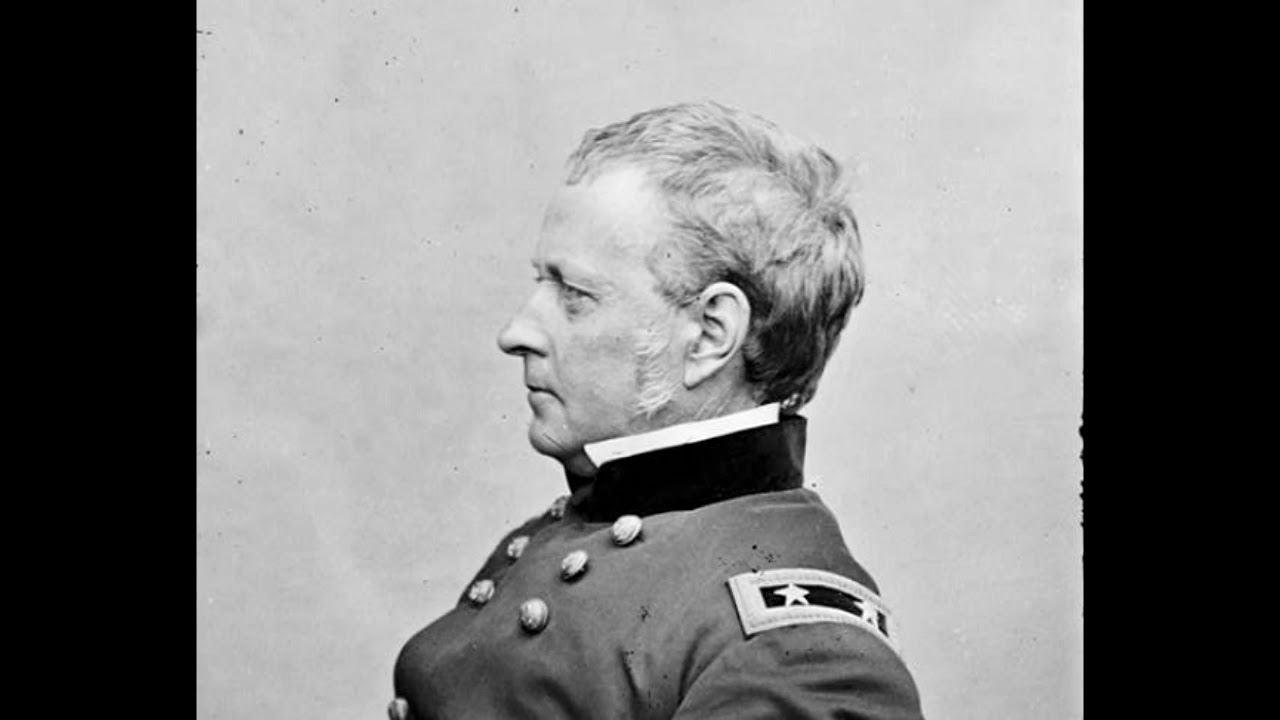
After the Battle of Antietam, McClellan failed to pursue Robert E. Lee’s army. President Abraham Lincoln replaced McClellan with Major General Ambrose Burnside.
Following a loss at Fredericksburg and a series of poor decisions, Lincoln removed Burnside. Joseph Hooker was promoted to commander of the Army of the Potomac in early 1863.
As commander, Hooker improved conditions for his soldiers, including better food, medical care, and leave policies. However, disagreements with his staff and commanders, along with a loss to Confederate General Robert E. Lee at Chancellorsville, led to Hooker’s resignation as commander of the Army of the Potomac.

Hooker continued his career in the United States Army. In the summer of 1863, he transferred with the 11th and 12th Corps to the Western Theater with the Army of the Cumberland.
Hooker enjoyed success at the Battle of Chattanooga and the Battle of Lookout Mountain. He was also successful during the 1864 Atlanta Campaign under commanding General William Tecumseh Sherman.
From October 1864 until the war’s conclusion, Hooker commanded the Northern Department, with headquarters in Cincinnati, Ohio. After the war, Hooker led Lincoln’s funeral in Springfield on May 4, 1865.

He later served in command of the Department of the East and the Department of the Lakes. Following this, his health declined, and he was partially paralyzed due to a stroke.
Hooker was mustered out of the volunteer service on September 1, 1866. He retired from the U.S. Army on October 15, 1868, with the regular army rank of major general.
He died on October 31, 1879, while visiting Golden City, New York. He is buried in Spring Grove Cemetery in Cincinnati, Ohio.