On April 2, 1882, a man checked into room 80 of the Glenham Hotel on Fifth Avenue. He sat at the edge of the bed, raised a Smith & Wesson revolver to his left temple, and pulled the trigger. He was 51 years old.
He was also the son of the richest man in American history. His name was Cornelius Jeremiah Vanderbilt, and by the time he died, his family had spent three decades trying to erase him.
He was not the only one. Across the Gilded Age, America’s greatest dynasties produced children they were determined to make disappear. Some were locked behind asylum walls. Some were buried under false names. One was silenced with an ice pick to the brain.
This is what old money did to the children who threatened the brand.
In 1877, $100 million changed hands inside a single family. Cornelius Vanderbilt, the man who had clawed his way from a $16 ferry loan to the largest personal fortune in the Western Hemisphere, lay dying at 10 Washington Place in Manhattan. When he died on January 4, 1877, his estate was valued at roughly $100 million.
To understand that number, you must forget modern wealth. In 1877, $100 million represented between 1.5% and 2% of the entire gross national product of the United States. In today’s terms, that would be somewhere north of $300 billion. No American had ever possessed that much.
Cornelius Vanderbilt left nearly all of it to one son. William Henry Vanderbilt received $95 million. His brother, Cornelius Jeremiah, received the income from a $200,000 trust, administered by a trustee William controlled. The Commodore’s eight daughters received between $250,000 and $500,000 each.
The will was not a distribution. It was a weapon.
The Vanderbilts were not a family in any sense that carries warmth. They were an enterprise. Their fortune required discipline, public performance, strategic marriage, and above all, control of the narrative. Every Vanderbilt child was an employee of the brand.
The same logic governed every great dynasty of the era. The Astors treated their family like a holding company. The eldest capable son inherited. Everyone else was given an allowance and a set of expectations.
The Rockefellers built a family culture of secrecy so profound that basic biographical facts were treated as classified information. The Goulds, the Huntingtons, the Kennedys, every one of them ran the same calculus. The family is the corporation. The children are the assets. And assets that depreciate are written off.
By 1890, the top 1% of American families held 51% of the nation’s wealth. The 400 families deemed worthy of Mrs. Astor’s ballroom controlled more capital than the bottom 11 million households combined.
A single dinner party at Delmonico’s could cost $5,000, the equivalent of a factory worker’s entire annual salary. A Newport cottage might contain 70 rooms, 45,000 square feet of marble floors and gilded ceilings, and a staff of 30 servants who lived in quarters designed to be invisible from the main house.
Wealth existed to be displayed, and display demanded perfection. This was the world that demanded perfection from its children. The question was brutally simple. Could you perform the role assigned to you? Could you marry the right person, manage the trust, avoid scandal, smile for the photographers, and keep the machine running?
And if you could not, then the machine had tools for dealing with you. Asylum commitments that required nothing more than a father’s signature and a compliant physician. Trust instruments that could reduce a $100 million inheritance to a controlled pittance. Social ostracism that could make a person vanish from every guest list and every conversation in polite society.
And if all else failed, there were walls. Real, physical walls, attended by nurses who answered not to the patient, but to the family that paid their salaries.
Consider two images from the same city, in the same decade, in homes barely a mile apart.
On March 26, 1883, Alva Vanderbilt opened the doors of her new chateau at 660 West 57th Street for the most lavish costume ball New York had ever witnessed. Twelve hundred guests streamed through the entrance. A quarter of a million dollars had been spent on flowers, costumes, and catering alone. That is roughly $7.5 million in today’s money, spent on a single party.
The second image is a brownstone on 14th Street, quiet, curtains drawn. Inside, a man sits in a room he has occupied for years and will occupy for decades more. He is attended by nurses. He does not go out. No one comes to visit him except the lawyers who manage his allowance.
His name is John Jacob Astor Jr. He is the firstborn son of John Jacob Astor III, one of the wealthiest men in the country. And he has been effectively imprisoned in this house since roughly his 20s.
The ballroom and the brownstone were not contradictions. They were two halves of the same system.
Cornelius Jeremiah Vanderbilt was the Commodore’s second son. From the moment it became clear that he suffered from epilepsy, his father began the process of elimination. The seizures were read not as a medical condition, but as a moral failing.
The Commodore had Corneil committed to the Bloomingdale Asylum for the first time in the early 1860s. The commitment process required nothing more than a physician’s certificate and a judge’s order. In practice, both were formalities when the petitioner was the richest man in America.
Corneil was locked away. Not because he was dangerous. Not because he was delusional. Because he was embarrassing.
John Jacob Astor Jr. lived out an even quieter form of destruction. The Astor family’s approach was different in method, but identical in logic. Where the Commodore used asylums and punitive trusts, the Astors used architecture. They simply built a life of permanent comfortable confinement.
Astor Jr. was provided with a house, attendants, and an allowance. He was also provided with an absolute absence of freedom, agency, or identity. He would live to be 78 years old. He would never marry. Never hold a position. Never appear in the social columns.
What did these families fear more than cruelty? The answer is exposure. They feared the wrong child saying the wrong thing at the wrong dinner party. They feared a seizure in a ballroom. They feared the newspapers, which could elevate a family to glory in one edition and destroy it in the next.
The system that enabled dynastic erasure rested on three institutional pillars.
The first pillar was the law itself. In the 19th century, the male head of household held near absolute authority over the persons and property of his dependents. Children were, in the eyes of the law, essentially possessions. A father’s decision to institutionalize a child was a private family matter.
The second pillar was the asylum system. By the mid-19th century, America had built a network of private and public institutions that could absorb inconvenient people with quiet efficiency. The asylum’s population included the genuinely mentally ill. It also included the merely inconvenient.
Between 1850 and 1900, American asylum populations grew from roughly 15,000 to over 150,000 patients. The system was not designed to heal. It was designed to contain.
The third pillar was the trust. By placing assets in trust, a patriarch could control the behavior of his heirs across generations. He could specify conditions for distributions. He could appoint trustees loyal to himself. And he could reduce a child’s share to a trickle, just enough to prevent starvation, but not enough to enable independence, rebellion, or escape.
The Commodore’s treatment of Corneil deployed all three pillars in concert. When the will was read, Corneil’s share was designed not to sustain, but to humiliate. The income from $200,000 in a world where his brother controlled $95 million. The ratio was a sentence. It said, “You are nothing.”
There is a detail that collapses the entire fiction. When Corneil was examined at Bloomingdale, at least one physician looked at the man sitting before him and concluded, on the record, that this patient did not belong in an asylum.
The epilepsy was real. The seizures were documented. But insanity? No. Corneil was lucid, articulate, self-aware, and painfully conscious of what was being done to him.
Corneil was born in 1831, the second son of the Commodore and his first wife, Sophia Johnson. His older brother, William Henry, was the heir. Corneil was the spare, and spares in dynastic families are tolerated only so long as they remain invisible and compliant.
Corneil was neither. He developed epilepsy in his youth. For a dynasty that depended on the myth of genetic superiority, a son with bad blood was a contradiction the family could not afford to explain.
The first commitment to Bloomingdale came in the early 1860s. He was eventually released, but the damage was permanent. The commitment had branded him.
He was committed a second time, released again. Each cycle stripped another layer of standing, of dignity, of the capacity to function as an independent person in society.
Then came exile. The Commodore sent Corneil to a farm in Hartford, Connecticut, a polite form of banishment. The farm was managed by a man named George Terry, who became, over time, something approaching a genuine friend. Perhaps the only one Corneil ever had.
In Hartford, Corneil tried to build something. He attempted business ventures that failed. He gambled badly and compulsively, accumulating debts that his father refused to pay. His brother William sometimes covered the debts, grudgingly and always with conditions attached.
He married a woman named Ellen Williams. For a brief period, there was something resembling stability. But Ellen died in 1872, and with her death, the last tether holding Corneil to ordinary human life snapped clean.
The gambling worsened. The debts mounted. He was arrested for fraud. He was sued by creditors. Each scandal fed the family’s narrative that he was unfit.
And then the Commodore died, and the will was read. $100 million. $95 million to William. The income from $200,000 to Corneil.
Corneil understood exactly what had been done. His letters from this period reveal a man who saw the architecture of his own destruction with devastating clarity. In his final years, writing to George Terry, Corneil put the whole thing into words that carry more raw need than anything else in the Vanderbilt archive.
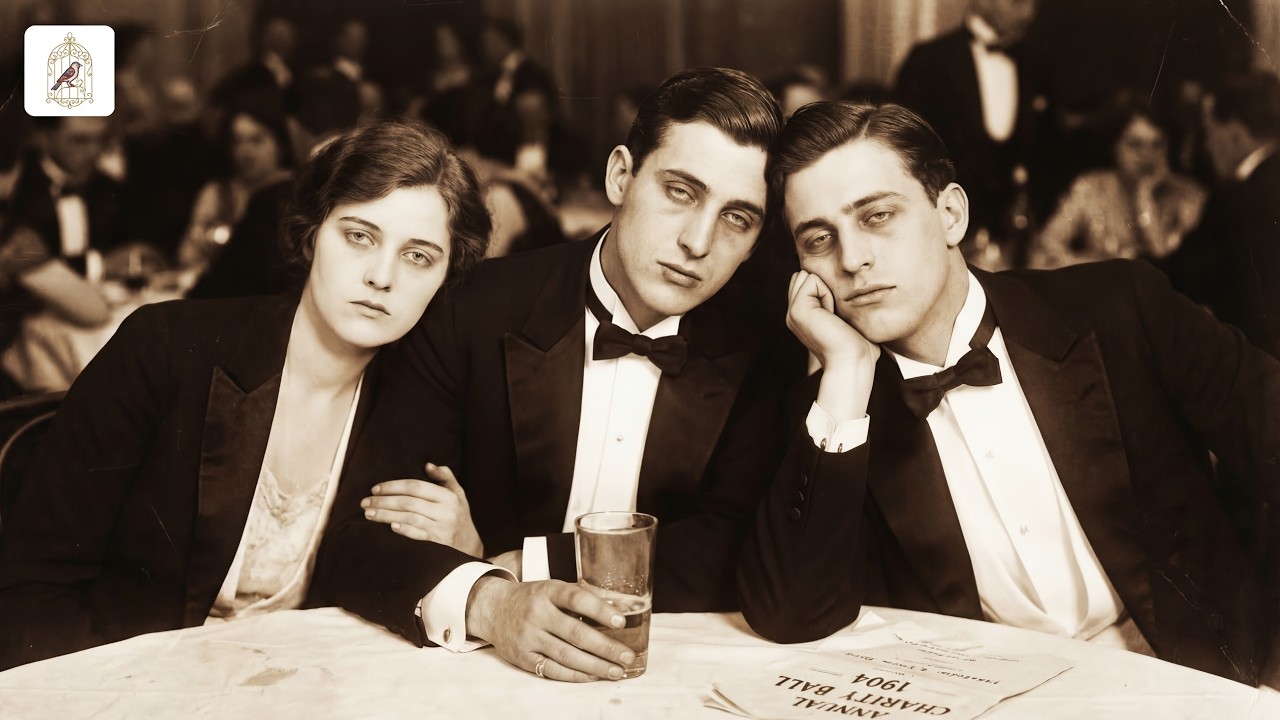
“Oh, George, you must not desert me now.”
One sentence. One plea. The voice of a man who had been abandoned by his father, his brother, the legal system, and the medical system, and who was begging one person not to complete the abandonment.
When Corneil and two of the Commodore’s daughters filed their challenge to the will in 1877, they cracked open a door the Vanderbilt family had spent decades keeping shut. The will contest of 1877 to 1879 was the first great dynastic trial in American history.
The contestants argued that the Commodore had been of unsound mind and that he had been unduly influenced by his second wife and by a circle of spiritualists and clairvoyants. The Commodore, it turned out, had spent his final years conducting seances in his parlor.
But the truly dangerous witnesses were the Claflin sisters. Victoria Woodhull had run for president of the United States in 1872. Her sister, Tennessee Claflin, had opened a brokerage firm on Wall Street with the Commodore’s financial backing.
If the will contest went to a full trial, the Claflin sisters would be called to testify. Every detail would be printed. Every innuendo would become headline news.
William could not allow that. The fortune was at stake, but the reputation was worth more than any dollar amount.
So William deployed the weapon that dynasties always reach for when secrecy fails: cash. The Claflin sisters received over $100,000. Some historical accounts place the figure considerably higher.
The payment was not a legal settlement. It was a purchase. William was buying their absence from the courtroom and, more importantly, their absence from the country. The sisters left the United States for England, where they married into minor aristocracy and reinvented themselves.
The trial continued without its most explosive witnesses. In the end, the will held. The judge ruled that the Commodore had been of sound mind and that the distribution of his estate, however unequal, was within his legal rights.
Cornelius’ challenge failed. The principle was carved into legal precedent. A patriarch could distribute his fortune however he chose, and the courts would not overrule him, no matter how punitive the result.
For Cornelius, the failure was total. He had spent his last reserves of credibility and hope on the contest. When it collapsed, he had nothing left.
On April 2, 1882, Cornelius Jeremiah Vanderbilt walked into the Glenham Hotel on Fifth Avenue. He was 51. He was broke. He was alone. He sat on the edge of the bed in room 80, raised a Smith & Wesson revolver to his left temple, and fired.
The family buried him quickly and quietly. Within a year, the name Cornelius Jeremiah Vanderbilt had largely disappeared from public conversation.
For nearly a decade, George J. Gould arrived at Manursing Island by yacht every weekend. His legitimate children had a name for the family he visited there. They called them the bastards.
George J. Gould was the eldest son of Jay Gould, the railroad baron and the most hated man on Wall Street. Jay Gould had died in 1892 leaving an estate of roughly $77 million. George inherited the largest share.
George married Edith Kingdon, an actress of considerable beauty and fierce social ambition. Together, they built Georgian Court, a palace in Lakewood, New Jersey that sprawled across 200 acres.
But George also maintained a second family. Her name was Guinevere Sinclair. She was younger than Edith, strikingly attractive, and she lived on Manursing Island in Rye, New York in a house George provided and visited regularly.
Between roughly 1907 and 1914 she bore him three children: Guinevere, George, and Jane. George visited by yacht. He came every weekend or nearly so.
The legitimate Gould children knew. They knew the address. They knew the names.
Meanwhile, Edith Kingdon Gould was declining. She had gained weight dramatically. Her health was deteriorating.
On November 13, 1921, she was found dead on the golf course at Georgian Court. The official cause was heart failure. But the detail that seared itself into every newspaper account was the rubber suit.
Edith had been wearing a full-body rubber garment beneath her clothing, an extreme and dangerous weight reduction device. Combined with vigorous physical exercise on the golf course, it had almost certainly triggered the cardiac event that killed her.
Here was a woman married to one of the wealthiest men in America, living in a 200-acre palace surrounded by every material comfort money could buy. And she died alone on a golf course wrapped in rubber, trying desperately to sweat herself thin enough to hold the attention of a husband who was already gone every weekend to another woman’s bed.
Six months after Edith’s death, George married Guinevere Sinclair. When the marriage certificate appeared on the front pages of the New York papers, it included the names and ages of three children. The arithmetic was damning. These children had been born years before Edith’s death.
When George died in 1923, his will attempted to provide for the Sinclair children alongside his legitimate heirs. The legitimate Goulds contested the provisions with the full weight of the family’s legal resources.
In 1925, the Supreme Court of New York delivered its ruling. The Sinclair children were declared to have no right, title, or interest in Jay Gould’s original estate. They received approximately $200,000 each in settlement. The legitimate heirs retained tens of millions.
$200,000 versus tens of millions. That ratio is the market price of illegitimacy expressed in the cleanest possible arithmetic.
The court did not merely reduce the Sinclair children’s inheritance. It erased their lineage. They were Goulds by blood and strangers by law.
The Sinclair children grew up in a shadow world. They were comfortable by ordinary standards. But they were exiled absolutely from the dynasty whose blood ran in their veins.
John Jacob Astor Jr. was the eldest son of the richest man in America, and he spent his entire adult life in a single house he was never permitted to leave.
Think about what 50 years means. Not as a number. As a life. 50 years is the span from a young man’s prime to an old man’s death.
John Jacob Astor Jr. spent more than 50 years inside the walls of a brownstone on 14th Street in Manhattan. Attended by nurses. Visited by lawyers. Seen by almost no one else.
He was born around 1822. The eldest son of John Jacob Astor III. By the rules of primogeniture that the Astors observed with quasi-aristocratic rigor, he should have inherited the empire.
But something was wrong. The historical record is deliberately vague. This vagueness is not an accident of time. It is the final product of the family’s campaign.
Astor Jr. may have had an intellectual disability. He may have suffered from a mental illness. He may have been, in the terminology the family would never have used publicly, simply different.
The Astors never said. They ensured that no one else could say, either.
John Jacob Astor III made his decision. His firstborn would not inherit. His second son, William Waldorf Astor, would be groomed for the role. And the firstborn would be removed.
Not to an asylum. The Astors were more refined than that. There would be no public commitment. No physician’s certificate on file. The Astors simply provided their son with a house and a staff of keepers and made certain he never left.
There was no lock on the front door in any crude sense. There did not need to be. The nurses were paid by the family. The lawyers were retained by the family. The allowance was controlled by the family.
Astor Jr. was not mistreated in any way that would have satisfied a legal definition of abuse. He was fed. He was housed. He was clothed. But comfort without freedom is not kindness. It is the most sophisticated form of imprisonment available to those who can afford to make a cage look like a home.
He died in 1900 at approximately 78 years of age. He had been confined for more than 50 years. He never married, never worked, never appeared in society, never traveled.
He left no letters that have entered the public record. No memoirs. No interviews. No surviving record of his own voice or his own thoughts.
That silence is the final act. When a human being lives for nearly eight decades and leaves no trace of an inner life, the family has achieved something beyond concealment. It has achieved obliteration.
Arabella Huntington lied about her name, her age, her birthplace, her marriage, and the father of her only child. And she made every lie stick for the rest of her life.

Arabella Duval Yarrington was born sometime between 1850 and 1852 in Richmond, Virginia. The exact year is uncertain. And the uncertainty is by design.
She grew up in Shockoe Bottom, one of the poorest neighborhoods in a city still devastated by the Civil War. Some accounts suggest her mother ran a boardinghouse. Other accounts, less charitable, suggest the boardinghouse offered services beyond room and board.
What is certain is that Arabella possessed extraordinary beauty, sharp intelligence, and a survival instinct that would have served her well on a battlefield.
She left Richmond. She traveled to New York. She acquired a man named John Archer Worsham, whom she presented as her husband. When Worsham departed her life, she presented herself as a widow. Young, beautiful, tragically alone, and available.
She caught the attention of Collis Potter Huntington. Collis was one of the Big Four, the men who built the Central Pacific Railroad. He was powerful. He was wealthy. He was also already married.
His affair with Arabella was conducted with the discretion that money buys. And at some point in the 1870s, Arabella bore a son. She named him Archer.
The official story was that his father was the departed Worsham. The unofficial truth, visible to anyone who looked at the child’s face, was that he was the son of Collis Huntington. The resemblance was, by every account, startling.
When his first wife died and he married Arabella in 1884, Collis formally adopted Archer. The adoption was a legal masterwork. Collis adopted his own biological son, a maneuver that simultaneously gave the boy legitimacy and buried the truth of his conception under a layer of legal paper.
Arabella did not stop with Archer’s origins. She rebuilt her entire life from the foundation up. She moved her birth year forward by as much as five years. She claimed Alabama as her birthplace, erasing Virginia and Shockoe Bottom entirely.
She destroyed letters. She burned papers. She instructed servants to discard any correspondence that might connect the great Mrs. Huntington to the girl from the boardinghouse on the wrong side of Richmond.
The destruction was systematic and lifelong. When she died in 1924, the documentary record of her early life was virtually nonexistent.
The human cost of this reinvention was measured in distance. Distance from her own past. Distance from her own family. Distance, ultimately, from her own son.
When Henry Huntington, Collis’s nephew and Arabella’s second husband, wrote to Archer after Arabella’s death to ask a simple question, “What was your mother’s real date of birth?” Archer could not answer.
His mother had concealed her birthday from her own child. She had rebuilt reality so completely that even the people who loved her most could not find the original beneath the revision.
Arabella understood that her value to the Huntington empire depended on the total suppression of who she had been. A woman from Shockoe Bottom who had born an illegitimate child to a married railroad baron could not be the matriarch of a fortune.
So she built a new woman and killed the old one.
John D. Rockefeller became the richest man in the world. And the first thing he purchased with that wealth was the disappearance of his own half-sisters.
The official Rockefeller origin story goes like this. John Davison Rockefeller was born in 1839 in Richford, New York. His father, William Avery Rockefeller, was a traveling salesman. His mother, Eliza Davison, was a devout Baptist.
Through prayer, discipline, and extraordinary commercial talent, young John built Standard Oil into the greatest industrial monopoly the world had ever seen. He became the first American billionaire. His fortune peaked at roughly $900 million.
The story leaves out the father. William Avery Rockefeller, known universally as Devil Bill, was one of the most extraordinary con men in 19th century America.
He traveled the countryside posing as a deaf-mute herbal doctor, selling patent medicines he brewed himself. He was an accused rapist, formally charged in 1849. He abandoned his legitimate family for years at a stretch.
And he had a second family. Devil Bill maintained a housekeeper named Nancy Brown. With her, he fathered at least two daughters.
The details are deliberately obscured. The children were born sometime in the 1850s or 1860s. Their given names do not appear with certainty in standard Rockefeller genealogies. Their lives, fates, and identities were treated by the Rockefeller family as radioactive material.
John D. Rockefeller’s campaign to bury his father’s past was arguably the most sustained act of biographical warfare in American history. As Standard Oil grew, the risk that Devil Bill’s double life would surface grew proportionally.
A bigamist father. Illegitimate half-sisters. A rape charge. Any one of these facts could have devastated the image the Rockefellers had constructed.
So John D. deployed his resources. He employed investigators to track Devil Bill’s movements and his second identity. For decades, William Avery Rockefeller had been living under the name William Livingston.
John D. ensured the Livingston identity stayed hidden. He paid for silence wherever silence could be bought. And he made absolutely certain that Nancy Brown’s daughters never surfaced in any context that could be connected to the Rockefeller name.
The suppression worked. It worked so thoroughly that even Ida Tarbell, the journalist whose 1904 investigation of Standard Oil remains one of the great works of American muckraking, could only partially penetrate the veil.
The Rockefeller half-sisters, blood relatives of the richest man on the planet, have no known biographies, no confirmed photographs, no surviving letters, no memoirs. Their entire existence was scrubbed from the record.
This is the most total form of erasure in this story. The Vanderbilts destroyed Cornelius’ spirit, but could not prevent his name from appearing in court transcripts. The Astors confined their son, but left traces in genealogical records. The Goulds lost their secrecy when a marriage certificate hit the front page.
The Rockefeller daughters left nothing. They are empty spaces in the archive. They were not lost. They were erased.
In November of 1941, Rosemary Kennedy was 23 years old. She was the third child and eldest daughter of Joseph and Rose Kennedy, born into a family that was accelerating toward the highest levels of American political power.
Rosemary could not serve the mission. She had been born with an intellectual disability, possibly caused by oxygen deprivation during a catastrophic delivery.
She struggled in school. She could not keep pace with her siblings. But she wrote in her diary with a teenager’s earnest frustration about parties she attended and boys she liked. Entries that reveal a young woman who was aware of her limitations and pained by them, but who was also capable of joy, humor, connection, and love.
But Rosemary was becoming, in her father’s calculus, a problem. In her late teens and early 20s, her behavior grew more volatile. She had mood swings. She became agitated. She occasionally wandered away from home.
And she had begun to show interest in men. A development that terrified Joseph Kennedy for reasons that had everything to do with the dynasty’s image and nothing to do with his daughter’s happiness or safety.
Joe Kennedy was building a political empire. An intellectually disabled daughter who was emotionally volatile and sexually curious was, in the cold arithmetic of dynastic management, a threat to everything he was constructing.
Joseph Kennedy consulted Dr. Walter Freeman, the leading American proponent of prefrontal lobotomy. Freeman believed the procedure could calm agitated patients by severing connections in the frontal lobes.
The surgery was performed at George Washington University Hospital. Rosemary was awake throughout. Freeman and his colleague, Dr. James Watts, made small incisions in her skull and inserted a surgical instrument into her brain.
They asked her to recite the Lord’s Prayer. They asked her to sing God Bless America. They asked her to count backward. And as she spoke, they cut.
The result was devastation. Rosemary emerged unable to walk properly, unable to speak intelligibly, unable to care for herself in any meaningful way. Her intellectual capacity, already limited, was reduced to that of a very young child.
She was 23 years old. The woman who had written diary entries about her hopes, attended dances, expressed frustration and affection and longing, was gone.
Joseph Kennedy had not told Rose about the surgery. When the truth emerged, the family’s response was not outrage, but concealment.
Rosemary was transferred to St. Coletta, a Catholic institution in Jefferson, Wisconsin. The family told the press and the public that she was reclusive, that she preferred a quiet life away from the pressures of the public eye.
The lobotomy was not publicly acknowledged until 1987, nearly half a century after the procedure.
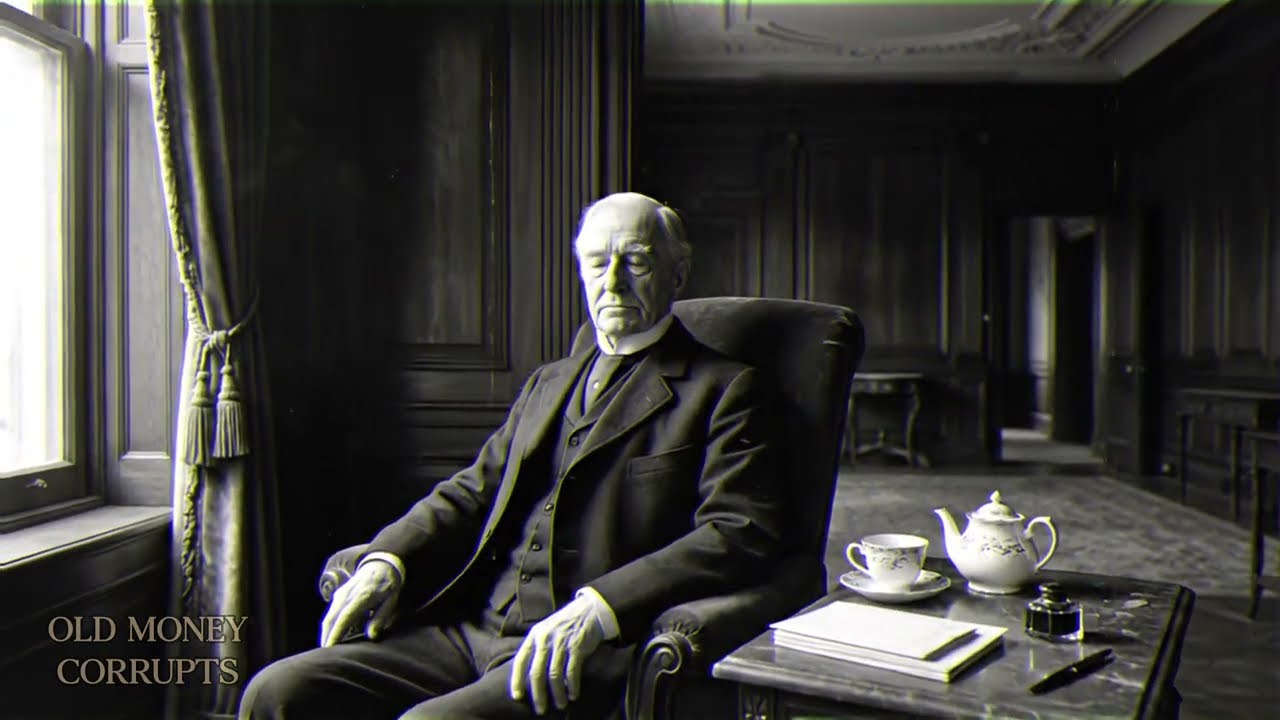
For 20 years, Rose Kennedy did not visit her daughter. When she finally traveled to St. Coletta, Rosemary reportedly became agitated and struck her mother.
Rosemary lived until January 11, 2005. She was 86 years old. She had spent 63 of those years in institutional care. Her mind destroyed by a procedure her father authorized in secret to protect the family name.
This was the terminus. The end point of the escalation that began with the Commodore’s asylum commitments and advanced through legal exclusion, physical imprisonment, and biographical annihilation.
Joseph Kennedy did not merely hide his daughter. He did not merely disinherit her or confine her. He destroyed the organ that made her who she was. He erased not her name, not her fortune, not her freedom, but herself.
The dynasties that paid to erase their children now fund the museums, universities, and foundations that bear the family name. Almost none of them acknowledge what that name cost.
Walk through the Breakers in Newport today. Two hundred fifty thousand visitors come through every year. They admire the chandeliers. They photograph the grand hall. They do not think about Cornelius Jeremiah Vanderbilt dying alone in room 80 of the Glenham Hotel.
The brochure does not mention him. The audio tour does not name him. He has been erased from the palace his father’s money built.
Drive to Lakewood, New Jersey. Georgian Court University operates on the grounds of George Gould’s palace. The university website describes the architectural heritage of the estate. It does not describe the rubber suit on the golf course. It does not name Guinevere, George, and Jane.
Visit the Huntington Library in San Marino, California. Arabella’s art collection hangs on the walls. Archer’s scholarly legacy fills the shelves. Shockoe Bottom is not mentioned. The boarding house is not mentioned.
The Rockefeller name adorns a university, a research center, a philanthropic foundation with an endowment exceeding $5 billion. The name is synonymous with generosity. It is not synonymous with Devil Bill. It is not synonymous with Nancy Brown. It is not synonymous with the daughters who have no names in any public record.
And the Kennedys. The name that gave America a president, a senator, the Peace Corps, and the mission to the moon. It also, eventually, gave the world the Special Olympics.
Eunice Kennedy Shriver founded the games in 1968, explicitly because of what had happened to her sister Rosemary. The Americans with Disabilities Act traces a line of influence directly back to the Kennedy family’s eventual, belated confrontation with its own crime.
Something good was built on the wreckage. But the wreckage came first.
Here is the deepest irony. The fortunes these families sacrificed their children to protect did not survive.
The Vanderbilt estate, $100 million in 1877, was effectively dispersed within three generations. When 120 Vanderbilts gathered for a family reunion in 1973, not one of them was among the wealthiest people in America.
The dynasty that destroyed Cornelius Jeremiah to protect its wealth watched that wealth evaporate within the span of a single human lifetime.
The Gould fortune followed a similar trajectory. The $77 million Jay Gould left in 1892 fragmented among his heirs and largely vanished from the lists of great American fortunes by the middle of the 20th century.
The Astor wealth proved more durable, anchored as it was in Manhattan real estate. But even it was diluted across generations.
Only the Rockefeller fortune, managed with the same discipline that had created it, maintained its position. But even the Rockefellers could not prevent the multiplication of heirs from gradually reducing the per capita wealth of the family.
Anderson Cooper, the journalist, is a direct descendant of the Commodore through Gloria Vanderbilt. He has spoken openly about the disintegration of the family fortune.
The names on the buildings survived. The fortunes, mostly, did not. The children those fortunes consumed were never returned.
We live again in an age of dynastic wealth. The mechanisms of erasure have not disappeared. They have merely been professionalized.
In 1882, the year Cornelius Jeremiah Vanderbilt died in room 80, the top 1% of American families held roughly 51% of the nation’s total wealth. Today, the top 1% holds approximately 32%. A lower share, but still staggering, and a share that has been climbing steadily for four decades.
The dynastic impulse has not weakened. It has adapted. It has hired better lawyers.
Modern dynasty trusts, legal in certain states for periods of up to 1,000 years, can shelter wealth from estate taxes, creditor claims, and the reach of inconvenient heirs across dozens of generations.
Family offices and private corporations that manage the financial lives of ultra-wealthy clans employ teams of attorneys, tax specialists, investment managers, and public relations consultants. Their function is, at its core, the same function William Vanderbilt’s legal team performed in 1877. Protect the fortune. Control the story.
The most extreme methods of erasure documented in this story are no longer available. Asylum commitments can no longer be arranged with a father’s signature and a compliant physician. Lobotomies are no longer performed.
Rosemary Kennedy’s story was directly responsible for some of these changes. The Special Olympics now serves more than 5 million athletes across 170 countries.
But the underlying logic has not changed. The logic is that the family is an enterprise, and enterprises manage their liabilities.
The instruments have evolved from asylums to non-disclosure agreements. From punitive trusts to family constitutions drafted by teams of wealth advisers. From physical confinement to the quiet management of reputation by firms that specialize in making inconvenient information difficult to find.
In the United States today, approximately 70% of wealthy families lose their fortune by the second generation. 90% lose it by the third. The dynasty trusts, the family offices, the armies of advisers, all of them exist to fight this statistical gravity.
And the fight requires, as it always has, that every family member serve the mission.
The question the Commodore asked about Corneil is the same question dynastic wealth asks today. Is this person an asset to the brand or a threat?
We do not hear about the modern Corneilles. We do not hear about the children of today’s billionaires who have been quietly removed from family trusts, written out of operating agreements, pressured into silence by legal instruments that make the Commodore’s will look crude.
We do not hear about them precisely because the mechanisms have improved. The walls are better built. The contracts are tighter. The public relations firms are more skilled. The silence is more complete.
The philanthropic legacies of the families in this story are real. The universities they endowed are real. The research institutes, the libraries, the museums, the foundations, they educate millions. They advance knowledge. They preserve art and history.
And they rest, every one of them, on a foundation of silenced voices, stolen lives, and children who were weighed against a name and found too light to keep.
This story began in room 80 of the Glenham Hotel on Fifth Avenue. It ends there, too.
On April 2, 1882, a man who knew exactly what his family had done to him sat on the edge of a bed and chose to leave a world that had never made room for him.
In his final years, writing to the only friend left in his life, Cornelius Jeremiah Vanderbilt compressed the entire story into nine words.
“Oh, George, you must not desert me now.”
No one answered.
The fortune survived for a while. The name survived. It is carved in marble above doorways that tourists photograph.
The man did not.
And the question this story leaves behind is not whether the past was cruel. The past was cruel. The question is whether we have built a world where that sentence, written by a man who was erased by his own blood, could not be written again.
The evidence suggests we have not.