Carolyn Roehm was born Carolyn Jane Smith in 1951 in Kirksville, Missouri. Her father was a school principal and her mother was a teacher. It was a safe, predictable middle-class life, but Carolyn felt a profound sense of displacement from an early age. She studied fashion magazines not as entertainment but as maps, teaching herself the language of elegance.
After high school, she attended Washington University in St. Louis, which had a serious fashion design program. But St. Louis was too small for her ambitions. In 1973, she bought a one-way ticket to New York City. The city was gritty and dangerous, but to Carolyn, it was Oz.
She landed a job as an assistant to Oscar de la Renta. He became her mentor and a surrogate father figure. He taught her not just how to sketch a gown, but how to live the life of the women who would wear it. He introduced her to the legendary socialites known as the swans, including CZ Guest and Babe Paley. Carolyn watched them, studied them, and absorbed their mannerisms.
Her first marriage was to Axel Roehm, a German chemical heir. It gave her a new last name with a European aristocratic ring. The marriage was short-lived and ended in divorce, but she emerged as Carolyn Roehm. The Smith was gone forever.
By the early 1980s, Carolyn was a rising star in fashion. She was beautiful, talented, and single. She was moving in the right circles, but she was still an employee. Then she met Henry Kravis at a dinner party.
Kravis was a pioneer of the leveraged buyout and the face of the new Wall Street. He was the man who would inspire the book "Barbarians at the Gate." Physically, they were a mismatch. Carolyn was tall and statuesque. Henry was shorter and intense. But functionally, they were perfect for each other. Henry needed a queen to serve as his ambassador to high society. Carolyn saw in him the ultimate patron.
Their courtship was a merger of ambitions. They married in 1985. It was not a quiet affair. It was a coronation. Carolyn Roehm became Mrs. Henry Kravis and overnight ascended to the very peak of the social mountain.
The couple became the center of a new social solar system. This was the era of the nouveau society, a group of wealthy newcomers who didn't want to hide their wealth. They wanted to celebrate it publicly. Henry and Carolyn were their king and queen.
Carolyn threw herself into the role of the hostess. She bought 18th-century French furniture. She filled their Park Avenue apartment with Renoirs and Monets. She bought estates in Connecticut, Colorado, and the Dominican Republic. With Henry's backing, she launched her own fashion label in 1985. Nancy Reagan became a client. The Duchess of York wore her designs.
From the outside, it looked like the perfect life. The magazines chronicled the Kravis lifestyle with breathless adoration. But the pressure to maintain the illusion of perfection was mounting. Carolyn was running a struggling fashion business, managing five households, and maintaining a social calendar that would break a diplomat.
Henry approached everything in life with a transactional mindset. He had invested in Carolyn and expected a return. As long as the stock market was booming, the arrangement worked. But the wind on Wall Street was beginning to shift.

The zenith of the Kravis Empire came on December 7, 1987. Henry had just completed the legendary leveraged buyout of RJR Nabisco, a deal worth $25 billion. For one night, Carolyn transformed the Temple of Dendur at the Metropolitan Museum of Art into her own private court. She imported thousands of yards of silk and flew in out-of-season flowers by the cargo plane load. The guest list included Henry Kissinger, the Rockefellers, the Beises, and the Trumps.
The press dubbed it a scene from "The Great Gatsby" brought to life in the age of the junk bond. But even as the champagne flowed, the tectonic plates were shifting. The stock market had crashed in October 1987. The era of easy money was drawing to a close.
Inside the Kravis marriage, the atmosphere was cooling. Henry began to run the numbers on his wife's fashion business. The Carolyn Roehm label was a critical darling but financially a disaster. It was losing millions of dollars a year. Henry had been quietly covering the losses, but his patience was evaporating.
Then came a tragedy. In 1991, Carolyn's beloved stepson, Henry's son from a previous marriage, died in a car accident. The grief was shattering. But instead of bringing them together, it drove a wedge between them. Henry processed his pain by working harder. Carolyn needed to stop and mourn.
The end arrived in 1991. It was not a mutual uncoupling. It was a termination. Henry asked for a divorce. Carolyn thought she was a partner. She discovered she was an employee who could be fired.
Because she had signed a prenuptial agreement, she was not walking away with half the empire. Henry stopped funding the fashion label. Overnight, Carolyn Roehm went from being a top American designer to being unemployed. The showroom closed. The staff was let go.
The fall from grace was dizzying. The swans of the Upper East Side began to distance themselves. Invitations stopped coming. Phone calls went unreturned. It was a cold, silent exile.
There is a story from this period that perfectly captures the humiliation of her descent. Shortly after the separation, Carolyn found herself alone in a grocery store. When she got to the register, she handed over her credit card. It was declined. Henry had canceled the cards.
There she stood, the woman who had draped the Temple of Dendur in silk, unable to buy milk and bread. She had to leave the cart and walk out of the store with nothing.
She retreated to the one piece of property she had managed to keep in the divorce settlement. A historic house in Connecticut called Weatherstone. It was beautiful, but empty. The Renoirs were gone. The servants were gone. Carolyn Roehm was 40 years old with no husband, no children, no business, and her social standing in ruins.
In the silence of Connecticut, Carolyn began to plant a garden. It started as therapy. She got down on her knees in the dirt and dug, pruned, and planted. As she worked the soil, something miraculous began to happen. The connection to the earth began to heal the wounds of her New York life.

She began to arrange the flowers she grew. She treated a peony with the same reverence she had once treated a bolt of silk. A friend suggested she write a book about her flowers. In 1997, she published "A Passion for Flowers."
The industry expected it to flop. But the public disagreed. The book was a sensation. It became a bestseller and launched a second career. Carolyn Roehm wasn't just Henry Kravis's ex-wife anymore. She was a lifestyle icon.
Just as she was finding her footing, the universe had one final cruel test. On a freezing night in January 1999, a fire began in the middle of the night at Weatherstone. Carolyn managed to escape with her dogs, running out into the snow in her nightclothes.
She stood on the frozen lawn and watched her life burn down. Inside were the archives of her fashion career, the sketches from the Oscar de la Renta years, the family photographs, the irreplaceable antiques. By morning, Weatherstone was a smoking blackened crater.
For most people, this would have been the breaking point. But the fire did something unexpected. It cauterized the wound. Standing in the ruins, Carolyn realized that the fire could destroy her possessions, but not the hand that created beauty or the eye that recognized it.
Instead of leaving, she decided to rebuild. The reconstruction of Weatherstone became her magnum opus. She became the general contractor, the architect, and the historian. She allowed the public to see the work behind the perfection.
She expanded her publishing career. She wrote books about wrapping presents, about summer parties, about winter comfort. Each book was a bestseller. She launched a line of home accessories, funded by her own earnings.
She found love again. This time, it wasn't a transaction. She entered a long-term relationship with Simon Pinager, a man who was handsome, kind, and distinctly not a master of the universe. It was a relationship built for living, not for photographing.
As the new millennium dawned, the scaffolding came down around the resurrected Weatherstone. The house that emerged from the ashes was not a replica. It was a refinement. Carolyn had designed it with a survivor's eye.
She embarked on a publishing marathon. Her books were tactile experiences, heavy, bound in silk, filled with photographs that looked like Renaissance paintings. She democratized the aesthetic of the Upper East Side. She showed that you didn't need a staff of ten to fold a napkin beautifully.
By making herself independent of high society, she didn't need the approval of the swans. She had the adoration of the public. As her books topped the charts, the invitations began to trickle back in.
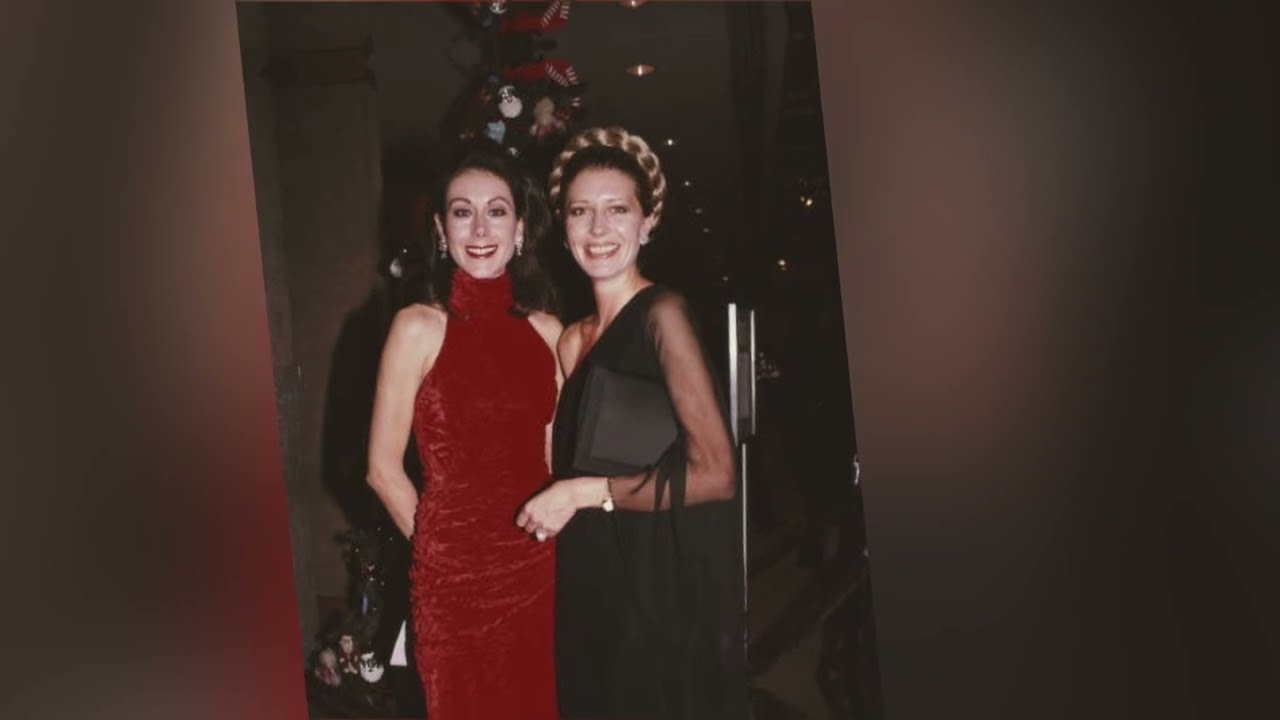
But the woman who returned was not the same woman who had been exiled. She was cooler, calmer, and possessed of a steely self-assurance. She knew who she was without the diamonds.
By the mid-2000s, the era of the decorative socialite was ending. The new power players were women who worked. Carolyn Roehm had leaped across the generational divide. She had transitioned from being a relic of the 80s to being a pioneer of the influencer economy.
She kept a distance from the old world. She spent more time at Weatherstone in her garden than at benefit dinners. She curated her circle of friends carefully, favoring those who had called her when she was broke.
She spoke openly about her failures. She realized that her scars were what made her interesting. Perfection is boring. Survival is riveting.
By 2010, the nouveau society of the 80s was a distant memory. But Carolyn remained. She had outlasted the trend she helped create. She was no longer fashionable. She was classic.
Carolyn Roehm serves as the crucial link between two distinct eras of American womanhood. She is the spiritual heir to the swans of the mid-20th century. Like them, she understood that style was a form of soft power. But unlike the swans, Carolyn did not die when her husband left.
Babe Paley withered under the infidelities of her husband. Slim Keith drifted into a lonely old age. They were dependent creatures who could not survive without the hothouse of a wealthy marriage. Carolyn Roehm broke that mold.
She proved that a woman could lose the prince and keep the kingdom, provided she was willing to build the castle walls herself. She took the skills traditionally dismissed as women's work and professionalized them. She monetized her taste.
Her journey from the Temple of Dendur to the compost heap at Weatherstone is a moral fable. It suggests that the true American dream isn't about accumulation. It's about cultivation.
As Carolyn moves through her 70s, she occupies a unique space. She is a survivor of the bonfire of the vanities. She paints watercolors that sell to collectors. She mentors younger women.
The scars remain. There is a certain melancholy in her eyes, a shadow that lingers behind the smile. It is the memory of the humiliation in the grocery store. It is the memory of the fire. It is the memory of the friends who turned their backs.
But perhaps that is the source of her beauty now. It is no longer the brittle porcelain perfection of the 80s trophy wife. It is the weathered, resilient beauty of the garden she tends. A garden is beautiful not because it is perfect, but because it survives the winter.
The legacy of Carolyn Roehm is found in the simple, radical act of planting a seed in the ashes of a burnt-down house. She is the woman who outlived her own myth. She is the last swan who learned to fly.