In September 1327, a deposed English king died inside a small stone chamber at Berkeley Castle in Gloucestershire. The official record attributed the death to natural causes, but witnesses and chroniclers spoke of murder, and the mystery has never been fully resolved. The death of Edward II, and the family that held him prisoner, became one of the most enduring legends in English history. The Berkeleys have occupied Berkeley Castle continuously for roughly 900 years, the longest documented single-family residence of its kind in England, but their survival has come at a cost measured in compromise, complicity, and blood.
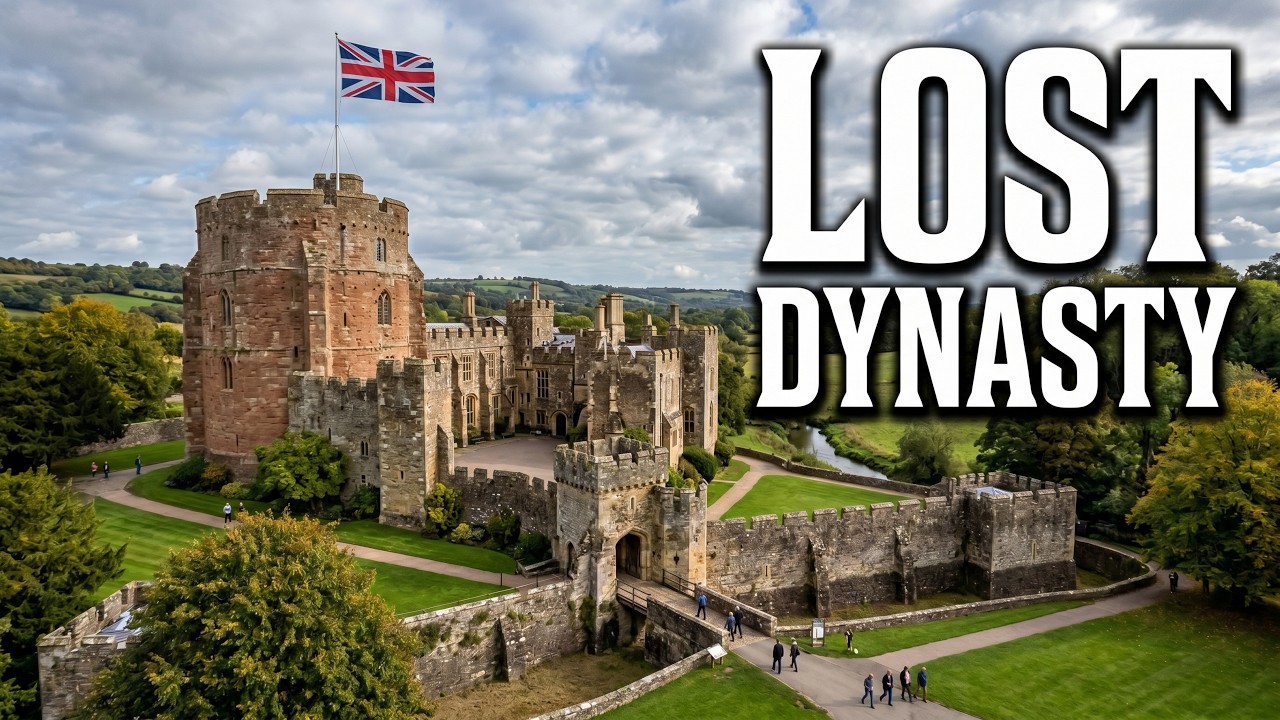
The dynasty began with Roger de Berkeley, a Norman knight who seized the land shortly after the Battle of Hastings in 1066. William the Conqueror rewarded his service with roughly 12,000 acres carved from Saxon territory. Roger burned the existing Saxon manor and built a wooden keep, which by 1090 had become stone. The castle rose on a limestone outcrop between Bristol and Gloucester, controlling the Severn crossing and the trade routes to the Welsh marches.
The keep walls were 14 feet thick at the base, the great hall could garrison 60 soldiers, and the dungeons were built before the chapel. Roger died in 1131. His son, also Roger, expanded the fortifications, adding a curtain wall and a fortified gatehouse. Within three generations, the family’s original seizure of land had become, in their eyes, legitimate inheritance.
The castle’s strategic location made neutrality impossible. When Henry II demanded fealty in 1155, Robert de Berkeley traveled to Westminster and knelt before the young king. He opened his gates to royal troops in 1163, provisioning 600 soldiers for three months and losing two years’ worth of stored grain and cattle in the process. The Berkeleys developed a survival strategy built on flexibility: commit late, switch early, and maintain deniability.
In 1173, during a rebellion by Henry II’s own sons, Robert publicly supported the king while privately allowing rebel messengers to use the castle. When the rebellion collapsed, he implicated other barons and was rewarded with additional lands. This pragmatic approach defined the family for generations. The most consequential test came in 1327, when Edward II was delivered to Berkeley Castle in chains.
Edward had been king for 20 years, but his reign was marked by military defeats, financial chaos, and conflicts with the nobility over his favoritism toward male companions. Queen Isabella and her ally Roger Mortimer invaded England in 1326, and within months Edward’s support collapsed. Parliament forced him to abdicate in favor of his 15-year-old son, Edward III. Deposing a king created a permanent problem.
As long as Edward lived, he remained a potential rallying point for rebellion. The new regime needed him dead, but the death had to appear natural. Thomas de Berkeley, who had inherited the castle five years earlier, was ordered to hold the former king in custody along with co-jailer John Maltravers. The records show Thomas was paid £40 for the kings custody, in two installments of £20.
The first came in April when Edward arrived. The second came in August, one month before Edward died. Edward II died on September 21, 1327. Three accounts of his death emerged within a week.
The official record presented to Parliament stated he died of natural causes after a sudden illness. Servants whispered that he had been smothered in his sleep, a method that leaves no marks. A third account, recorded years later by chroniclers, claimed Edward had been held down while a red-hot poker was thrust into his body through a funnel, causing internal injuries that killed him slowly. The king’s screams, it was said, were heard throughout the keep.
The forensic reality of medieval England made proof impossible. There were no police investigations, no autopsies, and the physicians who examined Edward were appointed by the same regime that had deposed him. The body was embalmed within hours of death, which destroyed any internal evidence of violence. The financial records, however, suggest planning.
The absence of a third payment to Thomas de Berkeley before September indicates someone knew custody would end that month. Thomas also vanished from all official records for two weeks in mid-September, during the exact period Edward died. He reappeared in early October, days after the death was announced. Three years later, the political landscape shifted.
In October 1330, Edward III, now 18, arrested Mortimer and had him executed for treason. With Mortimer dead, the young king needed someone to blame for his father’s murder, but he could not accuse his mother, Queen Isabella, without destroying the legitimacy of his own reign. Thomas de Berkeley was the perfect scapegoat. In April 1330, he was charged with conspiring with Mortimer and Maltravers to murder Edward II.
His defense was simple: he had not been present when the king died. He claimed he had left the castle on estate business in early September and only learned of the death upon his return. He could not prove where he had been, but in 1330, the absence of evidence was deemed sufficient. In May 1330, Parliament found Thomas not guilty by reason of absence.
He walked free, kept his castle, and retained his title. No fines were levied, no lands were confiscated. The verdict acknowledged that murder had likely occurred, but concluded that without proof placing Thomas at the scene, conviction was legally impossible. The trial was a political solution that satisfied everyone except historical truth.
Edward III avoided accusing his mother, and Thomas avoided execution. The only loser was clarity about what actually happened in that chamber. Though legally innocent, Thomas was never trusted again. For the next three decades, Edward III treated the Berkeley family with cold calculation.
Royal summons became rare, and Thomas was excluded from councils where policy was made. He paid £500 in a questionable relief payment in 1345 and was required to lend the crown £1,000 in 1348, a loan never repaid. In 1352, Edward requested that Thomas’s 14-year-old son, Maurice, join the royal household. It was phrased as an honor but functioned as a hostage placement.
Thomas sent his son, and Maurice spent six years at court under royal surveillance. Between 1330 and 1360, the castle’s expenditures on royal fees, loans, and payments exceeded £12,000, while the estate generated roughly £800 in annual income. Thomas also funded masses and chantries for Edward II’s soul, spending nearly £2,000 in religious gifts. The stain of suspicion, however, never fully lifted.
Thomas de Berkeley died on October 13, 1361, having kept his castle and preserved his bloodline, but significantly poorer and permanently compromised. Every subsequent Berkeley heir lived inside rooms where Edward II had spent his final months. Over the following centuries, the family turned the murder legend into a political asset. By 1400, they did not deny the rumors; they encouraged them.
A family ruthless enough to hold a king, possibly kill a king, and profit from his death was one no rational enemy would cross. During the Wars of the Roses, beginning in 1455, the Berkeleys switched sides four times. James de Berkeley declared for Lancaster in 1461, switched to York within months, returned to Lancaster in 1470, and switched back to York when Edward IV recovered the throne. He received a pardon and kept his lands.
Contemporary chroniclers mocked him as a weather vane lord, but the strategy worked. The family understood that ideology was a luxury; keeping the land was victory enough. The English Civil War in the 1640s tested this strategy to its limit. In September 1645, parliamentary forces under Colonel Thomas Rainsborough surrounded Berkeley Castle with 1,200 men and eight cannon.
George de Berkeley, the ninth baron, had tried to remain neutral by paying taxes to Parliament and provisioning royalist forces when they passed through. This ambiguity was no longer acceptable. Parliament demanded surrender. George consulted his household: his wife argued for resistance, his son for pragmatism.
George chose survival. He opened the gates on September 27. Despite the surrender, the bombardment began the next day. Rainsborough justified it as military necessity, but the effect was political theater.
The cannon fired for three days, breaching the keep wall, collapsing part of the great hall roof, and damaging the eastern tower. George signed an agreement placing the castle under parliamentary garrison, paying for their provisioning, and accepting that any future royalist activity in the region would result in immediate forfeiture. He had surrendered, cooperated, and still watched his home get destroyed. The damage took 80 years to fully repair and cost the family nearly everything they owned.
Three generations of Berkeleys sold land, borrowed heavily, and stripped the estate to fund reconstruction. By 1700, the castle was structurally sound, but the family was financially ruined. The 18th century brought a different solution: marriage for money. Frederick Augustus Berkeley married Elizabeth Drax in 1722, the daughter of a Barbados sugar plantation owner, whose £20,000 dowry paid off debts and completed the restoration.
The marriage was functional rather than affectionate, but it saved the castle. By the late 1800s, the aristocracy was hollowing out. Agricultural depression reduced rents, and death duties consumed capital. The direct male line ended in 1857, and the title passed to cousins who lived in London and rarely visited.
The castle became a hunting lodge used a few weeks a year. World War I accelerated the collapse. When the eighth earl died in 1916, his son owed more than £40,000 in death duties, requiring the sale of nearly half the estate’s agricultural land. The 10th earl sold more land to pay further duties after 1928.
In 1949, facing financial unsustainability, the family opened Berkeley Castle to public tours. Visitors paid two shillings to walk through the great hall and hear about Edward II’s imprisonment. The family retained private apartments in the south wing. What had been a fortress was now a half-home, half-museum.
Today, Berkeley Castle advertises Edward II’s ghost as part of the admission price. Guides show visitors the chamber where the king was imprisoned and recount the legends of screams, suffocation, and the red-hot poker. Evening ghost tours are offered from October through December and cost £20 per person. This commodification is deliberate.
The castle costs roughly £600,000 annually to maintain, and tourism generates about 70 percent of that revenue. Without public access, the family would face selling the castle or surrendering it to the National Trust. The current owner, Charles Berkeley, inherited in 2003 after a genealogical accident brought him the title and the building. He quit his London finance job, moved to Gloucestershire, and now manages a 900-year-old building while living inside it.
He conducts the family business of maintaining the castle for roughly 60,000 visitors a year. The irony is complete. A family that spent centuries denying involvement in Edward II’s murder now advertises that murder as their primary attraction. The crime scene their ancestors tried to distance themselves from has become their most valuable asset.
Nine hundred years after Roger de Berkeley claimed this land with a sword, his descendants still sleep behind these walls. They have survived the Norman settlement, the Wars of the Roses, the English Civil War, two world wars, death duties, and the dissolution of the aristocratic system that created them. They are the longest-documented single-family residence in England. The price of that continuity has been measured in honor.
The Berkeleys are not remembered for bravery or glory. They are remembered for complicity in the death of a king and for surviving the accusation through calculated absence and strategic flexibility. Every generation made the compromise required by its era: switching sides during civil wars, surrendering during the parliamentary siege, marrying for money, and finally opening the family home to tourists. Flexibility was the only constant.
The castle they maintain is the same structure, but its purpose is unrecognizable. A fortress designed to project military power now generates revenue through ghost tours and gift shops. The family that once built walls to keep enemies out now opens doors to let strangers in. The truth of what happened in September 1327 remains unknowable.
The official account said natural causes. The rumors said suffocation or worse. The financial records suggest premeditation. Thomas de Berkeley was found legally innocent, but historically complicit.
What is certain is that a king entered Berkeley Castle alive and left dead, and the family that held the keys prospered afterward. The grip remains unbroken, but the inheritance comes with a question: whether 900 years of survival is victory or a prison built from the stones of a crime scene.