The dust tasted like iron and defeat, a metallic reminder that the chase was ending. For the man known as “Kid Curry,” the pursuit through the rugged canyons of Colorado on June 9, 1904, was not merely a flight from lawmen. It was a collision with an unforgiving mathematical certainty, and the math was about to win. Just two days earlier, Harvey Logan, the outlaw called Kid Curry, seemed untouchable.
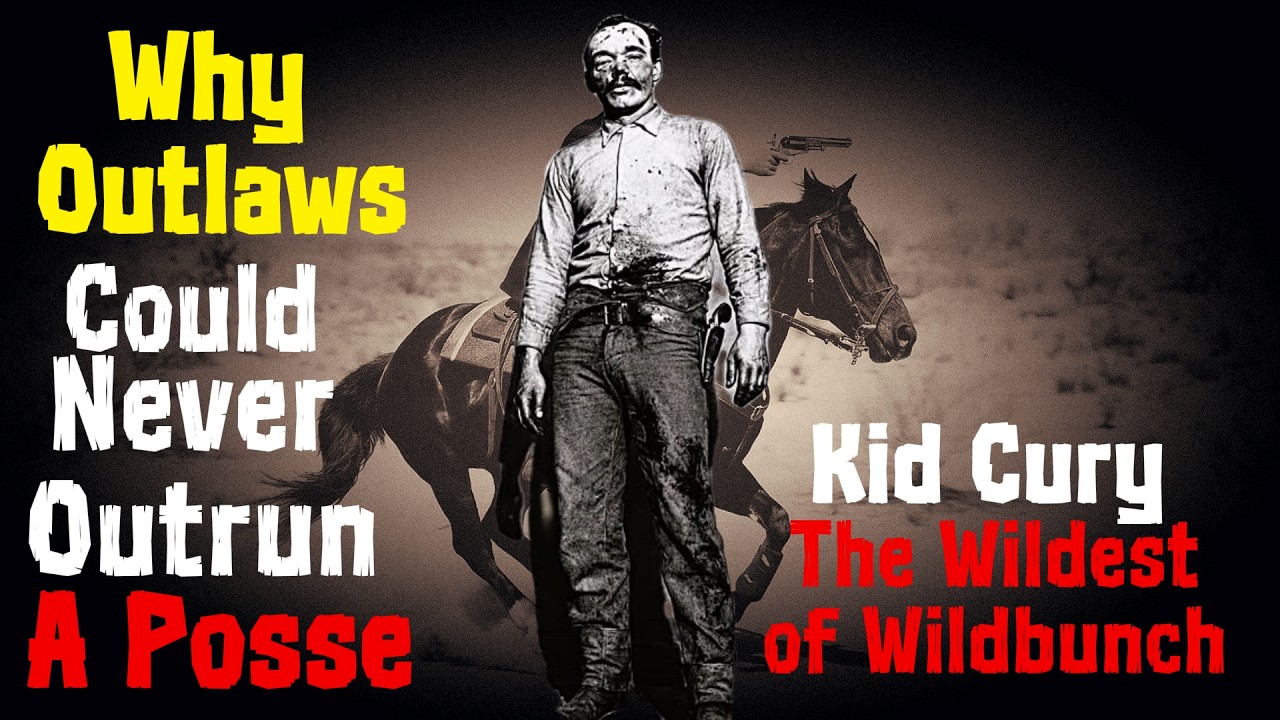
The most violent member of the Wild Bunch, he was a ghost who had escaped from Knoxville prison a year prior, famous for killing lawmen and vanishing into the wilderness. On the moonlit night of June 7, 1904, Curry and two accomplices put that reputation to work. Near Parachute, Colorado, they forced a Denver and Rio Grande train to a sudden halt. The plan was classic Wild Bunch: quick, bold, and built on speed.
They ordered the engineer to move the train to an isolated spot called Streator Flats, cut the cargo car loose, and got to work. After the robbery, they disappeared into the night. Their escape was precise. They used a stolen boat to cross the Colorado River, where fresh horses awaited.
To buy more time, they cut the telephone lines—a small act of defiance against the technology that was rapidly shrinking their world. It was a clever move, the kind that had worked for years. But the world was changing. A local rancher named Pant repaired the cut line quickly.
With a crank of the handle and frantic words, the trap was set. The clock began ticking against Kid Curry, even though he did not know it yet. The legend of the Old West chase is one of desperate, mad dashes across the plains. That is mostly a myth.
By the turn of the 20th century, pursuing outlaws had become a science. It was a cold logistical problem, and the solution was the relay. The system was pioneered by mail services like the Pony Express, which used a network of stations to move mail 2,000 miles in just 10 days. Riders swapped horses every 10 to 15 miles, ensuring their mounts stayed at peak strength.
Lawmen and posses adapted this ruthless efficiency for their own purposes. While the man believed to be Kid Curry was exhausting his first horse, a posse of 40 men was forming from Grand Junction to Newcastle. They were not panicked or running at full speed. They did not have to.
Their strategy was to become a slow, relentless wall of attrition. They rode at a steady pace a horse could maintain for hours, sometimes covering 20 miles before needing rest. They knew what outlaws were learning the hard way: a single horse, especially a poorly trained one, has limits. Pushed to a frantic gallop, a horse can typically maintain top speed for only two or three miles before fatigue sets in.
If pressured, the animal collapses. The pursuers did not need to be faster; they only needed to endure, switching to fresh horses while the fugitive destroyed his only one. The first sign of trouble for the outlaws came with sunrise. Their pre-ridden horse, exhausted from the night, began stumbling on the rough terrain of Battlement Mesa.
The animal’s strength faded to a swaying canter, then a stumbling trot. It had reached its limit. In desperation, Curry and his men made a critical mistake. They stole new horses from a ranch owned by a man named Rola Gardner.
This gave them a temporary reprieve, but it also made the crime personal. Robbing a train was one thing; stealing a man’s horse was a serious violation in the Old West. It enraged the locals and drove Gardner himself to join the chase, giving him a personal stake in the capture. Even with fresh horses, the calculation was inescapable.
They were still pushing their mounts to the point of collapse, while the posse behind maintained their steady, energy-conserving pace. Soon, the second batch of horses began to fail. After a frantic ride, Curry’s gang reached the Pant ranch on Main Creek on foot, their horses completely finished. In a surreal moment of civility, they paid a dollar for breakfast, then stole three more horses from the stable.
Every station and every horse theft was a victory for the pursuing posse. It was lost time and ground covered without needing to quicken their own pace. They did not need bloodhounds; they only had to follow the trail of exhausted horses. The outlaws were caught in a cruel cycle: exhaust a horse, steal another, repeat, all while the posse’s slow advance continued.
They had covered nearly 80 miles in two days—a punishing distance for any horse in that terrain. On June 9, the inevitable occurred at East Divide Creek. A team of six men from the main posse, including the rancher Rola Gardner, crested a hill and saw the three outlaws below. Cornered, with their horses spent again, Curry and his men dashed on foot toward a cluster of rocks for a final stand.
Defiantly, the outlaw leader shouted at the posse, ordering them to retreat. A violent gunfight erupted. The outlaws were deadly accurate. A bullet grazed the cheek of one posse member.
The man identified as Curry shot and killed the horses of Rola Gardner and another posse member. But as he advanced to fire again, Rola Gardner, back on his feet and hidden behind his dead horse, fired his . 38-55 rifle. The bullet tore through the outlaw’s chest, shattering bone and piercing his arm.
It was a fatal wound, and he knew it. One of his companions yelled, “Are you hit? ” His reply was the voice of a man who finally understood the end of the calculation. He saw the posse approaching, felt his life draining away, and knew there was no escape.
He said, “Don’t wait for me. I’m done for. I might as well end it here. ” With those words, the man believed to be Harvey “Kid Curry,” the most savage member of the Wild Bunch, raised his revolver to his right temple and pulled the trigger.
The final shot echoed through the valley. When the posse cautiously approached, they found him dead. His two companions had vanished, but the man they had all been chasing was finished. The era of the lone outlaw was over—not just because of lawmen, but because of logistics.
The West was being tamed by telephone lines, railway schedules, and the simple, cruel calculus of a horse’s endurance. The man at Divide Creek was not outgunned; he was outcalculated. Whether he was truly Kid Curry or another desperate outlaw, his final act was a bitter admission that in the new West, you could never outrun the math.