The American Civil War is often defined by iconic battlefields like Gettysburg and Shiloh, but the conflict that began when Confederate artillery opened fire on Fort Sumter in April 1861 unfolded across more than 10,000 engagements, stretching from Vermont to Arizona. Over four years, Union and Confederate forces fought everything from small skirmishes to massive battles involving tens of thousands of soldiers. The human cost was staggering. National Park Service records show roughly 110,100 Union soldiers were killed in combat, with another 275,174 wounded.
Confederate forces lost an estimated 94,000 men in battle, with 194,026 injured. When disease, malnutrition, and accidents are factored in, some demographic studies suggest the total death toll may have reached 850,000, making it the deadliest conflict in American history. Jim Campi of the American Battlefield Trust notes that measuring a battle’s significance requires looking beyond simple victory or defeat. A battle’s impact is judged by whether it accomplished a strategic aim, crippled a critical enemy force, or shifted the broader course of the war.
Among thousands of engagements, seven battles stand out as particularly consequential. The first major clash came at Bull Run near Manassas, Virginia, on July 21, 1861. Union General Irvin McDowell led mostly inexperienced 90-day volunteers out of Washington with the goal of capturing Richmond and ending the rebellion quickly. Confederate General P.
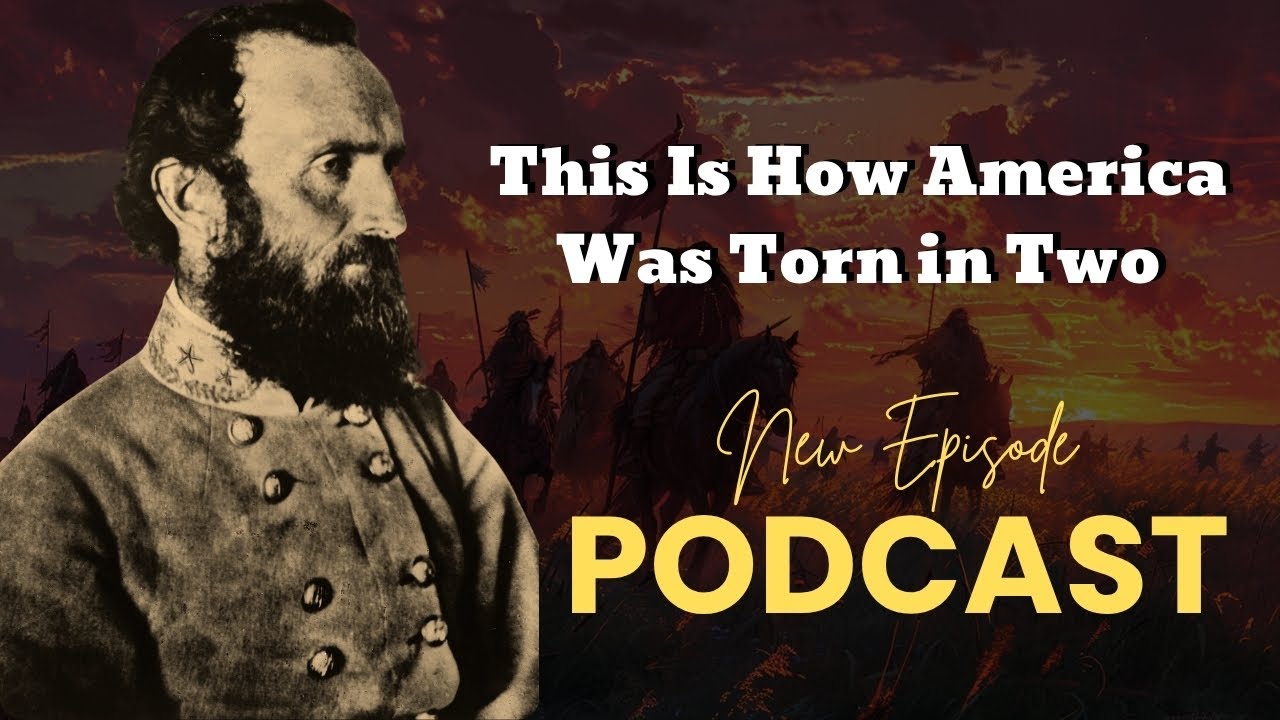
G. T. Beauregard had entrenched his forces at a vital railway junction. Union troops initially pushed back the Confederate line, but the arrival of reinforcements under Brigadier General Thomas J.
Jackson turned the tide. Jackson’s stubborn stand earned him the enduring nickname “Stonewall,” and the Union forces collapsed into a chaotic retreat toward the capital. The battle produced 2,896 Union casualties and 1,982 Confederate casualties, shattering Northern hopes of a swift, decisive victory. Both sides understood that the conflict would be long and brutal.
In February 1862, Union Brigadier General Ulysses S. Grant achieved an early strategic victory at Fort Donelson in northern Tennessee. After Confederate defenders repelled Union gunboats and mounted a counterattack, Grant exploited a weakness in their defenses. Confederate generals Gideon Pillow and John B.
Floyd fled, abandoning 13,000 soldiers. When Confederate officers requested surrender terms, Grant famously demanded “unconditional and immediate surrender,” earning him the nickname “Unconditional Surrender” Grant. Combined with the earlier capture of Fort Henry, the victory opened a gateway into Tennessee and elevated Grant to national prominence, setting him on the path to command the entire Union Army. On September 17, 1862, Confederate General Robert E.
Lee launched his first major invasion of the North, moving the Army of Northern Virginia into Maryland. He hoped to deliver a psychological blow to the Union, win foreign recognition for the Confederacy, and potentially force negotiated peace. President Abraham Lincoln sent Major General George B. McClellan and the Army of the Potomac to intercept him.
The armies clashed near Sharpsburg, Maryland, in fighting that shifted through a cornfield, a sunken road later dubbed Bloody Lane, and a stone bridge over Antietam Creek. Union soldiers charged the bridge three times before dislodging the entrenched Confederates. By day’s end, approximately 22,717 soldiers were killed, wounded, captured, or missing, making it the bloodiest single day in American military history. Though the battle was tactically inconclusive, Lee’s retreat gave Lincoln the political leverage to issue the preliminary Emancipation Proclamation, transforming the war into a moral crusade against slavery.
Grim photographs taken by Alexander Gardner also exposed the Northern public to the war’s realities for the first time. In May 1863, Lee secured one of his most brilliant victories at Chancellorsville. Despite facing a Union force more than twice his size, he split his army and sent Stonewall Jackson on a daring flanking march through dense wilderness to strike the right flank of General Joseph Hooker’s forces. The surprise attack sent the Union line reeling, and Confederate forces drove Hooker into retreat.
The cost, however, was devastating. Jackson was mistakenly shot by his own men and died of pneumonia four days later. Lee won the battle but lost his most trusted commander. Union casualties exceeded 17,000, while Confederate losses approached 13,000.
The victory emboldened Lee to attempt another invasion of the North. Vicksburg, Mississippi, sat on a bluff overlooking the Mississippi River and was vital to Confederate logistics. Jefferson Davis called it “the nail head that holds the South’s two halves together. ” Grant recognized that capturing it would give the Union control of the river and split the Confederacy in two.
After several failed frontal assaults, he settled into a siege that wore down soldiers and civilians alike. Confederate troops and townspeople were reduced to living in caves and surviving on minimal rations as Union artillery and gunboats pounded the city. In June, Union soldiers detonated a mine under the Confederate lines, but failed to capitalize on the breach. By early July, Confederate Lieutenant General John C.
Pemberton and his 29,000 troops surrendered, unable to endure further starvation and shelling. The fall of Vicksburg, coinciding with the Union victory at Gettysburg, marked a turning point in the war. From July 1 to 3, 1863, Lee once again led his army north, hoping for a decisive blow on Union soil. His forces clashed with Major General George Meade’s Union army near Gettysburg, Pennsylvania.
What began as a chance encounter escalated into a massive three-day engagement. Confederate forces pushed Union troops through town but could not break their defensive positions on the surrounding high ground. On the third day, Lee ordered a frontal assault on the Union center at Cemetery Ridge. The infamous charge, led by General George Pickett, ended in disaster, with more than 60 percent of the attacking Confederates killed or wounded.
Lee was forced to retreat, ending his second and final invasion of the North. The Confederate army never regained the strategic initiative, and the war began tilting irreversibly toward the Union. In the war’s final chapters, Union General William Tecumseh Sherman directed a campaign deep into Georgia. A trio of Union armies converged on Atlanta, a crucial manufacturing and railway center.
Confederate General John Bell Hood, who had lost a leg at Chickamauga, launched a desperate counterattack outside the city but was repelled with heavy losses. The Battle of Atlanta on July 22, 1864, cost the Union approximately 3,700 casualties, while Confederate forces lost around 5,500 men. Sherman then encircled Atlanta, methodically severing its supply lines and bombarding key infrastructure, including railroads and warehouses. Food and ammunition shortages compounded the chaos for soldiers and civilians alike.
On September 1, 1864, Hood ordered Confederate forces to withdraw, leaving Atlanta vulnerable. Union troops moved in and seized control of the strategically vital hub. The loss crippled Confederate logistics and morale, while revitalizing Northern support for the war effort at a time of growing war weariness.
The capture of Atlanta significantly bolstered President Abraham Lincoln’s re-election campaign in November 1864, ensuring the Union would pursue the conflict to its uncompromising conclusion.