Hymie Weiss, the fierce leader of Chicago’s North Side Gang, was one of the few men Al Capone is said to have truly feared. His relentless pursuit of revenge after the murder of his mentor, Dean O’Banion, plunged the city’s underworld into a bloody war that reshaped organized crime. Born Earl J. Hymie Weiss in 1898 in Poland, his real name was Henrik Wojciechowski.
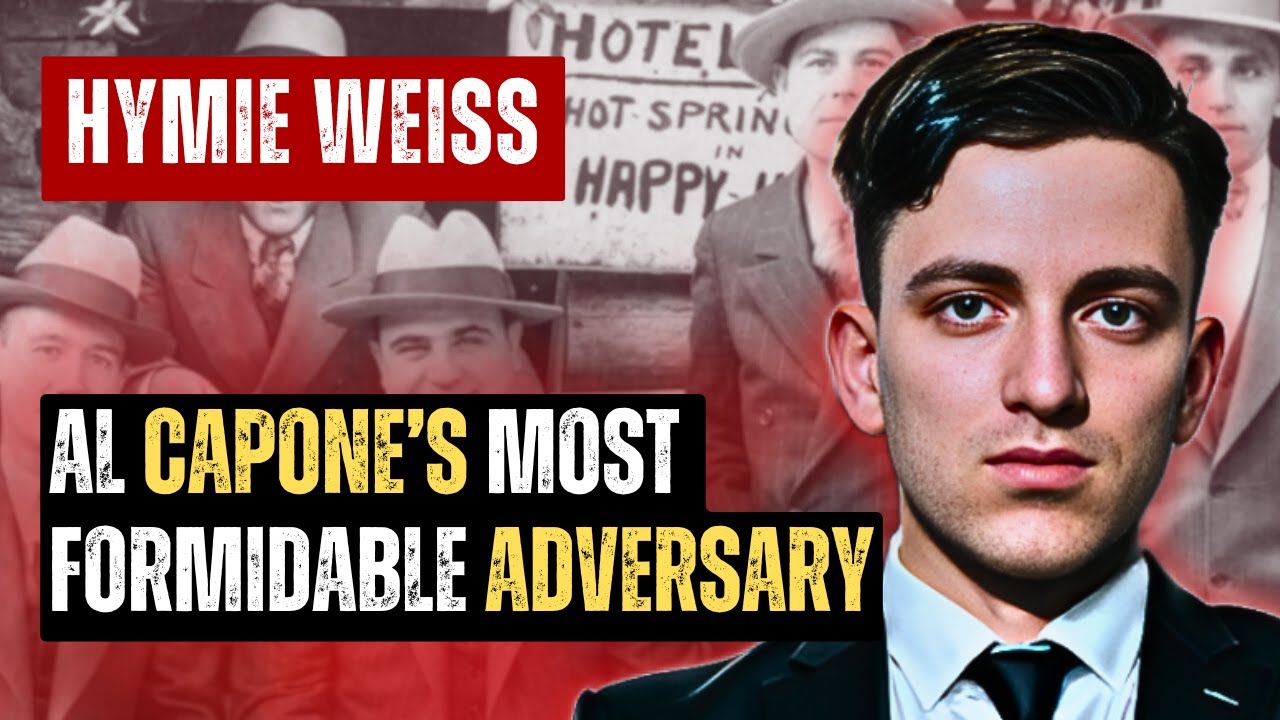
His family immigrated to the United States in 1901, settling first in Buffalo, New York, before moving to an Irish district on Chicago’s North Side. It was there that Weiss met his childhood friend, Charles Dean O’Banion, a bond that would define his life and ultimately lead to his death. Known for his cold intelligence, Weiss presented a complicated public image. He was deeply religious, often carrying crucifixes and rosaries, and attended Mass regularly.
He was known for quiet acts of generosity, such as secretly paying a struggling neighbor’s grocery bill. But those close to him also witnessed a violent temper. In 1920, after his brother Fred returned from military service in France and made a remark about Weiss not having served his country, Weiss pulled out a gun and shot him. The family covered up the incident, claiming the weapon discharged accidentally, even though no blood stains were found on the pillow.
Police released Weiss, but the two brothers never spoke again. Weiss’s dark side surfaced again when he threatened to kill photographers who tried to take his picture, and he once threatened to kill his own cousin after a fistfight. His career in crime began with burglary and car theft, but it was Prohibition that launched him into the big leagues alongside the North Side Gang. The gang evolved from the Market Street Gang, a group of street toughs who worked as sluggers for rival Chicago newspapers in the 1910s.
Alongside Weiss and O’Banion, the crew included Vincent “The Schemer” Drucci and George “Bugs” Moran, who was notorious for his sudden rages. When Prohibition took effect in January 1920, O’Banion saw opportunity. He established connections with Canadian suppliers and focused on high-quality beer distribution, determined to control the 42nd and 43rd wards. The gang’s dominance soon attracted unwanted attention from the Italian South Side mob led by Johnny Torrio and his young lieutenant, Al Capone.
Torrio, a master tactician who treated the underworld like a corporation, sought to avoid open warfare. He met with O’Banion, who brought Weiss along for protection. The two gangs agreed on a territorial split, with Torrio and Capone controlling much of the South Side and O’Banion holding the North Side. But the agreement was fragile.
O’Banion repeatedly hijacked trucks belonging to other mobsters and began poaching business from the Italians. He cheated Torrio out of a half-million-dollar brewery deal and publicly mocked him. After O’Banion refused to pay a $30,000 gambling debt owed by a rival gang leader, the decision for his elimination was made. On November 10, 1924, three men entered O’Banion’s flower shop and killed him.
The assassination stunned Weiss, who had walked into the shop moments later and was told the news. He retreated to a bathroom and collapsed against the bathtub, barely whispering, “Everything I have is gone. ”
Once he pulled himself together, a new resolve took over. Weiss vowed revenge, and the hunt began with Johnny Torrio, the man who ordered the hit.
Weiss was now the leader of the North Side Gang, and the quiet years were over. On January 12, 1925, Weiss’s crew ambushed a car they believed belonged to Capone, opening fire at 55th and State streets. Remarkably, no one was killed. A police sergeant who inspected the bullet-riddled vehicle joked, “They let it have everything but the kitchen stove.
” The incident reportedly prompted Capone to order an armored Cadillac with bulletproof windows. Days later, on January 24, Weiss and Bugs Moran ambushed Johnny Torrio as he returned from shopping with his wife. Torrio was struck in the arm, jaw, lung, and abdomen. As Moran aimed his pistol at Torrio’s temple for the final shot, the gun clicked empty.
Torrio survived but left Chicago shortly after, handing his empire to Capone. Weiss and his crew continued their campaign against the Italian gang. Angelo Genna, the new president of the Unione Siciliana, was killed in a high-speed chase on May 26, 1925. His brother Mike was shot and died at the hands of police during a chase the following month.
Anthony Genna was killed in another ambush on July 8. The war escalated. On September 20, 1926, a convoy of cars drove past the Hawthorne Inn, a Capone headquarters, and unleashed a barrage of submachine gun fire into the restaurant and lobby. Capone himself was reportedly inside but unharmed.
When asked who was responsible, he reportedly said, “Watch the morgue. They’ll show up there. ”
Capone attempted to broker peace, sending Tony Lombardo to meet with Weiss in October 1926. Lombardo offered the North Siders exclusive rights to sell beer in all of Chicago north of Madison Street.
Weiss refused, demanding the heads of the two men who had killed O’Banion. Capone realized there would be no negotiating. Within days, Capone’s men, including machine gun specialist Jack McGurn, rented rooms overlooking Scoffield’s Flower Shop, the North Side Gang’s headquarters. For days, they waited for Weiss to appear.
On October 11, 1926, Weiss left the building with his driver and bodyguard, joined by a politician and a prominent lawyer. As the five men crossed State Street, two shooters opened fire from a second-floor apartment above. Weiss was hit by ten bullets and died instantly. His bodyguard, hit by fifteen rounds, collapsed a few yards away.
The lawyer was wounded in the arm, abdomen, and thigh, while the driver and politician were also hit. The assassins escaped through a back stairway, and the Thompson submachine gun used in the attack was later found atop a dog kennel a block away. Hymie Weiss’s death removed the last serious obstacle to Capone’s dominance in Chicago. The North Side Gang continued to operate under Bugs Moran, but the violence did not stop.
Three years later, Moran’s men would be among the victims of the St. Valentine’s Day Massacre, an attack orchestrated by Capone that sealed his control over the city’s underworld and became one of the most infamous crimes in American history.