The high heels came off first, a small act of defiance in a room that had never truly been hers. Then, Betty Ford, the First Lady of the United States, climbed onto the Cabinet Room table. It was January 19, 1977, and the woman who had spent nearly three decades standing beside power was finally standing above it, striking a dance pose for a lone photographer.
America remembers the Fords as the honest marriage that healed a nation after Watergate—58 years, one bedroom, no secrets. That photograph, circulated for decades as a symbol of playful spontaneity, obscures a far more brutal reality. The truth is that the marriage which the public canonized as the gold standard of political partnerships was built on a foundation of strategic calculation, enforced silence, and a loneliness so profound it nearly destroyed the woman at its center.
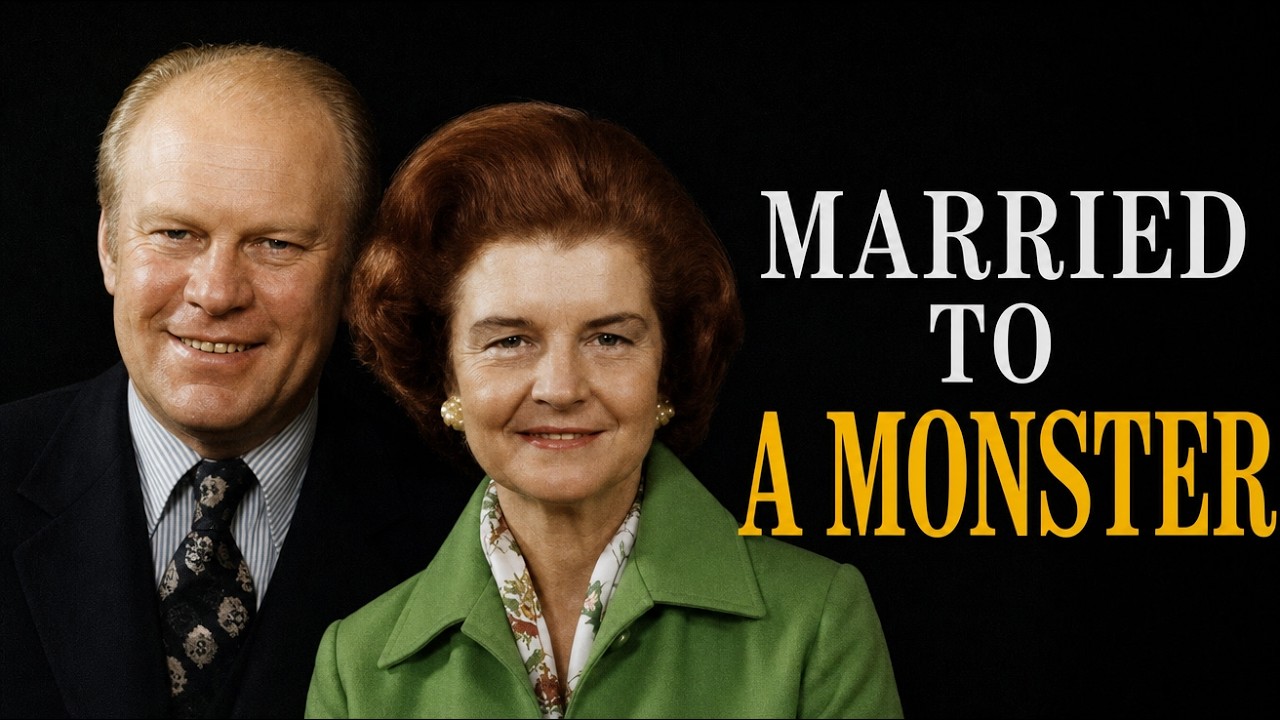 The image of Betty Ford dancing on that table was not a joke. It was the final act of a woman who had never been given a seat at that table, taking one thirty years too late.
The story begins with a wedding date that was never about the bride. When Gerald Ford proposed to Betty Bloomer in February 1948, he was a 34-year-old lawyer and former University of Michigan football star, one of the most eligible bachelors in Grand Rapids. She was a 29-year-old recent divorcée working as a fashion coordinator.
He asked her to marry him, then informed her they could not do it until the fall. He refused to tell her why. There were two reasons, and he could only explain one of them.
The first was purely strategic: Ford was secretly planning to challenge Bartel Jonkman, the incumbent Republican congressman, in the September primary. In a safe district like that, the primary was the real election, and any early announcement would have killed the campaign before it started. So he told his fiancée nothing and let her assume what she wished.
The second reason was never put in a press release: she was a divorced woman who had worked as a professional dancer in New York. In western Michigan in 1948, that was not a good biography. It was a liability.
Ford was not sure how voters would feel about his marriage to a former dancer who was divorced. The wedding was scheduled for October 15, one month after the primary and three weeks before the general election. Close enough to look devoted, late enough to be safe.
Her wedding date was determined by the votes of other people. She said yes anyway.
To understand why she agreed, you must understand what she had already survived and what she had learned about silence. Elizabeth Ann Bloomer was born in Chicago in April 1918, the third child and only daughter of a traveling salesman. The family settled in Grand Rapids.
Her father, William, was always on the road, a pattern worth remembering because she would marry it twice. In the summer of 1934, when Betty was sixteen, William Bloomer was found dead in the family garage. He had been working under the car.
Carbon monoxide. The garage doors were open, a detail every account includes and every account leaves ambiguous. He died one day before his sixtieth birthday.
Here is the part that matters: Betty wrote decades later that she had no idea her father was an alcoholic. Not as a child, not as a teenager. She learned it later from her mother, in a home that had spent years organizing itself around a truth no one dared speak aloud.
She grew up in a family that handled a drinking problem by refusing to name it. That is not a coincidence. That is training.
Her mother, Hortense, became a widow in the middle of the Great Depression and went to work. Betty had already started teaching dance to neighborhood children for money—fox trots, waltzes, the Big Apple—and modeling locally. She also taught dance to children with disabilities at the Mary Free Bed Center.
She was good at it. She wanted out. Out meant Bennington, Vermont, two summers at the dance school in 1936 and 1937 where she met Martha Graham.
Then New York. She joined Graham’s auxiliary troupe and danced at Carnegie Hall and worked as a model for the John Robert Powers agency to cover rent, the usual arrangement for a dancer who was talented but not yet essential. She was not essential.
Graham’s inner circle was small and very hard to enter. Then her mother came to New York and asked her to come home. She came home in 1941.
She returned to Grand Rapids to run the fashion department at Herpolsheimer’s and organize her own dance troupe and teach children. She had gone to the center of American modern dance and come back to the department store where she once modeled coats. She was twenty-three years old.
The next decision is the one people ignore, and it explains everything.
In 1942, she married William C. Warren, a salesman she had known since childhood. He was charming and traveled constantly, and for five years they moved between Toledo, Syracuse, and Grand Rapids while she took department store jobs in whatever city he landed in.
She wrote later that she wanted a home and children and married a man who wanted to move to the next city. By 1947, she had decided the marriage was over. Then Warren collapsed.
Diabetic coma. He remained very ill for most of the next two years and she did not leave him. She worked to support them both, cared for him, waited until he recovered so her departure would not look like abandoning a sick man, and only then filed for divorce.
The divorce was granted in September 1947 in Michigan under the grounds available to women at the time. Consider this for a moment because it is the essence of her entire life. Betty Ford’s decisive instinct was not passivity.
It was timing. She held on through the hard times and moved when moving was justified. She also admitted later that she was humiliated by the whole thing.
In Grand Rapids in 1947, divorce came with a permanent stigma.
She met Gerald Ford about a month before the decree was granted, through a mutual friend. He called and asked her out for a drink. She told him she was still legally married.
He came anyway. He said he only had twenty minutes. He stayed an hour, and he was genuinely a good catch.
A Yale Law graduate, Navy service on the aircraft carrier Monterey across the Pacific. Real war record without any interest in showing it off. A man who was self-contained, did not drink much, and showed up when he said he would.
After Bill Warren, stability felt like romance. There is an irony here that no one was allowed to enjoy at the time. Gerald Ford was worried about the political cost of marrying a divorcée.
Gerald Ford was born Leslie Lynch King Jr. , and his mother had fled a violent first husband when he was an infant, divorced, remarried, and given her son the name of the man who raised him. He did not learn the full story until he was a teenager.
The man calculating whether divorce would cost him votes was himself the product of a divorce. He never considered it an insult. Neither did she, at least not publicly.
 But the calculation had been made, and she was the variable in it. Nine months of dating made her see clearly what she was signing up for. He was campaigning before it officially started.
He was touring farms. He was shaking hands with workers at factory gates in the early morning. The night before their wedding, at the rehearsal dinner, he left early to give a political speech.
The wedding took place at Grace Episcopal Church in Grand Rapids on October 15, 1948. She wore a sapphire blue dress. He was late.
He had been working on farm property that day and walked in with mud still on his shoes. She joked later that if he had been any later, she would have run off with the best man, the kind of joke a bride makes so no one has to tell the truth. The reception was a campaign event, and the honeymoon lasted about a day.
They went to a rally in Owosso to hear Thomas Dewey, the Republican presidential nominee, then to Ann Arbor for a football game, then back to the district. Ford won the general election three weeks later, and that was the beginning of thirteen consecutive terms. In December, they moved to a small apartment near Washington, then to Alexandria, Virginia.
Betty Ford began the job that would last for the next twenty-five years without pay, without evaluation, and without anyone asking if she wanted it. She mastered it immediately. She worked in his congressional office.
She learned names and committees and wives and seating charts and the chain of power in a city run on who owes whom. She became, in the phrasing of that era, a homemaker, one of the women who kept a congressman effective. What she did not yet know was the scale of the cost.
She had four children between 1950 and 1957. Ford’s ambition was to be Speaker of the House, which meant campaigning for other Republicans in other districts, which meant a lot of travel. By the mid-1960s, in his busiest years, the family estimated his absence at about 258 days a year.
She wrote later that she could not say “wait until your father gets home” because their father would not be home for a week. She did not complain publicly, not once, for years. The people around her interpreted that silence as contentment, and it would be used against her later as evidence of a happy marriage for the rest of her life.
It was not contentment. It was the same skill she had learned in her Grand Rapids home, where no one mentioned why the salesman drank. In 1964, she reached to open a window in the Alexandria house and tore a nerve in her neck that caused pressure on her spine.
That is the phrase that appears in every biography, and it is as accurate as it goes. Sources differ on whether it happened in 1964 or 1965. The family’s own accounts differ by a year.
What is not disputed is what happened next. The injury turned into chronic pain, and the chronic pain turned out to be arthritis in her spine, and the pain was treated the way American medicine treated a congressman’s wife in the mid-1960s. Generously.
She was prescribed opioids for pain. She was prescribed benzodiazepines for muscle spasms and nerves. There were other drugs added on top from more than one doctor.
No one in that chain was tracking the quantities. This was not a back-alley problem. Every pill she took was written on a prescription pad by a doctor who thought he was helping her.
For the next fourteen years, no one in that system asked her the only question that mattered, which was what else she was drinking. Because she was drinking. Not dramatically.
She described herself later in that period as a moderate drinker. No binges, no making scenes, just the usual end-of-day drink for a lonely woman in a Virginia house with four children and a husband in another state. Then came the pills, and the two began to interact.
Here is the timing that should worry you. In the same period she started taking the medication, Gerald Ford was elected House Minority Leader. January 1965.
It was the biggest promotion of his life, and it meant he was away more, not less. She went to a psychiatrist weekly for nearly two years. Accounts vary on exactly when she started.
She once dated the beginning to around 1962. Other accounts place it after the neck injury, but the substance is consistent and comes from her own mouth repeatedly. In interviews she gave when admitting to psychiatric treatment was still capable of ending a political career, she said she had lost her sense of self-worth.
Thirty years had passed since the Carnegie Hall days. She was the one who drove carpool, organized Sunday school, hosted constituents, and was introduced everywhere as Jerry’s wife. She summarized later what the psychiatrist gave her.
He told her she had to start believing she was valuable as a person, not just as a wife and mother. Now, notice what he missed. He was building her confidence while she was mixing prescription painkillers with alcohol.
He did not notice the drinking. Neither did her internist. Neither did her husband, who was not there again.
The most important fact of the next decade of Betty Ford’s life was not noticed by any professional or relative in the room for years, because she was polite, functional, elegant, and married to a man everyone liked. That is the cruelty of this story, and there is no villain. It is a system in which no one is assigned to look at her.
By the early 1970s, she had extracted a promise. Ford had spent a quarter century chasing the Speakership, and Republicans kept failing to take the House. She agreed with him that he would run one last time in 1974 and then retire.
She had a date. The end of the road was on the calendar just as the wedding day had once been. Except this time the calendar was hers.
In October 1973, Vice President Spiro Agnew resigned in a bribery 𝒔𝒄𝒂𝓃𝒹𝒶𝓁, and Richard Nixon chose Gerald Ford to replace him. She said afterward that she had been happily counting the days to living a normal life. Instead, she was standing in the East Room in December, watching her husband take the oath as Vice President of the United States in the middle of Watergate, while everyone in Washington quietly understood what that job might become.
The escape route did not narrow. It closed entirely. Eight months later, on August 9, 1974, Nixon boarded the helicopter and Gerald Ford became President, and Betty Ford became First Lady.
She was not elected to any office, and she was not consulted about any of it. And she had been taking prescribed painkillers for about a decade.
Then in September, a routine physical at Bethesda revealed a lump in her right breast. Within days, she underwent a modified radical mastectomy, and the country knew about it in detail, including the diagnosis, the surgery, and the recovery, because she decided it would be so. She understood how strange that was.
 In 1974, the word “breast” was barely printed in a family newspaper. First ladies did not have body parts that were discussed. The medical custom of that era was to anesthetize a woman for a biopsy and remove the breast in the same operation if the tissue proved malignant.
So many women would wake up unconscious without knowing what they had lost. Betty Ford’s response was to describe her surgery to the press and urge American women to examine themselves. Clinics were flooded with appointments.
Weeks later, Happy Rockefeller, the wife of the incoming vice president, found her own lump during a self-exam and had surgery too. Here is the shift that reframes everything that came before. For twenty-six years, the publicity machine had been used against her.
Her marriage was scheduled around it, her divorce was hidden for it, her private life was shaped by what a Michigan constituency could bear. On a hospital bed in Bethesda, she picked up that machine and used it herself.
Her daughter Susan, seventeen years old, took on the role of White House hostess while she recovered. Her husband visited with Bob Hope and photographers. The pictures were everywhere.
What the pictures did not show was that the medication had followed her into the White House, that the pain in her neck and spine had not gone away, and that the new job required standing for hours in receiving lines. The next eighteen months were the strangest and best months of her life. She personally lobbied state legislators on the Equal Rights Amendment over the phone from the White House, enraging conservatives who thought the First Lady’s calls should be limited to china patterns.
She pushed her husband to appoint women to positions. She said things out loud. Then on July 21, 1975, she sat in the White House Solarium with Morley Safer of CBS.
Her own staff arranged the interview. They turned down other outlets and chose “60 Minutes” because they thought Safer would present her well. The tape aired on August 10.
She called the Roe v. Wade decision a great, great decision and said abortion should be in hospitals rather than back alleys. She said if marijuana had been around when she was young, she probably would have tried it, and she assumed her children had.
She talked about seeing a psychiatrist. Safer asked if she had ever doubted her husband’s fidelity, and she said she had complete trust in him, adding that she was always glad to see him enjoy a pretty woman, that she would only worry when he stopped looking, and that he did not have time for extracurricular activities because she kept him busy. Then Safer asked what she would do if her daughter told her she was having an 𝒶𝒻𝒻𝒶𝒾𝓇.
She said she would not be surprised. She said Susan was a perfectly normal human being, like all young girls.
The White House mail room was flooded within days. Clergymen denounced her from pulpits. The Republican right, which had already been circling her for not being conservative enough, had a new target with a face.
The famous story says the President threw a pillow at her and said she had just cost him ten million votes, then raised the number to twenty million. Treat that story with caution. It reaches us through later accounts rather than a contemporary record.
It is the kind of anecdote that gets funnier and more complete each time the family repeats it. What is documented is that he spent the following days at press conferences carefully refusing to disagree with his wife in public. Her approval ratings dropped, then rose, and kept rising past his.
By the 1976 campaign, supporters wore buttons reading “Vote for Betty’s Husband.” Campaign staff began limiting her appearances, afraid that polls showed she was more liberal than the Democratic candidate’s wife. Think about the shift that happened here.
In 1948, she was the divorced dancer he had to schedule around. In 1976, she was the asset his aides had to manage. Election night in November was close and went the wrong way.
Ford had campaigned himself hoarse. In the end, he barely had a voice left. The next morning, on camera, Betty Ford read her husband’s concession statement to the nation while he stood beside her silent.
That is the last public image of this marriage in power. She spoke. He could not.
Two months later came the Cabinet Room table. She was returning to the residence, passing through the empty room, and thought about the fact that she had spent thirty years in Washington and never had a seat at that table. Kennerly, the White House photographer, was with her.
She took off her shoes, climbed onto the table, and struck a pose, and he took a few shots with a small Leica. He did not publish those photos. Not that year, not for a long time.
Then they moved to California, to a house in the Thunderbird Country Club in Rancho Mirage, and the audience was gone. The desert nearly killed her, and the reason sounds almost too ordinary. Everything that had been holding her up was structural.
The schedule, the staff, the people who needed her at three o’clock. Strip those away. What remains is a woman in her late fifties in a California desert house, with neck pain, an empty nest, and a husband who started traveling again immediately.
Board seats, speeches, golf tournaments, and the post-presidential tours that keep a former president in the air 200 days a year. The same absence, in a new setting. She said later that they had fought that campaign to win, and losing by that margin was a deep wound, and the desert had good friends, but it did not have a solution for that pain.
She had finally gotten the thing she had wanted since 1948. Her husband retired from politics, and it arrived stripped of everything that had given her importance. The medication increased, and the drinking increased.
She was writing her memoirs with the journalist Chris Chase, spending her days narrating her life into a tape recorder, which is itself a special kind of torture for someone falling apart. Her speech slowed. She dragged her feet.
She fell in the bathroom one night when she was alone in the house. Her family, by their own later admission, spent a long time in the usual maneuvers, watering down drinks, justifying missed lunches, and explaining away slurred speech as fatigue. The Bloomer method.
Manage it, do not name it.
Susan broke that silence. Susan Ford was twenty years old. She lived nearby in Palm Desert, and she saw her mother more than anyone else in the family.
In the spring of 1978, she contacted a Navy doctor who worked in chemical dependency and started asking what could actually be done. The first attempt was small. Susan, the family physician, and Betty’s personal assistant.
 According to the family account, Betty had already taken her morning medication when they walked in, and she threw them out of the house. Two days later, on April 1, 1978, they came back with everyone. Gerald Ford, their four children, and Dr.
Joseph Pursch, who would oversee the treatment. Ford spoke first, then the children took turns one by one describing what they had seen. Susan told her mother that she had grown up wanting to be a dancer because her mother was one, and that she was not that person anymore.
It went on for about two hours. Betty’s account of the event was not grateful or tidy. She said they took turns blaming her for letting them down, and that it hurt, because she had devoted her life to them, and here they were telling her she had failed.
She agreed to go. Then she went to her room and dressed carefully to show how fine she was, and took the four or five pills she always took at noon. She entered Long Beach Naval Hospital and spent four weeks in a twelve-step-based program on a general ward, not a luxury wing, and shared her room with other Navy patients at her own request.
Now, the decision that makes her the most influential First Lady of the twentieth century. The first public statement in early April admitted only to overmedication and painkillers, a respectable female problem that invited no blame. She could have stopped there and no one would have pushed her.
On April 21, 1978, she issued a second statement. She said she was addicted not only to medication but to alcohol as well. No prominent American woman had ever done that before.
The word “alcoholic” applied to a wife and mother was a moral judgment, not a medical diagnosis. She had watched her family refuse to apply that word to her father for sixteen years. Her memoirs were already in production.
She reopened them and added a final chapter about Long Beach, a book about being First Lady that ends in a Navy rehab ward. The book came out in October under the title she had chosen before any of this happened. The Times of My Life.
Everything that happened after this point is Betty Ford’s decision about the purpose she lived her life for. In October 1982, the Betty Ford Center opened in Rancho Mirage. She raised the money herself with Leonard Firestone and chaired the board until 2005.
She insisted on features no one else had done. Equal beds for women because treatment programs in that era were designed for men, and women got what was left. A family program because she had learned personally that addiction is a household arrangement.
And a policy that made a construction worker and a movie star sit in the same group. She would greet new patients herself. Hello, my name is Betty Ford and I am an alcoholic and addict.
She said the sentence her mother never said.
Look at what this did to their marriage. It did not fix it in any conventional sense. Gerald Ford kept traveling, kept his boards and speeches, and did not become a man who stayed home.
But the arrangement inverted. The Center was hers. The money she raised was hers.
The name on the building was her name. For the first time since 1948, he was the one in a home that belonged to her, and he was the spouse flying in for the celebrations. He also, in a way that cost him nothing to acknowledge but a lot to say, went on national television and described the intervention as the hardest thing his family had ever done, and did not pretend he had noticed the problem himself.
He had not noticed it. That is the point. Fifty-eight years, one bedroom, and he missed fourteen of them.
That brings us back to the table. Kennerly kept those photographs for seventeen years. In 1994, he asked her permission to publish them and she agreed.
Gerald Ford saw the picture of his wife dancing on the Cabinet Room table for the first time as an old man in California. He said something like, Kennerly is our source and he has been honest in his account. Betty, you never told me you did that.
She said there was a lot she had not told him. She said it as a joke. Everyone laughed.
And it is also the most accurate sentence ever spoken about that marriage. He died on December 26, 2006. She outlived him by four and a half years, and she barely appeared in public after his funeral.
When she died in July 2011, her casket was flown to Grand Rapids and lay in repose at the Gerald R. Ford Presidential Museum, and she was buried beside him on July 14, which would have been his ninety-eighth birthday. Interpret that as devotion if you want.
Interpret it also as her last organizational act. Because that is where the story ends. Gerald Ford’s presidency lasted 895 days, and he is remembered primarily for a presidential pardon.
Her institution has treated tens of thousands of people and merged into a national foundation that still bears her name. Say the word “Ford” to an American under fifty, and there is a good chance they will think of a rehab center before they think of a president. In 2024, the Postal Service put her image on a stamp, and it was her daughter Susan who stood in the East Room to unveil it.
The same daughter who walked into that house in Rancho Mirage and refused to deal in silence. The archive is at the Ford Library in Ann Arbor. The “60 Minutes” tape is in a box there with her papers.
The wedding photo from Grace Episcopal Church is in the same collection. She put everything in one place and left it for historians to examine, which is not what wives of powerful men usually do with the evidence. She learned in a house in Grand Rapids in the 1930s that families survive by not saying the word.
She spent the next forty years being scheduled, postponed, hidden, prescribed, and left alone 258 nights a year by a man everyone agreed was decent, and he was decent, which is why no one looked too closely. Then she said the word publicly, attached to her own name, and saying it became the thing she is remembered for. So look at the photograph again.
A small woman with bare feet on top of the Cabinet Room table in an empty room, on her way out, posing for one witness and no press. It has been printed as a joke, as a farewell, as a bit of magic from the last honest couple in Washington. It is not a joke.
It is a woman who was never given a seat at that table, taking one thirty years too late, and not telling anyone in her house about it for seventeen years. The marriage everyone envied survived on what it was allowed not to know. She ended it by telling us first.