Rudolf Höss was one of the most notorious war criminals of World War II, a man with a long history in the German military and the SS. He was a figure trusted deeply by Heinrich Himmler, and he was the person who established Auschwitz, the largest concentration camp. He transformed the site into a place where more than a million people were killed in gas chambers.
What shocked many was his blunt confession of his crimes at the Nuremberg trials. He was called to the war crimes proceedings as a defense witness for Ernst Kaltenbrunner, and his testimony would stun the entire world. He admitted before the global media, "I commanded Auschwitz until December 1, 1943, and I estimate that at least 2.5 million victims were executed and exterminated there by gassing and burning, and at least another half a million died from starvation and disease, making a total of about 3 million dead."
That number represented about 70 or 80 percent of all people sent to Auschwitz as prisoners. The rest were selected and used as forced laborers in the camp’s industries. Among those executed and burned were about 20,000 Russian prisoners of war who were brought to Auschwitz in transports run by ordinary Wehrmacht officers and men. The rest of the total included about 100,000 German Jews and large numbers of citizens from the Netherlands, France, Belgium, Poland, Hungary, Czechoslovakia, Greece, and other countries.
Höss later revised his estimates, but he was living a double life. Despite being a brutal and barbaric figure inside his death camp, he would finish his work at the end of the day. He returned home to his villa, where he lived with his wife and children. But what did his wife know? And what did she know about the evils of Auschwitz?
Rudolf Höss claimed he wanted to do things differently at Auschwitz when he arrived. He turned a small camp in Poland into a massive site of mass murder and slaughter. He was responsible for the guards, where evil men and women such as Josef Kramer, Irma Grese, and Maria Mandel inflicted violent beatings and daily executions on prisoners.
Before the war, Höss had been outspoken and politically active. On August 17, 1929, he married a woman named Hedwig Höss. She was 21 years old at the time. They had met through the Artaman League, a political group that promoted a return to the land, farming, and resistance to the changing urbanization of Germany. Both were outspoken in their views, and through that, they met and fell in love.
At that time, Hedwig could never have believed she would marry a man responsible for the largest concentration and killing sites of World War II, a man who was a terrible mass murderer. The couple had five children, three daughters and two sons. Shockingly, their youngest daughter was born inside the Auschwitz complex, meaning she was born in the same place where her father inflicted so much suffering.
In the period after their marriage, Höss joined the Nazi Party and rose within the SS, becoming a trusted assistant to Heinrich Himmler, the head of the SS. Himmler respected Höss, and because he was a trusted man, he was sent to Poland to inspect a site in western Poland that would be used to create the largest concentration camp. Höss researched and visited the location before writing a positive report. Himmler then allowed him to establish Auschwitz, and Höss became the commandant of that very site.

Höss was also responsible for Auschwitz-Birkenau, the part of the camp dedicated to killing. While prisoners were being deported to Auschwitz, Höss and his wife Hedwig moved into a nearby villa prepared specifically for them. The house was likely built using the same forced labor used to construct the camp. The home sat at the corner of the camp, and large trees were planted in the garden so that Hedwig and the children could not see what was happening inside the camp. They could not see the chimney of the crematorium where the bodies of victims were processed. A large wall further blocked the view of the camp.
The villa was luxurious, and the family and Hedwig wanted for nothing. They always received the best food, furnishings, and everything they needed for their home. The house was lavish, and compared to the conditions at Auschwitz, it was shocking. Inside the home, Hedwig Höss lived a relatively normal life. They had servants from the camp who tended the garden or cut the grass. It was an ordinary family home, with paintings on the walls. They had views of the surrounding area, but they could not see the horrors of the camp.
Because of this, Hedwig Höss had little knowledge of what her husband was doing at work. He was a mass murderer, but she apparently did not realize anything about it. She knew he was a member of the SS, but she did not know he was executing and killing thousands daily. The atmosphere toward Auschwitz prisoners inside the home was disgraceful, as their son Klaus used to beat and whip the servants in the house. But Hedwig continued to ignore her husband’s evil deeds.
It is believed Höss lived a completely double life, going out during the day to run Auschwitz, then returning home to spend time with his wife and children, where he was considered a good father. He was able to separate his work and home life very well, apparently, and did not disclose what he was really doing inside the camp. Historians have questioned this, as Hedwig herself was deeply anti-Semitic. One former gardener at the house said, "Mrs. Höss reminded me of an incident, forcing me to do everything she asked." The couple hated everything Polish. Mrs. Höss often told him that all Jews should disappear from the face of the earth, and that the time would come for the Jews of England as well.

Some historians have claimed that Hedwig Höss pretended ignorance after the war to avoid any form of punishment in post-conflict trials. The fact that prisoners were inside her home showed she must have known some things about the camp she lived next to. But her husband continued to lie about what was happening at Auschwitz.
There was a volatile moment in their relationship when Hedwig heard an SS member talking about what was really happening at Auschwitz. She heard Fritz Bracht, the governor of Silesia, speak about what was going on inside the camp regarding the gas chambers and crematoria. Hedwig Höss’s reaction was complete contempt, and she was upset that her husband was responsible for mass murder in his work.
Höss himself was the man who introduced the use of gas in the camp to kill as many people as possible. He did this because he feared that shooting and execution squads were too distressing for his SS men. That is why gas was introduced.
Hedwig could not come to terms with what her husband was doing, and as the war neared its end, she fled to Flensburg with her eldest son. While there, she was arrested by the Allies and interrogated for weeks on end. The main question was where her husband was, and eventually, she gave up all the information, revealing that Rudolf Höss was living as a gardener under the name Franz Lang. She told the authorities where her real husband was.
Rudolf Höss was captured by Hans Alexander, who worked for the British army. Alexander was in charge of 25 soldiers who located and arrested Höss on a farm in Germany. He was ordered to remove his wedding ring and threatened with having his finger cut off if he did not. Inside the ring was an engraving reading "Rudolf and Hedwig are united." That is what exposed Höss. He was arrested and beaten nearly to death with axe handles by British soldiers.
Hedwig Höss escaped any form of punishment for what she knew or might have known about Auschwitz. She left Germany permanently and moved to America, eventually remarrying. She died in 1989, peacefully in her sleep. But many questions have been raised about what she truly knew about the evil concentration camp of the Third Reich. Many found it unbelievable that she knew nothing about what was actually happening. There was plenty of evidence that she was anti-Semitic, and that her children in the home mistreated Jewish prisoners who served there. She must have suspected something, especially since the crematoria were constantly burning as daily operations at Auschwitz escalated.
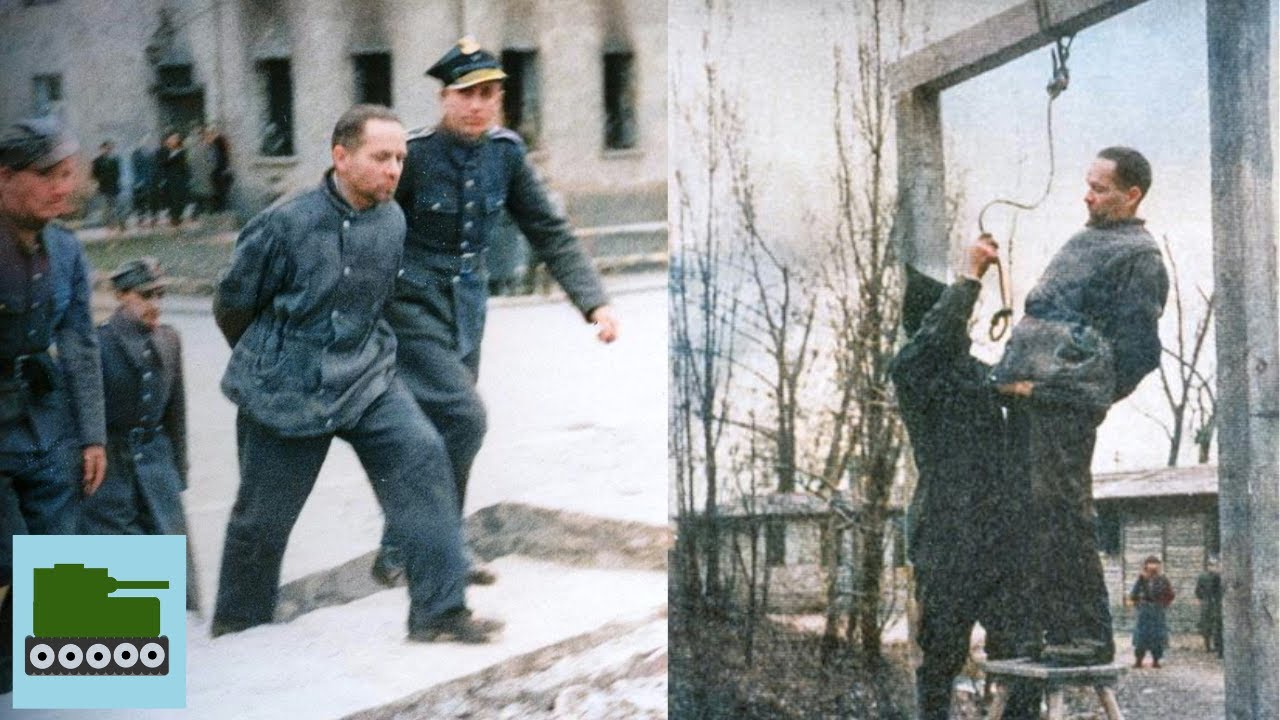
She never contacted her husband after his arrest. Rudolf Höss was brought back to Auschwitz, hanged, and executed inside his own concentration camp. But the story of Hedwig Höss is a debatable one, and it is strange to think she knew nothing about the deadly camp routine where her husband oversaw such tyranny.