They were called the two fun Windsor wives. Two young women who married into Britain’s oldest family and found in each other the one thing the palace could not provide: a friend who truly understood them.
They laughed together in the royal box. Their children played together. When one felt suffocated inside the family, the other was the person she called.
Yet when Diana died in a Paris tunnel in the summer of 1997, the two had not spoken in nearly a year.
There were letters. There were apologies sent and never answered.
What ended the closest friendship either woman ever had was not a man. It was not betrayal of the kind you might expect. It was a paperback book and a joke about a pair of shoes.
### A lonely princess
By the time Sarah Ferguson arrived, Diana had already spent five lonely years learning what that family does to the women who marry into it.
Diana Frances Spencer was born on July 1, 1961, at Park House on the royal estate at Sandringham. She was the youngest daughter of an earl and grew up almost in view of the family she would one day join.
Her childhood was aristocratic and, in its own way, lonely, spent in long silences inside a grand country house.
When she married Charles, Prince of Wales, at St. Paul’s Cathedral on July 29, 1981, she was 20 years old and the whole world was watching.
The dress. The carriage. The kiss on the balcony. The crowds filling the streets of London.
It was sold to the public as a fairy tale, and the public believed every word of it.
Within a year, she gave birth to Prince William. Two years after that came Prince Harry.
In theory, she had everything a young woman could be told to wish for. In reality, life behind palace walls was far colder.
Diana was the most photographed woman alive. She was also, in the ways that truly mattered, alone.
The marriage was strained almost from the start. The people around her were ancient, formal, and rigid in their ways, run by a household that had served the Crown for decades and did not quite know how to handle a shy young princess who cried and did not hide her unhappiness.
She was surrounded by people and served at every hour. Almost no one understood her.
The machine that made her famous was not interested in making her happy. It wanted her to smile, wave, produce heirs, and above all, keep her own pain out of the papers.
That was the loneliness that shaped everything that followed.
There is a particular cruelty in being envied by millions while feeling alone in your own home. Diana felt it every day.
The public saw the glamour, the beauty, the compassion, the woman who could light up a room and comfort a dying stranger. Behind all that, Diana lived a quiet, watched, guarded life.
Trust in that world was the rarest thing she possessed. She learned early and painfully that the palace is a place where you perform your role and do not share your secrets.
### The redhead who laughed too loud
Into this world, a few years later, came a young redhead with a laugh too loud for royal surroundings who did not seem afraid of anything.
Sarah Margaret Ferguson was born on October 15, 1959, making her almost two years older than Diana. Her father was Major Ronald Ferguson, the man who managed Prince Charles’s polo interests.
The Fergusons had long moved in the same royal circles. Sarah and Diana were distantly related and had known each other socially long before either married into the family.
They came from the same small world of English country families, a world of horses, house parties, and shared acquaintances.
What Diana saw in Sarah was something she desperately needed. Here was a young woman her own age, from her own background, who found the same things ridiculous and the same rules laughable, and who could make her laugh out loud.
For a princess who had learned to guard every word, that was more than just fun. It was a lifeline thrown from outside.
Diana did not simply want a friend inside the family. She needed an ally who spoke her language, someone who understood the particular loneliness of being famous and trapped at once, someone who was never afraid of her fame.
So when the opportunity came for that friend to enter palace walls, Diana welcomed it.
### The connection that pulled her in
Sarah had known Andrew since childhood. But in Diana’s orbit, the two were quietly brought together.
Sarah Ferguson and Prince Andrew, Queen Elizabeth II’s second son and Diana’s brother-in-law, had crossed paths for years. They met casually as children at polo matches and in the shared world of horse racing.
Andrew was the Queen’s second son, a serving officer in the Royal Navy, handsome and confident, and at that time one of the most eligible bachelors in the country.
Sarah was warm, funny, and spontaneous, a working young woman who had made her own way rather than waiting to be introduced.
On the surface, they were an unexpected couple. Then in 1985, they met again at Royal Ascot. This time, something clicked.
It was not pure chance. Diana was there, and according to Sarah’s later account, Diana wanted her friend inside the family to be close to her for companionship.
That claim deserves caution. The memory belongs to Sarah and was told years later, rather than written down in any record at the time.
What is not in doubt is that the friendship between the two women came first. Sarah entered the royal orbit through Diana’s world.
Diana was already Princess of Wales. She had the standing to open doors, and she opened them.
Whether she deliberately engineered it or was simply the warm presence that made the right introduction at the right moment, the result was the same. Sarah was pulled inside, and Diana was the one who wanted her there.
The engagement moved quickly, as royal engagements often do once the institution decides a marriage is suitable.
On July 23, 1986, Sarah Ferguson married Prince Andrew at Westminster Abbey and became Duchess of York. She was 26 years old.
The wedding was a major public occasion watched by millions around the world. For a moment, the monarchy seemed to have found a second young star to stand beside the first.
Two daughters arrived in quick succession. Princess Beatrice was born in August 1988 and Princess Eugenie in March 1990.
On the surface, Sarah had stepped fully into the same life as Diana. Palaces. Titles. Cameras. Crowds.
But Sarah fell into the same trap. And that was the side Diana understood better than anyone alive.
Marrying into the House of Windsor was not the fairy tale the public imagined. It was joining a closed, watchful institution that rewarded discretion above all other virtues and punished anyone who did not fit its mold.
Sarah did not fit the mold. She was loud where the family was quiet, warm where it was cold, quick-spoken where the family prized silence.
The press adored her at first. Then, as it always does, it became hungry for her.
For each woman, the friendship promised something the other could provide. Sarah gave Diana laughter and loyalty and the simple comfort of company. Diana gave Sarah a map of the minefield, the hard-won knowledge of how to survive inside the palace, which doors to avoid, which courtiers to be wary of, how to smile when you want to scream.
It was, in essence, a survival pact between two people the institution was not designed to protect.
In the early years, it worked beautifully. The two duchesses became a harmonious duo, and a country hungry for royal news adored them.
What neither could see, in the summer of that bright church wedding, was how much they would need each other, and how badly it would all end.
### The two fun Windsor wives
For a few bright years, they were the happiest story the monarchy had.
Two friends laughing in front of the cameras that chased everyone else. The press gave them a nickname and it stuck because it captured exactly what the country wanted to believe.
They were the two fun Windsor wives.
The phrase conjured mischief and warmth. Two young women bringing joy to a grim old institution. For a while, the pictures backed it up completely.
Diana and Sarah were photographed together at Royal Ascot, at polo matches, on ski slopes, in the royal box, sharing private jokes the cameras caught but never heard.
There is a famous picture of them at the races, teasing a friend with the tip of an umbrella, laughing like schoolgirls who had gotten away with something.
The monarchy had very few stories that made ordinary people smile. In those years, the friendship of the two young duchesses was the best one of all.
Behind those pictures, the friendship was real, and by every account, it ran deep.
Sarah said Diana was one of the cleverest people she ever knew, and that no one ever made her laugh the way Diana did.
They leaned on each other through the strange pressures of royal life, the constant surveillance, the press at every door, the feeling of being outsiders inside a machine that barely understood them and did not care about them at all.
They traded opinions about the courtiers and the endless rules. Their children grew up side by side. They spent holidays together with the children away from the cameras whenever they could.
When one needed to talk at any hour, the other answered the phone. In a life where almost no one could be trusted, they trusted each other.
It is hard to overstate what that was worth to two women in their position. Almost everyone around them wanted something, or took orders from someone, or might sell a private secret to a newspaper for the right price.
They found in each other someone who wanted nothing but the friendship itself. Someone who knew exactly what the pressure was like because she was living the same version of it next door.
Sarah always insisted they were never rivals. In those years, there is little reason to doubt her.
However much the tabloids liked to hint at competition between the family’s two young stars, the women behaved as allies against the same circumstances, not as opponents.
That closeness showed in small, ordinary ways. One of them matters more than all the rest.
The two households were close enough, and the women familiar enough with each other, that Diana would simply pass on to Sarah clothes and shoes she no longer wanted.
It was pure generosity from one friend to another, the kind of thing sisters do without thinking. A shared wardrobe passed back and forth.
A pair of shoes that once belonged to Diana found its way onto Sarah’s feet. In the warmth of those years, it meant nothing more than practical affection, a sign of how close they were.
That detail is worth remembering. It will come back with terrible consequences.
Those shared shoes, given as a simple kindness, would one day become the single thing at the heart of the friendship’s collapse.
But that was years away and unthinkable now. In the mid-1980s, the two fun Windsor wives were at the height of their glory.
Two duchesses at the peak of public affection, each convinced she had found a friend for life. The country believed it too and wanted to believe it.
What almost no one saw behind the laughter and the shared shoes was that both of those great royal marriages, the ones that had produced these two beloved young women, were already quietly rotting from within.
### Two marriages cracking behind the smiles
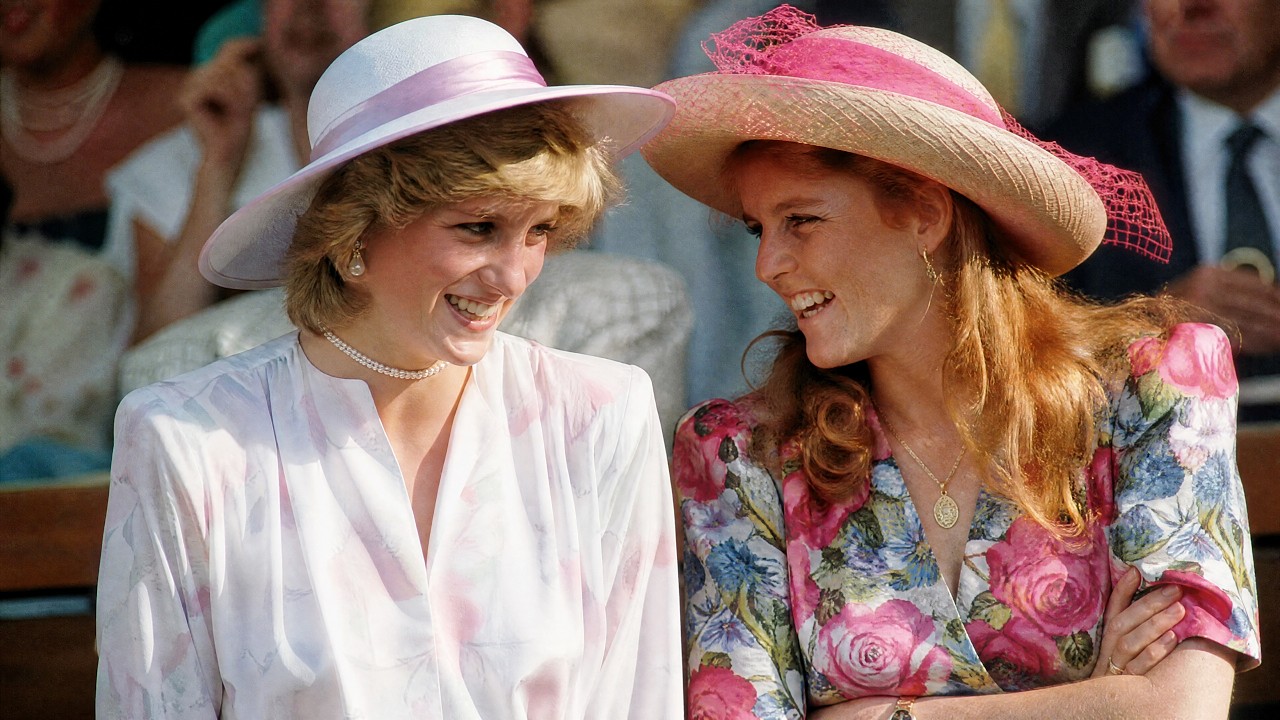
The duo the public loved was built on two marriages that were quietly falling apart at the same time.
The truth behind the image of the two fun wives is that both women were unhappy, and growing more unhappy with every passing year.
Diana’s marriage to Charles had been strained since almost the wedding day, and the strain deepened into something colder and more permanent.
By every account, Diana felt unloved, unheard, and out of place in her marriage. The warmth she did not find at home she found instead in her friendship with Sarah, in her two sons, and in a public that adored her more with every appearance.
But the private wound did not heal. It widened, carried behind the perfect public smile the cameras loved.
Sarah’s marriage was failing along a different path, though it led to the same bleak place.
Prince Andrew was a serving naval officer, away at sea for long stretches at a time. Sarah was left inside the royal machine without him, often alone, often feeling trapped.
She struggled with the coldness of court life, with the weight of the rules, with the way the same press that had once celebrated her now hovered and waited for her to fall.
The very traits that made her fun, the impulsiveness, the openness, the refusal to be ordered around, were the traits the institution did not like. They made her an easy target.
She made mistakes in judgment and was punished for them publicly, blown up on every front page.
This is the part of the story where the friendship mattered most of all.
Two young women, both mothers, both married to brothers, both slowly drowning inside the same large family, clung to each other for survival.
When Diana felt no one was on her side, Sarah was there. When Sarah felt the walls closing in, Diana was there.
The friendship was not a nice extra in those years. It was the thing that kept each of them standing.
Each was the only person who could look at the other and say, truthfully and without pretense, that she knew exactly what it felt like because she was living it too, at the same time, inside the same institution.
There were psychological dimensions to their bond that made it stronger than ordinary friendship.
The institution had, in a sense, chosen both women. It brought each of them in at a young age to serve a specific purpose, to marry and produce heirs, to stand and smile for the cameras.
Both discovered, slowly and bitterly, that the role left little room for the person performing it.
That shared discovery, the realization that the fairy tale was really a job with no exit, bound them together in a way outsiders could not fully grasp.
They were survivors of the same shipwreck, clinging to the same piece of wreckage in the same cold sea.
With Andrew away at sea for months at a time, Sarah floundered in the royal world without the one person who was supposed to stand beside her. She learned the cruelty of that world largely alone.
Diana had learned those lessons years earlier and had no one at home who wanted to hear her pain.
So each became family for the other. The friend you call late at night. The friend you meet for lunch who lets you say what cannot be said and never repeats it.
They laughed so they would not cry. They cried in front of each other because there was no one else they felt safe crying in front of.
That is what the two fun Windsor wives were really doing behind the bright pictures. They were holding each other up.
But there is a hidden danger in a friendship built on shared suffering. It would prove fatal in this case.
Such a bond can hold two people together with extraordinary force. It can also make each of them fragile, defensive, and quick to take offense, because both were already carrying more pain than they could bear.
When you have been hurt often and publicly, the smallest new wound can feel like a major betrayal.
And when private suffering turns into public scandal, when the collapse of two duchesses’ marriages is displayed before the whole world at once, the pressure on everyone caught in it becomes almost unbearable.
That is exactly what was about to happen. The slow, private decay of both marriages was about to become a loud, very public collapse.
And it would all happen in one terrible year, a year the House of Windsor would never forget.
### The year the cameras turned cruel
Within a single year, the two women went from being the family’s brightest faces to its biggest sources of embarrassment.
That year was 1992, the year that exposed the modern monarchy to everyone.
For Sarah, it began in March when the palace announced that she and Prince Andrew would separate. The fairy-tale abbey wedding of 1986 had lasted less than six years.
For a woman never fully accepted by the institution in the first place, the separation was the beginning of a long exile. The press, sensing weakness, moved in for the kill.
Sarah was no longer the charming new duchess. She became the embodiment of a failed royal marriage and a target for everyone.
That August, the worst happened. The Daily Mirror published photographs of Sarah on holiday in the south of France with an American financial adviser named John Bryan.
In the pictures, he was kissing her toes while she lay in the sun.
The images spread across the country and the world. The mockery that followed was merciless, total, and relentless.
Sarah was humiliated on a national scale. Overnight she went from duchess to a joke told in every pub and playground in Britain.
It was one of the most brutal public takedowns the royal family had ever seen, and Sarah endured it while still, in name and title, one of them. Those photographs would follow her for the rest of her life.
The scale of what collapsed in that single year is hard to absorb even now.
Sarah separated from Andrew in March. The France photographs appeared in August.
In those same twelve months, Diana’s marriage was exploding publicly through a book about her life by journalist Andrew Morton, and through leaked private phone conversations that stripped the family of whatever privacy remained.
At the wider family level, three of the Queen’s four children’s marriages failed or faltered in that period.
Queen Elizabeth II herself gave that year its lasting name. She called it her annus horribilis, her horrible year.
Three royal marriages collapsing. Two young duchesses in public scandal. An ancient monarchy stripped of its mystique. All within 12 months.
For Diana, 1992 was the year her private unhappiness became public property forever.
The Morton book revealed the misery of her marriage in detail that shocked the nation and changed the course of her life.
Diana had quietly and distantly cooperated with him, keeping her hand hidden, because she had decided the only way to fight a hostile palace was to put her own version of the truth before the world.
It was a calculated and dangerous risk. From that moment, Diana was at war with the institution she had married into, fighting it through the newspapers, learning along the way how to place a story and shape a headline.
It was a brutal time for a young royal woman in trouble. The journalism of that era discovered that royal marriages sell better in ruins than in bloom, and it chased both duchesses without mercy or shame.
A telephoto lens across a beach. A leaked recording. A source inside the family willing to talk for money.
Every private moment became fair game. Every misstep became a headline that pursued the woman who made it for years.
Both Sarah and Diana had been presented as the family’s brightest hopes. Now the same machine that had adored them turned to feed on them.
There is a special loneliness in being chased by millions while almost no one you know can be trusted. In that year, both women tasted the worst of it at exactly the same time.
So the two fun Windsor wives ended that terrible year both outcast, both disgraced, both alone in the cold the palace reserves for those who fail it.
The duo that had charmed the nation was finished. The two bright young stars had become the family’s two biggest scandals.
By the logic of ordinary friendship, this should have brought them closer than ever. They were the only two people alive who knew exactly what the other was going through, having lived through the same storm at the same time.
For a while, it did bring them closer. But shared disgrace is a strange and unstable glue. The two women, so alike in their circumstances, were about to be tested in a way that revealed how different they were inside.
### One who closes doors
Shared shame should have bound them more tightly. For a time, it did.
But the two women were profoundly different at their core. The years after 1992 changed both of them, and it changed them in opposite directions.
Diana, locked in her long war with the palace, became harder, sharper, and more guarded than ever before.
She learned that the press could be a weapon as much as a tormentor, and she taught herself to use it. She learned to control her image with total discipline, to place the story where it did the most good, to manage exactly how the world saw her, down to a glance or a dress.
The shy young woman who used to cry behind palace walls had become one of the most media-savvy figures on earth, capable of winning a public battle against the most powerful family in the country.
It was armor, and she needed every piece of it. But armor changes the person wearing it. It changed Diana.
Part of that hardening was a fierce new wariness of betrayal. People who knew Diana well described a woman who could be warm, funny, and endlessly generous. And who could also cut someone off completely, without appeal and without return.
Her former butler, Paul Burrell, who saw her home life from the inside, put it plainly in later years. Once Diana decided a relationship was over, it was over. There was no arguing, no gradual thaw, no second chance.
The door closed and stayed closed.
It was a survival instinct learned in a family and a marriage that had wounded her again and again. But it was also a loaded weapon, and once loaded, it could be aimed at anyone at all.
Even the friend who had shared her worst years.
Sarah took a completely different direction. Where Diana became guarded, Sarah remained open, spontaneous, and warm, wearing her feelings clearly.
Quick to make a public mistake, and just as quick to try to fix it. The kind of person who apologizes first and worries about the details later.
She simply assumed that a friendship as deep as theirs could survive anything the world threw at it. Because in the end, love was surely stronger than any disagreement.
She believed there would always be a chance to make things right. Always another lunch, another phone call, another laugh about how ridiculous it all was.
She believed, without needing to say it, that time would stretch to fit everything.
That difference in temperament is the hinge on which this entire story turns.
One woman had a spring-loaded door that closed and locked tight. The other could not believe that any door between friends could truly close forever.
In the good years, that difference did not matter at all. Two people can love each other across that gap for a lifetime and never notice it exists.
It only shows when something goes wrong. When a wound opens and one waits with an outstretched hand while the other simply turns and walks away without looking back.
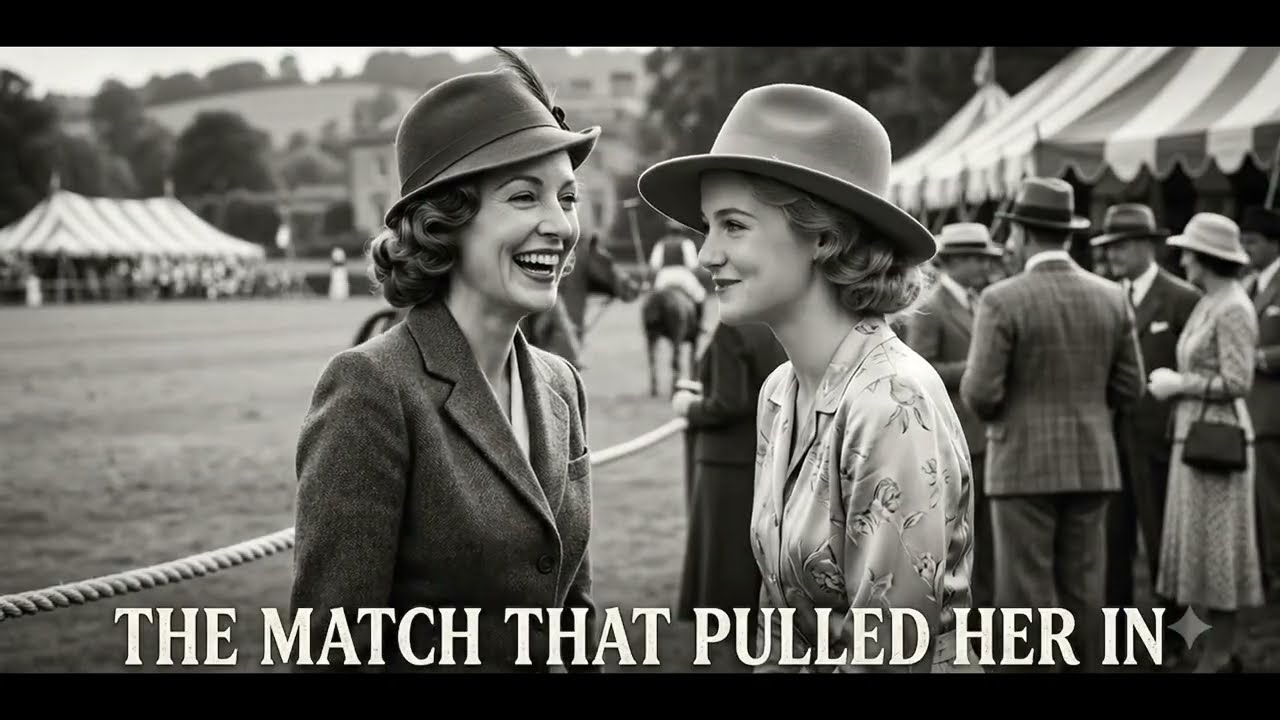
Something was about to go very wrong.
In those same years, amid the wreckage of her marriage and her public humiliation, under the weight of large debts, Sarah was doing what many cast out by the palace had begun to do. She was preparing to tell her story in her own words and sell it to the world.
The tell-all memoir had become the weapon of the age and the lifeline, the way those without power inside the Crown defended themselves and paid their bills at the same time.
Diana herself had done exactly that.
Sarah did not see the danger coming. She was writing a book about her life, and her life, naturally, included the friend who meant more to her than anyone on earth.
She meant it as a tribute. She could not imagine that one friendly, foolish line in the book would end the friendship forever.
### The book that ended a friendship
Months after her divorce was finalized, Sarah told her story in a book. One small, friendly anecdote would cost her her closest friend.
1996 was the year both women finally broke free of the marriages that had imprisoned them. Both paid a price for that freedom.
Sarah’s divorce from Prince Andrew was finalized that year. Diana’s divorce from Charles was completed in August of the same year, ending the marriage that had begun with such extravagance at St. Paul’s Cathedral 15 years earlier.
Two duchesses, married into the royal family within five years of each other, were now divorced from it within months of each other.
The strange parallel that had run through their entire friendship, the way their lives seemed to rise and fall in sync, held to the end.
That November, Sarah published her autobiography. It was called “Sarah: My Story,” written with American writer Jeff Coplon. It was her own account of the years inside the family, the good years and the terrible ones.
Such books had by then become a small, profitable industry. People used and discarded by the palace were learning that their stories were worth real money, and they were selling them one by one.
Sarah, newly divorced and carrying large debts, had every practical reason to tell her story. She was not the first insider to turn her life into a book, and she would not be the last.
In that sense, the memoir was an ordinary act of survival, the kind of thing her advisers would have encouraged and her bank manager welcomed.
A divorced duchess with bills to pay and a story the public wanted. Selling it was simply what people in her position did now.
What made this book different was not the money or the motive. It was who was mentioned in its pages.
Somewhere in that book there was a passage about Diana, written with love, not malice.
Sarah wrote about how close they had once been, close enough to share a wardrobe. She reached for a small, self-deprecating joke to prove how close that was.
In a line that would be quoted for decades afterward, she wrote that when she lived in Clapham, south London, Diana helped her out by giving her all her shoes and, less pleasantly, her verrucas, the small growths also known as plantar warts.
The shared shoes, once a private joke between two friends, had finally made it into print, offered as a warm, miniature symbol of how intimate the two women had been.
Read one way, the line means nothing at all. A fond, slightly silly memory of two friends so close they swapped shoes without a second thought.
That is certainly what Sarah meant. It is what most people who read it understood.
It was a joke at her own expense as much as anyone else’s. A warm look back at the fun wives years. At the days when Diana would simply hand over shoes she no longer wanted and Sarah would wear them gratefully.
For the woman who wrote it, that passage was affection set down on paper. Proof of a friendship she treasured.
She had no idea she was lighting the fuse of a crisis. Because Diana did not read it that way. Not at all.
To understand the scale of the damage, you must remember what Diana had become by 1996.
She was the most famous and most photographed woman in the world. An icon of glamour and elegance who protected her image with total, exhausting care.
Every photograph, every appearance, every quoted word was shaped and controlled by her own hand.
And now here was a book written by her closest friend, sold in shops across the country, putting something as unglamorous and personal as a foot complaint into the public record under Diana’s own name, for the amusement of millions of strangers.
For Sarah, it was pure affection. For Diana, it was a friend making her a laughingstock and getting paid for it.
That line landed like a physical blow. And Diana, the one woman in this story who could close a door and never open it again, closed that door without hesitation.
### Why Diana could not forgive it
For Sarah, it was a joke about how close they were, close enough to share a wardrobe. Diana did not see it that way at all.
Biographer Tina Brown, who wrote one of the most closely observed accounts of Diana’s life in her 2007 book “The Diana Chronicles,” saw that small passage as fatal to the friendship.
Her explanation was as sharp as it was cruel. She wrote: “Goddesses don’t get verrucas.”
In five words, she summed up the whole tragedy.
Diana had spent years building herself into something approaching a goddess in the public imagination. Flawless. Radiant. Glowing. Above the small, ordinary indignities of the body.
Then her closest friend, with a careless and loving joke, brought her back down to the level of foot warts and secondhand shoes in a book anyone could buy.
On the surface, it seems a small thing to end a decade-long friendship. In a sense, it was a small thing.
But it touched the nerve Diana protected above all others. Her image. Her dignity. Her complete control over how the vast world saw her.
For most people, a joke about a verruca is harmless, even endearing. For a woman whose power and survival depended on being adored and admired, on being flawless before the camera, being made to look silly by a trusted friend in a book sold for profit was a wound in the one place she could not bear to be touched.
The importance was not in the size of the joke. It was in where it landed.
There was a deeper grievance beneath the joke, and it matters more than the joke itself.
Diana felt that Sarah had traded on their friendship. That she had taken the privacy between them, the shared shoes, the closeness, the years of trust, and turned it into copy, into pages for sale.
Here is the sharp and painful irony at the heart of this story. Diana herself had done something strikingly similar, secretly cooperating with Morton’s book to tell her own story to the world.
She could forgive herself for putting her story in the press because she owned the story, and because she was fighting for her survival against a family that had crushed her.
What she could not forgive was being made a secondary character, a source of amusement, in someone else’s book, without controlling a single word of it.
That distinction reveals almost everything about the woman Diana had become by the end.
She used the press brilliantly and ruthlessly, but always on her own terms, in her own voice, controlling every word and every image.
To be written about by someone else. To be reduced to a joke she had not approved. To be stripped of control over her own image. That was unbearable to her.
It broke the only rule that had come to govern her embattled life. She decided who told her story and how it was told.
Sarah had broken that rule, however carelessly, and Diana treated the break as a betrayal of the deepest and most private kind.
It would be wrong to state as fact what was going through Diana’s private mind. She left no record of it and never fully explained herself to anyone who wrote it down.
What can be said with confidence is that after the book came out, she stopped speaking to Sarah entirely.
Whether the shoe-and-verruca passage alone ended the friendship, or whether it was simply the last and cruelest of smaller wounds, or the final proof that a friend had exploited their closeness for personal gain, cannot be known for certain.
What is certain is the result. The warmest, deepest friendship of their lives went cold, and it went cold over a joke about a pair of borrowed shoes.
Sarah, warm and impulsive and utterly confident that love would win in the end, refused to accept it. She began immediately trying to reach out.
She had no idea how little time was left to build bridges.
### The letters that went unanswered
Sarah did not accept the silence quietly. She wrote and she pleaded, but the letters simply ended up in a drawer that was never opened.
This is the part of the story that turns a quarrel between two friends into a real tragedy.
The rift between Diana and Sarah was not simply two friends drifting apart in mutual anger, each nursing a grudge. It was one woman begging for forgiveness and another refusing to respond.
Sarah, by her own account and the accounts of those around Diana, could not bear the silence for a moment. She wrote letters, more than one, over many months.
She tried to reach out again and again through every channel available to her. She apologized clearly and repeatedly.
She believed, as she later put it in her own words, that what had happened between them was not really important. That they could surely sort it out the way friends always did.
She was confident their friendship was too deep to end over something so trivial and silly.
Diana did not respond to any of it.
The letters arrived and went unanswered. The apologies were offered and hung in the air. The door Diana had closed stayed closed, month after month.
Sarah stood outside it, hand raised to knock, waiting for an answer that never came.
For a woman like Sarah, who assumed warmth would always find its way back, the silence was baffling and painful. She kept knocking anyway, because she could not imagine their friendship had actually ended.
Those close to Diana watched the rift become a permanent break. Paul Burrell, who served as Diana’s butler and knew the details of her life, later described the final period in careful words.
He said that for roughly the last six months of Diana’s life, the two women did not communicate at all. Not in any form.
By the time Diana died, the two had not spoken for about a year.
Burrell said something had happened in their personal lives that they found impossible to get past. He did not always specify exactly what it was, but every account of the rift traces back to the same source: the book and the line about the shoes.
The accounting of that silence is what makes it unbearable to consider.
These two women had been friends for more than a decade. They had married into the same family just five years apart. They had raised their children side by side, spent holidays together, survived the annus horribilis together, and been cast out of the family hand in hand.
In the face of all that, there was nearly a year of no contact. Within that year, a final six months of total, crushing silence.
A friendship that spanned more than ten years held hostage by a disagreement neither woman necessarily believed would be permanent.
That is the cruelest truth of all.
Sarah did not think the silence was the end of anything. She thought it was a phase, a period of stubbornness that would pass with time, as Diana’s moods sometimes did.
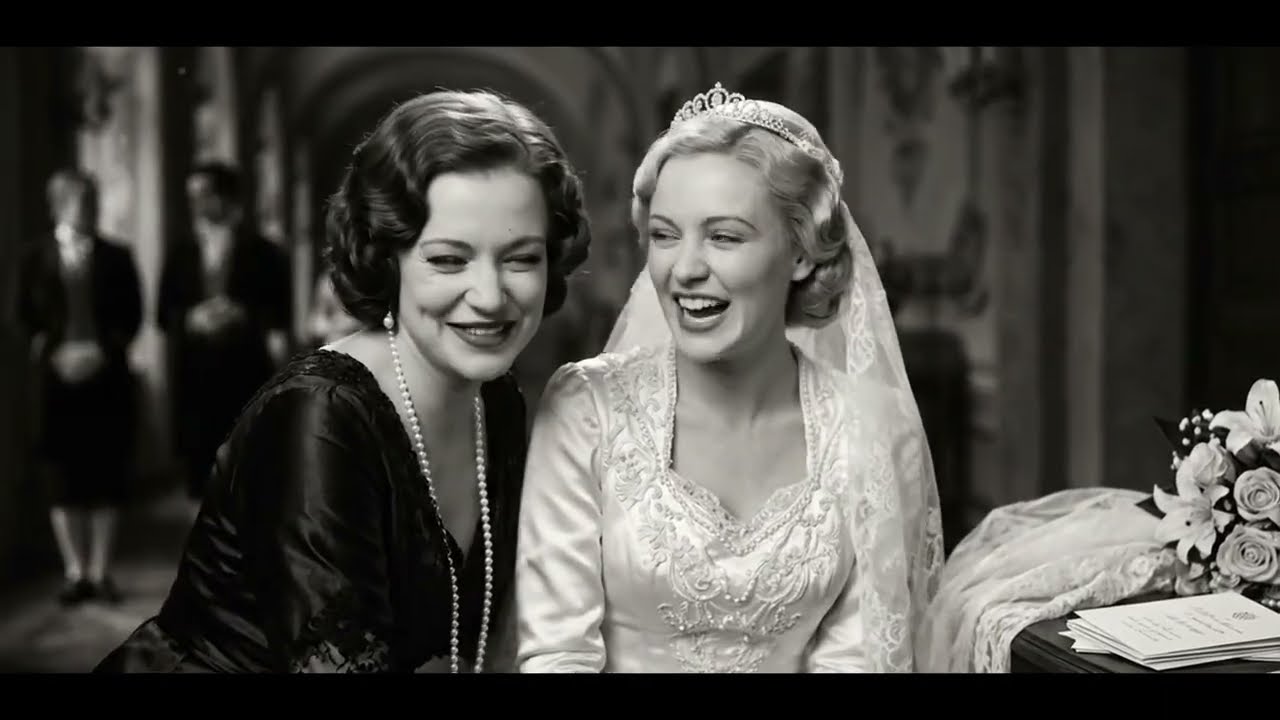
She kept her door open. She kept writing and waiting, confident that one day the phone would ring and Diana’s voice would be on the other end. That they would laugh together about how silly the whole thing was.
She believed, right up to the end, that there would be plenty of time to fix things.
Everyone who has ever quarreled with someone they love believes the same thing.
There were letters that went unanswered. And Sarah, in the summer of 1997, was still waiting for a reply that never came.
The two women still moved in the same small world, the same family, the same circle. It would have taken one phone call from either of them.
The distance between them was nothing at all. It was just a closed door and a shared belief that it could always be opened later.
But later was about to run out.
### Paris took the time they had left
On the last night of August 1997, the chance to make things right ran out in a tunnel beside the Seine.
On August 31, 1997, Diana, Princess of Wales, was killed in a car crash in the Pont de l’Alma tunnel in Paris. She was in the car with Dodi Fayed and their driver. She was 36 years old.
The most photographed woman in the world, the icon who had guarded her image so fiercely and at such cost, died in moments inside a tunnel beside the Seine, chased to the very end by the same cameras that had pursued her all her life.
The news broke in the early hours. By morning, the whole world had stopped to absorb what had happened.
The grief that followed was immense and strange, a global outpouring unlike anything seen for a single person. The flowers piled at the palace gates. The silent crowds. The feeling that something in the country itself had broken.
But for Sarah Ferguson, the loss carried a second wound hidden inside the first.
She had not only lost a princess the world loved. She had not only lost a sister-in-law. She had lost the closest friend she had ever known, and she had lost her in a silence that could now never be broken.
There would be no phone call now. No reply to the letters. No laughter to see them through over a long lunch. No growing old together.
The door Diana had closed was now closed forever. Sealed shut not by a final decision, but by an accident that eliminated every remaining chance of reconciliation.
In the days that followed, the country surrendered to a grief it could barely explain. Sarah grieved among the millions while carrying a private sorrow none of them could share.
The world was crying for a princess it had watched from afar. Sarah was crying for a friend who had once given her a pair of shoes.
The friend she used to call in her difficult years. The friend she had written letters to, and whose reply she was still waiting for on the morning the news broke.
For others, the loss was enormous but simple. For Sarah, it was tangled up with an unresolved quarrel. That made it a heavier burden to carry.
There is one additional detail. It must be handled with great care because it is only an account, not a proven fact. It concerns a private moment no one can fully confirm.
According to accounts that circulated in later years, Diana asked about Sarah in the days just before her death. The words passed from mouth to mouth, offered only as rumor, not as fact, were something like: “Where’s that redhead?” “I want to talk to her.”
“Redhead” was an old and affectionate nickname, a reference to Sarah’s hair, the kind of name you only give to someone you love.
If true, and it is only a story that cannot be verified, it means Diana was beginning to soften in her final days. It means the closed door was beginning, quietly and without fanfare, to open again.
It means the two friends were perhaps only days away from reconciling, from ending the long silence themselves, when time ran out for both of them.
That is the possibility that gives the whole story its most painful edge.
The rift was almost certainly temporary. Both women, in their very different ways, seem to have been moving back toward each other.
Then, on a summer night in a Paris tunnel, the future in which they reconciled was erased before it could arrive.
For Sarah, that possibility, the idea that Diana had wanted her after all, would become a source of both comfort and torment for the rest of her days.
Comfort because it suggested the friendship had never truly died in Diana’s heart, whatever the silence suggested.
Torment because it meant they had come so close, so painfully close, to fixing everything between them, and missed by only days.
The story of the two fun Windsor wives finally ended. Not with a great scandal. Not with a great betrayal. But with a closed door, and with the oldest and most common of human errors: the quiet, arrogant belief that there will always be more time.
### The regret Sarah carried
In the years and decades after Diana’s death, Sarah Ferguson returned to that loss again and again in interviews and in her own writing.
The note she always struck was the same. Grief. Regret. And a quiet, stubborn refusal to let the world reduce what they had shared to a petty rivalry between two duchesses.
She had lost the person who was, in her own words, one of the quickest-witted people she had ever known. The friend who made her laugh like no one else on earth.
And she had lost her without the reconciliation she had been working toward.
In her memoir “Finding Sarah,” published in 2011, some 15 years after the book that caused the rift, she wrote about the estrangement with clear and obvious pain.
She admitted that the two of them had not spoken for a year. She added that she never knew the real reason, except that if Diana got something into her head, it stayed there for a while and did not shift.
She wrote about the letters she sent, and about her belief that none of what had happened between them really mattered in the end, and that they should simply have sorted it out and moved on.
The words carry the unmistakable tone of a woman still making her case to a friend who can no longer hear her.
She has been firm and consistent on one point above all others. She has always insisted they were never rivals.
When people suggest that jealousy or competition poisoned the friendship from within, she pushes back hard, saying people want to tear down something that was strong, and they cannot leave something good alone.
Whatever finally broke the bond, in her telling it was never a war between two women. It was a closeness, then a quarrel, then a terrible piece of timing that prevented them from healing.
She mourns the friendship publicly as one of the greatest relationships of her life, not as a dispute she needs to win.
There is a particular kind of sorrow in her reflections. The special grief of the one left behind when a friend dies.
Diana died at 36, young and frozen forever at the height of her fame and beauty. Sarah lived on, and is still living, for decades, carrying in her memory the brightness of the years when they were the two fun Windsor wives, and carrying with it the far heavier burden of knowing it all ended in silence.
She has often spoken of her wish that they could have grown old together, become two old ladies sitting in the sun, finally laughing about that silly quarrel over a book and a pair of shoes.
That is the future the Paris tunnel took from her. And it is the one she seems to mourn most of all.
What comes through clearly in everything she has said in the years since is not self-defense. It is longing.
She does not spend her energy defending the shoe line or arguing that Diana overreacted to it. Instead, she spends her time grieving.
She is still, after all this time, reaching for the friendship rather than holding on to the quarrel.
And in that reaching, there is something that tells you the bond between them was as deep as she always claimed. Because a shallow friendship does not leave a wound that lasts a lifetime and still hurts decades later.
And in her endless reaching, there is also a lesson. A lesson that has nothing to do with crowns or palaces or titles, and everything to do with anyone who has ever let a silence between loved ones stretch too long.
### What a small thing can cost
History has been kinder to the two fun wives than the tabloids were, and sadder about the way their friendship ended.
Time has softened the story and clarified it. Where the 1990s press loved to portray the duchesses as rivals, always scrambling for attention and headlines, the settled view now is far gentler and far sadder.
It holds that they were two women thrown into the same extraordinary and cruel situation, who found in each other a rare and genuine friendship, and who finally lost it over something so trivial that, given time, they would certainly have laughed about it.
The word “scandal” in the telling of this story is really a reference to the way the newspapers sold everything about that family, turning every human moment into a headline. The truth of the matter was never a scandal at all.
It was a friendship. A quarrel. And a death that came before that quarrel could be repaired.
Look again at where it began and where it ended, because the tragedy of that arc is almost unbearable.
The story began with a pair of shoes passed from one friend to another, an ordinary, loving gesture, a shared wardrobe between two women who trusted each other with everything.
It ended with that same pair of shoes turned into a careless joke in a book, becoming the wedge that separated them forever.
The thing that once meant love came, in the end, to mean betrayal. And between those two meanings lies the entire story of the rise and fall of the two fun Windsor wives, and the whole arc of a friendship measured in a single pair of borrowed shoes.
The deeper truth the story reveals has less to do with royalty than it appears.
The collapse of Diana’s relationship in this friendship was inseparable from her strength. It was woven into the same thread.
The very discipline that allowed her to survive a hostile palace and a cruel marriage. The fierce refusal to be made a fool of. The rigid instinct to close a door and never open it again. That was the same quality that cost her the friend who had shared her worst moments.
The armor that saved her life was also the thing that isolated her from the person who loved her most. Her strength and her loss were two faces of the same coin. One protected her. The other isolated her.
And there is a simpler lesson inside, one for everyone who hears this story.
Both women assumed there was plenty of time. Sarah wrote her letters and waited, utterly confident the quarrel would pass as quarrels do. Diana, if the reports are true, was beginning to soften and ask about her friend in her final days.
Neither of them thought the silence was really the end. Because a friendship that deep could not end over something so trivial.
They both thought they would sort it out eventually. They both thought there was still time.
That is the assumption the Paris tunnel revealed, in a moment, to be as fragile as it has always been for everyone.
So the story of Diana and Sarah is not really about the Crown at all.
It is about pride and time. About how the people who understand us best are the ones we can least afford to lose over something that will not matter in a year.
It is the oldest and most human of lessons, wrapped in a title and a crown and lit by a thousand camera flashes.
Pride is cheap. Time is not.
And the door you leave closed today may be a door you never get the chance to open again.
They were once the two fun Windsor wives, laughing together in the royal box, sharing a private joke the cameras caught but no one heard.
They were supposed to grow old together and laugh about all of it.
They ran out of time by only a few days.