In September 1938, Adolf Hitler threatened to unleash a European war unless the Sudetenland, a border area of Czechoslovakia, was ceded to Germany. The leaders of Britain, France, Italy, and Germany met in Munich and agreed to the annexation in exchange for a pledge of peace from Hitler. The Czechoslovaks were not invited to the conference.
Less than six months later, on March 15, 1939, Nazi Germany invaded and occupied the Czech provinces of Bohemia and Moravia. Hitler arrived in Prague and established the Protectorate of Bohemia and Moravia. More than 118,000 Jews living in the protectorate found themselves under Nazi domination. One of them was Fredy Hirsch.
Fredy Hirsch was born on February 11, 1916, in Aachen, then part of the German Empire. His father, Heinrich, a butcher and food wholesaler, died in 1926 when Fredy was only 10 years old. In 1931, Fredy took over the leadership of the scouting branch of the local Aachen Jewish youth association. A year later, he helped found the Aachen branch of the Jewish Scouting Association of Germany, which had Zionist tendencies and close ties to the Maccabi youth movement.
The Jewish community of Aachen was well-integrated and experienced little antisemitism. That changed in 1933 when Hitler and the Nazi Party came to power. The regime quickly began restricting the civil and human rights of Jewish people. Because of growing antisemitism, 300,000 Jews fled Nazi Germany between 1933 and 1939. Among them were Fredy’s brother Paul and their mother Olga, who fled to Bolivia in 1933.
Fredy did not emigrate with them. He remained in Germany and moved first to Frankfurt and then to Dresden, where he worked from 1934 as a sports instructor for the Maccabi youth movement. In 1935, the Nuremberg Laws were announced, stripping Jews of citizenship and forbidding marriages and extramarital relations between Germans and Jews.
Hirsch’s situation was even more complicated because he was also a homosexual man. In June 1935, the Nazis revised Paragraph 175 of the German criminal code, which banned sexual relations between men. The revision gave the regime legal tools to prosecute and persecute men engaged in same-sex behavior in much larger numbers than before. In the Nazis’ understanding, these men were criminals and enemies of the state.
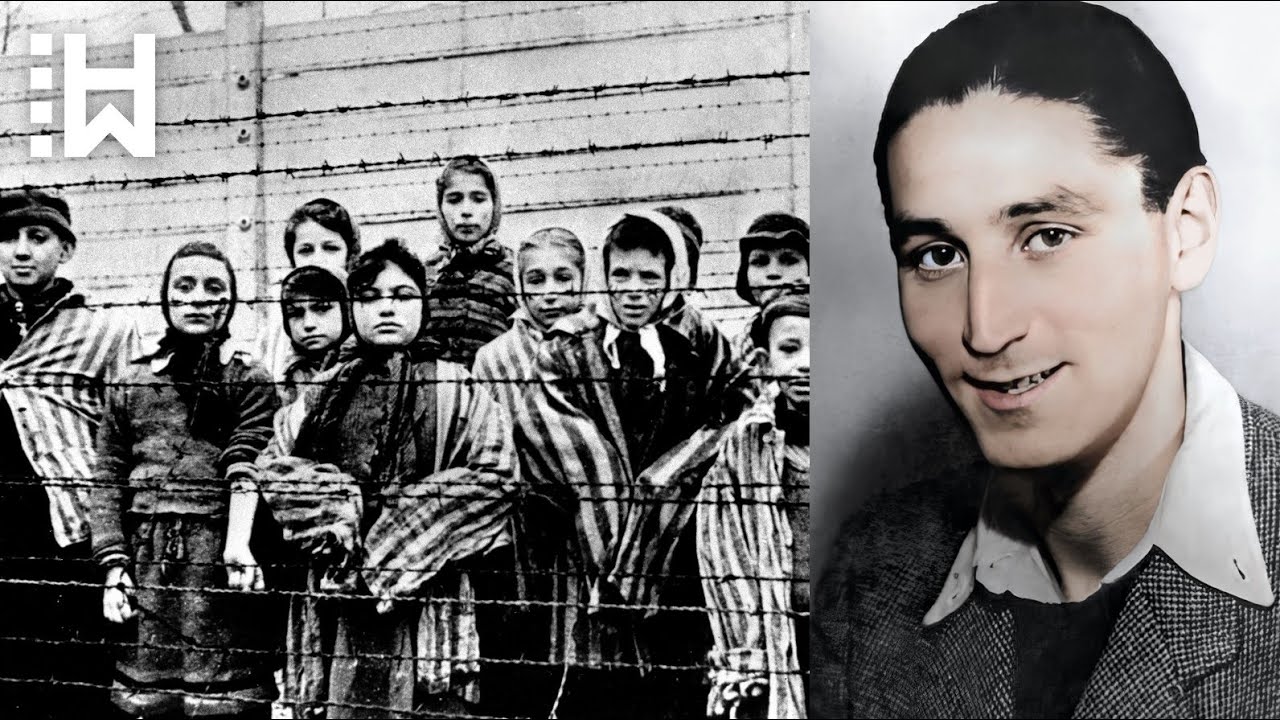
In November 1935, Fredy Hirsch moved from Nazi Germany to Czechoslovakia. He lived in Prague, then in Brno and Moravian Ostrava. In Brno, he met his life partner, the medical student Jan Mautner. Together they published the Maccabi newspaper. Fredy also organized local Maccabi Games and set up youth and adult groups for physical education.
In March 1939, after the Nazi occupation of the Czech provinces, Fredy moved to Prague, where he continued to work for the Maccabi organization. The Nazis quickly passed new anti-Jewish laws designed to exclude Jews from society. Jewish teachers, lecturers, army officers, and doctors were dismissed from government jobs. Jewish children were banned from attending public and private schools from August 1940 onward.
Despite these restrictions, there was still an oasis of fun and hope for Jewish children in Prague. Hagibor, meaning “Hero” in Hebrew, was a playground with tennis courts, volleyball courts, and a running track. Jewish children could play games and participate in competitions there. All of this was organized by Fredy Hirsch, whom the children adored.
Children had heard rumors that Fredy was a homosexual, but they did not pay attention to it. They saw him as a great athlete and an example they looked up to. By that time, the Nazis had forbidden Jews to travel by public transport, so the children had to walk from all over Prague wearing yellow stars on their coats.
The systematic deportation of Jews from the Protectorate started in October 1941 with transports to the Lodz Ghetto. In November 1941, Reinhard Heydrich established the Theresienstadt Ghetto in the fortress town of Terezín. Fredy Hirsch was sent there in early December 1941 and was appointed head of the children and youth department of the Jewish Ghetto.
Fredy insisted on maintaining discipline, regular exercise, and strict hygiene to maximize the children’s chances of survival. He established a good relationship with SS guards, which helped him arrange better housing and food for the children. Although he was able on a few occasions to remove children from transports to death camps, almost all the children were eventually deported.

Fredy himself was sent to Auschwitz in September 1943. The box cars from Theresienstadt were so overcrowded that people had to stand for about two days. There was no sanitary facility except a bucket that overflowed within hours. Many deportees died before the trains even reached their destinations.
The Jews from Theresienstadt were placed into the B II b family camp, called the Theresienstadt family camp Auschwitz. It was one of nine camps built in the Birkenau subcamp of Auschwitz. About 18,000 Jews deported from Theresienstadt were placed there between 1943 and 1944. They received tattooed numbers but were not subject to selection upon arrival.
The family camp was set up for propaganda purposes. All other living conditions were the same as in the rest of the camps: hunger, beatings, hard labor, and limited access to water. The camp consisted of thirty-two wooden barracks, originally horse stables, with no windows. Each housed 300 prisoners.
Because Fredy was charismatic and spoke German as well as the Nazis, he once again managed to arrange better conditions for the children, including the creation of the Children’s Block. It was located in barracks number 31, and Fredy became its Block Elder. The children could stay there during the day until the afternoon roll call.
The block was empty except for small stools, where the children sat in age groups in a circle with an adult responsible for them. They played guessing games or sang but were also secretly taught. Teaching was done only orally. There were no toys or pencils. The only aids were some 12 to 14 books smuggled in by prisoners.
Hirsch convinced the camp commander to allow the Children’s Block, claiming it would keep the children busy while their parents performed forced labor. He also obtained additional food for the children and arranged for the block to be heated. He was extremely strict about hygiene, insisting the children wash daily even in the frigid winter of 1943–44.

Due to his efforts, the mortality rate of the children was nearly zero, compared to the overall mortality of about 25 percent of the inmates in the first six months. In February 1944, the Auschwitz resistance movement decoded the meaning of “SB6,” a cryptic abbreviation for murder in the gas chamber after six months. The Jews to be killed were those who had come in the September transport together with Fredy Hirsch.
In March 1944, the Jews from the September transport were told they would be sent to another camp. They suspected it was a lie and believed they would be killed in the gas chambers instead. Some of the Jews decided to make an uprising. They wanted to set the barracks on fire, cut through the gate, and run for their lives.
Fredy Hirsch was a member of the uprising. His task was to start it by blowing his whistle, which he always wore around his neck. On March 8, 1944, one hour before the uprising was to begin, Hirsch asked the doctors to give him a tranquilizer, as he was extremely worried about the children. The doctors deliberately overdosed him with sleeping pills to prevent him from leading the uprising.
The reason was that Dr. Mengele had promised the doctors they would be recalled to B IIb, because he needed them in the hospital. When the time came to blow his whistle, Fredy Hirsch was in a deep sleep and was unable to launch the uprising. The uprising did not take place, and the doctors were indeed recalled as promised.
That same day, still unconscious, Fredy and 3,800 men, women, and children from the September transport were loaded onto trucks and driven to the gas chambers, where they found their death. For many years it was believed that Fredy had committed suicide. However, according to the testimony of Dita Kraus, who knew Fredy well, he would never have escaped responsibility or committed suicide.
Jan Mautner, Fredy’s Jewish boyfriend, did survive the war. He had been sent to Theresienstadt in July 1942 and was deported to Auschwitz in December 1943. In May 1944, Mengele performed a selection of inmates to be sent to Germany, and Mautner was among them. He survived a death march back to Theresienstadt and was liberated shortly after.
Mautner then found a new partner, finished his medical degree, and worked as a doctor. He died in 1951 of tuberculosis he had contracted in the camps. When Fredy was carried to his death on a stretcher, he was only 28 years old.
Even today, this good and brave man, who did everything in his power to shield hundreds of children from the dreadful reality of Auschwitz, is not forgotten. All who knew Fredy speak about him with great respect and recognition, and some affirm that they owe their lives to him. Fredy was a hero who dedicated his life to those who needed it most, and in the end, he died with them.