Peggy Lipton died on May 11, 2019, in Los Angeles. She was 72 years old. She had spent 15 years fighting colon cancer. Her daughters and nieces were with her. There were no cameras, no press, only family.
She had once been one of the most recognizable women on American television. She won a Golden Globe in 1971. She was a fashion icon. But for years, she largely disappeared from public view. This is the story of her life, her marriage to Quincy Jones, and the daughters she raised.
Margaret Ann Lipton was born on August 30, 1946, in New York City. She grew up in Lawrence, Nassau County, on Long Island. Her father, Harold Lipton, was a corporate lawyer who graduated from Harvard Law School. Her mother, Rita Benson, was an artist born in Dublin to Jewish parents of Latvian origin. Her paternal grandparents were Jewish immigrants from Russia.
Around age seven, Peggy developed a severe stutter. At 13, at summer camp, she could not say her own name. She later wrote in her memoir, "Breathing Out," that she would stay awake at night worrying about how to avoid certain consonants.
In the same memoir, she disclosed that she had been sexually abused by a relative around age seven. She connected the abuse to the stutter and the anxiety that followed her throughout her life. She did not sensationalize it. She placed it in the record and kept moving.
She transferred to the Professional Children's School in New York. At 15, she signed with the Eileen Ford modeling agency. In her late teens, she began using drugs, including cocaine and peyote, to manage depression and anxiety. At 19, she moved with her family to California and signed with Universal Studios.
In 1968, ABC launched "The Mod Squad." The show followed three young people in trouble with the law who went undercover for the Los Angeles Police Department. Peggy Lipton played Julie Barnes. The show was revolutionary for its time, featuring an interracial main cast and addressing topics like the Vietnam War, drug addiction, and racism.
Peggy became the face of the show. Her long ash blonde hair and serious eyes made her a fashion icon and cultural touchstone. She won a Golden Globe for Best Actress in a Television Series Drama in 1971. She earned four Emmy nominations. But she was miserable.
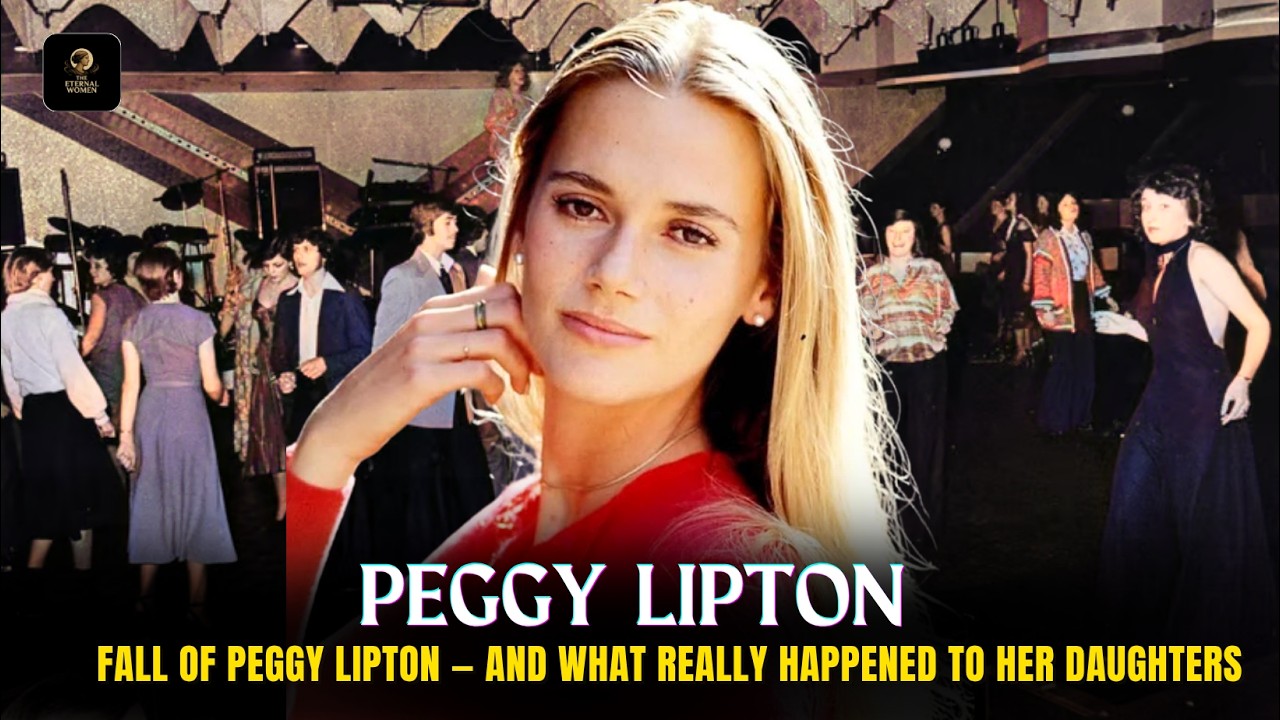
"Fame really drove me into my house," she told the Los Angeles Times in 1993. "I was very paranoid. I didn't like going out. I had no idea how to be comfortable with the press. I was very young. It was really hard for me."
The show ran from 1968 to 1973. When it ended, Peggy was 26. She walked off stage and tried to figure out what came next.
She met Quincy Jones in the early 1970s. He was 14 years her senior and one of the most influential music figures of the 20th century. He had arranged for Count Basie, Frank Sinatra, and Miles Davis. He was the first black vice president of a major American record label.
They married in 1974. Peggy was 27. The interracial marriage drew immediate and sustained racist backlash. It came from strangers. It also came from Peggy's own mother. Peggy wrote about this in "Breathing Out" without flinching. She did not apologize for her choices.
Quincy continued producing at a massive scale. He produced Michael Jackson's "Off the Wall," "Thriller," and "Bad." During Peggy's years out of the spotlight, he was one of the most powerful men in entertainment. Peggy stayed home.
She stepped back from her career. She raised their daughters. She became a private person in Bel Air. She wrote that the marriage was passionate and complicated, with periods of confusion and difficulty. She loved him. She did not regret her daughters.
Kidada Ann Jones was born in 1974, the year of their wedding. Rashida Leah Jones arrived in 1976. They were raised in Bel Air, biracial and beautiful, in a world with strong opinions about both facts.
When their parents separated in 1986, the girls split. Kidada, 12, went to live with her father. Rashida, 10, went to live with her mother. They remained close, but they navigated the divorce from different vantage points.

Kidada grew up to work with Tommy Hilfiger at 19. She became a model, stylist, and fashion designer. She eventually built a line called Kidada for Disney Couture. Rashida went to Harvard, studied philosophy and religion, and graduated in 1997. She went into acting, landing the role of Ann Perkins in "Parks and Recreation." She co-wrote and co-starred in "Celeste and Jesse Forever." She had, by her mid-30s, built a career that stood entirely on its own.
In the early 1990s, Tupac Shakur criticized Quincy Jones in an interview for having children with white women. Rashida, then a teenager, wrote an open letter to Tupac that The Source published. Tupac reached out. He apologized, first to Kidada, whom he mistook for Rashida at a club, then to Rashida, then to Quincy personally.
The apology was real. The connection that followed was real. Tupac and Kidada fell into something genuine. By the summer of 1996, they were living together.
On September 7, 1996, Tupac went to the MGM Grand in Las Vegas to watch a boxing match. Kidada had a horrible feeling about the trip. Tupac told her the situation wasn't safe and left her at the Luxor Hotel. He was shot four times in a drive-by shooting on Flamingo Road.
Kidada got to the hospital. She leaned in and said, "Do you know I love you? Do you know we all love you?" Tupac nodded. He convulsed. He fell into a coma. He died on September 13, 1996. He was 25. Kidada was 22.
She later said it was the most horrible thing that ever happened to her. She got a tattoo of his face on her arm three days after his death. She did not speak publicly about the relationship for years. She carried the loss and kept working.
In 1986, Quincy and Peggy separated. The divorce was finalized in 1990. They remained deeply fond of each other. Peggy was 42. She had been out of acting for 15 years, with one exception: a 1979 TV movie, "The Return of the Mod Squad."
She wrote in "Breathing Out" about how terrifying the return to work was. "I had become so insulated in my world as a mother, that I didn't know how to pick up the phone and call anybody to put myself out there."

In 1988, she appeared in a TV movie called "Addicted to His Love." A year later, she co-starred with Charles Bronson in "Kinjite: Forbidden Subjects." Then David Lynch cast her in "Twin Peaks."
The show premiered in April 1990. Peggy played Norma Jennings, the owner of the Double R Diner. Lynch cast her on the spot after her audition. She was nominated for a Soap Opera Digest Award. She later said Norma Jennings was the most fun she had ever had acting.
In 2004, Peggy was diagnosed with colon cancer. She was 57. She was in the middle of a career that had found its second rhythm. She had developed a practice of yoga and meditation. She was more at peace with herself than she had been at any other point in her adult life.
She wrote about the cancer in "Breathing Out," published in 2005. The book became a New York Times bestseller. She became an advocate for cancer screening. The treatment worked for a time. Then the cancer returned.
For 15 years, from 2004 to 2019, Peggy lived with the knowledge of it. In 2017, she reprised the role of Norma Jennings in "Twin Peaks: The Return." Also in 2017, she appeared in an episode of "Angie Tribeca," the TBS comedy created by and starring her daughter Rashida. She played Peggy Tribeca, the mother of Rashida's lead character.
Quincy remained in Peggy's life as a friend. When she died, he posted on social media, "Love is eternal." He called her his beloved former wife.
On May 11, 2019, Peggy Lipton died. Her daughters released a statement that day. It read in part, "She made her journey peacefully with her daughters and nieces by her side. We feel so lucky for every moment we spent with her. We can't put all of our feelings into words right now, but we will say Peggy was and will always be our beacon of light both in this world and beyond. She will always be a part of us."
Quincy Jones died on November 3, 2024. He was 91. The cause was pancreatic cancer. He was survived by seven children, including Kidada and Rashida, and three grandchildren.
Rashida Jones continues to work as an actor, writer, and producer. She has spoken with rare thoughtfulness about growing up biracial in an industry that kept trying to categorize her. Kidada Jones continues her design work. She has spoken publicly about Tupac with the same quiet directness her mother brought to difficult truths.
What Peggy Lipton left behind is not a simple legacy. It is the story of a woman shaped by childhood trauma who found a way to transmute it into art. Who performed confidence so convincingly that the whole country fell in love with her. Who gave up her career for a marriage that taught her things she could not have learned anywhere else. Who found in her 40s the courage to start again. Who wrote honestly about all of it. Who raised two daughters who learned from watching her what it looks like to keep going when the world has stopped paying attention.
Peggy was and will always be our beacon of light. That is the version of Peggy Lipton that lasts. Not the it girl. Not the fallen star. Not the ex-wife. The beacon. The woman who kept burning even when the flame was low.