The trial of former Auschwitz staff at the Polish Supreme National Tribunal in Krakow began on December 22, 1947. Among the 41 defendants were five women, and the proceedings revealed that female guards could be just as brutal as their male counterparts. One of the most notorious figures was Luise Danz.
Danz was born on December 11, 1917, in the village of Walldorf, then part of the German Empire. After finishing elementary school, she worked as a housemaid in a bakery in Brandenburg. Following the outbreak of World War II in September 1939, she returned to her parents’ home and began an apprenticeship at the post office in 1940, where she worked until 1943.
Her path to a criminal career began during a holiday, when she met a concentration camp doctor and started a relationship with him. This connection is believed to have led her to become a camp guard. Financial incentives also played a role, as guards could earn nearly ten times more than they did in civil service jobs.
On March 1, 1943, Danz began a three-week training course at Ravensbrück concentration camp. After completing her training, she served at several camps, including Majdanek, Krakow-Płaszów, Auschwitz-Birkenau, and Malchow. She was described as tall and slender with a gaunt, boyish face, and it was noted that she was not popular with men.
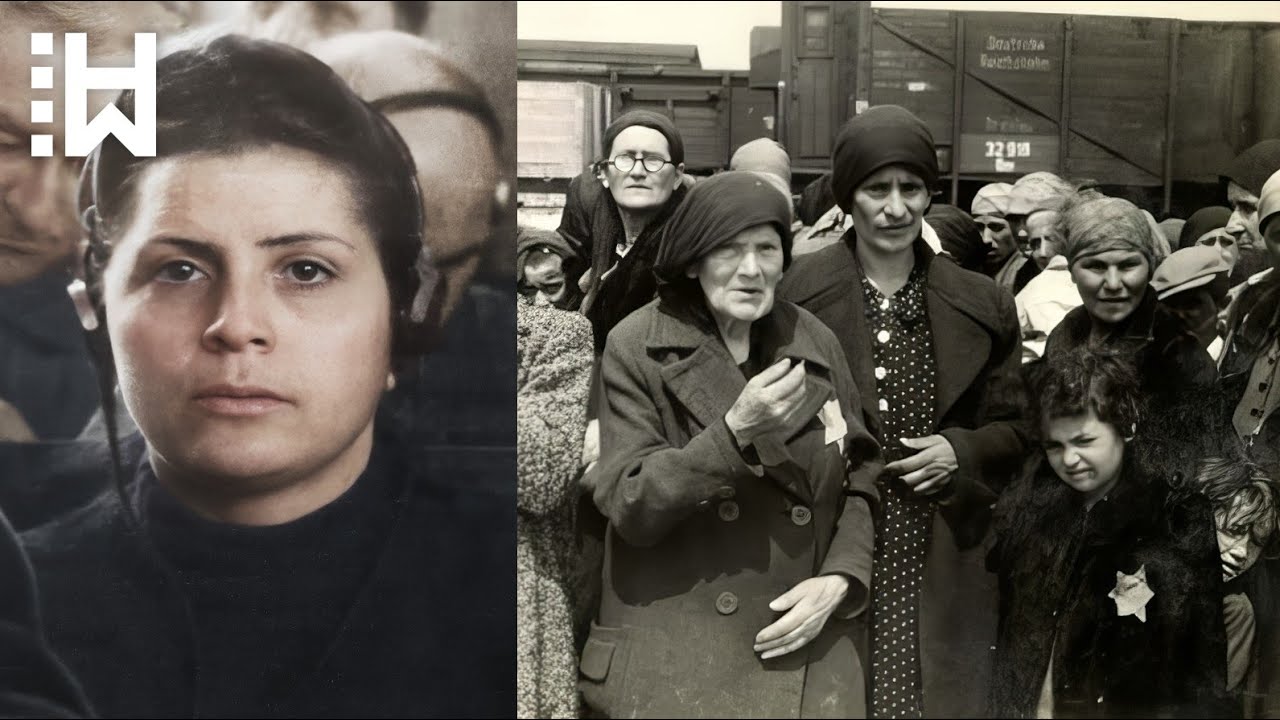
At Auschwitz, Danz supervised a work brigade of female inmates, mostly French and Greek Jewish women who worked the night shift in the tailor’s workshop. When the prisoners returned to camp, she would beat and torture them, sometimes until they were covered in blood. She did not allow them to rest or even leave the worksite for a drink of water.
She showed favoritism toward prisoners who brought her gifts or performed services for her. After the evacuation of Auschwitz in January 1945, she was transferred to Malchow concentration camp, a subcamp of Ravensbrück, where she became the camp commandant.
At Malchow, around 900 female prisoners were forced to work in an explosives factory, produce mines, or build canals. Upon their arrival, Danz took away their warm clothing and refused to provide blankets. The women were forced to sleep in the cold, huddling together for warmth.
The daily food ration consisted of a single slice of bread and watery soup made from potato peelings, without salt. Prisoners were starving, yet after the camp’s liberation, food storerooms were found to be fully stocked. Whenever Danz caught prisoners searching for leftovers, she beat them immediately.

Those caught stealing raw potatoes had their heads shaved as punishment. During a scabies epidemic, she punished a prisoner the same way after finding skin ointment in her possessions. Even townspeople who tried to provide food to the inmates were imprisoned when discovered by the SS.
Danz regularly tormented prisoners at Malchow, beating them with her whip and kicking them without reason, especially during roll calls. One Holocaust survivor testified to suffering a heart attack and fainting after witnessing Danz brutally torturing a woman during a roll call.
Her specialty was forcing prisoners to stand for hours in the sun or frost until they died from exposure or exhaustion. She was also known for punching prisoners in the jaw while bringing her knee into their stomachs. Danz was also said to have aided in the hanging of Russian female prisoners.
Survival in the camp often depended on forming close social bonds. Many prisoners relied on relatives or friends, and older women sometimes adopted teenagers who had lost their mothers to the gas chambers. As one survivor later explained, being alone meant near certain death, and having a camp sister was often the only thing that gave prisoners the courage to continue.

Malchow also served as a transit camp during the death marches. One survivor testified that during a three-day train transport, prisoners received no food or water, even though supplies were stored in one of the cars. Danz ordered that food distribution be prohibited before the transport departed.
Malchow concentration camp is believed to have existed from the winter of 1943. When the Red Army liberated it on May 2, 1945, most prisoners were severely malnourished, with many weighing no more than 40 kilograms.
After the war, Danz went into hiding but was captured and arrested on June 1, 1945. She was tried at the Auschwitz trial for her crimes. Survivor testimony showed that she had evolved from a relatively affable guard into a sadist.
On December 22, 1947, the Supreme National Tribunal in Krakow sentenced her to life imprisonment. However, she was released in 1956 after serving only nine years.
She lived in seclusion for decades, hoping her crimes would be forgotten. In 1996, she was tried again before a German court after new evidence emerged. She was accused of kicking a teenage girl to death when the girl begged to stay with her mother during a death march.
German doctors declared Danz too old to withstand court proceedings, and the charges were dropped in 1997. She died on June 21, 2009, in Walldorf at the age of 91. There were no tears shed for Luise Danz.