On May 10, 1940, Nazi Germany invaded the Netherlands. The invasion included heavy aerial bombardment, and the historic center of Rotterdam was destroyed. Dutch forces surrendered on May 15, and the country fell under German occupation.
The Nazis soon introduced anti-Jewish laws designed to exclude Jewish people from society. Systematic deportations of Dutch Jews to death camps began in July 1942. However, some Dutch citizens resisted the occupation and worked to protect their fellow citizens.
One of these resisters was Willem Arondeus. He was born on August 22, 1894, in Naarden, Netherlands, as the youngest of six children. His father was a feed trader, and his mother ran a tavern in the summer. Soon after his birth, the family moved to Amsterdam, where his parents started a costume rental company for stage actors.
In 1907, Arondeus was accepted into the Quellinus School in Amsterdam, where he studied decorative painting. He refused to suppress his identity as a gay man. When he was 17, he fought with his parents about his homosexuality and soon left home, severing contact with his family.
In the 1920s, Arondeus became involved in the Dada movement and was an active member of the Amsterdam Dadaists. After graduation, he found work as a commercial artist and became one of the Netherlands’ most successful illustrators. His biggest commission came in 1923, when he was asked to paint a large mural for Rotterdam City Hall.
During this time, he lived in poverty and loneliness. He wrote, “Friendship is so rare in my life. I hardly know any people other than my intellectual friends, and they hardly fulfill my desire for affection.”
In 1933, when he was 38, Arondeus met Tijn van Teyen, the son of a local greengrocer. They fell in love and later moved to Amsterdam. However, he struggled to find housing due to his refusal to hide his sexuality. He wrote in his diaries about being kicked out of apartments because he was gay.
Although he was a struggling painter, he refused to go on welfare. Around 1935, he gave up visual arts and became an author. In 1938, he began writing a biography of the Dutch painter Matthijs Maris. After the book was published, his financial situation improved.
In the late 1930s, as the German threat grew, Arondeus wrote to a friend, “I have suffered so much in recent years that the misery that is yet to come no longer deters me.”
After the German invasion, a civil administration was installed under SS auspices. Soon after the occupation began, Arondeus joined the resistance. In January 1941, the German authorities required all Jews to register themselves. A total of 159,806 persons were registered.
Arondeus realized that the registration was not for the safety of Jewish people, as the Nazis claimed, but to enable their future deportation. His resistance unit’s main task was to falsify identity papers for Dutch Jews so the Nazis could not track them down.
On February 22 and 23, 1941, German forces raided the Jewish quarter in Amsterdam. They arrested and deported more than 400 Jewish men to the Buchenwald and Mauthausen concentration camps. In response, the Dutch people organized the February Strike, a two-day general strike that started on February 25, 1941. German officials brutally suppressed the strike.

The Nazi policy then hardened. Jews were segregated from the general Dutch population, and 15,000 were incarcerated in forced labor camps. Deportations of Jews from the Netherlands began in July 1942. During the occupation, the Germans and their Dutch collaborators deported some 107,000 Jews, mostly to Auschwitz and Sobibor. Only 5,200 survived.
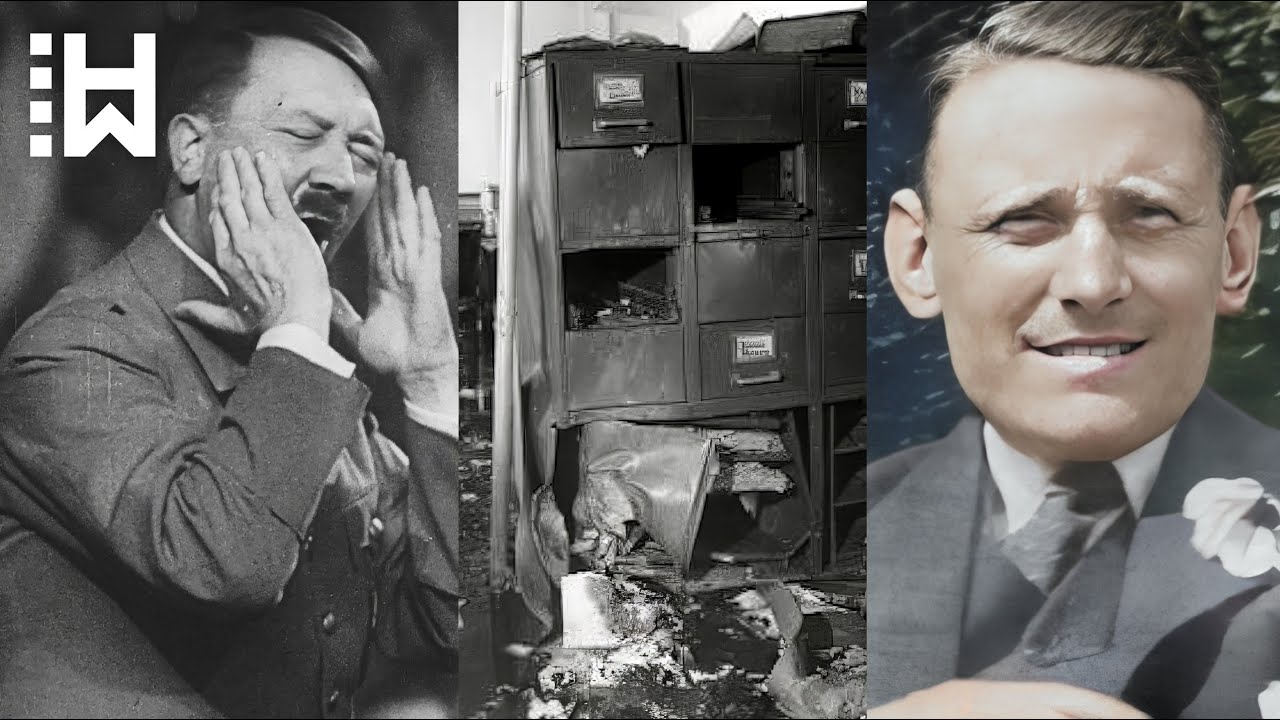
Arondeus and other resistance members created about 70,000 false identification cards for Dutch Jews. Over time, the Nazis began to catch on to the forged documents, which could be double-checked at the Amsterdam registry building. In 1943, Arondeus and his associates developed a plan to bomb the registration office and destroy those records.
On March 26, 1943, a group from the Dutch resistance entered the registration building in Amsterdam disguised as Dutch policemen. The group included artists, students, and two young doctors. The doctors anesthetized the security guards with injections and placed them outside on the sidewalk. They chose a later hour when the office was empty so no innocent people would be harmed.
They destroyed as many papers as they could and planted a bomb. The next morning, on March 27, the bomb exploded. It was only partially successful, as only 15 percent of the records were completely destroyed. In total, 800,000 identity cards were destroyed, which saved the lives of thousands of people.
The Nazis promised a large sum of money for anyone who could uncover the culprits. On April 1, an anonymous source informed the Nazis about the resistance group’s involvement. Arondeus was arrested the same day. He took full responsibility for the bombing and refused to give up his comrades’ names.
However, the Nazis found his notebook, which included the names of all the participants. Some managed to escape, but Arondeus and 12 more members of the resistance were arrested. In June 1943, they were tried and sentenced to death. The two young doctors received clemency and were given custodial sentences instead, because Arondeus pleaded guilty and took the full blame.

In his farewell letter, Arondeus wrote to a friend, “Just now the commander brought paper, ink, and an envelope. That means we have to die in the morning. Greet all my friends. I think of them all with love and friendship. Farewell.”
On July 1, 1943, the day of his execution, Arondeus was 48 years old. He made a point of ensuring the public would be aware that he and other men in the group were gay. He asked his lawyer, “Tell people that homosexuals are not cowards.”
The resistance’s counterintelligence, domestic sabotage, and communications networks helped support the Allied Forces throughout the liberation of Holland. Members of the resistance, if discovered, were immediately sentenced to death. The action of Arondeus’s unit, which saved the lives of thousands, also inspired resistance groups in other parts of the country.
The Germans officially surrendered all their troops in the Netherlands on May 5, 1945. Arondeus left his small fortune to Tijn, who survived the war. Due to homophobia in the 1950s and 1960s, gay war heroes did not get the recognition they deserved.
In 1984, Arondeus finally received the Resistance Memorial Cross from the Dutch government. In 1986, Yad Vashem recognized Willem Arondeus as Righteous Among the Nations, Israel’s highest honor for non-Jews who risked their lives to save Jews during the Holocaust.
In 1990, his sexuality was revealed in a TV program, and the Dutch public finally learned the true extent of his bravery. It cemented his efforts as a symbol of heroism for the LGBT community. As resistance fighter Frieda Belinfante later said, “Willem was a great hero who was most willing to give his life for the cause. There were many tears shed for Willem Arondeus.”