Rising from the North Carolina foothills just outside Morganton stands a red brick building that most drivers barely notice anymore. Its windows catch the afternoon light in a way that almost looks warm, almost looks inviting. But those who have worked inside its oldest wings tell a different story. They speak of hallways that feel colder than they should, of a silence so heavy it presses against the chest, of rooms where the past seems to linger long after the people who suffered there have gone.
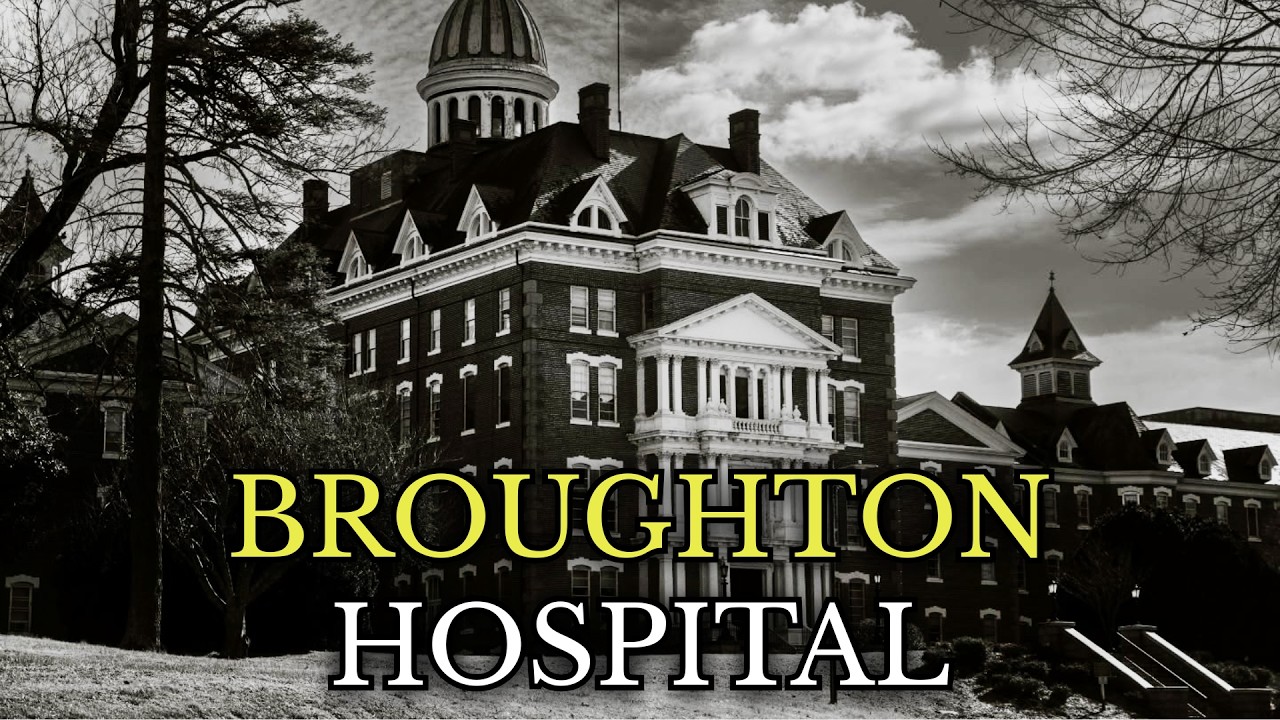
For nearly 150 years, this building has stood as one of the oldest psychiatric institutions in the American South. It was born from genuine compassion and a promise that the mentally ill deserve dignity instead of chains. But behind the stately facade and the manicured lawns, a darker story was taking shape. In the middle of the 1800s, the United States had no real answer for people suffering from mental illness.
Those who could not care for themselves were often locked away in jails alongside criminals or abandoned in poor houses. Some were kept in cellars and outbuildings by their own families, chained to walls or hidden from neighbors out of shame. Into this landscape stepped Dorothea Dix, a school teacher from Massachusetts who had spent years touring jails and alms houses across the Northeast, documenting what she found with her own eyes. She saw men and women kept in cages, beaten, starved, and left without clothing in winter.
She turned her observations into a relentless campaign, petitioning lawmakers to build proper asylums where the mentally ill could receive humane treatment. Her efforts succeeded, and North Carolina opened its first psychiatric institution in the state capital. But North Carolina was a large and difficult place to navigate, and patients from western counties often could not reach the existing facility at all. In 1875, the General Assembly approved $75,000 to establish a second psychiatric hospital in the western part of the state.
The town chosen was Morganton, a quiet foothill community with rail access and enough open land for an ambitious building project. The site sprawled across roughly 283 acres, rolling countryside framed by distant mountain ridges, the kind of setting reformers believed could itself become part of the healing process. The architect chosen was Samuel Sloan, known for his work on public buildings throughout the country. His design called for a massive central structure with long extending wings, emphasizing natural light and corridors meant to feel less like a prison and more like a retreat.
Construction began in the late 1870s and continued for several years. The doors opened on March 29, 1883. It was named the Western North Carolina Insane Asylum. According to local lore passed down through generations of hospital staff, the very first patient admitted was a physician himself, a man whose colorful nickname “Dr.
Red Pepper” has survived in hospital folklore long after his actual identity faded from memory. Dr. Patrick Livingston Murphy was appointed as the asylum’s first superintendent. Within the first year of operation, he reported to the General Assembly with a message that would become a familiar refrain throughout the hospital’s history: more space was desperately needed.
The hospital expanded rapidly. By 1885 and 1886, two new wings had opened, pushing capacity to more than 500 patients. In 1890, the hospital became known simply as the State Hospital at Morganton, a title it would carry for nearly 70 years. By 1893, the hospital’s land holdings had grown past 300 acres.
In the years that followed, expansion took on a shape known as the colony system, an approach that blurred the line between hospital and self-sufficient village. Patients considered capable of physical labor were put to work constructing roads, tending vegetable gardens, and maintaining the grounds. The hospital established a working dairy staffed largely by patients under supervision. On the surface, this was framed as therapeutic.
But the arrangement also served a practical function: patient labor kept operating costs remarkably low, allowing the institution to feed itself and expand without matching increases in staff or spending. It was a hospital built to sustain itself on the backs of the very people it was meant to be healing. The years surrounding the First World War marked a turning point. Public funding for asylum building shifted elsewhere.
Through the 1920s, the ratio of patients to physicians stood at roughly 300 to 1. By the 1930s, it had worsened to nearly 500 patients for every physician. Many attendants during this era slept in the very same wards as their patients, sharing the same cramped, overcrowded spaces night after night simply because there was nowhere else for them to rest. Then came the Great Depression, striking institutions like this one especially hard.
State budgets contracted sharply, and mental hospitals found themselves among the first casualties of austerity. By the 1940s, the hospital’s total patient census had swelled to more than 3,500 individuals. Beneath the overcrowding and underfunding, there existed a far quieter and far more troubling chapter. Eugenics, the belief that the human population could be improved by controlling who was allowed to reproduce, had taken hold in the mainstream of American science and public policy.
In 1929, the North Carolina General Assembly passed its first sterilization law, though courts later struck it down. In 1933, lawmakers created the Eugenics Board of North Carolina, a body granted legal authority to approve the sterilization of individuals deemed unfit to reproduce. The definition of unfit was left disturbingly broad. From the 1930s through the 1970s, this program operated with the full backing of state law.
Over more than four decades, more than 7,600 North Carolinians were sterilized, placing the state among the most aggressive practitioners of eugenics anywhere in the country. There was no courtroom drama to these decisions, no dramatic confrontation between doctor and patient. Instead, there was only the quiet machinery of a state board, meeting on a schedule, reviewing files, and signing forms that would permanently alter the course of a person’s life. In 2002, Governor Mike Easley issued a formal apology on behalf of North Carolina, acknowledging the harm done to thousands of its citizens.
In 1959, the hospital was renamed Broughton Hospital, honoring Joseph Melville Broughton, the former governor who led the state through the Second World War. The treatments practiced within its walls during this period would come to be viewed by the medical profession as deeply flawed, even barbaric. Hydrotherapy involved submerging or wrapping patients in water at controlled temperatures for extended periods. Electroshock therapy was used widely, often without the refined safeguards that would later become standard practice.
Insulin shock therapy induced comas through measured doses. Lobotomies, surgical procedures that severed connections within the brain’s frontal lobes, were performed on patients considered otherwise untreatable. The 1960s did bring meaningful change. Educational programs were established, religious services were incorporated, and the hospital formed affiliations with local community health centers.
The 1970s brought further structural change as administrators moved away from grouping patients geographically. On March 28, 1973, Broughton Hospital received its first formal survey from the Joint Commission on Accreditation of Health Care Organizations, receiving a one-year accreditation. Nothing in its long history would leave as lasting a mark on staff memory as what unfolded within Ward R on a spring morning in 1971. Dr.
Paul Douglas Boils was a 37-year-old psychiatrist on staff. Betty Cheek Yarborough was a 39-year-old nurse administrator. Both were fixtures of the ward. On the morning of April 22, 1971, staff recalled seeing the two enter the nurse’s station together at around 7:30.
Co-workers reported hearing a commotion, followed by an unsettling silence. When staff forced the door open, Dr. Boils was found dead of a stab wound. Nurse Yarborough was found gravely injured and died roughly one hour later.
The Burke County Medical Examiner ruled Yarborough’s death a homicide and Boils’s death self-inflicted, suggesting Boils had fatally attacked Yarborough before ending his own life. No motive was ever made public. No detailed account of what led to that morning’s violence was ever released. In the years that followed, the area surrounding the old nurse’s station took on a reputation of its own.
Some staff described hearing angry voices behind closed doors only to find the rooms empty. Others noted unexplained drops in temperature. Some described glimpsing shadowy figures, one resembling a man in a white lab coat, another resembling a woman in a nurse’s uniform. Nearly a decade earlier, in April 1962, another death had defied explanation.
Bobby Jean Eller and Betty Joe Eller were identical twin sisters, both 31, who had spent years living with schizophrenia. Born as part of a set of triplets, only the two sisters had survived infancy, and their bond had grown unusually intense. Hospital staff came to believe the relationship had grown unhealthy, and made the decision to separate the sisters into different wards. The separation took place just one day before tragedy struck.
Early the following morning, staff discovered that one twin had died in her sleep. The second twin was also found dead in her own bed at what appeared to be roughly the same time, in a completely different part of the hospital. Autopsies revealed no anatomical cause of death. Toxicology reports suggested no overdose or drug-related cause.
Burke County’s coroner, Dr. John C. Ree, suggested the women may have willed themselves to die, noting that some psychiatrists believed certain patients could develop what he described as a “will not to live. ”
Behind the main hospital building lies a quiet cemetery opened in the spring of 1883, the very same year the asylum first welcomed patients.
Over the coming century, it would come to hold the remains of more than 1,500 people. For many of these individuals, burial at the asylum was not a matter of abandonment. The hospital’s catchment area stretched across the entire western reach of North Carolina, and transporting a loved one’s remains home by train or wagon was often simply not possible. Other patients had no surviving family left to claim them.
Dr. Murphy, the first superintendent, refused to allow any patient’s remains to be handed over to the North Carolina Anatomical Board for dissection or disposal, a common fate for unclaimed bodies across the country. Murphy insisted that if a family could not provide for a proper burial, the asylum itself would take on that responsibility. For decades, however, many of the graves were marked not with names but with simple numbers.
This began to change in the final years of the 20th century and the early years of the 21st, as chaplains and volunteers took on the painstaking work of researching hospital records, cross-referencing burial numbers with admission files. Today, every grave within the cemetery is marked and every person buried there is known. Given everything that unfolded within its walls, it is perhaps no surprise that Broughton Hospital has developed a reputation as one of the most haunted locations in North Carolina. Among the most persistent stories involves an elevator said to occasionally operate on its own, stopping at floors where no one is waiting.
Some have reported glimpsing a figure inside, a woman dressed in clothing from an earlier era. Other stories describe disembodied voices in areas once used for treatments like electroconvulsive therapy. Beneath the hospital lies a network of underground tunnels, long sealed off, that remain a frequent subject of stories about sudden cold drafts and an unshakable sensation of being watched. Perhaps the most visually striking piece of folklore involves a particular window on the third floor, one that was eventually boarded up entirely.
Drivers passing along the nearby highway reportedly saw the silhouette of a woman standing in the window with such regularity that administrators chose to seal it rather than continue fielding questions from the community. The 1980s and 1990s brought the slow, grinding pressure of institutional survival. Oversight organizations demanded improvements that the hospital’s budget could barely support. In December 1992, the Broughton Hospital Foundation was formed to enhance the lives of patients through donations, endowments, and community support.
Today, the hospital serves approximately 800 patients each year, supported by a staff of roughly 1,200 employees, operating on an annual budget of approximately $98 million. In 2017, the hospital completed construction on an entirely new facility, built to house hospital departments and patient divisions under a single modern roof. The original main building was preserved as a historical landmark, its long brick corridors repurposed as office space rather than patient wards. It was listed on the National Register of Historic Places, first for the main building in 1977 and later for the broader historic district in 1987.
Standing today at the edge of Morganton, the old building still catches the morning light the same way it did on the day it opened. Its brick has darkened with age. Its windows have watched over more than 14 decades of human lives. Broughton’s story does not offer a clean answer to why an institution built on such genuine hope could also become a place capable of so much quiet suffering.
Perhaps the truth is simply that good intentions, however sincere, are never enough on their own, and that even the most beautifully designed building meant to heal troubled minds can still become a place where people are failed, forgotten, or lost entirely.