Cary Grant built his career on portraying the epitome of charm and sophistication, but behind the debonair facade was a man carrying profound trauma, a fabricated identity, and a secret history that included a mother he believed was dead for decades. Born Archibald Leach in Bristol, England, to a working-class family, Grant’s life took a devastating turn at age nine when his father told him his mother had died while she was away on vacation. In reality, Elsie Leach had been institutionalized at the Bristol Lunatic Asylum by her unfaithful husband. Grant only learned the truth while in his 30s, already a Hollywood star, and when he arrived to rescue her, his mother reportedly asked with suspicion if it was truly him.
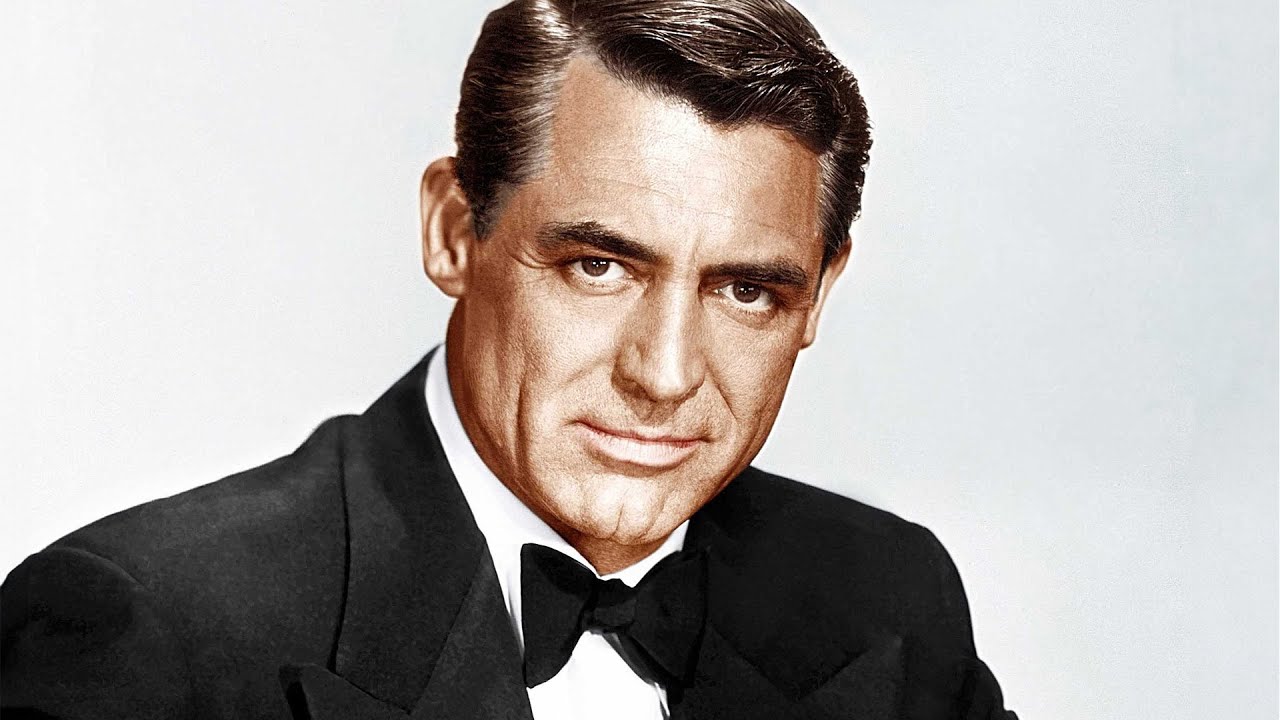
The childhood loss shaped everything that followed. At 14, Grant ran away from home, forging his father’s signature and lying about his age to join an acrobatic troupe. He eventually landed in New York at 16, where he spent nearly a decade doing odd jobs, including stilt walking, dinner-party seat filling, and reportedly working as an audience plant. For a time, rumors circulated that he held the title of the highest-paid gigolo in town, leveraging his handsome looks and charm to survive.
His early attempts to break into film brought a string of disappointments before a fateful encounter with Mae West changed everything. While casting for her film “She Done Him Wrong,” West spotted Grant and told her producer, “If he can talk, I’ll take him. ” It was the turning point that launched a career spanning three decades, during which Grant starred in iconic films under legendary directors like Alfred Hitchcock, Howard Hawks, and Charles Walters. Despite his success, Grant never escaped the tension between his humble Bristol roots and his Hollywood image.
He once famously quipped, “Everyone wants to be Cary Grant, even I want to be Cary Grant,” adding that he pretended to be someone he wanted to be until that persona eventually overtook him. In rare reflective moments, he confessed that the suave leading man audiences saw on screen was a “facade,” a carefully constructed myth that left him unsure whether he was Archie Leach or Cary Grant. In the late 1950s, at the zenith of his fame, Grant sought help. Therapy, hypnosis, and yoga had failed to provide relief, so his third wife, Betsy Drake, introduced him to Dr.
Mortimer Hartman, a Los Angeles physician who used LSD as a therapeutic tool. Grant underwent roughly 100 sessions between 1958 and 1961, an era when approximately 40,000 patients were prescribed lysergic acid for conditions ranging from alcoholism to PTSD. Grant described the sessions as a kind of “rebirth” and noted that the drug allowed his subconscious to take over, freeing him from self-imposed constraints. Through the therapy, he confronted his complicated feelings toward his parents, ultimately finding forgiveness.
“I forced myself through the realization that I loved my parents and forgave them for what they didn’t know,” he shared, adding that the insights he gained dispelled many fears he had carried for decades. He was so transformed that he personally contacted Good Housekeeping magazine to share his experience, reportedly telling them this had changed his life and that everyone should try it. Timothy Leary’s interest in psychedelics was allegedly sparked after learning about Grant’s experience. Grant’s personal life remained turbulent, marked by five marriages and well-documented romances.
His friend David Niven once joked that Grant’s secret with women was ironically confessing performance anxiety, a tactic that apparently made him more appealing. But his relationships also reflected his deeper struggles with intimacy, which he later traced to the abandonment pattern established in childhood. In 1966, at age 62, Grant’s priorities shifted dramatically with the birth of his daughter Jennifer, his only child with fourth wife Diane Cannon. He walked away from acting entirely, dedicating the next two decades of his life to fatherhood.
He rented a house in Jennifer’s trick-or-treating neighborhood just to be with her on Halloween, kept a camera always at hand to document their moments, and stored every note and letter they exchanged in a fireproof vault at home. Jennifer, who initially felt embarrassed by her father’s intense devotion, later said she wished she had thanked him properly for everything he did. Grant died in 1986 at age 82, but the legacy he left behind is far more layered than his polished on-screen persona suggested.
Beneath the charm and the carefully maintained Hollywood image was a man constantly searching for stability, first fleeing from his past and eventually finding the peace he sought not on screen, but as a father.