In the high-stakes drama of the House of Windsor, Lady Sarah Chatto is the quiet survivor. She is the woman who inherited a legacy of chaos and deliberately chose a life of serenity. Born to Princess Margaret, the dazzling and controversial sister of Queen Elizabeth II, Sarah grew up amid the wreckage of a golden marriage famous for its toxicity. She was the silent witness to her mother’s public self-destruction, a life fueled by alcohol, heartbreak, and the suffocating pressures of the Crown. This is the story of how she inherited what many called Margaret’s curse, and how, against all odds, she broke it with quiet grace.
While other royals chase the spotlight, Sarah Chatto built a life in the shadows. She became a respected artist, a devoted wife, and one of the most trusted and discreet confidantes of the royal family. Her story is not one of scandal, but of profound resilience. It is the tale of a daughter who transformed a legacy of pain into a life of quiet dignity.
To understand the storm into which Sarah Chatto was born, one must first understand the woman at its center, her mother, Princess Margaret. Long before she became a cautionary tale, she was the nation’s sweetheart. Born in 1930, she was the antithesis of everything her older sister Elizabeth represented. While Elizabeth was reserved and dutiful, Margaret was vivacious, intelligent, and possessed an irresistible charm. She had striking violet-blue eyes, flawless porcelain skin, and a wit as sharp as a blade. Their father, King George VI, famously said of his daughters: “Lilibet is my pride, and Margaret is my joy.”
She was the Diana of her day, a fashion icon whose every outfit was copied and whose every romance was speculated upon with fervor. She embodied hope and glamour for a post-war Britain eager to shed the drab austerity of the 1940s. But beneath that glittering surface was a deep well of vulnerability. Her life changed irrevocably at the age of six when her uncle, King Edward VIII, abdicated the throne to marry the divorcée Wallis Simpson. That single act pushed her shy father onto the throne and put her sister on the path to becoming queen. It also taught Margaret a harsh early lesson: for the royal family, love and duty are often mortal enemies.
This lesson would define her life when she fell deeply in love at a young age. The man was not a foreign prince or a British duke. He was Group Captain Peter Townsend, a decorated RAF hero of the Battle of Britain. He was handsome, kind, and sixteen years her senior. Crucially, he was a trusted and beloved member of the royal household. After the King’s sudden death in 1952, Margaret, then 22, and Townsend, both grieving the man they loved, found solace in each other’s company. Their friendship deepened into a secret, passionate love affair. For Margaret, Townsend represented stability and genuine affection, a safe haven in the unforgiving world of the royals. But there was one insurmountable problem: he was divorced.
In 1950s Britain, this was a catastrophic obstacle. Elizabeth was not just the Queen; she was the Supreme Governor of the Church of England, which did not recognize divorce. The memory of the abdication crisis was still fresh. The idea of the Queen’s sister marrying a divorced man was unthinkable to the political and religious establishment. The public was largely unaware of the romance until one unguarded moment revealed it. During the 1953 coronation of Queen Elizabeth II, a television camera caught Margaret tenderly removing a piece of lint from Townsend’s uniform jacket. It was a fleeting, intimate gesture, but for sharp-eyed journalists, it was a thunderbolt. The story exploded.
Margaret found herself besieged. The government and the Archbishop of Canterbury made their position clear: the marriage could not happen. The only way forward, they decreed, was for Margaret to renounce all her royal rights, title, income, and place in the line of succession, and live in exile. The ordeal lasted two years. Townsend was sent to Brussels, a form of exile, to separate the couple. Margaret was left to face the immense pressure alone. In the end, the weight of the royal institution was too great. On October 31, 1955, a heartbroken Princess Margaret issued a public statement. It read in part: “I would like it to be known that I have decided not to marry Group Captain Peter Townsend. I have reached this decision entirely alone, and in doing so, I have been strengthened by the unfailing support and devotion of Group Captain Townsend.”
The nation sighed with a mixture of relief and sympathy. But for Margaret, something broke that day. The vivacious, joyful princess began to retreat, replaced by a woman who was harder, more cynical, and deeply wounded. She had chosen duty over love, and the sacrifice seemed to hollow her out. She threw herself into a frenetic social life. Her famous wit became tinged with a biting aristocratic arrogance. She was searching for a new life and a new kind of man. She found him in Antony Armstrong-Jones.
If Peter Townsend was the embodiment of the old establishment, Tony Armstrong-Jones was the vanguard of the new. He was not an aristocrat. He was a brilliant, boundary-pushing photographer, the son of a barrister, and a prominent social figure. He was charming and intelligent, with a seductive, and perhaps dangerous, disregard for tradition. They met at a dinner party in 1958. Margaret, still nursing her wounds, was captivated immediately. Tony was different from anyone she had ever known. He didn’t treat her with the fawning deference she was used to. He teased her, challenged her opinions, and called her “Margaret” instead of “Ma’am.” He took her away from formal palace life into his liberated world of artist studios, jazz clubs, and weekends with actors and writers. For Margaret, it was intoxicating. It was a rebellion. Her marriage to Tony was a blatant challenge to the establishment that had broken her heart.
When their engagement was announced in February 1960, the world was stunned. On May 6, 1960, they married in Westminster Abbey in the first royal wedding to be broadcast on television. Around 300 million people worldwide watched. The public was captivated. It seemed to be the happy ending their princess deserved. The new couple, the Earl and Countess of Snowdon, became the undisputed leaders of London’s fashionable elite. Their home, Apartment 1A at Kensington Palace, was the most exclusive salon in the country. Their dinner parties were legendary, a dazzling mix of nobility, aristocrats, and the brightest stars of the art world. They were glamorous, liberated, and constantly in the spotlight. They were the first celebrity power couple.
But the fairy tale built on rebellion and passion had no foundation in reality. The very qualities that brought them together, their fierce independence, artistic temperaments, sharp tongues, and need to be the center of attention, soon turned into weapons in a private war of astonishing cruelty. Tony, who expected to continue his career unhindered, quickly found that being the Queen’s brother-in-law came with suffocating restrictions. He resented Margaret’s status and the way she used it. He retaliated with a campaign of subtle psychological cruelty that was as creative as it was malicious. He would leave her small, upsetting notes in places he knew she would find them. One, tucked into a book she was reading, contained a list titled “Things I Hate About You.” The most vicious note, left in the glove compartment of her car, read simply: “You look like a Jewish manicurist, and I hate you.”
Margaret, a woman raised to be the center of attention, did not take these insults lying down. She gave as good as she got, using her royal status and her acerbic wit as weapons. She would disparage his work, belittle his non-aristocratic background, and deliver cruel public insults. Their arguments turned into volcanic explosions that echoed through their lavish apartment. Their son David was born in 1961, followed by their daughter Sarah on May 1, 1964. But the arrival of children did nothing to heal the growing rift. By the time Sarah was born, the marriage had completely collapsed. The initial passion had turned into toxic competition.
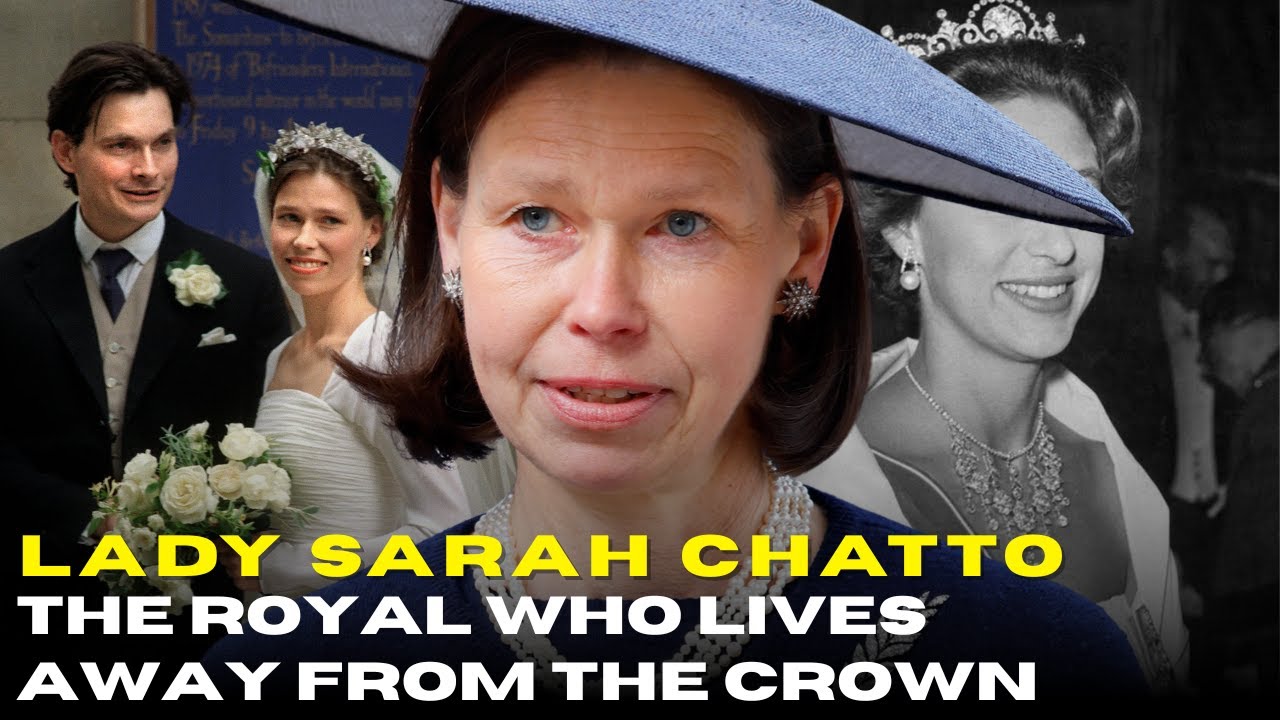
Sarah was not born into a happy home that later fell apart. She was born directly into the wreckage. She never knew her parents as a loving couple. Her entire life, from her first breath, was surrounded by an atmosphere of emotional warfare, barbed insults, and icy silences. The glamour the world saw was a carefully constructed lie. The reality for the two young children living in Apartment 1A was filled with confusion, anxiety, and a profound lack of emotional security. Sarah was born a lady and a niece of the Queen. But she was also born a child of the Cold War, a silent witness to the slow, painful collapse of the modern fairy tale her parents had promised the world. The curse was not something that would befall her in the future. It was the very essence of the atmosphere in the home she was brought into.
For most children, their universe is small and predictable. For David and Sarah Armstrong-Jones, it was a sprawling, magnificent, and hazardous kingdom. Their home was Apartment 1A at Kensington Palace, a stunning 20-room residence. But the lessons they learned there were complex and often painful. The primary source of stability, their anchor in the daily storms of their parents’ lives, was their nanny, Verona Sumner. She was much more than a caregiver; she was the architect of their childhood. She intuitively created a bubble of normality for the children, an island amidst the chaos. While Princess Margaret and Lord Snowdon dazzled London society, engaged in bitter arguments, or pursued their increasingly separate lives, Verona was the one who provided the routine and continuity that all children crave. She was, in every practical sense, their mother.
This created a strange duality in their upbringing. They were undoubtedly children of immense privilege, playing in the private gardens of a royal palace with a loving aunt who happened to be the Queen of England. But they were also children suffering from profound emotional neglect. Their parents were physically present but emotionally absent, consumed by their own dramas. Princess Margaret’s life, in particular, had descended into a rigid ritual of self-soothing centered on her comforts. Her days were famously organized around cigarettes, newspapers, and her first drink of the day at 12:30 pm. It was a life of suffocating, privileged boredom, a desperate attempt to fill the void left by heartbreak and a lack of meaningful purpose. For her children, it meant their mother was often unavailable, surrounded by a cloud of cigarette smoke and an alcoholic haze. They learned to approach her with caution, to gauge her mood before speaking.
Lord Snowdon, meanwhile, was increasingly absent, throwing himself into his photography with frantic energy. He was a demanding and perfectionist father when present, but his primary coping mechanism was escape. His affairs became more frequent and less discreet. The children felt this distance keenly. David, the older brother and heir to the title, developed a practical, protective shell. He became the little man of the house, watching over his younger sister. Sarah, in contrast, turned inward. She was a naturally quiet and observant child, and her environment only amplified these traits. She learned to watch, to listen, and to understand the unspoken currents of resentment and unhappiness around her. She became emotionally self-sufficient because she had no choice. She found her solace, and her own language, in art. Drawing and painting became her escape, a way to create order and beauty in a world that felt chaotic and ugly.
This fragile, turbulent equilibrium finally shattered in 1976. Sarah was 12 years old. The press, which had long suspected the Snowdon marriage was a sham, finally got the story they were waiting for. Photographs were published of Princess Margaret on her beloved island of Mustique, vacationing with a man named Roddy Llewellyn. He was a landscape gardener of partial aristocratic descent, and he was 17 years her junior. The implication was clear: the princess was having an affair. The public reaction was brutal. The media, which had once adored her, now turned on her with shocking ferocity. She was portrayed as a corrupt, lazy, parasitic royal, a disgrace to the Crown. For Sarah, it must have been a bewildering and deeply painful experience. At an age when peer acceptance is everything, she had to endure her mother’s private life becoming a subject of public mockery and national debate.
The scandal precipitated the final, formal separation of her parents. Lord Snowdon left Kensington Palace for good. Two years later, in 1978, the divorce was finalized. It was a landmark event, the first divorce of a high-ranking royal in over 400 years. For Sarah, who was 14, it was the official confirmation of what she had always known. Her family was broken beyond repair. The long Cold War that had defined her childhood was finally over, but the peace was one of exhaustion and defeat.
During this turbulent period, her father, Lord Snowdon, made a decision that proved to be the most important intervention in his daughter’s life. Despite all his failures as a husband, Tony was a devoted father determined that his children not be crushed by the weight of the monarchy. He despised the stuffy, anti-intellectual world of traditional aristocratic education. He insisted they not be sent to a rigid, single-sex institution like Gordonstoun. Instead, he enrolled them at Bedales. Bedales was, and still is, one of the most progressive and liberal boarding schools in Britain. Founded on principles of liberal education, it focused on creativity, self-expression, and a lack of pretension. Students called teachers by their first names, wore their own clothes instead of uniforms, and followed a curriculum that valued arts, design, and drama as much as Latin and mathematics.
For Sarah, arriving at Bedales was like breathing fresh air after a life spent in a beautiful but suffocating room. It was a lifeline. For the first time, her identity was not defined solely by her royal connections. She was simply Sarah Armstrong-Jones, a quiet, talented student with a genuine passion for art. Here, her talent was not just a hobby; it was valued, nurtured, and celebrated. The art studio became her real home, a place where she could pour all the complex, suppressed emotions of her childhood into her work. Bedales gave her a community of friends who loved her for herself, not for her relatives. It gave her confidence in her own abilities. Most importantly, it gave her a vision of a different kind of life, one where worth was determined by talent and hard work, not by birthright.
After graduation, she followed this path with quiet determination. She did not take the expected route of a gap year followed by a humanities degree at a prestigious university. Instead, she enrolled in a foundation course at Camberwell School of Art and Crafts, followed by a period of study at the Royal Academy Schools. She was very serious about her career. Then she did something almost unprecedented for a royal in her position: she decided to learn a craft from the ground up. Using her family’s artistic connections, she became an apprentice in the wardrobe department of the film industry. It was unglamorous, behind-the-scenes work. This culminated in a two-year trip to India in the early 1980s, where she worked as a costume assistant on director David Lean’s epic film “A Passage to India.”
It was a profoundly formative experience. She was thousands of miles away from the stifling atmosphere of London, away from the press and the royal court. She was part of a huge, collaborative creative team, a small cog in a giant machine. She was not there as a prominent figure, but as a worker valued for her skills and work ethic. In this environment of professional creativity, far from home, she met a young actor named Daniel Chatto. Daniel, like Sarah, came from an artistic family. He was handsome, kind, and shared her quiet, serious nature. Their meeting on a bustling film set in India was the antithesis of her parents’ dramatic, high-society love story. It was a quiet, organic bond between two people who shared the same values. Their relationship developed slowly and away from the spotlight after they returned to England. It was a relationship built not on grand romantic gestures, but on deep friendship and mutual respect. For Sarah, who had grown up watching love burn like a destructive fire, Daniel’s calm, steady affection was a warm and safe hearth.
She had weathered the storm. She had survived the public disintegration of her family, the loneliness of her gilded cage, and the immense pressure of her royal lineage. Through the sanctuary of art and the discovery of a quiet professional purpose, she had forged her own identity. Now she had found a partner who saw and loved the woman she had become, not the princess she was born to be. The quiet girl from Kensington Palace was finally building her own world on her own terms.
When they decided to marry, the announcement was simple and dignified. The wedding, held on a warm July day in 1994, was a profound statement in an era still reeling from the fallout of the fairy-tale wedding of Charles and Diana. Sarah chose a path of intense privacy. The venue was not Westminster Abbey or St Paul’s Cathedral. She chose St Stephen’s Walbrook, a small, exquisite church in the City of London designed by Sir Christopher Wren. It was the choice of an artist and a connoisseur. Her dress was another declaration of independence. She turned to her friend, designer Jasper Conran, who created a dress of stunning, simple elegance made from crisp white linen. It was the dress of a modern working artist, not a princess from a storybook. But the most powerful and emotionally complex symbol of the day was what she wore in her hair. She chose the Snowdon Floral Tiara. This piece was not an ancient heirloom from the royal vaults. It was a piece with a deeply personal and painful history. It had been made by her father, Antony Armstrong-Jones, for her mother, Princess Margaret, to wear at their wedding. Wearing this tiara was a gesture of extraordinary grace. It was not a rejection of her difficult past, but an embrace of it from a perspective of redemption. By placing this beautiful, memory-laden piece on her head as she entered a very different kind of marriage, she was breaking the curse of her origins. It was a silent, powerful message: the pain of the past would not be forgotten, but it would not be allowed to define the future.
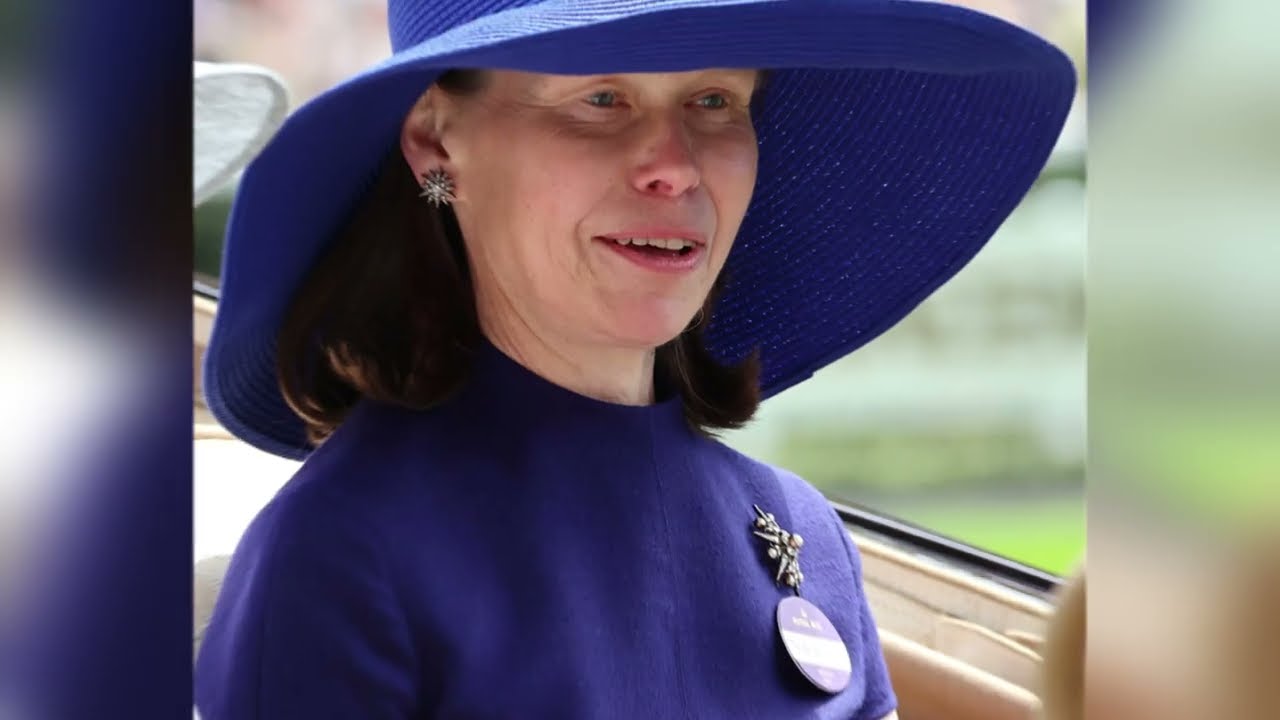
The ceremony was short and the guest list was small. It was a gathering of close family and friends, not a display of official figures. Photographs from the day show a woman radiating quiet joy and serenity. Her smile is genuine and unforced. She looks like a woman exactly where she belongs. The life they built after the wedding was an extension of these vows. They did not take up residence in a grand royal apartment. Instead, they settled into a comfortable home in Kensington, living a life that was almost startlingly normal by royal standards. Daniel continued his career as an artist, and Sarah devoted herself to her two great passions: painting and her family. In 1996, their first son, Samuel David Benedict Chatto, was born. Three years later, in 1999, his brother Arthur Robert Nathaniel Chatto followed.
For Sarah, motherhood was an opportunity to provide the childhood she never had. She was determined to give her sons the gift of a normal life, shielding them from the suffocating pressures and distorting lights of royal fame. She and Daniel created a home that was a sanctuary of love, stability, and creativity. The boys were sent to university like their cousins William and Harry, but they were encouraged to forge their own paths. Samuel studied art history at the University of Edinburgh and became a successful potter, working with his hands to make beautiful objects, much like his grandfather, Lord Snowdon. Arthur, the more adventurous one, also studied in Edinburgh before joining the Royal Marines. It was a personal choice, not a decision dictated by tradition. Sarah had succeeded in raising two well-adjusted, independent young men who are comfortable with their royal heritage but not defined by it. She had broken that vicious cycle.
Alongside her role as a mother, Sarah pursued her career as a painter with quiet, focused dedication. She has always exhibited her work under her maiden name, Sarah Armstrong-Jones. This was also an important choice. It was a nod to her father’s professional legacy and a way to carve out an identity entirely her own. Her paintings are a direct reflection of her personality. They are not dramatic or loud. They are usually intimate landscapes, still lifes, and studies of interior spaces. Her colors are often calm and light. There is a deep sense of peace and tranquility in her work. It is art from someone who has learned to find beauty in the ordinary, who values observation over declaration. In a world full of noise, her paintings are a whisper. They are, in many ways, her true autobiography.
Her public role, though limited, has also been carefully chosen. She became a vice president of the Royal Ballet, a position she inherited from her mother. Princess Margaret adored ballet; it was one of the greatest passions of her life. For Sarah, taking on this role was another act of redemptive love. It was a way to honor her mother’s memory, not by imitating her lavish lifestyle, but by supporting an art form that brought her genuine joy. But perhaps her most important role, one rarely seen by the public, was the one she played within the royal family itself. As the family was torn apart by the scandals of the 1990s, most notably the bitter “War of the Waleses,” Sarah became a figure of unique importance. She was the quiet center, the still eye of the storm.
Her relationship with her aunt, Queen Elizabeth II, deepened into a profound bond of affection and trust. The Queen, a woman who lived a life of immense loneliness and professional caution, found in her niece a rare source of simple companionship. Sarah wanted nothing from her. She had no agenda, no title to seek, no grievances to air. She was simply her loving niece. Courtiers have long noted that Sarah was one of the few people with whom the Queen could relax and be herself. They shared a love of the Scottish Highlands and spent time together at Balmoral. Their regular lunches were a fixed part of the Queen’s calendar, moments of ordinariness in a life of unrelenting duty. Sarah was a living, breathing link to the Queen’s beloved sister, Margaret, and through her own quiet stability, the Queen found comfort and a sense of continuity.
She was also a bridge between the warring factions of her generation. She maintained a warm relationship with her cousin, Prince Charles, who valued her artistic sensibility and her unwavering loyalty to the family. At the same time, she was highly regarded by Princess Diana. Diana respected Sarah’s integrity. Sarah was one of the few in the family who was never seen to take sides, who offered only kindness and discretion. She was neutral ground, a safe haven in the civil war that raged within the family. This universal trust was recognized formally on several occasions. She was asked to be a godmother to Prince Harry, a clear indication of the high regard in which she was held by both Charles and Diana. Later, she was named godmother to Prince Edward’s daughter, Lady Louise Windsor, and to the Duke of Gloucester’s daughter, Lady Rose Gilman. In a family where trust is the most valuable and rarest currency, Sarah Chatto was the gold standard. She had become the family’s anchor.
While Sarah built her sanctuary, the architect of her childhood chaos, her mother, was entering a final, painful chapter of decline. The true test for Sarah was not escaping her mother’s legacy, but facing it with compassion. The long farewell to Princess Margaret was her greatest act of love. As Sarah quietly built a life of peace, her mother’s world was shrinking. The glamour of her youth had long faded, replaced by a deep melancholy and the effects of a life lived with wild recklessness. The curse that Sarah had so successfully avoided, the curse of a life without purpose, public scrutiny, and a heart that never fully healed, was now besieging the princess who had created it.
The 1980s and 1990s were not kind to Princess Margaret. Her affair with Roddy Llewellyn ended, leaving her alone again. Her public image, tarnished by divorce and years of negative headlines, never recovered. Her health, always fragile, began to decline seriously, a consequence of a lifetime devoted to Chesterfield cigarettes and Famous Grouse whisky. In 1985, she had part of her left lung removed. Although the tissue was benign, it was a terrifying scare and a stark warning of her mortality. A warning she largely ignored. She continued to smoke and drink, habits that became less about social pleasure and more about self-medication against a rising tide of depression and physical ailments. Her once-famous wit became cruel and dismissive, alienating even those closest to her. Friends began to drift away, tired of her demanding nature and unpredictable moods. She was becoming an increasingly isolated figure, wandering through her large apartment at Kensington Palace like a ghost of the vibrant woman she once was.
The real turning point, the event that marked the beginning of her final helpless decline, occurred in 1993. While vacationing on her beloved Mustique, she contracted a severe case of pneumonia. Then in 1998 came the first of what would be a series of devastating strokes. Her doctors finally ordered her to give up smoking and drinking for good. For a woman whose entire adult life had been built on these two pillars of comfort, it was a crushing blow. A year later, a second, more tragic accident occurred on Mustique. When entering a bath, she turned on the taps, but the water system was set to a scaldingly high temperature. Before she could react, her feet were horrifically burned. The damage was so severe it left her with permanent nerve damage and mobility problems for the rest of her life. For a woman who was a fashion icon famous for her small, elegant feet and her love of beautiful shoes, it was a psychological catastrophe. The accident effectively confined her to a wheelchair or walking aids. The vibrant, sparkling princess who had danced all night in London, Paris, and New York was now an invalid, struggling to move from one room to another. The loss of her physical independence was the ultimate humiliation, plunging her into a deep, persistent depression.
During this dark and painful period, Sarah’s role in her mother’s life became central. She filled the void left by fair-weather friends and a departed public. She became her mother’s guardian, the repository of her secrets, and her most constant source of comfort. The daughter who had grown up in a home lacking emotional security was now the primary provider of it for the parent who had failed to give it to her. The roles had reversed completely and poignantly. Sarah’s devotion was a quiet, daily practice. She visited her mother at Kensington Palace almost every day. She did not come for dramatic reconciliations or tearful heart-to-hearts. She simply came to be there. She would sit with her mother for hours, reading to her from newspapers and novels, talking about her children, and sharing news from the art world. She ensured her mother’s comfort, attended to her needs, and, most importantly, never left her alone.
It was a task of immense emotional difficulty. Margaret was not an easy patient. Her frustration at her incapacity often manifested as royal rage or deep, inconsolable sorrow. She would weep over her lost beauty, her mobility, and her relevance. She could be demanding, sharp-tongued, and deeply difficult. Many would have avoided this task, especially a daughter with every reason to hold a grudge. Sarah had grown up watching her mother’s self-absorption and emotional volatility up close. She would have been forgiven for keeping a safe, loving distance. But she did the exact opposite. She moved closer with a compassion that was truly exceptional. Sarah looked past the difficult, demanding patient in the wheelchair and saw the vulnerable, frightened woman within. She saw her mother. She understood, perhaps better than anyone, that Margaret’s haughty behavior was a fragile defense against a life of disappointments and now a terrifying physical decline. She met her mother’s anger and grief not with judgment or impatience, but with a steady, unwavering, quiet love. Her brother David was also a devoted son, managing his mother’s affairs with dutiful efficiency and visiting often. But it was Sarah who provided the gentle, daily emotional support that Margaret so desperately needed. She became the guardian of her mother’s final years.
In 2000 and early 2001, a series of further strokes robbed the princess of more of her faculties. They affected her sight, leaving her partially blind, and caused further paralysis. She was no longer the famous beauty of her youth. Her face was puffy from medication. Her once-famous eyes were often hidden behind dark glasses, and she was completely dependent on others. Her final public appearances were heartbreaking. At the 100th birthday celebrations for her aunt, Princess Alice, and the 101st for her mother, the Queen Mother, she was a frail, shrunken figure in a wheelchair, a tragic shadow of her former self. In the late afternoon of February 8, 2002, she suffered a final, massive stroke. She was taken from Kensington Palace to King Edward VII’s Hospital in London. The following morning, with her two children, David and Sarah, at her bedside, Princess Margaret, Countess of Snowdon, died peacefully in her sleep. She was 71 years old.
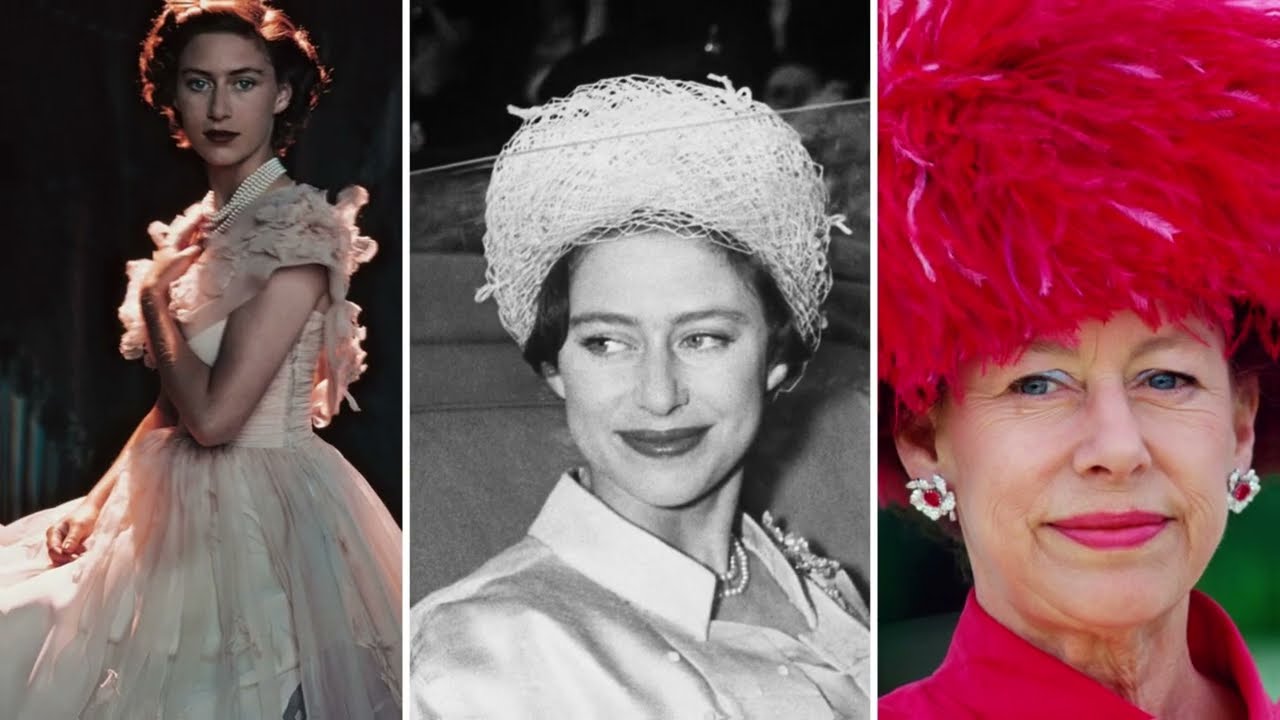
The funeral was held a week later at St George’s Chapel, Windsor Castle. It was a private family service. The most poignant image of grief that day was the face of Lady Sarah Chatto. As her mother’s coffin was placed on the hearse, cameras caught her face, and for almost the only time in her life, her fiercely protected privacy vanished completely. She was not Lady Sarah Chatto, the Queen’s niece. She was simply a daughter who had lost her mother. Her face was a mask of raw, unvarnished grief. She cried openly, her body shaking with a sorrow so profound it was hard to watch. In that moment of public pain, the world saw the truth of their relationship. It was not a bond defined by the chaos and neglect of Sarah’s childhood. It was a bond of deep, complex, and ultimately unconditional love. Sarah’s tears were not just a lament for the mother she had lost, but for the vibrant, dazzling woman her mother could have been. They were tears for a life of immense promise that had ended in such sadness and isolation. They were the tears of a daughter who had spent years caring for her mother’s broken body and spirit, a daughter who had absorbed her pain and now felt the overwhelming weight of her final absence.
Just seven weeks later, the family’s grief was compounded by the death of the Queen Mother at the age of 101. It was a double blow for the Queen, and for Sarah and David, it was the loss of their last grandparent. In the aftermath, Sarah retreated to her cherished privacy, but her final act of love for her mother had been a profoundly public one. She had shown the world what true devotion looks like. She had faced her mother’s painful, difficult legacy, not by running from it, but by walking straight into its heart with compassion and nobility. She had cared for the source of her own childhood pain. And in doing so, she had not only broken the curse for herself, but had brought a measure of peace and dignity to the woman who had carried that burden first.
With the deaths of Princess Margaret and the Queen Mother, a chapter of royal history closed. That great, semi-theatrical royal generation was gone. A new era had fully begun, marked by the 24-hour news cycle, the rise of the internet, and a public demanding more transparency and less deference. For the House of Windsor, it was a time of deep reassessment. In this changing landscape, the focus was naturally on the direct heirs. But in the quiet spaces between the headlines, the life of Lady Sarah Chatto began to take on a new and powerful significance. Her story was no longer just about surviving a difficult childhood. It had become a crucial case study, a potential blueprint for how the monarchy itself could survive the modern age.
This leads us to the central debate surrounding Sarah’s life. For years, the media, when it bothered to notice her at all, settled on a comfortable and rather simplistic narrative. They dubbed her the royal ghost. The term was meant to evoke a sense of tragedy about a woman so damaged by the psychological drama of her parents’ marriage that she retreated into a half-lived, imaginary life. According to this view, her intense privacy was not a choice but a symptom of trauma. Her calm was seen as fragility. Her reluctance to engage with the media was a sign of fear. Every choice she made, marrying a quiet artist, living outside an official royal residence, pursuing a reclusive career, was interpreted as an attempt to flee. She is the Windsor haunted forever by ghosts, the shy, introverted figure in the background, forever playing a supporting role in her own life story. This narrative is comfortable. It is psychologically tidy and fits a certain tragic mold. But it is also a profound misreading of the woman she has become.
The second argument, and the far more compelling one, recasts Sarah not as a ghost, but as a quiet revolutionary, a strategic master of well-being. This perspective does not see her choices as acts of fear, but as acts of profound, hard-won wisdom. Sarah had a front-row seat from childhood to observe the devastating effects of a life lived for public consumption. She realized that fame is a predatory beast, that headlines are cruel, and that royal status without a foundation of personal stability is nothing but gilded poison. She watched her mother, one of the most famous women in the world, die of a loneliness that no amount of public adoration could cure. From this unique and painful vantage point, she learned a lesson that few ever learn: true power lies not in public visibility, but in autonomy. So her life was not an escape, but a strategic, meticulously executed withdrawal into an area she could control. Her privacy is not a wall built from fear. It is a garden she has carefully cultivated so that something real and beautiful could grow within it.
Look at the evidence. A successful, loving marriage that has lasted over three decades in a family notorious for marital disasters. Two well-adjusted, successful sons raised without a whisper of public scandal. A respectable career built on her own talent. The unwavering trust and affection of the most powerful family in Britain. These are not the achievements of a fragile, haunted woman. They are the hallmarks of someone with immense inner strength, clarity, and discipline. She is not the royal ghost. She is the royal survivor, having quietly solved the puzzle that has confounded so many others.
This interpretation of her life became exceptionally relevant in the wake of the monarchy’s most recent and explosive crisis: the departure of the Duke and Duchess of Sussex. Prince Harry and Meghan Markle presented the world with a powerful narrative that life within the confines of “The Firm” was inherently impossible. Their solution was radical: a complete break, a move to another continent, and a new life funded by telling the story of their escape. The life of Lady Sarah Chatto as an adult is a silent, powerful, and deeply compelling counter-argument. It does not invalidate the personal experience of Harry and Meghan, but it fundamentally complicates their general conclusion. Sarah’s story suggests that the choice is not a binary between miserable servitude and noisy exile. It proves that there has always been a third way.
Consider the parallels. Sarah was also a child of despair. She also grew up in a broken home filled with emotional turmoil. She also had her every move, and her parents’ every move, scrutinized by the media. The public humiliation and criticism her mother endured in the 1970s were just as fierce as any coverage the Sussexes faced. Yet Sarah’s response was the polar opposite. She did not issue statements or give interviews. She did not run away. She stayed and quietly drew her own boundaries. She achieved privacy not by demanding it, but by demonstrating over decades that she was not a source of drama or media content. The media eventually learned there was no story to be had from her. She proved that one could remain a loyal, integrated, and even beloved member of the royal family while maintaining a fiercely protected private life. She did it not by fighting the system, but by simply refusing to be consumed by it. Her life is proof that the cage is perhaps not as inescapable as it seems. Sometimes the most powerful act is to simply and consistently refuse the role you are offered.
Her skill in navigating complex family dynamics extended beyond her relationship with the Queen. She also brilliantly managed the controversial legacy of her father. After his divorce from Princess Margaret, Lord Snowdon remarried quickly and had another child. He continued his famous career, but his private life remained complicated. Years later, it was revealed that he had fathered a secret child out of wedlock shortly before marrying Princess Margaret. He was a genius and a charmer, but he was undoubtedly difficult and morally complex. Through it all, Sarah and her brother David remained loyal to him. They refused to be drawn into the bitterness of their parents’ divorce. They loved and supported both their mother and their father, offering a model of loyalty that transcended the conflicts of the marriage. When Lord Snowdon died in 2017, Sarah was, as always, a model of quiet dignity at his funeral, mourning the father who, despite all his flaws, had given her the gift of an enlightened education and a passion for the arts. Her ability to retain love for two difficult, troubled parents without issuing judgment or public criticism reflects a level of emotional maturity that can only be described as exceptional.
In a world that is increasingly loud, confrontational, and confessional, Sarah Chatto’s life is a revolutionary act of silence. She represents a different kind of royalty, a different kind of power. A power that is based not on grabbing attention, but on self-possession. Her life is a lesson in the art of living. She teaches us that a meaningful life is not measured by the noise of applause, but by the depth of the inner peace it inhabits. She is the Windsor who shows us that true sovereignty is not in ruling a country, but in ruling oneself.
The ultimate recognition of her unique and vital role did not come through a royal decree or public honor, but in a moment of profound national grief. As the Elizabethan age drew to its historic close, a single silent gesture at the heart of the monarchy’s most sacred ritual revealed everything, confirming her place not in the shadows, but as a pillar at the very center of the family’s inner circle. On September 8, 2022, the world stopped. Queen Elizabeth II, the steadfast Queen who had reigned for over 70 years, died peacefully at her beloved Balmoral Castle in Scotland. Her death was not just the end of a reign; it was the end of an era. For Lady Sarah Chatto, it was the loss of the woman who had been a second mother, a constant anchor, and her most trusted confidante.
During the solemn, meticulously planned days of national mourning that followed, the world watched the royal family grieve. Amidst the grand processions, ancient rituals, and global media coverage, the familiar quiet figure of Lady Sarah was a constant, reassuring presence. At the state funeral, her face, etched with a grief as deep and genuine as the one she had shown at her mother’s funeral two decades earlier, was a poignant reminder of the personal loss at the heart of this public spectacle. She was not just mourning a Queen; she was mourning her beloved aunt. But during one particularly moving ceremony in the ancient silence of Westminster Hall, Sarah’s true place in the family’s heart was revealed to the world in a way it never had been before. The event was the “Princes’ Vigil,” a tradition where the children of the late monarch stand guard over their parent’s coffin. On the evening of September 16, King Charles III, Princess Anne, Prince Andrew, and Prince Edward took their places at the four corners of the catafalque. Then, in a notable and historically unprecedented departure from tradition, others joined them. The Queen’s four grandchildren, including the Prince of Wales and the Duke of Sussex, also took part in the vigil. But during the solemn proceedings, the presence of Lady Sarah Chatto was remarkably prominent. While tradition dictates that only the monarch’s children and grandchildren stand guard, Sarah was seen in a position close to the senior royals during these moments of deep grief. Her visible presence near the heart of this sacred ritual was a powerful, unspoken statement. Many saw it as evidence of her unique standing within the family. Not a working royal, not a headline-maker, but an essential member of the tight emotional circle, bound by a lifetime of love and loyalty. Here was the royal ghost, that shy, reclusive figure, taking her place at the heart of her family’s most sacred rite. She was not there for the cameras or for public approval. She was there as a daughter, a niece, and a cousin performing one final, silent act of love and duty. It was her most public appearance ever. Yet it was her most private and profound expression in that moment. She was not a ghost. She was a cornerstone.
So, what of the curse? The curse of Princess Margaret, born of a broken heart, a life lived under the microscope, and a fiery spirit denied a meaningful outlet. The curse of glamour that hid a hollow core, of wit that turned to cruelty, and of a search for love that ended in loneliness and a haze of smoke and alcohol. Lady Sarah Chatto inherited this legacy. She inherited the shattered remains of her mother’s life. She breathed the air of her parents’ unhappiness and grew up with the ghosts of what might have been. But in the end, she did not inherit the curse. Because a curse only has power if you allow it to define you, if you surrender to its patterns. And Sarah, with every quiet, determined, and graceful choice of her life, systematically and completely broke its spell.
Where her mother’s life was a frantic, desperate search for a public stage, Sarah found her purpose in the quiet, secluded sanctuary of her own art studio. Where her mother’s marriage was a public battlefield of passion and cruelty, Sarah built a private partnership of enduring love, stability, and mutual respect that has lasted for decades. Where her mother sought fulfillment in the fleeting admiration of crowds, Sarah found it in the steadfast love of her family and the deep, simple joy of raising her two sons. And where her mother’s story became a cautionary tale of squandered potential, Sarah’s story became a quiet lesson in emotional resilience and the art of a life well-lived. She did not reject her mother. In fact, her life may be the deepest tribute she could have paid her. By caring for Margaret in her painful final years with such unwavering compassion, she gave her mother the unconditional love and security she had always craved. And by building the happy, quiet, purposeful life that Margaret herself could never achieve, Sarah fulfilled the potential that was denied to her mother. She did not just escape her mother’s shadow. She walked out of it into the sunlight, carrying the best of her mother’s legacy, her love of art and devotion to family, with her.
In the grand, noisy, and increasingly controversial saga of the House of Windsor, the life of Lady Sarah Chatto is a quiet but powerful counter-melody. It is a story that reminds us that legacies are not always written in headlines or history books. Sometimes the strongest legacy is the invisible one: a cycle of pain broken, a loving family nurtured, a private peace won against all odds. She is not the tragic figure, nor the ghost in the machine. She is perhaps the wisest of them all. She looked at the glittering, treacherous world she was born into, understood its rules and its risks with perfect clarity, and chose to build her own kingdom, based not on pomp and spectacle, but on integrity, art, and love. The curse was broken, and in its place, a blessing was found.