On the morning of August 19, 1945, two Japanese bombers painted hastily with whitewash lifted off from Kisarazu Naval Air Station on the eastern shore of Tokyo Bay. Their mission was the first step towards the formal surrender of the Japanese Empire. The aircraft were carrying a 16-man delegation led by Lieutenant General Torashiro Kawabe, deputy chief of the Army General Staff, who had been personally appointed by the emperor two days earlier. Their destination was the island of Ie Shima, a 9-square-mile patch of farmland and coral off the northwest coast of Okinawa that American engineers had transformed into a major airbase in just four months.
The island had seen brutal fighting earlier that year. The 77th Division had landed on April 16th and required six days of combat to secure it, losing 172 men killed, 901 wounded, and 46 missing. Nearly 5,000 Japanese defenders died on the island, with only 50 taken alive. It was there, two days before the island fell, that famed war correspondent Ernie Pyle was shot through the temple and killed.
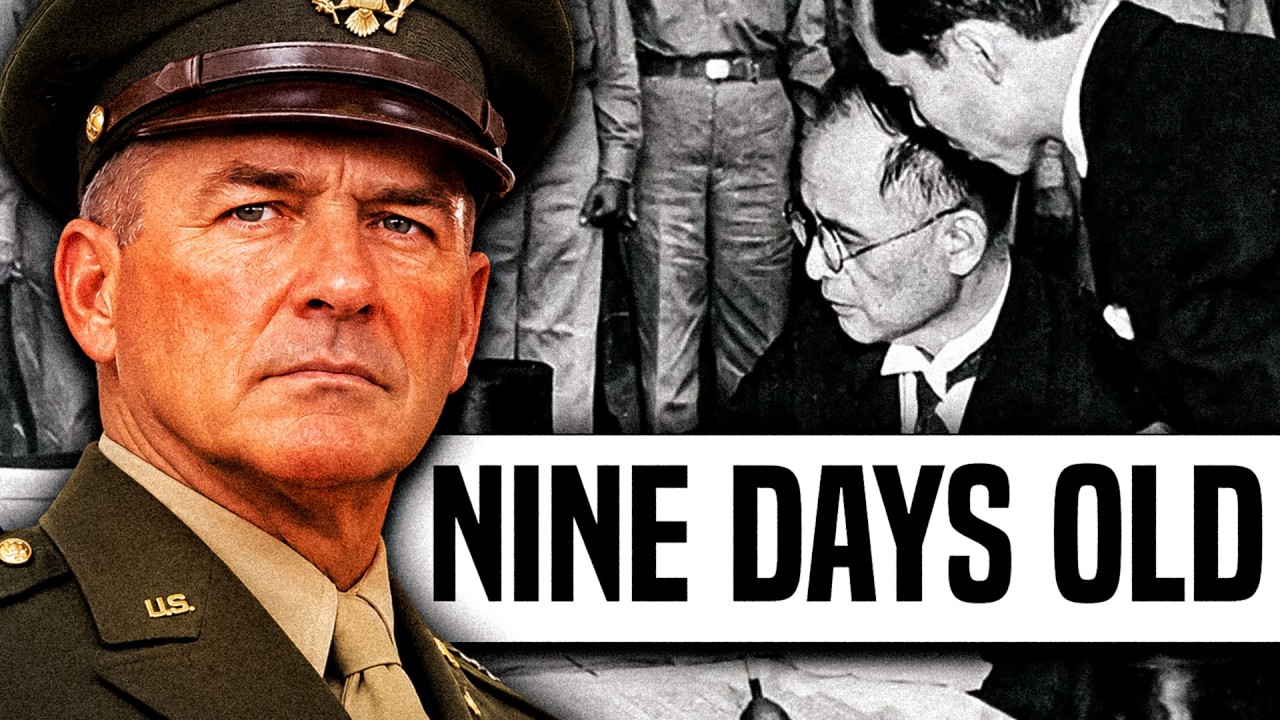
In the months that followed, the island was transformed. Engineers quarried coral and laid down three airstrips, including a 7,000-foot runway built for Superfortresses that had been completed just nine days before the Japanese delegation arrived. They opened 56 miles of road and brought 84,000 tons of stores across the beach. Fighter groups based on the island had been striking southern Kyushu since May.
The Japanese delegation flew a 5-and-a-half-hour crossing from Tokyo Bay, escorted part of the way by American fighters. A Flying Fortress from an emergency rescue squadron flew alongside carrying a motorized lifeboat slung underneath, as neither side wanted to lose these men in the water at this stage of the war. The first Betty touched down on the coral runway at 12:46 PM. Men were posted along both sides of the strip at intervals of about six feet, with rolls of barbed wire behind them.
Beyond the wire, thousands of American servicemen had gathered to watch the historic arrival. The second aircraft followed, and both taxied with their canopies open as pilots guided the turns with propeller wash sweeping across the crowds. The Bettys showed their age up close. The white paint was streaked, with old red markings showing through.
The green surrender crosses, however, had been painted with care. Base operations sent a short signal to Manila, reporting the visitors were down and promising to “slick you word when departing for your paradise. ”
What the Japanese delegation saw through the windows of their aircraft was four months of American engineering work. The ground had been farmland in March.
Now it carried three airstrips, hospitals, fuel storage, ammunition dumps, and a Red Cross canteen operating around the clock. Two polished Douglas Skymasters waited on the hard standing with their four engines cooling, making the Japanese aircraft look like relics of an earlier conflict. The delegation was airborne again within half an hour, arriving at Nichols Field south of Manila by 6:00 PM. There they were met by General Charles Willoughby and a party of officers who spoke Japanese.
After quarters on Dewey Boulevard, the delegation was driven through a city that both American and Japanese forces had devastated six months earlier, and up the steps of the ruined city hall. Sitting down a little after 9:00 PM across a long black table in a room hung with maps, the negotiations began. General Richard Sutherland ran the meeting. General Douglas MacArthur never appeared.
Translators worked all night copying the charts and tables the delegation had brought and rendering the American requirements into accurate Japanese by morning. Kawabe asked for extra time before the Allied landings in Japan, arguing he could not predict how his own army and people would react. Sutherland granted him three days. The Japanese delegation was then handed four critical documents: the requirements of the Supreme Commander, a draft of the Imperial Proclamation, General Order Number One, and the Instrument of Surrender itself—the document that would be signed in Tokyo Bay.
The delegation left Manila at 1:00 PM on August 20th and returned to Ie Shima that evening. One of the two Bettys departed the island at 6:41 PM carrying 12 people—10 passengers and two crew—along with the vital documents. Somewhere over the coast of Shizuoka before midnight, the aircraft’s fuel ran dry. The pilot put the machine down in shallow water off the shore near Hamamatsu, a city that American battleships had shelled and bombers had devastated just weeks earlier.
Miraculously, nobody died. The men waded out of the surf clutching the papers that dictated how Japan’s occupation would be carried out, and local fishermen helped them through the darkness. They continued to Tokyo by road, reporting to the prime minister about seven hours behind schedule. The second Betty left Ie Shima at 7:09 the following morning with 13 aboard.
Tokyo signaled Manila in the clear that the aircraft had reached the capital at 2:00 PM on August 21st. American military files do not explain why the second aircraft waited a day. One account has it swinging off the runway while taxiing and breaking its landing gear. Another suggests it left the taxiway and became bogged in soft coral.
Official message traffic from Ie Shima states only that the aircraft would leave in the morning, giving no reason. There are similar holes in the paperwork regarding fuel figures and even the completion date of the runway the delegation landed on, which rests solely on the engineer battalion’s own history. What the signals do confirm, beyond argument, are the hours each aircraft departed, how many people were aboard, and when they arrived. The crew members left on Ie Shima spent that time under guard.
A group of Americans climbed onto the wing of the first Betty and had their photograph taken standing on top of it. Neither Betty had much of a career afterward. The one that landed in the shallows off Shizuoka was beyond repair and stayed where it lay. The other reached Kisarazu and was broken up not long after, with its remains joined by those of its companion.
Accounts disagree about whether that was due to damage or a deliberate decision. The men themselves fared better. Every one of those who had flown out of Kisarazu on the morning of the 19th was in Tokyo by the afternoon of the 21st, and the Instrument of Surrender had come off a beach in the dark in somebody’s hands.
The first American troops landed in Japan seven days later.