The final surrender at Appomattox left many Confederate soldiers shattered, and some were so overcome by despair that they seriously discussed leaving the country altogether. Major General John Brown Gordon, one of the senior officers present, recalled in his memoirs how he tried to stop that exodus before it began. Gordon addressed his men for the last time as their commander, sitting on his horse in the middle of a crowd that gathered around him as the weapons were stacked and the battle flags folded. He wrote that many of the grieving men wept as the old banners were laid over the piled rifles, like ornaments on a coffin holding their dead hopes.
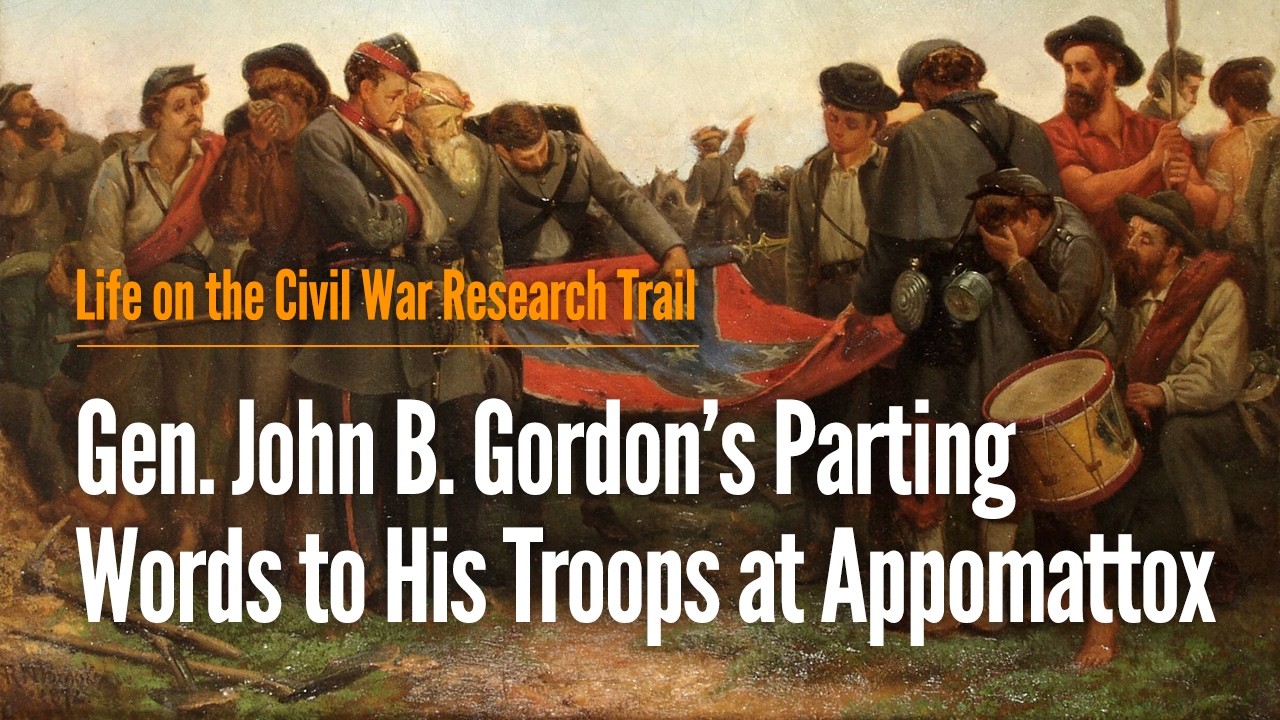
In that final speech, Gordon told the soldiers that although their cause was lost, the principles they had fought for could not be lost. He urged them to abandon any idea of leaving the country, telling them their duty as patriots was to stay and work for the restoration of their stricken region with the same courage and energy they had shown in battle. He pointed to the mild climate of the South, the fertility of its lands, and the high prices being paid for its main crop as legitimate grounds for hope. Gordon recalled that he saw, through the gaps in the clouds above them, the hand of the Almighty stretched out to help them in their coming struggle against adversity.
He also predicted that the brave soldiers of the Union Army, once discharged and scattered among the people, would become preachers of peace and brotherhood between the regions. Gordon wrote that the prophecy would have come true quickly if not for the catastrophic fate that struck the country with the assassination of President Abraham Lincoln. As Gordon began to speak, a large number of Union soldiers gathered to hear what he had to say, giving him a strangely mixed audience. One man present was Elihu B.
Washburne, a close political ally and adviser to Lincoln, who was attending the surrender as a guest of the Union commander. Washburne introduced himself to Gordon after the ceremonies and expressed his pleasure at the general direction of the remarks. He assured Gordon that the South would receive generous treatment from the federal government. Gordon later asked Washburne why he believed the government would deal generously with the South.
Washburne’s answer was brief: “Because Abraham Lincoln is at its head. ”
Gordon admitted he knew much about Lincoln’s history, his steady opposition to slavery, the Emancipation Proclamation, and his strong continuation of the war, but he knew nothing of the good feelings Lincoln held for the people of the South. Washburne’s words, coming from a friend and adviser of the president, greatly interested him. The two men rode together from Appomattox back toward Petersburg over the following days.
Washburne described Lincoln’s character, his friendly and charitable nature, and illustrated his points with stories that Gordon found entertaining and revealing. Washburne gave a detailed account of Lincoln’s meeting with Confederate commissioners at Hampton Roads. He expressed his opinion that the president went to that meeting with the fixed purpose of ending the war by granting the most liberal terms, provided the commissioners accepted the essential condition of restoring the Union. Before they parted in Petersburg, Washburne offered his confidence in Lincoln’s good intentions toward the Southern people.
He said the president would recommend legislation to Congress that would, in his view, promote the prosperity of the South. He was decisive in stating that Lincoln desired only the restoration of the Union, and that even the abolition of slavery was secondary to that main goal. Washburne reported that Lincoln had declared that if he could restore the Union without abolishing slavery, he would do so gladly. If he could save the Union through partial abolition, he would do it that way.
But if abolishing slavery entirely became necessary to save the Union, then it would be abolished. Since the surrender of Lee’s army had achieved Lincoln’s great objective, the people of the South would soon know that the president was deeply concerned with their welfare. There would be no prosecutions or discrimination, state governments would be properly recognized, and every effort would be made to help the Southern people.
Gordon wrote that these moving assurances were increasing his hopes when the whole country was shocked by the assassination of the president.