
The Dangerous Life of Tamara de Lempicka: Art Deco’s Most Scandalous Painter

Tamara de Lempicka, the artist who distilled the intoxicating, fragile spirit of the Jazz Age onto canvas with blades of color and a gaze of unflinching power, has been reclaimed from the ash heap of art history. Her resurrection is not merely a market correction, but a cultural reckoning, forcing critics to confront a legacy that was once dismissed as decorative, scandalous, or simply too commercial to matter. From the gilded ruins of St.

Petersburg to the smoky salons of Paris, from the glittering desperation of Hollywood to a final, defiant stand in Mexico, her life was a masterclass in reinvention, a relentless performance of self-creation that blurred the lines between artist, muse, and myth.

Her story begins not with a birth certificate, but with a fog of deliberate obfuscation. Born Maria Górska, she would later claim Warsaw in 1898, though other records suggest Moscow two years earlier. This ambiguity was her first act of artistry, a refusal to be pinned down by facts when a more compelling narrative could be forged.

Her childhood was one of opulent privilege, the granddaughter of a wealthy Polish banker, educated in Swiss boarding schools, surrounded by the trappings of aristocratic ease. But this gilded cocoon was shattered when she was ten, her father vanishing under circumstances she would later embellish with tales of suicide or gangland murder, depending on the audience. It was a formative lesson in the power of narrative, the utility of erasing inconvenient truths and replacing them with something more theatrical, more useful to the legend she was building.

The cataclysm that would define her generation arrived with the Russian Revolution. She had married Tadeusz Łempicki, a devastatingly handsome lawyer, in 1916, already pregnant with their daughter, Kizette. Their life was one of Petrograd’s glittering chaos, champagne flowing even as the Tsar’s world crumbled.

But the Bolsheviks’ seizure of power in October 1917 ended the revelry with brutal finality. One night, secret police kicked in their door and dragged Tadeusz from their bed at gunpoint. Tamara, chasing after them, was struck down into the snow, waking to find herself face to face with the carcass of a dead horse, its ribs a cage of despair.

Her husband’s release came at a terrible price. With forged papers secured through a harrowing bargain with the Swedish consul, a man who demanded sexual favors in exchange for her salvation, she fled across the border, the taste of ash and humiliation burning in her throat. She had survived, but the woman who emerged from that frozen nightmare was forged in steel, determined never to be so powerless again

Paris, the city of light, initially felt like a gray purgatory. The family, exiled and impoverished, lived in cramped quarters, their jewels pawned one by one. Tadeusz, broken by his imprisonment, had become a hollow shell, his violence a new, terrible language.

The bruises on her body were hidden beneath high collars and strategic strands of pearls. But Tamara, whose sense of entitlement had been honed since childhood, refused to accept this fate. Her sister’s sharp rebuke, a challenge to use her talent instead of enduring her misery, ignited a fierce, desperate ambition.

In late 1919, she enrolled at the Académie Ranson, throwing herself into her studies with a feverish intensity, chain-smoking three packs a day and painting through the night. She rejected the avant-garde’s worship of chaos, the muddy earth tones of the left bank, dismissing even Picasso as a destroyer rather than a creator. Her guiding star was André Lhote, whose soft cubism, with its glamorous, stylized figures, offered a path to something she craved, precision, elegance, a modern beauty infused with the grandeur of the past.

She would take his lessons, sharpen them, and make them her own

Her rise was meteoric. By 1922, she was debuting at the prestigious Salon d’Automne, marking the occasion with a vow that was pure Tamara, for every two paintings sold, she would buy herself a diamond bracelet, stacking them on her wrists until her arms glittered from elbow to hand. Her portraits were not mere likenesses, but distilled fantasies, capturing the glossy, self-possessed women of the new era, the garçonnes who drank in cafes, took lovers, and answered to no one.

Her female subjects, with their luminous skin and smoky, knowing gazes, often seemed to be looking at each other rather than at the viewer, a subtle, sapphic charge that set her work apart. Her first great muse was Ira Perrot, a flame-haired heiress who lived across the street, who became her lover and the subject of some of her most charged early works. Their trip to Italy together in 1921 was an awakening, a rediscovery of luxury and pleasure that infused her canvases with a new, golden sensuality.

Works like “Perspective,” with its entwined female nudes, announced her intentions unambiguously, scandalizing some, but captivating the powerful lesbian salons of Paris, where Natalie Barney and the Princesse de Polignac held court, wielding the power to launch or destroy reputations. Tamara, ever the strategist, inserted herself into this world, understanding that desire and ambition could be painted with the same brush stroke

Her private life grew increasingly decadent, a whirlwind of lovers of every gender, cocaine and ether, and parties that became the stuff of legend. She hosted soirées where waitresses shed their clothing as trays emptied, where food was served from the naked body of a young woman, where the atmosphere was wicked but never threatening, always choreographed, always controlled. Her marriage to Tadeusz, already frayed, unraveled completely when he left her for another woman.

The shock was profound, a wound to her pride as much as her heart. She chased him to Poland, begged, pleaded, even brought their daughter as a bargaining chip, but ultimately, her contempt was too sharp. You’re a nobody, she spat, too dumb even to have an affair with a pretty girl.

He walked out for good. She collapsed, moaning on a hotel floor, but she did not stay down for long. She painted him, capturing his dark allure, but deliberately leaving his left hand, where his wedding ring would have sat, unfinished.

The title was, of course, “The Unfinished Man.” A tribute, a condemnation, and a final, masterful act of control

Professionally, she was peaking. In 1929, she painted her most iconic work, “Autoportrait (Tamara in the Green Bugatti).” She depicted herself helmeted, gloved, eyes half-lidded with power, speed, beauty, and detachment fused into a single unyielding image.

It was her brand, her legend, sealed in paint. She was wealthy, earning over a million dollars by decade’s end, and she spent it lavishly, buying a three-floor apartment that was part home, part studio, and entirely a monument to herself, with chrome staircases, glass panels, and gray velvet sofas embroidered with her initials. She married Baron Raoul Kuffner, a Hungarian nobleman and collector, in 1934, believing she had secured immunity from the gathering storms of history.

But the world was darkening. The Depression had ended the Jazz Age’s heedless extravagance. Fascism was rising in Europe, and as a woman of Jewish descent, she could smell the fear in the streets of Berlin.

The era that had made her, that had given her subject, style, and stage, was over. She sensed it, confessing to her diary, I hate my life which is useless, without scope. The vitality that had once seemed inexhaustible was flagging, replaced by anxiety, depression, and a creeping sense of dislocation

In 1939, she and Raoul fled Europe for America, hoping for a new beginning. Hollywood shimmered like Paris in its prime, full of oil barons and movie stars, and she threw herself into its world with determination, hosting lavish parties, resuming her role as the glamorous, mysterious baroness. But the artistic currents had shifted.

A new generation, led by Jackson Pollock and the abstract expressionists, was splattering paint with violent, physical energy, dismissing her crisp lines and invisible brushwork as relics of a dying order. When Peggy Guggenheim opened her revolutionary gallery, Art of This Century, in 1942, Tamara’s work was nowhere to be found. She had misjudged the moment.

She was still celebrated, but as a decorative curiosity, a gossip column fixture, not as a serious artist. Her marriage to Kuffner, one of elegant distance, ended with his sudden death from a heart attack in 1961, leaving her a very rich, but profoundly lonely, widow. She moved to Houston to be near her daughter, but the relationship was brittle, marked by disappointment and a lifetime of neglect.

She tried to dominate her granddaughters, molding them into the exceptional beings she felt she had failed to create in her own daughter, but her efforts were cold, judgmental, and often cruel. Houston society, with its neat, practical values, found her absurd, her language vulgar, her theatrical glamour grotesque in a woman pushing seventy. She loathed it, calling it this uncivilized location

But then, unexpectedly, the tide turned. The art deco revival of the 1970s began to resurrect her reputation. A 1972 Paris exhibition of her early works was a revelation to a new generation, and she was featured in major shows celebrating women artists.

Her name, once a punchline, became a reference point. Her paintings, once dismissed as decadent, began selling for millions. “Autoportrait” became shorthand for a whole aesthetic, appearing on book covers, in music videos, and in the collections of celebrities like Jack Nicholson.

Madonna, the ultimate curator of image, built an altar of aesthetic worship around her. Angelica Huston played her in a cult play. She was no longer just a relic of the 20s, she was their embodiment, their apotheosis.

Tamara, who had always believed in resurrection, orchestrated her own with the same meticulous control she had applied to her art. She moved to Cuernavaca, Mexico, a haven for eccentrics and exiles, where she painted daily, even into her 80s, surrounded by a new court of admirers. She died on March 16th, 1980, a wisp of what she had been, but her myth remained intact.

She asked to have her ashes scattered over Popocatépetl, the great volcano towering above the city. It was not sentiment, it was staging. She wanted to rise from fire, and like a phoenix, she did

Her legacy is now secure, but it remains contested. Critics still debate whether she was a great artist or a brilliant stylist, whether her work was a profound commentary on female power or a glossy celebration of elite indulgence. But such questions miss the point.

Tamara de Lempicka did not just paint glamour, she painted the gaze of power, of sensuality without apology, of a woman who insisted on being seen. She captured the intoxicating, fragile excess of an era, its beauty, its indulgence, its collapse, with a precision that no photograph could match. And she did it on her own terms, refusing to conform, refusing to apologize, refusing to be diminished.

She was a woman who climbed from the ruins of revolution to the salons of Paris, who fell in America and then rose again, who defined an art movement and then outlived it, only to see it reborn in her own image. The woman in the green Bugatti had raced ahead of history, and when it finally caught up, she was waiting, hand on the wheel, eyes forward, flames at her back, already immortal. Her story, with all its scandal, its ambition, its genius, and its pain, is not just a cautionary tale or a celebration, it is a testament to the relentless, transformative power of self-invention, a reminder that in the end, the only legacy that matters is the one we forge for ourselves, brushstroke by brushstroke, diamond by diamond, from the ruins of everything we once knew
10 September 2026
Categories US

What Was the Wedding Night and Married Life Like in the Victorian Era?

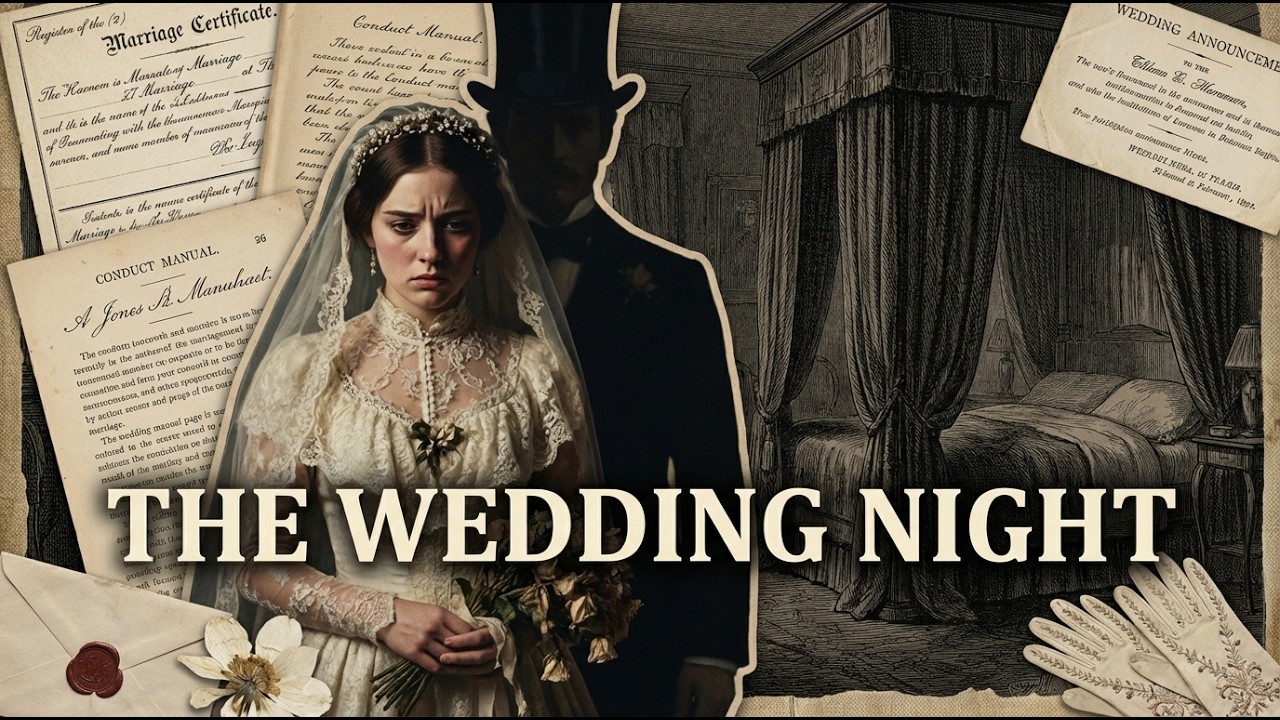
The pristine white gown, the delicate lace, and the carefully arranged flowers created a portrait of perfection, but beneath the surface of the Victorian wedding lay a chasm of ignorance, fear, and legal subjugation that historians say was one of the most carefully maintained silences in all of social history.

A young woman, often as young as 17 or 19, would arrive at her wedding night having spent months embroidering a nightgown by lamplight, her fingers tracing intricate patterns while her mother sat nearby and said nothing useful about what was to come. The needlework was exquisite, a displacement of all the anxiety and anticipation into thread and linen because there was nowhere else for it to go. When the bride asked her married cousin what marriage was truly like, the cousin smiled in a way that closed the subject entirely and poured another cup of tea.

The preparation, or rather the deliberate lack thereof, was not an accident of Victorian modesty. It was by design, a managed requirement enforced through education, social pressure, and the threat of complete social destruction. Medical texts of the era were written in language so abstract and remote from the physical body that even women who actively sought out information came away no more informed than when they started.

Mothers who had themselves experienced the reality of marriage were actively discouraged from sharing that reality with their daughters, as though knowledge itself were a form of contamination that could ruin a young woman before the institution of marriage had the chance to absorb her.

Historical accounts describe a culture of orchestrated ignorance where the most common advice given to a bride on the eve of her wedding was a chilling three-word instruction: “Endure it, dear.” The mother would sit on the edge of the bed, take her daughter’s hands, tell her to be obedient, assure her that her husband would guide her, and then leave the room without looking back. That was often the complete extent of a Victorian woman’s intimate education before marriage.

The structural asymmetry of experience that met on that first night was profound and deliberately maintained. The bride was expected to be pure, untouched, and her innocence was not merely preferred but was the central condition of her value on the marriage market. A woman who had any prior physical experience was considered ruined, unmarriageable, and morally compromised in a way that could never quite be repaired.

The groom faced no such requirement. Records suggest that many Victorian men, particularly those of the middle and upper classes, had prior worldly experiences before marriage, and this was understood in certain social circles as the necessary management of physical expectations.

Men were considered to have physical needs that required a legitimate outlet, while women were considered, in the dominant medical and social thinking of the era, not to have such needs at all. If they did, those needs were a sign of pathology rather than health. The two people who met in the marriage bed on that first night arrived from entirely different worlds of knowledge and experience, and no one thought it necessary to close that gap.

No one, in fact, acknowledged the gap existed.

What followed was, in many documented cases, confusion, fear, and physical discomfort that no one had warned the bride to expect. Historical accounts describe women who did not fully understand what they were experiencing, women who froze, women who lay still and wept quietly and waited for it to be over. Women who, in the days that followed, confided to diaries never to be shared that they had felt something very close to fear in that first night and something very close to grief in the mornings after.

The wedding chamber itself would have been carefully prepared, with fresh linen, flowers, a fire already laid in the grate, a pitcher of water, and candles set at intervals around the room burning down toward some inevitable moment. The space was designed to communicate romance, but what it actually communicated to a young woman standing in it for the first time without a chaperone was a kind of finality. The silence in that room must have been extraordinary, given that the entire scaffolding of Victorian courtship, the chaperoned walks, the formal calls, and the carefully managed conversations, had existed specifically to prevent two people from ever being truly alone together.

Men, too, felt the particular pressure of that moment. A marriage was not legally complete until it had been physically sealed, and failure to formalize the marriage could be grounds for annulment. The pressure to perform transformed what might otherwise have been a moment of genuine closeness into something more resembling a test, and tests, when both parties are aware they are being taken, rarely go the way anyone intended.

The weeks that followed brought their own particular weight. The expectation of pregnancy was immediate and unambiguous, as marriage in the Victorian moral framework was inseparable from reproduction. A woman who did not conceive within a reasonable period became the subject of quiet concern, whispered speculation, and the particular diminishing pity that polite society reserves for those who fail at what has been designated their primary purpose.

Records suggest that many Victorian women experienced their marriages as a continuous sequence of pregnancies, each one arriving before the physical and emotional demands of the last had been fully processed.

Birth control existed in limited forms, but its use was widely considered immoral, and it was rarely something a wife had the unilateral power to enforce. The husband’s desires governed the frequency of intimacy, and the wife carried the consequences. The physical reality of Victorian married life for women was, by any clear-eyed accounting, genuinely dangerous.

Childbirth in the 19th century carried a mortality risk that most women today cannot fully imagine, with the lifetime probability of dying in or shortly after childbirth being significant for married women across all classes.

Puerperal fever, the infection that followed delivery in unsanitary conditions, killed thousands of women every year well into the latter half of the century. A Victorian woman who married young and remained married for a normal span of years could expect to be pregnant many times over, and she could also expect to lose children, as infant mortality was at levels that would be considered catastrophic by any modern standard.

The legal framework surrounding marriage was equally devastating. The doctrine of coverture meant that a wife’s independent legal existence was entirely absorbed into her husband’s upon marriage. She could not own property, could not sign contracts, and could not, in most circumstances, retain her own earnings.

Upon marriage, she and everything she had ever owned became, in the eyes of the law, her husband’s. The Married Women’s Property Act did not arrive until 1882, and even then its protections were limited and vigorously contested.

A woman who entered marriage entered, in the most literal legal sense, a disappearance, and she was trained from her earliest years to be grateful for the opportunity. Divorce for the vast majority of the Victorian era was a practical impossibility. Before the Matrimonial Causes Act of 1857, a full legal divorce required a private act of Parliament, an expense and an effort available only to the extraordinarily wealthy and the extraordinarily determined.

After 1857, divorce could be obtained through the civil courts, but the standards applied to wives and husbands were, by explicit legislative design, entirely different. A husband could divorce a wife on the ground of adultery alone, while a wife seeking to divorce her husband was required to prove adultery plus at least one additional aggravating factor, such as cruelty, desertion, bigamy, or incest. A husband’s simple infidelity was not, in the eyes of Victorian law, sufficient justification for a wife to leave.

The message written into that law could not have been clearer. Marriage was an institution that women were expected to endure. Even a woman who successfully navigated the courts and obtained a divorce faced consequences that amounted to a second and longer punishment.

She lost social standing immediately and often permanently, was excluded from drawing rooms she had previously been welcomed into, and faced serious difficulty finding employment, remarrying, or being received in many of the spaces that had previously been available to her as a respectable wife.

The experience of marriage was not uniform across Victorian society, and the differences between classes were striking. Among the upper classes, marriages were primarily arrangements, strategic alliances for the consolidation of estates, the management of inheritance, and the calculated union of surnames and fortunes. Love was not the goal, and emotional compatibility was not among the listed requirements.

A young woman might be introduced to her future husband, assessed for her breeding, her dowry, and the manageability of her temperament, and engaged within a matter of weeks.

Wealthy Victorian couples frequently slept in separate bedrooms, maintained entirely separate social schedules, and conducted their daily lives in careful parallel rather than in any genuine communion. Marital life was often focused on the production of heirs, and once the heir had been produced, and ideally a spare secured against misfortune, the couple retreated into their respective spheres, and the arrangement continued with politeness and restraint until death dissolved it.

Further down the social order, the pressures took a different form but were no less total in their weight. Among the working classes, marriage was less about dynasty and more about immediate daily survival. Two incomes, however meager and unreliable, could sustain a household in ways that one income could not.

The working class Victorian wife did not simply manage a home; she was the home. She cooked and cleaned and sewed and mended, managed the household accounts with the discipline of someone who knows that a shilling miscounted means a child going without dinner, and performed all of this labor while in some state of pregnancy, recovery, or preparation for the next pregnancy.

Her work was total, unceasing, and almost entirely absent from the economic record of the era. It did not count as labor. It was simply what women did.

Emotional isolation was a notable feature of many of these marriages, not because warmth was absent, but because there was genuinely no space for it. Exhaustion is its own kind of wall, and when every waking hour is consumed by the mechanics of survival, tenderness becomes something that must be indefinitely deferred, and for many women, deferred meant lost.

And yet, amidst all of this, there was also love, complicated, real, sometimes extraordinary love. Diaries from the period describe women who came to regard their husbands as their closest companions and most intimate confidants. Men who wrote to their wives in language of such tenderness that it still pierces across a century and a half of silence.
The Victorian marriage was not a monolith but a vast, varied human spectrum, and the full truth of it requires holding both realities at once, the beauty and the burden, the tenderness and the trap.

Unmarried older women, the aunts, the sisters who never found a match, faced their own form of social diminishment. A woman who had not been absorbed into a man’s household by a certain age was a figure of pity, of faint contempt, and of the social awkwardness that settles around anyone who has visibly failed at what the world considers their primary function. She was a reminder of what the system classified as waste.

The institution held itself together not by brute force alone but by something far more durable: the genuine, deeply held belief of the majority of people living within it that this was simply the natural order of things. That women were suited to obedience and men to authority, and that the arrangement was not a system of control but simply life as it was correctly organized. That belief, internalized, performed, and passed from mother to daughter with a kiss on the forehead and three words of instruction, was the most powerful constraint of all.

The legal frameworks that reduced a wife to her husband’s property have been dismantled, slowly and incompletely, across generations of sustained and costly effort by women who fought from inside a system that told them their desires were irrelevant. Women can now own property, can divorce, can refuse, and can, within limits that still require vigilance, choose. These things seem obvious now, but they were not obvious then.

They were radical, they were contested, and they were, in some cases, achieved only after women had spent entire lives in advocacy and never lived to see the changes they made possible.

And yet it would be too comfortable and too historically irresponsible to declare the distance total. Some of what the Victorians embedded into their understanding of marriage, the expectations around women’s bodies, the idea that a good wife is primarily defined by what she gives rather than what she receives, and the quiet, persistent pressure to endure rather than to object, did not simply dissolve when the century ended. These echoes are fainter now, significantly fainter, in many parts of the world, but they have not disappeared entirely, and anyone paying attention can still hear them.

The young woman who stitched her wedding nightgown by lamplight, month after careful month, preparing for a night she was not permitted to understand, deserves to be seen clearly, not romanticized, not pitied from a comfortable distance, but understood. Her resilience, her ingenuity, and her quiet and often invisible adaptations to an impossible situation are part of the historical record, and they belong in the light. History is not a costume.

It is a record of lives actually lived.

10 September 2026
Categories US

What Happened to Unmarried Pregnant Women in the Victorian Era?

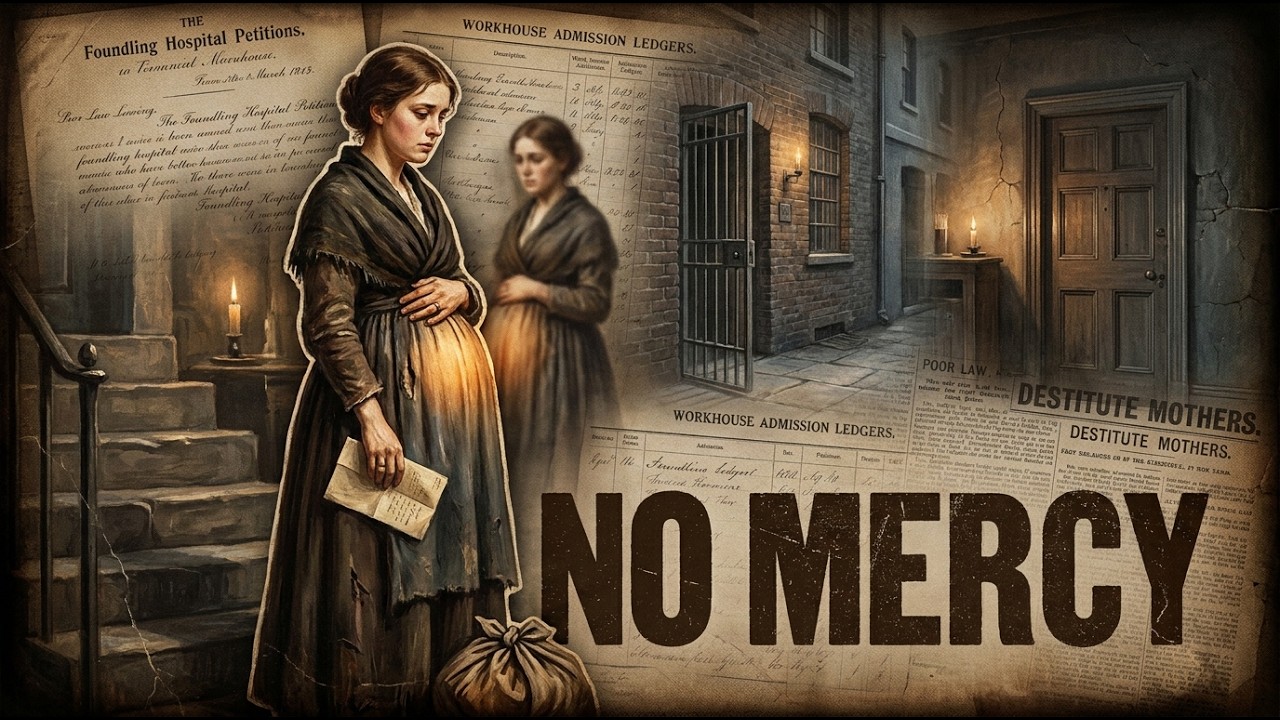
The clatter of a carriage wheel on wet cobblestones was the loudest sound in Kennington, but for Sarah Farquhar, the silence inside her own head was deafening. In 1853, the governess sat with a pen in her hand, the weight of a confession pressing down on her chest, and wrote a simple, devastatingly clear sentence that would echo through history as a damning indictment of an entire era: “If I expose the matter to my friends, I am disgraced forever.”

That letter, preserved in the silent, dusty archives of the Foundling Museum, survives alongside her name. Her child, her future, and the decades she had left to live do not survive in any public record, and it is precisely that absence, that void in the historical narrative, that makes her story representative. The myth of the Victorian era is a gilded cage, a handsome portrait painted in gaslight and velvet, hiding the screams of a vast machinery designed to crush a specific class of people.

Beneath the polite veneer of church, parliament, and the drawing-room, a parallel civilization existed, a brutal infrastructure for the dispossession of the “fallen woman” which operated with the cold, dispassionate efficiency of a public utility.

To understand the scope of the devastation, one must abandon the romantic distortion of the bonnet. The destruction of unmarried mothers in Victorian England was not simply a matter of social snubbing; it was a dependence within the law, a grim fiscal policy enacted in Westminster and enforced by the police, the magistrates, and the moral majority. In the 1860s, when a papal emissary toured the island nation and reported to the Vatican that an estimated thirteen thousand English infants were being murdered every year by their own mothers, the figure was contested among Parliamentarians, yet the phenomenon—which historian Ann Higginbotham has documented in forensic detail—was debated openly and with a total absence of the moral horror it should have provoked.

This essay is not a work of historical revisionism about exceptional monsters; it is a surgical dissection of a system that Parliament built, the Church endorsed, and respectable society maintained, using working-class women as the fuel for its maximization of social purity.

The mechanics of this machine began not with a child, but with a document. In the household of a Victorian middle-class family, the domestic servant was the engine of order. But her life was a prison of dependency.

She possessed no legal autonomy, no income of consequence, and slept in a room that was not her own. Her single most valuable asset was her character reference, given by her employer. When she discovers she is pregnant, the terror of exposure is not merely a fear of embarrassment; it is the anticipation of structural annihilation.

When her mentor learns of the pregnancy, the dismissal is immediate. She is turned out of the doors with or without her reference depending on the employer’s grace, which is rarely given. Without that reference, she cannot be hired.

She is effectively rendered unemployable by a system that simultaneously condemns her for her condition and prevents her from ever rectifying it.

From the moment she steps onto the cold London pavement, every subsequent door is not a door; it is a trap designed to clamp shut. The law, specifically the Poor Law Amendment Act, had been the first and most lethal assault. By abolishing the legal right of a woman to compel a father to contribute to his child’s maintenance, Parliament created a grotesque equation.

A man could father a child and disappear legally, leaving no financial trace, while the mother was held the sole legal, moral, and financial guardian of an infant she could not sustain. Contemporary research from the University of Cambridge analyzed records across London and found the abstruse truth: only twenty percent of unmarried fathers in the capital paid even a single penny toward their child. This £0 owed, the entire weight of the child’s existence fell onto the woman with the velocity of a stone dropped from a great height.

The father was free, either through legal loopholes or brute financial impunity, while the woman was castrated—she was legally separated from ever being able to negotiate her own condition.

Her next recourse was the workhouse, that coercive horror. To a nation that defined self-sufficiency above all, the workhouse was not meant to be a charity refuge, but a punishment for the sin of female poverty. A woman in her ninth month of pregnancy entered the grim walls and scrubbed floors until her water broke.

She delivered her child and was given very fourteen days, a brutal fortnight. Upon expiration, she had to choose between remaining with her child, forced to surrender him to institutional care that provided statistically disastrous survival rates, or leaving with her two-week-old infant into the cold winter of London with no job, no respite, and no subsidy. One can excuse the system’s cynicism, for it was working perfectly to its design: it created a class that would disappear into the void.

For those who sought to preserve their own lives in the eyes of what traced it politely as respectability, the Foundling Hospital held a sliver of hope. Yet the institution’s gate was guarded. It was a single oppressive valve.

The woman had to provide a written petition and two character references from respectable householders. She had to prove she had been seduced, not chosen; seduced, not seductive—all within the strict framework of male governors who decided her own fate, demanding proof of employment beyond her. The hospital only accepted first offenders and would evaluate her entire story before deciding if she was worthy of mercy.

It prioritized her restitution back to the role of a servant in society over the welfare of the child she was surrendering. It asked, in pain, to demonstrate that she was a victim rather than a woman capable of desire. Many were turned away, leaving them in the desperation of the streets.

And it is here that the system reached its terminal and most macabre logic: the trade of baby farmers. A woman with no money, no work, no guardian, and no options was left with one final way back to work: to pay an unlicensed neighbor to care for her infant away from the public eye. A complete regulatory vacuum existed.

The women who bought this service were not those contrary to the social contract; they were precisely the women hoping to climb back into employability. The baby farmers in charge, however, operated a business model where the business seen was not keeping the child alive, but disposing of its burden. The historical records of a Mrs.

Waters in South London are a grotesque ledger: she was convicted of the murder of her wards, while her other grave sites are uncovered in the abandoned streets. Another woman allowed over sixteen children to die in her care of bronchitis, malnutrition, and melancholy. The records of the Lambeth workhouse note that of the surviving infants rescued, nine died of fluid in the brain.

Yet, stomach churningly, this was rationalized by sections of the press and public as a relief to the mothers who could not afford their existence. This is the haunting echo of the logistics of the age, where a man’s inability to pay for his child’s milk was the equivalent of signing its death sentence.

The Magdalene Laundries were the final, grim warehouse for those who did not manage to mechanically dispose of the child but couldn’t keep them. Institutions presented as refuges for the fallen, they were systematized forced labor camps. The women, sealed behind walls with their infants relinquished for adoption or death, were worked as unpaid servants, their labor sold to laundries in the city block while the institution collected the profits.

Archaeological digs beneath the sites have revealed more than trinkets; they have revealed mass graves, a testament to the bodies that the system discarded. The woman had fallen so low along the social ladder that she became a ghost, a prisoner of reverence.

Analyze the moral theology of the Victorian era that built this. The Victorian ideal of the “Angel of the House” was a perfect, chaste, domestic priestess, a woman of purity and refinement. Yet it was a stratagem applicable only to the married middle and upper class women, whose economic security was a given.

For that reason, the working-class woman was excluded from virtue simply by the fact of her working. She could not possess the same ideal because his employment, her waitress, her maid, her neighbor, her lack of a drawing room, meant she was exposed to the environment and temptations in a way the drawing room was designed to obscure. She was cast, not as a pure soul, but as a potential temptress.

Victorian morality did not just fail to protect her; it actively worked against her, creating the conditions of poverty that placed her in domestic servitude, placing her in close proximity to a master who could exploit her with a legal impunity, and then punishing her for the pregnancy the system exposed her to. The state demanded that she be responsible for a seduction it had structured and protected, while the man who was her moral equal, who was her employer, walked away without a mention in the record the system left behind.

The historical landscape is not entirely dim. There are victories to be recorded. The family law reform of the 1960s and 80s and the legal status of illegitimacy was stripped, legal abortion was decriminalized, the workhouse was dismantled, and the psychological and economic support for single mothers—though still contested—exists.

But the thesis of the era persists from the hidden, stayed document and parliamentary scandals. The wondering accuracy is that the architecture was not built by a sudden evil or a societal madness. It was built through deliberate choices—by drafting the Poor Act, by allowing the poor law to justify punitive measures, by allowing the middle classes to turn their faces away from the infanticide filings.

It is not enough to know the bonnets and tea. To remember the past is to understand the mechanics we have inherited, to ensure we no longer place the blame on the woman who walks the streets with a child, while ignoring the justified system that kills the children of the poor before we even ask their names.

10 September 2026
Categories US

The Battle of Midway: WWII’s Most Brutal Grudge Match

The Japanese military had a closely guarded secret after the Battle of Midway, and the people most likely to expose it were the very men who survived the battle. To protect their carefully constructed narrative of victory, the military devised a cruel plan to ensure those survivors never told the true story. They would be … Read more

10 September 2026
Categories US

The BIZARRE Brutal Truth of Stagecoach Travel

The romantic image of the stagecoach as a Wild West adventure is sharply contradicted by the diaries and records left behind by the passengers who actually endured those journeys. Described by those who lived through it as wooden coffins on wheels, the coaches offered brutal rides over rocky terrain, with strangers packed together for weeks … Read more

10 September 2026
Categories US

Will Black Jack Christian Outlaw Leader of High Five Gang

Will Christian, known as Blackjack, led an outlaw crew called the High-Fives Gang, with his older brother Bob, carving a path of chaos through Oklahoma, New Mexico, and Arizona by robbing banks, hijacking trains, and ambushing stagecoaches. Born William Christian Jr. in Fort Griffin, Texas,in1871, hesas the son of William Sr. and Sally Christian, a … Read more

10 September 2026
Categories US

“Insane” Princesses From History You Wouldn’t Want to Be

When Princess Louise of Belgium was born in 1858, she was the first child of the man who would become King Leopold II, the ruler whose brutal exploitation of the Congo made him one of the most infamous monarchs of the 19th century. But her own life would spiral into a tragedy marked by a … Read more

10 September 2026
Categories US

Curly Bill Brocius: The Bloodiest Outlaw the Old West Ever Knew

A man known as Curly Bill Brocius became one of the most feared outlaws of the American Old West, linked to cattle rustling, armed violence, and the loosely organized Cowboys of Cochise County. His reputation spread far beyond Tombstone, but behind the legend lies a figure whose real identity, crimes, and even death remain clouded … Read more

10 September 2026
Categories US

What They Hid About the Alamo

The final hours inside the Alamo remain one of the most contested puzzles in American history, and the reason is brutally simple: almost everyone who knew the truth died before sunrise on March 6th, 1836。 With nearly all Texan defenders killed in the Mexican assault, historians have been left to reconstruct those desperate minutes from … Read more

10 September 2026
Categories US

Joan Rivers’ Marriage Was Nothing Like America Believed

The silence in that Philadelphia hotel room on August 14th, 1987, was absolute, broken only by the soft ticking of a clock and the shallow, final breaths of a man who had once stood as the unshakeable pillar of America’s most famous comedy family. When Edgar Rosenberg, 62, was found dead from an overdose of prescription medication, he left behind a devastating puzzle. The world was told Joan Rivers’ ambition had driven her husband to suicide, but sealed envelopes and cassette tapes he left behind revealed a marriage, betrayal, and despair that bore little resemblance to the glittering image of success the public had consumed for over two decades.

The aftermath was a waking nightmare. In a moment of searing agony, only weeks after her father’s death, a 19-year-old Melissa Rivers looked directly at her mother and accused her, saying, “You killed Dad.” The accusation cut deeper than any critical review or canceled contract.

With her husband gone, her mentor Johnny Carson refusing to speak to her, and her network television career in ruins, Joan retreated into a darkened room, placing a cold handgun on her lap, contemplating whether the pain of existence was worth the effort required to continue surviving.

To understand the tragedy that shattered the family, one must first understand the woman before Edgar Rosenberg. Born Joan Alexandra Molinsky June 8, 1933, in Brooklyn, she grew up in a Jewish immigrant household where her father, Meyer, worked tirelessly as a physician while her mother, Beatrice, yearned for the wealth of high society. In that home, Joan was consistently told she lacked the traditional beauty of her older sister, Barbara, and was far too “clever” for her own good.

The constant comparison to societal standards of prettiness festered, creating a deep insecurity that she would later weaponize into her comedy.

Despite achieving a degree from Barnard College in 1954, her family’s primary obsession was securing a wealthy husband for her. To appease them, she married James Sanger in 1955, but the marriage ended in annulment after six months when she discovered he hadn’t been upfront about not wanting children. That swift collapse served as a liberation, allowing her to ignore the conventional script of the 1950s housewife and hurl herself into the unforgiving world of stand-up, where her own father threatened to institutionalize her for her “madness” in pursuing entertainment.

It was a brutal decade of struggle. In the smoky, dim basement clubs of Greenwich Village, she worked as “Pepper January” or “Pepper Miller,” trying to find a place in a male-dominated profession. For ten years, she faced rejection from agents and audiences, enduring brutal critiques and advice to undergo plastic surgery to improve her chances.

She wrote jokes for Phyllis Diller, worked as a scriptwriter for Candid Camera, and wept in the driver’s seat of her car, enduring a relentless baptism of fire that nearly extinguished her dreams.

Her life changed forever on February 17, 1965, when, at 31, with fear making her physically ill, she stepped onto the stage of The Tonight Show with Johnny Carson. She did not perform, but instead talked about her failing love life, the pressure for her to marry, and the trials of being a woman in her early thirties. The laughter she received was explosive and Carson, the reigning king of late-night, took her hand and declared to millions, “You’re going to be a star.”

The phone, silent for so long, began to ring off the hook.

Just as her star began to rise, she met a man who was her polar opposite. In the summer of 1965, she encountered Edgar Rosenberg, a European film producer, 8 years her senior. Born in Germany, he had escaped the Nazi regime and carried a quiet sophistication and composure.

Where Joan was loud and fearless, Edgar was gentle and protective. He never felt threatened by her ambition; instead, he saw her raw talent and dedicated himself completely to building the foundation of her empire, taking over up being her sole manager, overseeing every contract and negotiation with meticulous care.

This relationship would anchor her career, giving her the strength to sustain the demand of a 1960s and 1970s stand-up superstar, touring The Tonight Show. Their love story became complete on April 1, 1968, when their only daughter, Melissa, was born. Alongside the Gold Records and the sold-out shows, the little family traveled together, creating a bubble of joy for her in the often-toxic entertainment world.

However, Edgar struggled with several internal demons—he had battled depression for years and survived a major heart attack in the mid-1980s, adding a load of strain he kept largely hidden from the public.

The precarious pressure of Edgar’s illness collided when Joan’s star reached its highest point. In 1986, the newly formed Fox television network approached her with a $15 million contract offer to host her own late-night show, pitting her against The Tonight Show and Johnny Carson. For a woman who had absurd fear of the phone going silent if she stopped working, the chance to leave the shadow of her mentor and become an empire of her own was impossible to reject.

She accepted the deal but made the near-fatal mistake of following her lawyer’s advice in secrecy.

When she broke into the news with Johnny Carson herself, the billionaire famously felt deeply betrayed, hung up the phone, and banished Joan from his show and his life for the next 19 years. The doors that had opened for her, being the first and only woman guest host, now slammed shut, leaving Joan on the outside. Yet this hurtful conflict was a child’s game’s pain compared to the battle she faced within the Fox boardroom, where the management, including mogul Rupert Murdoch, regarded her with a ruthless suspicion.

Edgar took the position as executive producer of the The Late Show as the network was unstable and crippled by low ratings. He was a man who was already struggling from a nervous breakdown and a heart, and now he was exposed to ruthless executives and extremely abrasive politics. He slowly began to break under the massive stress that came with his wife’s career, filled with screaming matches and unexpected negotiations.

He lost his natural composure, blaming himself for the failing show, and retreated into a paranoid depression that began eating away at the core of his identity.

In May of 1987, the spiritual and moral collapse reached its zenith when Fox executives summoned Joan alone, shutting the door on Edgar. They coldly said he was being discharged for incompetence and was forbidden from ever entering the studio again; if she wanted to keep her network show, she had to continue with him out of the picture. Joan, whose loyalty was anything but surface-level, refused to abandon him and let her contract collapse.

On the chain of consequences, the Fox network fulfilled their threat, and The Late Show was officially canceled.

A short several months after the cancellation, overcome with despair and deep feeling of failure, Edgar flew to Philadelphia. There, in that sterile heritage hotel room, he chose to end the battle. He left behind two envelopes that contained the family’s financial paperwork, meticulous as she was always, and cassette tapes.

The recordings did not contain lengthy justifications, but rather a final, colder blow: he didn’t have a suicide note, he had an accounting; the tapes were practical instructions. Yet for Joan, the loss was total and it physically and mentally collapsed the world around her.

At 54, Joan was a widow, but also a woman without a network, she had been trapped in legal dramas, and was stripped of the safety net she had built in that financial ruling. The public, unaware of Edgar’s mental illness or the boardroom pressures, divided her nightmare, turning her into a figure of emotional manipulation and obsession—the ambitious tally-centered wife pushing his fragile husband. Worse than any public criticism, the backlash crashed into her own home because Melissa, too young and myself in grief, refused to speak to her mother, blaming the tragedy entirely on Joan.

Grief came in a complete wave. Forced to sell the Bel Air home to cover mounting legal fees and debts from the collapse, she moved into a small environment in New York. In that darkness, her own life reached a final crisis point.

In a moment Jan revealed with grief, she was complete on her uniform, with the entire world seeming to darken, she saw the only logical end. “You gotta remind yourself you have the courage to pull the trigger,” she recalled of this moment, where she, alone, resolved it to be worth deciding to end it all. But she didn’t.

The moment she felt the cold gun metal on her lap was the moment she ultimately chose a different path—a path that had nothing to do this with revenge or fame, but with survival. Joan came back to stand as she had done in the 1960s, with a relentless panic. She won’t take on every job that came her way, from reprising bar shows in communities straightening into clubs to performing on cruise ships.

While he took it hard financially, it was through these grime-laden stages she found a salvageable tether back to her purpose.

Her sheer work ethic delivered her to a rebirth through a new platform in 1989, with a daytime talk show, The Joan Rivers Show. She approached it with a new version of journalism and wit. Her way connected with audience; it wasn’t long until, in 1990, she was awarded a Daytime Emmy award for Outstanding Talk Show Host.

It was a public validation that proved her worth beyond the impact of the Fox tragedy, and it was a triumph that she could not let be undervalued. The Emmy is still a trophy she called “the biggest achievement” of her television career.

But television was not the end of income; the money came from a world she imagined would never host her, television shopping. In 1990, she at first was belittled for designing and hawking jewelry on QVC. Colleagues considered it a career-ending move, but she returned to QVC every time to pitch jewelry starting at $20.

Her products sold over a billion dollars in revenue. She wasn’t repaying debts; the “retail queen” had built a retail empire when no one thought her career would be further to climb, con or financially able to be standing.

Then she changed the very face of pop culture at 61 years old by taking the mic on the red carpet for E!. When she asked the question of “Who are you wearing?” to the actors, the world instantly changed.

Her style and outspokenness switched the mundane stride of the red carpet into a stage for culture: obsessive fashion. Seated beside her, mother and daughter, Melissa and Joan, their relationship were dueling and honestly HotTagged, carried along the monster complex of red carpet interview humor; they transformed the industry economy. Yet, a deeper intimacy – and the silence would still hurt.

Back inside her mansion, with five stories of chandelier gold and Mirò paintings on the wall, the setup seemed hers undesired. Hidden inside her room was a wall of note cards, organized by the title of her pain. One file said “death,” one “loneliness,” one “Edgar Resurrection.”

She kept a calendar literally filled blank, because the empty dates terrified her in the solitary circumstances. No matter the money, the glitz, or the achievement, the pearl palace felt echo-like in absence of her sympathetic, best friend. Even at 80-years-old, she persisted in working 300 nights a week of stand-up just to avoid staying within those silent walls.

That ferocious drive kept her in the stage until her final moments. On the morning of August 28, 2014, Rivers went into the Yorkville Endoscopy clinic in Manhattan for a routine throat endoscopy. She was expected to go home that afternoon, but the procedure turned dire when her sedative, propofol, caused a dramatic drop in blood oxygen.

The doctors failed to manage her airway, neglecting an emergency response as her heart rate fell. The life support was pulled six days later, on September 4, 2014. At 81, she’d left a schedule of bookings that ran to the last year of her death.

She left no space for the acknowledgment of her heart, but it was a house; she made her legacy with trailblazing presence. The tragic truth, the tapes, the aftermath—was her spark. Joan had loved a man who believed in her—even if his own darkness blinded him.

Her life was never a fairy tale. To the 31-year-old woman abandoned by the industry and a 54-year-old widow with a loaded gun in her lap, the rest was the lesson: the final act of survival is declared that rebuilding yourself in the lifetime after others think the story is over is the testament to your resilience.

10 September 2026
Categories US