Throughout his years of public speaking, Michael Franzese faced the same three questions wherever he went, from Southeast Asia to Europe to Australia and across America. People wanted to know where Jimmy Hoffa was buried. They asked whether he had ever killed anyone. And they asked where he had hidden all his money.
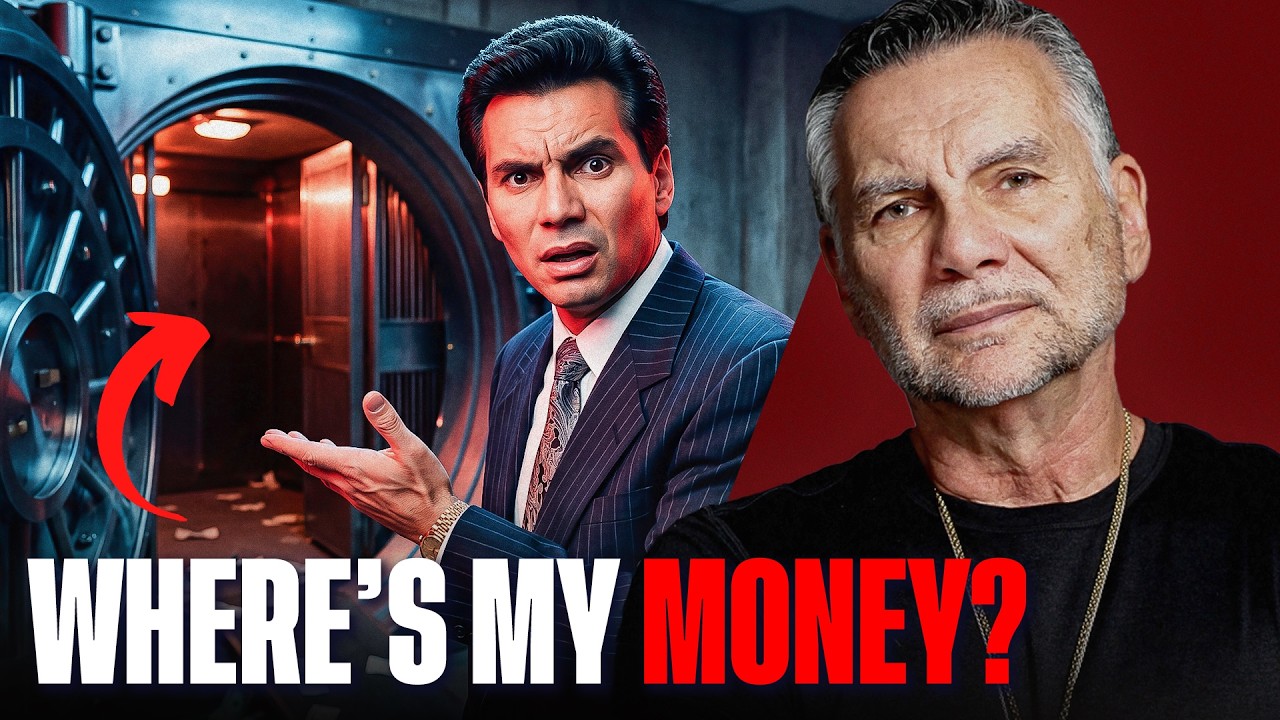
The third question, he decided, deserved a real answer, or at least as real an answer as he was willing to give. The answer began with the gasoline tax scheme, the largest criminal enterprise Franzese ever ran alongside his partner Lawrence Iorizzo, known to most as Larry. For seven or eight years, the two men defrauded the government of the taxes on every gallon of gas they sold. The federal tax at the time was nine cents a gallon, and between the federal, state, and local taxes, the take approached forty cents on every gallon.
Their operation sold half a billion gallons of fuel a month, and at the peak, they were pulling in between seven and eight million dollars a week. The government later claimed they had stolen more than two billion dollars altogether. Franzese believed that figure was inflated, but he never denied that the sum was enormous. Iorizzo was a giant of a man, six foot five and roughly five hundred pounds, but solidly built rather than sloppy.
He was also brilliant, and it was his idea to build the scheme around the tax on interstate gasoline sales. The two partners became so close that Iorizzo’s children called Franzese uncle, and their families were intertwined. They accumulated serious wealth together, and they salted some of it away in a numbered bank account in Austria. Over time, they deposited about thirty-three million dollars into that account.
The arrangement required both men to appear together, because one held half of the account number and the other held the other half. Neither could withdraw anything alone. The trouble began when Iorizzo faced a tax case of his own, unrelated to their partnership. As the trial turned against him, he came to Franzese and insisted he was not going to prison.
Franzese tried to talk sense into him, pointing out that the worst he faced was three years and that fleeing would only make everything worse. But Iorizzo was a man who had lived in luxury his entire life. He could not picture himself in a cell, so he fled during the trial and set himself up in Panama. At the time there was no extradition treaty between the United States and Panama, and Iorizzo had already paid some of Manuel Noriega’s people for refuge.
From Panama, he ran his side of the business and kept living large. He even mailed wedding invitations from Panama to guests in the United States for his daughter’s European wedding. The government watched him closely and eventually made a deal with the Panamanians. In the middle of the night, agents broke down his door, pulled him out, put him on a jet, and brought him back to Florida.
Once he was locked up, the reality of prison hit him. An FBI agent later told Franzese that Iorizzo looked at the narrow prison cot, understood that he could not even lie down on it comfortably, and said he would tell them everything they wanted to know about Michael. That was all it took. Iorizzo became the prosecution’s star witness against his old partner.
As the Eastern District of New York prepared its racketeering indictment, Iorizzo’s son came to Franzese with a bizarre message. His father had a plan. When he was brought to the courthouse in Brooklyn, there would only be two or three marshals around him. Iorizzo wanted Franzese to intercept him, kill the marshals if necessary, put him in a car, and get him out of the country so he would never testify.
Franzese politely refused. He told the son that his father had lost his mind. The plan was out of the question. Franzese had a complicated reaction to the betrayal.
Some people around him suggested that the only way to handle Iorizzo was to have him killed. That was the mafia way, and Franzese was by then a captain. But he could not bring himself to do it. Iorizzo’s children called him uncle.
Their families had been close for years. He decided instead to fight Iorizzo in court and see whether the man would hold up on the witness stand. Franzese later said that cost him dearly, but he still considered it the best decision he made. Around the same time, Rudy Giuliani was building a separate case against Franzese in the Southern District of New York.
When Giuliani learned that Iorizzo would testify against his former partner, he wanted Iorizzo as a witness in his case too. The problem was that Iorizzo knew nothing about the Southern District case, but they put him on the stand anyway. Franzese and his lawyers tore him apart in front of the jury, and Franzese was acquitted. That acquittal destroyed Iorizzo’s value as a witness.
The government had spent its prize witness and gotten nothing. They were already talking about dropping him from the witness protection program, and Iorizzo was desperate. He suddenly remembered the thirty-three million dollars in Austria and told them about it. Franzese knew he had leverage.
He had beaten Iorizzo in the Southern District, and the government worried about getting a conviction in the gas case using the testimony of a witness who had already been shredded. For about three months, Franzese’s lawyer negotiated a plea deal. The government initially demanded twenty-five years and a hundred million dollars. They eventually came down to ten years in prison and fifteen million dollars in restitution, forfeiture, and penalties.
Then the Austrian account became part of the negotiation. The federal agents went to Austria with the half of the account number that Iorizzo had given them. The Austrian bank refused to release the money without the complete number. When the American government insisted the money belonged to gangsters and was illegal, the Austrians simply froze the funds and said whoever produced the full account number could collect the money.
Franzese had a choice to make. He could keep his half of the number and refuse the plea deal, or he could surrender it and take the ten years. He knew that under the old sentencing laws, ten years meant he would likely serve around five and still have a life to return to. He handed over his half of the number, and the government collected the thirty-three million dollars.
He never received credit for that money, and he never learned what happened to it. He said he hoped the taxpayers benefited somehow, but he heard nothing about it afterward. One detail stuck with him. The government gave Iorizzo two and a half million dollars back from the stolen fund as part of his deal for testifying.
That fact came out during the plea negotiations and discovery. By the time Franzese went to prison, Iorizzo had already been released. He knew he could not stay in New York as a known informant, so he moved his whole family to Texas and went straight back into the gas business. He began defrauding the government again, and this time he was caught.
He and his entire family were arrested. When he was taken into custody, he went back to the federal authorities and offered them more information about Franzese. They were not interested. Franzese was already serving his sentence, and they told him so.
Iorizzo went to trial, was convicted, and received a twenty-year sentence. He served seventeen years. His own son and daughter testified against him. He came out of prison and died a few years later.
Franzese, for all the bitterness the story carried, was honest about his feelings. He said he loved Iorizzo even after the betrayal, because he always knew the man was weak and would not hold up. They made a fortune together and shared good times, and Franzese was genuinely sad when he died. But the story also carried a warning.
Franzese pointed out that everyone he knew from that life met a bad end, and he used his own example to urge young people away from crime. He spent eight years in prison and earned nothing during that time, gave up fifteen million in restitution and whatever property the forfeiture took, and surrendered his share of the Austrian account. When he counted what he had to show for the millions he had made, he said the answer was not much.
He left the audience with his own conclusion: the life promises everything and delivers ruin, and the only way out is to surround yourself with the right people and earn a living the right way.