For decades, Spain viewed King Juan Carlos and Queen Sofia as the model of royal stability. Their 1962 wedding in Athens, their three children, and their prominent public roles created an image of an unshakeable union. Yet beneath the carefully constructed facade, reports and press accounts long suggested their marriage had fractured, held together by duty, tradition, and the demands of the crown rather than intimacy. Their public partnership remained intact through major national events, including the failed coup attempt in 1981, which earned Juan Carlos lasting acclaim as a defender of Spain’s young democracy.
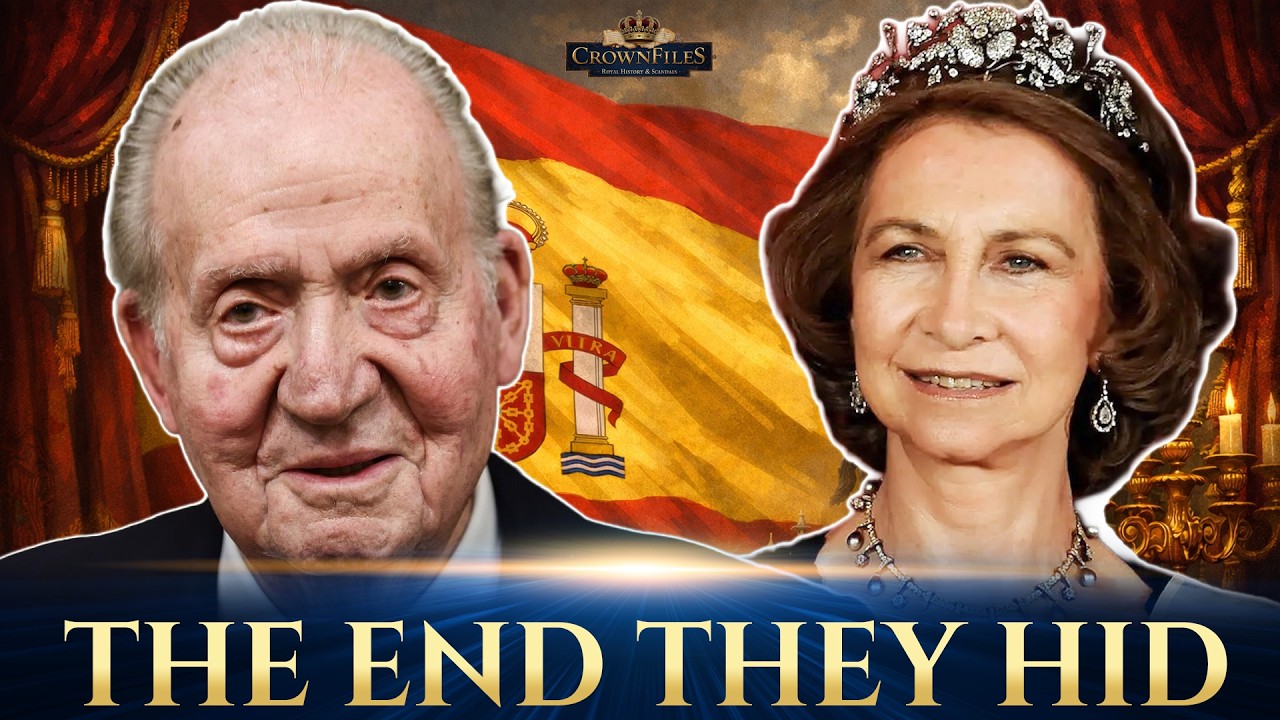
Sofia built a reputation for restraint and dedication to social causes, and together they projected a balance that seemed to guarantee continuity for the monarchy. One event permanently shattered that image. In April 2012, during a severe economic crisis in Spain, the king fractured his hip on a private elephant hunting trip in Botswana. The royal household did not reveal the trip; the public learned of it because Juan Carlos required urgent surgery upon returning to Madrid.
Many Spaniards were outraged that the head of state had been on a luxury hunting expedition while citizens struggled daily. The incident drew attention not only to the king’s conduct but also to the woman at the center of the growing scandal. Reports regarding Corinna Larsen, a figure long linked to Juan Carlos, became far more visible, and the country began openly discussing what had previously been private. In this context, Sofia’s silence during the crisis became a symbol of discipline and endurance many observers found striking.
Juan Carlos issued a public apology after emerging from hospital: “I am very sorry. I made a mistake. It will not happen again. ” His words were historic—a king apologizing in public—yet they did not contain the damage.
Instead, they confirmed what many had begun to suspect: the royal myth of an unbreakable marriage had been visibly fractured. Both Juan Carlos and Sofia were shaped by difficult childhoods. Juan Carlos was born in Rome in 1938 while his family lived in exile following the fall of the Spanish monarchy. He was sent to Spain as a young boy to be educated in preparation for a possible future role as heir, a separation from his family that exposed him to constant scrutiny and political calculation.
He also carried the trauma of the accidental death of his younger brother Alfonso, a loss he later described as having remained with him for the rest of his life. Sofia was also born in 1938, in Athens, as the daughter of King Paul and Queen Frederica of Greece. Her family endured exile during the Second World War, spending years in Egypt and South Africa before returning to Greece. That experience taught her early that royal status could vanish quickly and that stability was fragile.
Her upbringing emphasized self-command, composure, and the obligation to fulfill her role before attending to personal feeling. The couple first encountered each other as teenagers on a cruise through the Greek islands in 1954. They met again at the wedding of the Duke of Kent in 1961, and their engagement followed quickly. The wedding took place in Athens on May 14, 1962, and appeared from the outside to be a perfect union of youth, lineage, and dynastic promise.
Yet even then, the marriage came with deep sacrifice: Sofia adapted her name and public identity, entering a staunchly Catholic Spain still shaped by Francoism, while Juan Carlos lived under ongoing pressure and political calculation. Over the years, differences in their characters seemed initially complementary. He was energetic and charming in public; she was composed and disciplined. But in a marriage placed under such enormous institutional pressure, those differences were often silenced and deferred rather than resolved.
The appearances of a marriage gradually came to replace the life of one, with the couple appearing together for duty while emotional distance grew. The Botswana incident ultimately exposed that distance to the entire nation. It revealed more than an error of judgment; it revealed the extent of the king’s privilege and his separation from the reality of the economic crisis. The affair also signaled that the monarch’s once-untouchable public standing had begun to erode.
The subsequent revelations about his finances, offshore arrangements, and personal conduct followed him after his reign ended. In June 2014, Juan Carlos abdicated in favor of his son, now King Felipe VI. The move was widely interpreted as an attempt to preserve the monarchy from further damage caused by scandal and public disillusionment. Legal immunity that protected him as monarch no longer applied fully after abdication, leaving him more exposed to questions about his past financial dealings.
In August 2020, amid mounting controversy, Juan Carlos left Spain for Abu Dhabi. Although it was not officially called banishment, the symbolism was unmistakable: a former king had removed himself from the country to shield the crown from further harm. Sofia remained in Spain, continuing public engagements at Zarzuela and maintaining her role with visible discipline. There has been no divorce and no formal legal dissolution of their marriage.
Instead, the couple remained joined on paper while living separate lives. The story of Juan Carlos and Sofia became, in the end, less a romantic rupture than the account of an institution that continued long after the private bond at its center had been exhausted. Juan Carlos retains the title of King Emeritus, but his legacy carries the scars of scandal and suspicion, while Sofia has come to be associated with endurance and duty in the face of private collapse. The consequences of the crisis extended to the next generation.
Felipe VI has sought to distance the modern crown from his father’s controversies through austerity, discretion, and an emphasis on transparency. The shadow of the former king nonetheless persists, forcing the monarchy to confront how much of its old narrative can survive the weight of the events that followed.