In late summer 1945, a confidential message reached President Harry Truman’s desk carrying the warning of an emerging international crisis. World War II had officially ended, but inside occupied Europe, the peace was far more fragile than the American public realized. Washington was trying to build a delicate balance of power with the Soviet Union, but in Bavaria, America’s most famous combat general was operating by his own rules.
General George S. Patton Jr. was not acting like an administrator executing Allied policy. He was governing an occupied province with open contempt for political directives. Civilian officials and intelligence advisors began warning the White House that the legendary commander of the Third Army was heading straight toward a disaster that could wreck relations with Moscow.
The concern reaching the Oval Office was not about tactical competence. No one questioned Patton’s brilliance on the battlefield. The warning focused on his open hostility toward America’s new geopolitical realities and his complete refusal to deal with Soviet officials with diplomatic restraint.
For a president who had recently taken office, inherited an atomic monopoly, and faced an unstable global landscape, the situation was a serious threat. Truman understood that if a reckless statement or an unauthorized military confrontation erupted along the contact line in Germany, the fragile postwar peace could collapse overnight.
The warning delivered to the president was blunt. Patton was dangerous, unpredictable, and almost certain to cause catastrophic trouble again.
The situation demanding Truman’s attention was far more serious than a typical personal dispute between a general and his commander in chief. Patton was not just a celebrated soldier. He was a national symbol of relentless American victory, and his name commanded absolute loyalty across the country.
Inside Third Army headquarters, however, Patton viewed diplomacy as an illusion. He considered the Soviet Red Army an imminent enemy that should be confronted immediately rather than appeased.
To understand why this warning sent shockwaves through Washington, one must recognize what Patton had accomplished during the final drive into Germany. When the Third Army raced across France to rescue the besieged defenders at Bastogne, Patton proved himself the most devastating field commander in the Western Allied arsenal. His relentless speed and ruthless aggression saved thousands of Allied troops and crushed German armored divisions across hundreds of miles of rough terrain.
Soldiers revered his fierce willingness to demand the impossible, while the American public saw his blunt manner as the gold standard of military leadership. His armored spearheads broke the enemy’s back through sheer determination and a refusal to stop for bureaucratic supply constraints.
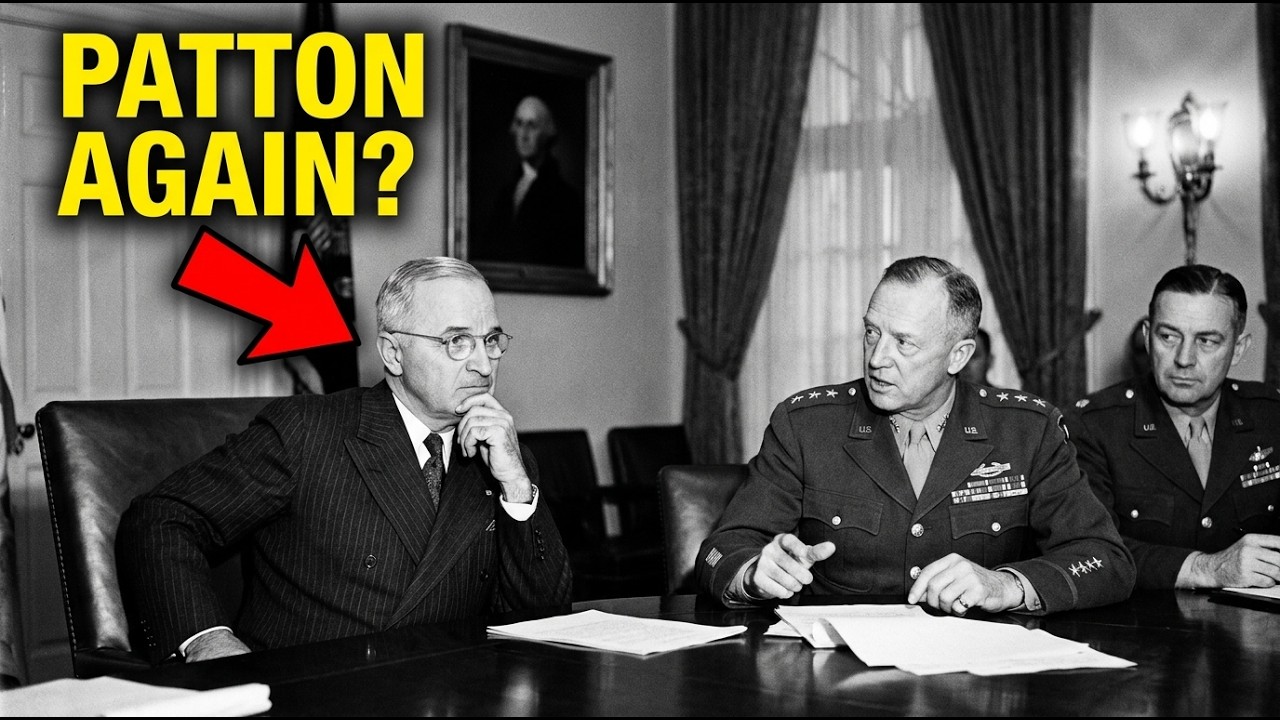
Yet the very qualities that made Patton indispensable in total war became toxic burdens the moment the guns fell silent across Europe. Patton was a warrior built for destruction, lacking any patience for civilian administration, international diplomacy, or legal precision.
When assigned to govern eastern Bavaria and oversee the denazification of municipal governments, his aggressive instincts collided immediately with official Allied policy. He viewed the denazification directives drafted in Washington as pointless bureaucratic obstacles preventing him from restoring civilian infrastructure and keeping the local economy running.
Instead of systematically removing former officials from public administration, Patton kept experienced staff in place regardless of their documented party affiliations. He treated military government as an operational task rather than an ideological purge.
The first major warnings reached Washington when journalists began reporting that Patton was openly ignoring administrative orders from Allied high command. When reporters cornered the general and pressed him on why active members of the former regime remained in municipal posts, Patton gave an answer that sparked outrage across the United States.
He casually compared membership in the German political apparatus to routine differences between American political parties, essentially downplaying the systematic atrocities the war had been fought to eliminate. Within hours, headlines across the United States exploded with anger, placing the White House in a catastrophic public relations crisis.
The American public was reading that the general who conquered Germany was now protecting the very regime he had been sent to dismantle.
Patton’s political recklessness was compounded by a more dangerous dynamic that kept the War Department in constant anxiety. In his private correspondence and informal operational discussions, Patton expressed a firm belief that the Western Allies were making a historic mistake by halting their armies at the agreed occupation borders.
He argued publicly that the Soviet Union was exhausted, weak, and ultimately hostile to the basic survival of Western civilization. In Patton’s strategic view, the United States possessed the undeniable industrial strength, veteran warriors, and logistical superiority needed to push the Red Army back beyond Poland’s prewar borders before Moscow could solidify its territorial gains.
As political pressure escalated, military advisors in Washington realized that if Patton made those private assessments public, the international consequences would be catastrophic.

Behind closed doors, President Truman was receiving frequent updates indicating that Patton had become a target of diplomatic hostility. Stalin’s foreign ministry was monitoring every word coming out of the American occupation zone, looking for evidence that Washington was secretly maintaining German infrastructure for use against the East.
General Dwight Eisenhower found himself caught directly in the middle of the escalating clash between the White House and its most aggressive field commander. Eisenhower had repeatedly protected Patton during the North Africa campaign, the slapping incidents in Sicily, and his pre-invasion verbal slips in England, knowing that Patton’s combat genius compensated for the trouble.
But in the fall of 1945, there were no more enemy armies to encircle. Patton’s reckless behavior was directly threatening Eisenhower’s mandate to maintain an orderly Allied occupation.
Eisenhower summoned Patton to his headquarters in Frankfurt and delivered direct, unambiguous verbal warnings that operational disobedience and political statements would lead to immediate dismissal. Patton nodded, defended his administrative competence, and privately dismissed Eisenhower’s directives as the hesitation of politically ambitious staff officers.
The crisis reached a boiling point in late September when Patton held another disastrous press conference at Bad Tölz. Instead of complying with Eisenhower’s strict instructions to avoid political statements, Patton again mocked the denazification directives in front of international reporters.
He declared that practical necessity required using people who knew how to operate power plants, water systems, and local transportation, completely ignoring the moral and legal mandates established by the victorious Allied powers. Within hours, newspapers in New York and Washington ran blaring headlines questioning whether General Patton was running a rogue empire in Bavaria answerable to no one.
The State Department immediately contacted the White House, confirming that Patton’s public defiance was insulting the administration and undermining its international credibility.
When presidential advisors approached Truman with urgent warnings that Patton was about to cause an unmanageable diplomatic incident, the president’s reaction was calculated, cold, and entirely focused on executive authority. Truman did not panic. He did not allow his cabinet to orchestrate an unseemly public quarrel between the presidency and a national hero.
Instead, Truman reviewed the assembled reports and made his position completely clear to those urging a public confrontation. The United States Army had an established chain of command, and General Eisenhower possessed full authority to deal with his insubordinate subordinates without the White House turning a military reassignment into a political martyrdom.
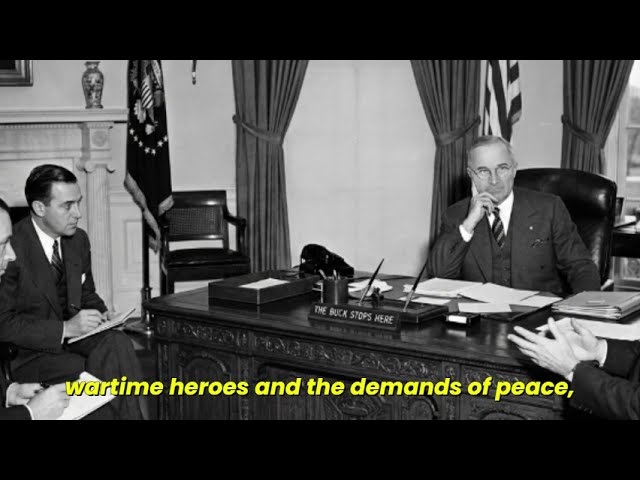
Truman’s measured words conveyed a decisive constitutional reality. Civilian supremacy over the military would be enforced through the proper institutional channels, quickly and without theatrical hesitation.
Truman understood that by refusing to engage in direct, personal hostility with Patton, he was systematically stripping the rebellious general of any claim of political persecution. The president instructed the Secretary of War that Eisenhower had the absolute support of the White House to take whatever disciplinary action was necessary to restore Allied policy in Bavaria.
Eisenhower moved with devastating precision, stripping Patton of his beloved Third Army and exiling him to the Fifteenth Army, a phantom command tasked exclusively with compiling a written history of the European campaign. In one stroke, the most celebrated combat commander in American history was completely removed from operational authority, administrative influence, and proximity to the Soviet contact line.
Patton was shattered by the decision. He viewed his transfer not as a legitimate administrative measure but as a deliberate betrayal orchestrated by cowardly politicians and jealous peers.
The historical record shows that Truman’s steady handling of the crisis prevented an uncontrollable escalation that could have derailed the early formation of postwar European reconstruction. By allowing the military hierarchy to enforce discipline, Truman proved that no individual, regardless of a decorated combat record or broad popular admiration, had the authority to dictate American foreign policy.
It demonstrated to the world that American democracy draws its enduring strength from the rule of law and the subordination of military power to civilian governance.
This decisive episode remains one of the most instructive moments regarding the volatile transition from battlefield victory to diplomatic governance. History reveals that winning a world war requires bold, tireless field commanders like Patton, but securing a lasting peace requires disciplined, rigorous statesmen who understand that an unconstrained military general can destroy in one afternoon what nations spent years of sacrifice building.
Only months after his sudden removal from operational command, Patton was fatally injured in a tragic, low-speed car accident near Mannheim, bringing an abrupt and somber end to one of the most extraordinary combat careers the modern world has ever seen. His legacy remains forever etched in the records of tactical genius, yet his dramatic dismissal stands as a great testament to the wisdom of Truman’s leadership during an unprecedented global transition.
The president’s calm and firm response to the warnings about Patton established a powerful precedent that would guide American foreign policy through the dawn of the Cold War and the ultimate test of the Korean conflict. It proved once and for all that while generals command armies, only the elected representatives of the people command the destiny of the republic.