In the summer of 1885, Ulysses S. Grant sat in a cottage in upstate New York, racing death to finish his memoirs. Throat cancer had been consuming him for months. He wrote in pain, often barely able to swallow, sometimes working in near silence while his family moved quietly around him.
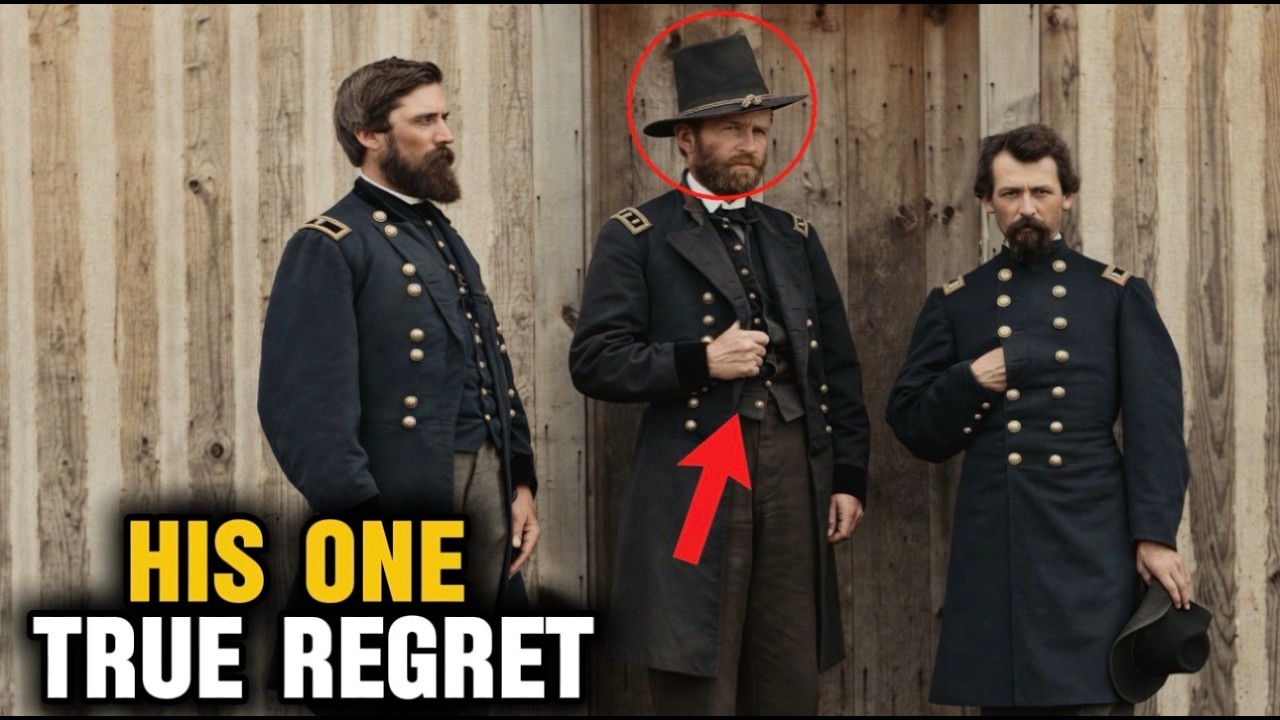
The personal memoirs he left behind would be celebrated as one of the finest military autobiographies ever written—clear-eyed, unsparing, and frequently brilliant. Grant did not soften his failures in those pages. He did not reframe his mistakes as misfortunes or direct blame onto subordinates the way generals before him and after him routinely did. He wrote about the war as he understood it, and he did not spare himself.
But of everything he wrote across two volumes covering three years of the bloodiest conflict in American history, one passage stands entirely apart. Writing about the morning of June 3, 1864, at a crossroads in Virginia called Cold Harbor, Grant said this: “I have always regretted that the last assault at Cold Harbor was ever made. ” For a man who had ordered tens of thousands of soldiers into combat across the length of the war—a man who had broken Confederate armies at Vicksburg and Missionary Ridge and who had understood from the beginning that winning a modern industrial war required a willingness to absorb and inflict casualties at a scale that softer men recoiled from—for that man to single out one morning, one specific assault, and say it should never have happened, that is where this story begins. Most people who know about Cold Harbor understand the outline.
Grant ordered a frontal assault against fortified Confederate positions. It failed catastrophically. Thousands of Union soldiers died in an extraordinarily short period of time, and it became one of the most debated decisions of the entire conflict. That outline is accurate.
It is also insufficient. The real depth of what Cold Harbor cost Grant—not simply in casualties, but in time, in political capital, in his army’s psychological coherence, and in the shape of everything that followed—demands a closer examination than the summary version allows. Grant had arrived in Virginia in the spring of 1864 with a strategy that was simple in concept and brutal in what it required. He would fix the Army of Northern Virginia in place, deny it the ability to maneuver freely, and apply unrelenting pressure until the Confederacy’s capacity to sustain the war in the Eastern Theater broke.
He was not, contrary to the caricature that formed around him during the campaign, indifferent to casualties. He understood that losses of the scale being generated were politically costly and personally painful. But he had also grasped something his predecessors in Virginia had consistently failed to act on. The Union’s ability to replace losses was structurally greater than the Confederacy’s, and every week of sustained combat drained southern manpower at a rate the South could not sustain indefinitely.
The arithmetic, if Grant could force it, favored the Union. The Overland Campaign that began in the Virginia Wilderness in early May of 1864 had already been devastating by the time the two armies reached Cold Harbor. The Wilderness had cost Grant approximately 17,000 casualties in two days. Spotsylvania had added another 18,000 across two weeks of nearly continuous fighting, including the extraordinary carnage at the Bloody Angle on May 12—a single day of combat so savage that the oak trees behind the Confederate line were reportedly cut down by the sheer volume of musket fire.
The North Anna River had added further losses. By late May and early June, Grant’s army had sustained somewhere in the range of 44,000 casualties in approximately 30 days of operations, and it had been marching, fighting, and entrenching almost without pause since crossing the Rapidan. That pace had extracted a toll that went beyond the casualty figures. Veteran officers who had survived three years of war were dying in quantities that outpaced replacement.
Entire divisions had been reduced to the fighting strength of regiments. The men in the ranks were carrying a form of exhaustion that was not simply physical. It was the cumulative weight of a month of sustained violence, of watching units they had served in for years dissolve around them, of being asked repeatedly to advance into fire under conditions that offered little obvious prospect of survival. They were still soldiers.
They were not the same soldiers who had crossed the Rapidan. The Confederate position at Cold Harbor had been engineered with a care that experienced officers on both sides could recognize immediately. Lee’s engineers had spent days constructing a network of interlocking trenches and earthworks that curved and angled across the terrain to generate overlapping fields of fire. The ground in front of the Confederate line offered limited natural cover and clear sight lines for defending artillery and infantry.
What made the position particularly dangerous was precisely what made it look manageable from a distance. It did not appear at first examination to be fundamentally different from the prepared positions Confederate forces had defended successfully throughout the campaign. It was only on closer study that the specific geometry of the earthworks became apparent, and by the time that geometry was fully understood, the assault was already committed. Grant’s plan called for a broad simultaneous attack along the front at 4:30 in the morning of June 3, with multiple Union corps hitting the Confederate line at the same moment.
The intent was to stretch Lee’s ability to shift reserves. If every point on the line was threatened at once, no single point could be reinforced at the expense of another. The logic was consistent with the approach Grant had used throughout the campaign. What it did not adequately account for was that the Confederate defensive network had been built to ensure that attacking forces would be exposed to fire not just from the front, but from angles created by the curving earthworks on either flank.
An assault moving straight into the Confederate line would walk into a geometry of fire it could not see until it was already inside the killing ground. The men who were going to make that assault understood something about it the night before that the casualty numbers the following morning would confirm. Veterans who had survived three years of war had developed a particular instinct for which attacks were survivable and which were not. Many of them had participated in the initial fighting on June 1, which had already revealed the ferocity of Confederate resistance along this particular front.
They had read the ground in the way only experienced combat soldiers know how to read it, and what they read told them that morning was going to be very costly. And so, in the hours before dawn on June 2 and into the 3rd, they began writing their names and home addresses on small pieces of paper and pinning them to the backs of their coats. Not letters, not final messages to the people they loved. Just names, so that whoever sorted through the dead could identify the body, so that the right family would receive the notification.
It was a custom that had evolved quietly across the war wherever soldiers found themselves ordered into assaults they did not expect to survive. When the assault began at 4:30 a. m. , the Confederate line responded with a volume of fire that stunned men who believed they had seen everything the war had to offer.
Soldiers advancing across the open ground were hit from the front and from both flanks simultaneously, struck by fire coming from angles they had not anticipated because the curve of the Confederate earthworks wasn’t apparent from the approach. Units that managed to reach the Confederate works found them impossible to breach. Those few that briefly penetrated found themselves isolated, surrounded on three sides by fire, unable to exploit the penetration because the units advancing alongside them had been stopped or destroyed before they could reach the line. The best estimates place Union casualties in the first 60 to 90 minutes of the assault at somewhere between 7,000 and 8,000 men killed and wounded.
Some accounts run higher. The precise total is less significant than the rate—several thousand men lost in a window of time insufficient to travel 15 miles on horseback. Grant called off the assault before midday. The Confederate line was intact.
Not a single objective had been achieved. The men who survived had gone to ground in whatever depression or fold in the earth offered minimal protection, because standing up or moving backward meant immediate death from Confederate marksmen who controlled the entire field of fire. Grant later wrote that when he received word that officers at the front were declining to order further charges, that men had simply refused in some instances to arise from the ground and advance again, he did not press the issue. He let the assault end.
What followed over the next 13 days was in some respects more psychologically damaging than the assault itself. The two armies settled into static positions separated by open ground that neither side could cross without coming under fire. Between the lines lay the Union dead and wounded—the men the assault had deposited there and left. Grant needed to recover those casualties, but the military protocol of the era required a formal request for a truce to be sent to the opposing commander, and such a request carried an implicit acknowledgement that the requesting side had been unable to control the ground—a concession of battlefield failure that Grant was reluctant to make explicit.
He waited. The men between the lines waited too, the ones still living. For four days, Grant and Lee exchanged letters that circled the issue without resolving it, Grant proposing informal arrangements that Lee declined, Lee insisting on the formal protocol that Grant was reluctant to invoke. By the time a proper truce was negotiated and Union soldiers could move into the field, the vast majority of men who might have been saved had died.
What had begun as a military catastrophe had accumulated an additional layer of human failure—men abandoned between the lines while their commanding general weighed the political implications of the concession required to save them. The 13 days at Cold Harbor did something to the Army of the Potomac that is harder to quantify than casualties but no less real. The army had been fighting almost without interruption for a month. It had absorbed losses at a rate that would have shattered most military forces.
And now it sat in the trenches at Cold Harbor, listening to the sounds that carried across a field it could not enter, unable to advance and unwilling to retreat, waiting for orders that did not come. The word that moved through the ranks during those two weeks was not the specific language of military defeat—terms like retreat or withdrawal that soldiers had heard and processed before. It was something quieter and more corrosive. It was the sense that the men making decisions did not fully understand what they were asking of the men carrying them out—that attacks would be ordered regardless of their survivability, that the calculus of command did not include the view from the ground.
Grant’s army did not break. It did not mutiny or collapse. But when he finally extracted it from Cold Harbor in mid-June and crossed the James River toward Petersburg, it moved with a tentativeness that had not been there in May. The momentum of the Overland Campaign—the aggressive driving energy that had pushed through the Wilderness and Spotsylvania and kept Lee off balance through a month of sustained pressure—had been bled out at Cold Harbor, not in one morning, but over 13 days of static exposure that gave men too much time to think about what they had just survived and what they might be asked to do next.
The direct operational consequence came almost immediately. When Union forces arrived at Petersburg in the days following the James River crossing, the Confederate defenses were not yet fully manned. There was a genuine window, brief but real, during which an aggressive assault might have broken through before Lee reinforced the position. The Army of the Potomac, under commanders who had just come from Cold Harbor and who were ordering men who had just come from Cold Harbor, did not seize that window with the speed and force the moment required.
Petersburg held. The siege that followed lasted nine months. Outside the army, the political damage from Cold Harbor was severe enough to threaten outcomes that extended far beyond any single campaign. The summer of 1864 was the most dangerous period of Lincoln’s presidency, and Cold Harbor had an identifiable role in making it so.
The northern public had been watching the Overland Campaign’s casualty lists arrive week after week since early May. The cumulative losses had generated a war weariness that was already politically significant before Cold Harbor, and Cold Harbor added thousands of names to a total that no political establishment could absorb without consequence. Newspapers that had been cautiously supportive of Grant’s methods began using language that would have been considered extreme earlier in the war. The phrase “Butcher Grant” appeared in print and spread.
The characterization was unfair as a full assessment of Grant’s generalship, but it found purchase because the numbers behind it were real and the families grieving those numbers were real. The Democratic Party’s argument that a negotiated peace ending the war without unconditional victory was a viable alternative was gaining a political legitimacy that Lincoln’s administration found genuinely alarming. Lincoln himself believed by midsummer that he would not be reelected. On the Confederate side, Cold Harbor produced precisely what southern morale most urgently needed.
By the spring of 1864, the Confederacy had been losing ground in the Western Theater for the better part of two years. Sherman was pushing toward Atlanta. The internal Confederate conversation about whether the war was winnable was becoming increasingly difficult to suppress. Cold Harbor interrupted that psychological drift.
Lee’s army had absorbed Grant’s campaign for an entire month, inflicting losses at a rate that stretched Union political endurance, and had now destroyed a Union assault in approximately an hour without yielding a foot of ground. For Confederate soldiers who needed evidence that their strategic theory—that southern independence could be won by making the North’s political will crack before the South’s military capacity did—Cold Harbor was that evidence. It was wrong in its ultimate implications, but in the summer of 1864, it was convincing enough to sustain Confederate resistance through a period when collapse might otherwise have become an internal conversation. And that sustained resistance extended the war at a cost measured in months and lives.
Grant’s response to Cold Harbor in the weeks after the battle is one of the more instructive things about him as a commander. He did not repeat it. After June 3, he never again ordered a broad frontal assault against prepared Confederate field fortifications of the kind that had failed so completely that morning. The entire operational logic of the Petersburg siege—investing the city, cutting Lee’s supply lines, extending Confederate defensive commitments until they became unsustainable—was in significant part a product of the lesson Cold Harbor had delivered about what frontal assaults against prepared positions cost relative to what they achieved.
The man who made the worst decision of his military career in early June had absorbed its implications by mid-June. The argument has been made seriously by military historians that the Overland Campaign as a whole, Cold Harbor included, was strategically sound even where it was tactically brutal. Grant’s sustained pressure kept Lee fixed in Virginia, prevented the redistribution of Confederate forces to other theaters, and established the siege conditions that eventually broke the Army of Northern Virginia. Sherman’s capture of Atlanta in September transformed the political situation.
Lincoln won re-election in November, and the war ended in April 1865. The campaign, by this reading, worked. That argument has genuine merit and a real limitation. The merit is that the strategic outcome is undeniable.
The limitation is that strategic success does not retroactively validate every tactical decision made within a successful campaign. Cold Harbor specifically is the hardest point in that argument to defend because the assault of June 3 produced nothing—no breach of the Confederate line, no strategic gain, no operational advantage of any kind. It added its thousands to a casualty total that was already testing northern political endurance to its limits, and it did so for no return that can be honestly identified. Grant understood this.
He said so. The memoirs he completed three days before he died contain the clearest possible statement of that understanding. And the fact that he included it rather than finding some way to rationalize the assault within his larger strategic framework says something important about who he was. Military leaders almost never admit in writing that a decision they made killed men for no result.
The institutional pressures against that admission are overwhelming. Grant made it anyway. The crossroads where much of the fighting occurred had actually seen combat before, in the summer of 1862 during the Seven Days Battles. The name itself came from an old local establishment that offered shelter but no food to travelers passing through.
Cold Harbor meant a place with no warmth, no sustenance. History found a grimmer use for the phrase and attached it to June 1864 so thoroughly that the original meaning has been almost entirely displaced. What Grant lost in those days is not fully captured by any single number. He lost soldiers whose battlefield experience was irreplaceable in a war where experience was the difference between functioning units and raw masses of men.
He lost time—the Petersburg window that closed before his army could exploit it. He lost political space that Lincoln needed to hold the coalition supporting the war through the summer when that coalition was most seriously at risk of fracturing. And he lost something within his army that no reorganization or resupply could simply restore—the offensive confidence of men who believed that what they were being asked to do had been thought through carefully by the people asking them to do it. The reason Cold Harbor is more catastrophic than its conventional summary captures is not because the facts have been concealed.
Historians have been examining those facts for 160 years. It is because the most available framework for evaluating Cold Harbor is the framework of final outcome. The Union won. Appomattox happened.
Grant is remembered as the general who ended the war. Within that framework, Cold Harbor becomes a dark passage in a story that resolved well. And dark passages in stories that resolve well are easy to move past. The framework Cold Harbor actually demands is harder.
It requires measuring the assault of June 3, 1864, on its own terms—against the information available, against the judgment of the officers who had surveyed the ground, against the exhaustion of the men who would carry it out, against the geometry of the defenses they would walk into. Measured that way, it was an assault ordered against a position that experienced officers had privately concluded was not breachable in the manner proposed, executed by men who had been in near continuous combat for 30 days, sent across ground that Confederate engineers had designed specifically to maximize the kind of casualties it produced. It failed within the first hour and left thousands of men in a field their army could not enter for four more days. Grant himself, writing in 1885 with whatever time he had left, looked back across 20 years and rendered his verdict without qualification.
He regretted it. He had always regretted it. He would spend whatever remained of his life having regretted it. That is what Cold Harbor was—not a stumble absorbed within a winning campaign, not a necessary cost that the eventual outcome justified.
A catastrophe, concentrated, specific, and mourned by the man who ordered it until the last day he could hold a pen.