On August 25, 1942, a flying boat emerged from low cloud over a barren Scottish hillside and struck the ground at full power. Fourteen men died. One man crawled from the tail of the aircraft and walked through the night, refusing for the next 35 years to say what he knew.
Among the dead was the king’s own brother, aged 39. He was the brightest of George V’s four sons, and the person his family had spent 20 years learning how to hide. Addiction, an American woman with a silver syringe, and a child born in Switzerland under another name. The official inquiry blamed a dead pilot, claiming he changed course for unknown reasons. Then the file disappeared.
This is the story of a prince buried twice, and how much of what you have heard was invented later.
The fourth son of a king was born in a house so small that the servants outnumbered the usable rooms. York Cottage sat on the Sandringham estate in Norfolk. He arrived at 7:35 p.m. on December 20, 1902, and was named George Edward Alexander Edmund. His father was then Prince of Wales and would become King George V within eight years. His mother was Princess Victoria Mary of Teck, later known as Queen Mary.
York Cottage was once called the Bachelor’s Cottage. It was dark and crowded. His father furnished it himself, ordering the contents from a London department store, and refused to leave even after becoming king. All six children were born there. Edward, called David within the family, arrived in 1894. Albert, called Bertie, followed in 1895. Mary in 1897, Henry in 1900, then George, then John in 1905.
The nursery consisted of two small rooms at the end of a passage behind a swing door. Two future kings, three other princes, and a princess grew up in two rooms with a swing door. The people who actually raised them were not their parents. A head nurse, Charlotte Bill, known to the children as Lalla, took charge in 1897. A nursery servant, Frederick Finch, was put in charge of the boys in spring 1902, the year George was born. A tutor, Henry Peter Hansell, whom the children called Maida, completed the household.
Edward later wrote that these two men, Mr. Hansell and Finch, raised him and his three brothers until they went to school one by one. He added that the servant may have had the stronger influence. The parents directed from a distance. George V decided his two eldest sons would be raised exactly as he and his brother had been. He had little interest in what he called intellectuals. The pattern softened by the time the younger boys arrived.
At birth, George was fifth in line to the throne. When his father became king in May 1910, he moved to fourth, where he remained for most of his adult life. Under the Civil List Act of 1910, each non-heir son of the sovereign received £10,000 a year at age 21, with an additional £15,000 upon marriage. That was all they were given. Income, a title in due course, and a schedule. No job in that arrangement. No task.
What that family did with a child it could not use is the most important thing to understand before anything else in this story. Prince John was born in July 1905, two and a half years after George. They shared a room and were the closest of brothers. By around 1909, John’s epilepsy became clear. In 1916, he was moved from the main house to Wood Farm on the same estate to be cared for by Lalla Bell. He died there on January 18, 1919, aged 13.
His mother described his death as a great relief for his troubled spirit. His father called it the greatest mercy possible. Edward, who later wrote 400 pages about his childhood, mentioned John only once in the entire book, on the page listing births. That was the family. It did not punish the unwanted son. It simply placed him somewhere the light did not reach and stopped writing about him.
The navy could not keep him. He was sent to naval college at 13 and was sick for much of the time afterward. No one in the family spoke of it aloud. The usual account has him attending a preparatory school in Broadstairs in Kent, then the naval colleges at Osborne and Dartmouth. The only source behind the prep school, the colleges, and two of his ships is an obituary in an American newspaper published three years after his death.
His documented naval record shows he became a sub-lieutenant on February 15, 1924, and a lieutenant exactly two years later. The list of ships attributed to him is far less certain. The only well-documented appointment was to HMS Durban in 1928 on the North America and West Indies Station, based at the Royal Naval Dockyard in Bermuda, where he stood watch duties as a lieutenant. George V himself had been a lieutenant standing watch in Bermuda as a young man. The son walked the same deck his father had walked. He hated it. Or perhaps he did not, depending on which account you believe.
Edward’s version is the tidy one. Writing in 1951, he said George was somewhat bohemian and found life in the navy constricting. He added that George received with relief the suggestion that he take on his share of the growing burden of public duties. In Edward’s telling, there was no illness, no crisis, no stigma.
The biographer’s version is medical and far less flattering to everyone. Christopher Warwick portrayed him as physically unfit for naval training from the start, intelligent academically but suffering from seasickness, insomnia, and a digestive disorder that life at sea threatened to worsen. On that basis, he pressed his father directly, arguing he was unsuited for the sea, and the king eventually gave in. Both cannot be true. Edward, writing more than 20 years later and shaping his own legend, had every reason to make his brother’s exit look respectable.
George left active service in March 1929. The navy continued to promote him on paper long afterward, to commander, then captain, then rear admiral, as services do with princes. But he never returned to the sea.
There was something else those navy years cost him, and it had nothing to do with ships. Her name was Helen Elia Baring, known to everyone as Bobby. She was the daughter of Sir Godfrey Baring of Nubia House in Cowes. She was clever and fashionable. She had already been rejected once by this same family. In 1921, his brother Albert, the future George VI, proposed to her, and Queen Mary made the marriage impossible. The queen was aware that Bobby Baring was known for her wildness.
A few years later, George wanted her for himself. His father objected on the grounds that she was unsuitable, and that was the end of it. The date is usually given as 1927, which is wrong. Two contemporary press reports placing the story date from January and February 1925. One ran under the headline: The British King’s Fourth Son in Exile with a Broken Heart. Another followed three and a half weeks later with: No More Dancing Girls for Queen Mary.
There was no formal engagement, no court record, no palace memorandum. A young man was told no, and a girl opened a dress shop on Down Street in 1927 and married someone else the following year. One biographer states plainly that Bobby Baring was Prince George’s mistress for many years.
He looked for other circles to belong to. On April 12, 1928, while still a lieutenant on active service, he joined the Freemasons at the Naval Lodge No. 2612. He took to it completely. Eleven years later, he became Grand Master of the United Grand Lodge of England and held that office until the day he died. It was a society with rules, rituals, degrees, and purpose, where a man could hold rank he had actually earned.
By his 26th birthday, his career had been chosen for him and made him ill. The woman he wanted had been rejected by his parents. His income arrived automatically and required nothing from him. His future consisted of official engagements. In 1929, after leaving the navy, he moved into York House at St James’s Palace, where his elder brother, the Prince of Wales, gave him two rooms at one end of the building. That is where trouble found him.
In November 1934, he married one of the most admired princesses in Europe, and the world listened to the wedding live for the first time. Her name was Marina. She was born in Athens on December 13, 1906, daughter of Prince Nicholas of Greece and Denmark. Her mother was Grand Duchess Elena Vladimirovna of Russia. She was George’s second cousin. Both descended from King Christian IX of Denmark. She was also, by the standards of European royal families, poor. Her family had been driven from Greece when she was about 11 and settled in Paris on modest means.
She was four years younger than George, tall, dark, and striking, and became one of the true style icons of that decade. A shade of green was named after her. The real beginning came at a lunch at Claridge’s in September 1933. Edward pushed the romance forward. By summer 1934, it was serious. On August 20, 1934, at Prince Paul’s house on Lake Bled in what was then Yugoslavia, George proposed. He did so privately after a game of backgammon. The engagement was announced eight days later.
The ring was platinum with a square Kashmiri sapphire of seven carats between two baguette diamonds. Of her, he said simply: This beautiful and elegant creature. Then something happened that had never happened before. The engaged couple sat before a newsreel camera and spoke. No royal couple had ever given a filmed interview about their engagement.
Seven weeks before the wedding, on October 9, 1934, letters patent granted him the titles Duke of Kent, Earl of St Andrews, and Baron Downpatrick. Three titles deliberately chosen from England, Scotland, and Ireland. The wedding took place on Thursday, November 29, 1934. It was two weddings in one. First the Anglican ceremony in Westminster Abbey, then a Greek Orthodox service in the private chapel at Buckingham Palace.
A microphone was placed under the Tomb of the Unknown Warrior inside the abbey, carrying sound through loudspeakers to the crowds outside and to a broadcast that reached around the world. It was the first British royal wedding ever broadcast live. One of the eight bridesmaids was eight-year-old Princess Elizabeth of York, the future Queen Elizabeth II. Somewhere among the guests sat 13-year-old Prince Philip of Greece.
Marina’s dress was designed by Edward Molyneux, of white silk and silver lamé brocade, embroidered with English rose motifs. Her veil was handmade lace and tulle, worn before by her mother and sister. The king gave her a robe, and the veil was fixed with the fringed tiara of the City of London, making her the first British royal bride to marry wearing a tiara. The groom wore Royal Navy full dress uniform with the orders of the Garter, the Thistle, and St Michael and St George.
About 1,500 guests filled the abbey. Ramsay MacDonald, Stanley Baldwin, and Lloyd George were among them. Hitler sent congratulations. Gifts were displayed to the public at St James’s Palace. From the king, a diamond necklace of 36 stones. From Queen Mary, the historic Cambridge suite of diamonds and sapphires. From the City of London, the fringed tiara. The wedding breakfast hosted 120 people at Buckingham Palace with five cakes and the Royal Artillery band.
Parliament itself listed an item that month titled: Expense of Wedding of Duke of Kent. The financial allowance changed the same day. Since his 21st birthday, he had received £10,000 a year. From November 29, 1934, he received £25,000. There was no vote on it. A week before the wedding, MP James Maxton asked the prime minister when the House would discuss the increase. Ramsay MacDonald replied that the increase was already authorized under the Civil List Act of 1910. Maxton pressed: Would it not be submitted to the House for discussion or approval at all? No, said MacDonald. Not at all.
By the end of 1934, he had a dukedom, a duchess, a house in Belgrave Square, £25,000 a year, and the affection of an empire. He still had nothing to do, and by then he had already spent five years learning how to fill that emptiness.
Her friends called her the girl with the silver syringe, and she had a house on a lake in Kenya where no one woke before dinner. Her name was Alice Carse Leke Gwynne. She was born in Hempstead, New York, with her birth date disputed between 1895 and 1898. Her father died in 1904 when she was still young. Everyone called her Kiki.
She was usually presented as being from the Whitney or Vanderbilt family, which is inaccurate. Her great-aunt Alice Claypoole Gwynne married Cornelius Vanderbilt II, so the connection was sideways rather than by blood. It was enough for the newspapers and enough to open doors. She married twice. First to Horace Ransom Bigelow Allen in April 1919, divorced in November 1924. Then in Paris in April 1925, she married an investment banker named Jerome Preston. That is the family name history remembers her by.
She and Jerome Preston built a house called Mound on the shores of Lake Naivasha in Kenya, placing her at the center of one of the strangest communities the British Empire ever produced. The white settlers, known to the world as the Happy Valley set, had money, distance, little oversight, and vast amounts of leisure. Her circle there included Lady Idina Sackville, Alice de Janzé, and Josslyn Hay, Earl of Erroll, who would one day be shot dead inside a car near Nairobi in the murder that inspired the book White Mischief.
Evelyn Waugh met her there in early 1931 and wrote a single line in his diary that sums her up: Beautiful American Kiki Preston who never wakes before dinner. A biographer describes her more bluntly as the beautiful, amusing, cocaine-addicted American who was his companion on the sea voyage. The source of supply, in Kenya at least, is reliably attributed to a farmer in the Kadong valley named Frank Greswolde Williams. One memoir describes him as a most unpleasant man who supplied many of the Happy Valley set. Another account puts it more coldly: one of her best customers was the beautiful American Kiki Preston.
The nickname was not invented later by a biographer hunting for a catchy phrase. The girl with the silver syringe is what people who actually knew her called her at the time, and it appears in several memoirs of that era.
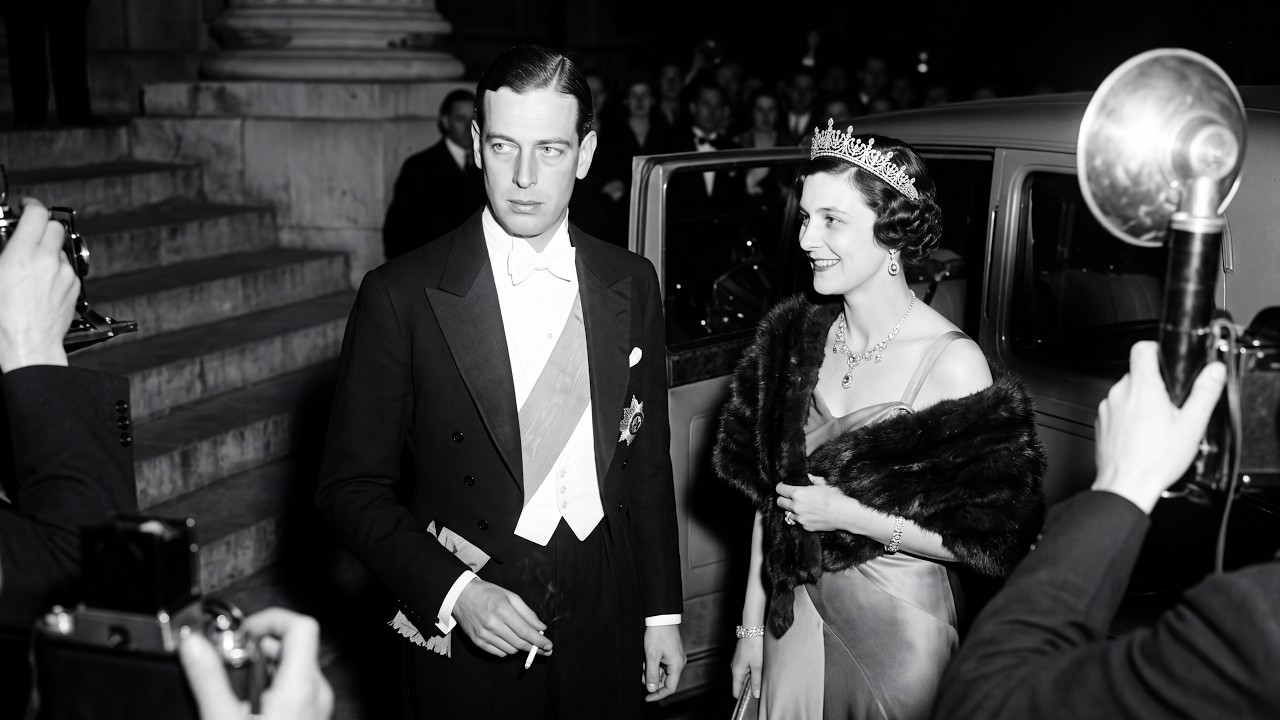
She met Prince George sometime in the mid-1920s. No one can pin down exactly where or when. The best single source on the Duke of Kent’s addiction is the official biography of Edward VII by Philip Ziegler, published in 1990. Ziegler had full access to the Royal Archives. He also had two private sources no one else had relied on: the collection of letters Edward wrote to his mistress Freda Dudley Ward, and the unpublished diaries of Sir John Aird, who was an equerry to the Prince of Wales.
Ziegler’s sentence is unambiguous. He writes that Prince George fell into the clutches of an attractive American called Kiki Preston, who introduced him to drugs. That is the strongest statement on record from the man with the best access, and he names her without hesitation. Note what that statement does not do. It says drugs. It does not specify which ones. Ziegler, working from the family’s private papers, does not identify any substance anywhere in the text.
The details everyone repeats come from later writers. All are serious, but none relied on a medical record. Hugo Vickers describes her as addicted to heroin, cocaine, and morphine, and says she soon made Prince George an addict as well. Brendan Beresford writes that George obtained cocaine from Kiki Preston, who was skilled with the needle. Andrew Morton names heroin. These are careful authors with credible claims. But they remain claims, not documents.
The start date is equally murky. The common story says she introduced him to drugs in 1928. One book states categorically that he was introduced to morphine in 1932, which cannot be true because his brother had already forced him into treatment before 1932. No primary document fixes a real beginning at all. All that can honestly be said is that they met in the mid-1920s and that he was seriously addicted by 1928 or 1929.
Freda Dudley Ward received Edward’s letters throughout the crisis and remembered the Duke of Kent long afterward in three short phrases. She said he was weak but charming. Of Kiki Preston, she said: Very bad. He fell under her spell. Of George himself, she used a French word with more weight than any English equivalent: narcissistic. Weak but charming. It is the kindest and cruellest thing anyone who knew him ever said.
Look at the state of his life at the moment she found him. He was 23 or 24. His career had worn him down and he was preparing to leave it. The girl he wanted had been rejected by his parents. He was fourth in line to a throne he would never reach, receiving £10,000 a year for a schedule of engagements in a family that discussed nothing and recorded even less. He was exactly the sort of young man a beautiful, amusing, wealthy, chemically destructive woman several years older would find easy prey.
In the 1920s, cocaine and morphine moved freely in London’s high society, and the Dangerous Drugs Act existed and was enforced. A society woman named Brenda Dean Paul was prosecuted for her addiction and became a public spectacle. Her name in the papers, her ruin turned into public entertainment. No charge was ever brought against Prince George. Nothing about him reached the newspapers, not even a line. The same habit produced a criminal record for one kind of person, and for the other, private treatment in a country house run by his brother.
By summer 1929, the Prince of Wales had spent months trying to persuade them both to stop, without success. He cancelled his holiday, shut him up in a country house, and stayed there until it was over. Then, in Ziegler’s phrase, he intervened forcefully. There is no exact date beyond the season. Summer 1929, when George was 26 and had left the navy a few months earlier.
Kiki Preston followed, and the historical record loses its nerve at the most dramatic moment. The lady was forced to leave the country and compelled to give a written undertaking to live abroad permanently. That is all the record contains. What influence the Prince of Wales exerted over an American citizen in the summer of 1929 was never written down anywhere that survives.
Then he turned to his brother. Ziegler says he shut him up in the country, almost, and took personal charge of his recovery. Note the word country, not London. And not, as the internet insists, Fort Belvedere. That detail is repeated everywhere and appears in no serious biography of anyone. Ziegler names no house. Hugo Vickers places the events somewhere entirely different, at York House in St James’s Palace, the same rooms where George had lived since leaving the navy. Edward had only received Fort Belvedere from his father that same year, and it was undergoing renovation. When you next see the fort attached to this story, you are looking at something invented later and repeated until it became established fact.
What George went through, no one documented. What Edward went through, he recorded moment by moment for the woman he loved, in letters never meant for anyone else to see. He told her he was doing the work of doctor, gaoler, and detective all at once. He apologised for the holiday they had lost. He wrote: I know that I ought not to feel bitter and disappointed that my holiday with you has been lost, but on the contrary, I ought to be glad that the treatment is going on so well. About a month later, he still could not leave. He told her: The treatment has reached a very delicate and critical stage, and I may be required for the next fortnight.
Here is the detail that stops you cold. To steady his nerves, while sitting for long hours in his sick brother’s room, the Prince of Wales took up embroidery. He told Freda Dudley Ward himself. He wrote: This will make you laugh, and perhaps cry a little too. Imagine the room. The heir to the British throne, the man the world considered the most dazzling creature on earth, sitting beside a bed in a house no one ever named, embroidering to keep his hands steady while his younger brother withdrew from drug addiction. No nurse is mentioned in any account. No doctor. Only him.
By the end of 1929, the worst was over. In mid-January 1930, Edward wrote to his father that he felt more optimistic about the future. He told the king: It really is a terrible and ghastly thing for anyone, and far worse when it happens to one’s own brother. A few weeks later, a letter arrived from George. Edward described it as long, pathetic, and full of remorse. He believed every word of it was sincere. But he also privately doubted how permanent the change would be.
Then George V wrote to his eldest son the only warm sentence recorded from him in a letter. The king wrote: Your looking after him all those months must have been a great strain on you, and I think everything you did for him was wonderful. Ziegler frames that reply in four words that compress an entire relationship: On this at least, the king thoroughly approved. On this at least, father and eldest son agreed, having agreed on almost nothing else before or since.
Two things in that letter deserve pause. The first is the phrase all those months, the only measure of duration anyone has. From summer 1929 into early the next year, four months, five, perhaps six. The second is that the king knew. The head of the family and head of state, the man who considered intellectuals a waste of time, knew exactly what his fourth son was suffering, and thanked another son for handling it in secret. Nothing was said. Nothing was written beyond a handful of letters that stayed private for 60 years. Nothing appeared in any British newspaper then or for the next 50 years.
Edward’s doubts proved justified, though not in the way people usually claim. In 1932 in Cannes, George met Kiki Preston by chance. He had to be almost forcibly removed. Sir John Aird was there and recorded it in his diary. He wrote: I felt sorry for His Royal Highness as he took it very much to heart. He added: I admired the way he handled the situation immensely. Be careful with this scene because it is usually and wrongly reported as a relapse. What was recorded is a meeting that was broken up, not a resumption of the affair. No biographer has found evidence of drug use afterward.
As for her, the story ends in a way no romance wants. On December 23, 1946, at the Stanhope Hotel on Fifth Avenue in Manhattan, Kiki Preston went to a fifth-floor window and jumped. She was about 50. Her companion, a woman named Lillian Turner, had left her with a glass of milk and returned to find the window open. Her mother lived in the same hotel. Her second husband had died at the Hotel Pierre in 1934, aged 37. Her son from her first marriage, Ethan Allen, was killed serving with the Royal Canadian Air Force in Normandy on June 6, 1944. Her body was cremated and her ashes placed in the family vault at Woodlawn Cemetery in the Bronx. She outlived Prince George by four years, and no one in England noticed. The one person outside the family who could have described the truth of those years threw herself from a hotel window at Christmas and took the whole story with her.
A child was born in Switzerland in August 1926 and registered under a surname belonging to no one in his family. The date was August 20. The place was Bern. The name on the register was Anthony Carse Leke, sometimes given in the French form, Antoine. He was adopted as an infant by an American publisher named Cass Canfield and his wife, and grew up as Michael Temple Canfield. He lived a busy life. He worked as a US diplomatic assistant and later as an editor at the New York publishing house Harper & Row. On April 18, 1953, he married Lee Bouvier, whose sister Jacqueline would marry a president of the United States. That marriage ended in 1958. In June 1960, he married Laura Charteris, Countess of Dudley. He died of a heart attack on a plane between New York and London on December 20, 1969, aged 43.
For most of his adult life, people in a certain circle in London believed he was the son of the Duke of Kent. There are two conflicting accounts of his birth, and the one everyone repeats is the weaker of the two. The popular account says his mother was Kiki Preston. This version first appeared in 1961 in the memoirs of Loelia, Duchess of Westminster, who mentioned that Edward VIII believed it. From there, biographer after biographer picked it up and recycled it over the next 40 years until it became the story everyone knows.
The strongest evidence for his parentage does not come from Loelia at all. It comes from the woman who married him. Laura Charteris, later Duchess of Marlborough, published memoirs in 1980 titled Laughter from a Cloud. She recorded what the Duke of Windsor told her when she raised the subject of her husband’s parentage. His answer was decisive and immediate. I am sure your husband is my nephew, the Duke of Windsor told her. Of course, it must have been when brother George was just a boy.
That is a direct memoir recording the words of a man who spent five years under the same roof as the father in question and was cleaning up his affairs himself. It is the best evidence in the file. The second account of the mother appeared very late and is supported by official papers. In July 2013, royal writer Christopher Wilson presented a different version through a national newspaper. According to this account, the mother was a young woman named Violet Evans, daughter of a Canadian coal merchant, who met Prince George at a naval ball in Dartmouth. She became pregnant, was quietly sent to Switzerland to give birth, and was never publicly linked to him again. She killed herself with gas in 1951.
Genealogists have since assembled a documentary trail supporting that version, and it is real. There is a Swiss birth certificate. There is an English adoption certificate. There is a passenger record for a ship called Minnetonka that sailed in September 1927, listing an infant named Anthony Carse Leke travelling to New York under the care of a nurse named Agnes White. The arrangement was made by Cass Canfield.
So why does everyone believe the other story? Perhaps because of a coincidence that seems too perfect. Carse Leke, the family name the child was registered under, was also Kiki Preston’s middle name. She was born Alice Carse Leke Gwynne. Two women, one child, a shared name, and 65 years of retelling did the rest. That a child was born in August 1926 and adopted by the Canfield family is documented. That the Duke of Windsor believed the boy was his brother’s son is direct testimony from a named witness. That the mother was Kiki Preston is the common and weak claim. The paternity itself has never been proven by any document naming Prince George. No confession, no test, nothing but a brother’s certainty, spoken aloud in a private room and written down later by the woman he said it to.
For a long time, the boy born in Bern represented almost the only evidence of the nature of George’s private life. That changed very recently and from an unexpected direction. In June 2024, a British newspaper published an article based on letters no one outside the family had ever seen. It was likely the fruit of nine years of research by biographer Glenn Gowans. It did two things at once, both important. First, it added real people to the record. A woman named Gladys Jean Combe, youngest daughter of Captain Christian Combe of the Royal Horse Guards, was described as his first significant relationship, begun while he was a sub-lieutenant on the destroyer HMS Wryneck. And Lela Devitt in Singapore in 1926, wife of a commodities magnate and ten years his senior, a relationship that began after the king sent him east. Neither name had ever appeared in the story before.
The article also documented a longer list of women, including Lois Sturt, Paula Gellibrand, Audrey Coats, Edith D’Erlanger, and Myrtle Farguson. The second thing the article did was stranger. It reviewed the widely repeated claims about his private life and cast doubt on many of them, while publicly questioning the accuracy of the reference biography that had spawned most of those claims. That reference biography was substantially rewritten afterward. It is a rare and documented case of a newspaper correcting the source that created the myth.
Two myths the article shook deserve mention because you have heard both. The affair with Margaret Whigham, later Duchess of Argyll, rests on a single newspaper column from 2019. There is no solid evidence for it. She married in February 1933 and he in November 1934, so the usual perception that it happened during his marriage does not fit the chronology. She wrote her memoirs in 1975 and never mentioned him. The claim that he fathered Raine McCorquodale, the future Countess Spencer, by the novelist Barbara Cartland, has no source of any kind. These are worthless claims and yet they are everywhere.
Gowans, who spent nearly a decade researching documents, framed the whole subject in one sentence. He concluded that the scarcity of conclusive evidence of a homosexual relationship contrasts with the revelation of previously unknown girlfriends. It is a precise sentence from a man who went looking for something and did not find it. It deserves more weight than a hundred confident paragraphs by people who never opened a single letter.
The most repeated stories about his private life all come from a handful of books and one newspaper article. Start with the friendship because the friendship is real and no one disputes it. Noël Coward met Prince George in 1923 during a West End production called London Calling. Coward was 23 or 24. George was 20. They remained close for 19 years, until the day George died. That much is simply fact, confirmed by everyone. It was the longest continuous relationship of his adult life apart from his marriage and his brother.
The strongest evidence of what they meant to each other was written 19 years later, in the last week of August 1942, when Coward heard the news from Scotland. He wrote it in his private diary for himself, with no audience in mind. He wrote: I can hardly believe it. But of course that is nonsense because I believe it only too well. It is never difficult to believe that someone young and charming and kind has died. Then, a few lines later, the sentence that has done more than anything else to keep this question alive: I suddenly find that I loved him more than I knew.
The best evidence of a sexual relationship is one quotation from one named witness describing a private conversation. The historian Michael Thornton says that when he pressed Coward directly about Prince George, Coward replied: We had a fleeting affair. Take that seriously. It is a named, recorded person relaying what he was told. It is also entirely unsupported, and standing against it is Graham Payn, Coward’s partner from 1945 until the end of his life, who denied any romantic involvement and said the two men were close friends.
Everything after this point deteriorates rapidly. There is a widely circulated story that security services reported Coward and Prince George wandering around London in women’s clothing and that the two were once arrested on suspicion of prostitution. It is repeated as settled fact across the internet. This story entered the record in a newspaper article published on November 9, 2007. There is no file reference, no date, no police force named, no charge mentioned, no record of any kind produced.
There is a story that George’s letters to Coward were stolen from Coward’s house in 1942. It appears in a published edition of Coward’s correspondence, with the added claim that Lord Beaverbrook arranged the theft and kept the letters in his safe, where his daughter said she saw them, with no trace of them after his death in 1964. That addition is from a single source and hearsay.
Then there is the blackmail, the most famous thing about him and the most devoid of fact. There are four separate versions in circulation, usually merged into one story that matches no source at all. The first version is Paris. Sir Charles Mendl, press attaché at the British embassy there, received a knighthood in the King’s Birthday Honours of 1924 for his services at His Majesty’s Embassy in Paris. The claim is that this honour was actually payment for recovering letters from a male prostitute who was blackmailing Prince George. This claim comes from one page in memoirs published in 1993, and it involves a chronological problem no one repeating it seems to notice. The honour dates to 1924, when George was 21 and serving in the navy. Every retelling that places the Paris incident in the late 1920s or 1930s has destroyed its own evidence.
The second version is a single sentence in a popular history book published in 2002 saying he was blackmailed by a male prostitute to whom he had written intimate letters. No name, no date, no amount, no outcome. That sentence sat in public references for nearly 14 years and is the direct origin of almost every version now on the internet. The third version concerns letters stolen from Coward’s house, which is a theft, not blackmail. The fourth version involves the Prince of Wales travelling to Paris to recover engraved cigarette boxes and lighters, originating from a self-published book.

Put those four versions side by side and something becomes clear. In the entire literature, there is no name for the blackmailer. There is no date. There is no amount. There is no described resolution. If you ever see a figure attached to this story, the person who wrote it invented it. The same pattern applies to the list of men. The claim that he had an affair with the bisexual son of the Argentine ambassador, a man usually referred to as Jorge Ferrara, can be shown to be a misattribution. For years, the public reference contained that name and separately another Argentine name derived from a different book. The two names merged. The phrase everyone now repeats appears to be the point where they collided. The name is not evidence. It is a scar left by transmission.
All claims about Anthony Blunt, Prince Louis Ferdinand of Prussia, and Henry Channon come from one page in one book published in 2002, written by two authors who also stated in another volume that Rudolf Hess was the subject of a vast British conspiracy. No archive is cited for any of the three cases. The claim that the writer Cecil Roberts was his lover rests on one page of a biography published in 1993, page 278, the same page that carries the Paris blackmail story.
So what is actually true? The honest answer is that no one knows. And the reason no one knows is the most important fact in this chapter. Sexual acts between men were criminalised in Britain until 1967. Christopher Warwick summed up the consequences in one sentence, speaking of the world these men moved in: You could go to prison for it. That single fact did two things at once. It guaranteed that nothing would be written down, and that anything written would be destroyed, stolen, or recovered. And it created the perfect conditions for blackmail while destroying any possibility that evidence of that blackmail would survive. A society that criminalises something creates both the crime and the silence around it.
What remains in the space where evidence should be is the most quoted phrase on the subject, and even that is misused. An unnamed source who spoke to the authors of a popular biography published in 1979, 37 years after George’s death, said the following: He was nothing but a playboy. He was always in trouble with girls. Scotland Yard chased so many of them out of the country that the palace lost count. Read the middle sentence again. Girls. That quote is about women. It is anonymous. It is second-hand. It appeared four decades after the event, and it is now cited across the internet as proof of a drugs cover-up and a homosexuality cover-up, neither of which the quote mentions.
That is the state of the record on the Duke of Kent’s personal life. One documented addiction, one documented treatment, one child with a paper trail and a disputed mother. A list of women, most only confirmed in 2024, and of men, a 19-year friendship, one quotation, one denial, and a great deal of confident writing based on nothing at all.
By the mid-1930s, the burial was complete. Everything difficult about him had been moved somewhere the light did not reach, out of sight behind the first stone. The problem with burying a man that thoroughly is that you lose the ability to prove anything about him later, including, one day, how he died.
In December 1936, the one person who had ever defended him walked away from the crown, and George chose the crown. To understand what that cost, go back to the winter of 1911 and 1912 at York Cottage. Edward had just left the navy. The middle brothers were at school. That left the 17-year-old heir and a nine-year-old boy alone in the house together for a few months. Edward wrote about it 40 years later, in the warmest passage of his memoirs. During this period at home, he wrote: My constant companion was my brother George. Although George was eight and a half years younger than me, I found in his character qualities similar to my own. We laughed at the same things. That winter we became more than brothers. We became close friends.
That was the beginning. It lasted a quarter of a century. When George left the navy in 1929, Edward gave him two rooms at one end of York House, and he stayed there for five years. Edward’s description of his brother in those years is the best character sketch anyone ever wrote of him. He said George was quite different in outlook and temperament from the rest of us. He had unusual charm of manner and lightness of touch, and was gifted in many directions, with an undeniable leaning towards the arts. He played the piano, knew a great deal about music, and had a knowledgeable eye for antiques.
They were constantly together. In early 1931, they made an 18,000-mile tour of South America. They competed at everything, including flying. Edward wrote: There was always keen rivalry between us brothers, and it became a race between me and them as to who would fly solo first. George began flying around 1929 or 1930 and later entered aircraft in air races, though his formal qualification as a pilot was disputed in the press even in his lifetime. It was George who accompanied him in the winter of 1931 on a shooting weekend at Melton Mowbray when Edward was introduced to an American woman named Mrs Simpson.
There was a period around that time when George did something almost no one associates with a royal prince. It is said that after the navy he took a post at the Foreign Office, which rests on one weak source. Then he moved to the Home Office, where he joined the factories department, which is documented with strong evidence. This part of his life is almost never told, and it was confirmed by the best possible witness. Two days after his death, the Home Secretary, Herbert Morrison, described it publicly on the basis of departmental knowledge. He said the Duke of Kent served for a time in the factories department of the Home Office and performed the ordinary duties of a factory inspector.
He gave up that work upon his marriage but continued to take a close interest in questions of industrial welfare. The ordinary duties of a factory inspector. A son of King George V, walking through British workshops in the early 1930s to see how men and women worked and making notes. He did this from roughly 1930 or 1931 until his wedding in November 1934, then stopped. He is often called the first member of the royal family to work as a civil servant. That description is exaggerated and lacks strong sourcing, so it should be treated with caution. The work itself is beyond doubt. A government minister confirmed it from the ministry’s own records.
Then came the abdication, and the friendship did not survive it. George was appointed an extra equerry to King Edward VIII on June 23, 1936. Five months into the reign, he watched the entire crisis from the inside. On December 11, his brother abdicated and left the country, and the middle brother, Bertie, became King George VI. Seven weeks later, on January 29, 1937, the Duke of Kent was appointed an extra naval equerry to the new king. Read those two dates together and you are watching a man make his choice.
The friendship cooled sharply and never recovered. George never once publicly sided with his brother again, not once, in the remaining five years and nine months of his life. The man who had spent months of 1929 working as doctor, gaoler, and detective, who had cancelled his holiday and sat in a sickroom embroidering, was gone. His brother had chosen the institution. Even the new king’s title was measured against George. Bertie, when deciding what title to give his brother, reasoned by looking at the two younger brothers, considering it appropriate that he should hold a title at least equal to those of his younger brothers. Edward recalled him saying: Harry, Duke of Gloucester and George, Duke of Kent, he said thoughtfully. I shall make you a duke.
And so the man who once wrote that the two had become more than brothers was now classified by reference to him. There is no record of any quarrel. There is no letter of reproach from either side that anyone has published. There is simply a gap where 25 years of closeness had been, and a fourth son who had lost the only relationship in which he had always been treated as an equal.
Instead, he collected titles and things. The titles came in sequence. President of the Trinity House, succeeding his great-uncle the Duke of Connaught, and President of King Edward’s Hospital Fund in London. Colonel and commandant of the Queen’s Own Royal West Kent Regiment from March 1935, then of the Royal Regiment of Rifles, then of the Essex and Kent Scottish. In 1939, he took the office of Grand Master of the United Grand Lodge of England. Each one was real. None of them was a job.
The things were another matter. He kept buying furniture, pictures, glass, porcelain, and silver for years, and he was buying them for a house he did not own. When the collection was finally described after his death, the explanation was that he had been furnishing his London residence and a larger country house than Coppins. He was buying for a life he expected to be given, and it never came. Hold on to that fact, because ten years later, an auction of those things would tell you more about him than he ever said about himself.
He was 34. He had a wife, two small children, a dukedom, a salary of £25,000 a year, and once again, nothing at all to do. Then suddenly, from the other side of the world, a job was offered to him.
Australia asked for him, refitted a house for him, printed souvenirs bearing his name, and then the war took him away. The request came from Canberra. That is the first thing to correct, because the story is usually told as a decision from the palace, and the truth was the opposite. On November 25, 1938, the Australian prime minister, Joseph Lyons, was asked about it in parliament by a member named Eddie Ward, and his answer was direct. The appointment was made on the recommendation of the Commonwealth government. Lyons said it was done in the belief that the people of this country would be glad to have a member of the royal family as their governor-general. The proposal had only been made about a fortnight before it was announced.
There had been an earlier attempt four years before that came to nothing, and the reason given at the time looks bad in retrospect. There is no suitable residence in Canberra, one Australian newspaper wrote in January 1935. Moreover, the Duke of Kent’s health is not robust, and he has not yet gained sufficient experience. By October 1938, all of that was set aside. Buckingham Palace announced it on the 25th. Lyons announced it in Canberra the next day and made it sound like a coronation. He told the House: It gives me great pleasure and honour to announce that the King has been graciously pleased to approve the appointment of His Royal Highness, the Duke of Kent, as Governor-General. The presence of the Duke and Duchess of Kent in Australia will be an additional link, if such a link were needed, between the people of this country and the people of Great Britain.
George’s response was almost boyish in its enthusiasm. He wrote: Convey to the Government and people of the Commonwealth of Australia my great pleasure in accepting the post of Governor-General and my deep appreciation of the honour. On Australia Day, January 26, 1939, he broadcast a message to the country from London. What he said shows you how he saw the task. He said: As the King’s personal representative, I shall have many opportunities of getting to know you and your country more closely than a short visit could afford. He promised: When opportunity offers, I shall meet workers at their work and farmers on their farms. He added of his children: I expect they will have the happiest days of their lives. He asked whether there were any ski slopes in Australia. He said he had always wanted to see the Blue Mountains.
Then the machine began to move. And here the story turns cruel, because everything was ready. The itinerary was fixed by the day. He was to sail on October 14, 1939, arrive at Fremantle on November 14, Adelaide on the 18th, Melbourne on the 20th, Sydney on the 22nd, and Canberra on November 23, where the Chief Justice, Sir John Latham, would swear him in. In August 1939, his household was appointed. Sir Eric Melville as secretary, Lord Herbert as military equerry, and a young man named John Lowther as one of his staff. Remember that name well.
The numbers are staggering. The statutory salary of the governor-general was £10,000 a year. His expenses in the post were expected to be at least double that. Two years in the post would cost him between £20,000 and £30,000 of his own money. The Australian estimates for that year allocated an additional £2,370 for staff, £3,280 for expenses, and £15,600 for the maintenance of Government House. Before he even sailed, £42,867 had been spent on redesigning and furnishing Yarralumla, with a further £5,050 spent on Admiralty House in Sydney. Nearly £48,000 spent on two residences for a man who never arrived. Someone in a factory even produced commemorative napkins for the occasion. One still exists in an Australian museum. It reads: His Royal Highness, the Duke of Kent. Her Royal Highness, the Duchess of Kent, Australia, 1939.
Not everyone was pleased, and the objections were sharp and thoroughly Australian. A labour paper in Sydney stated its position with perfect precision in late October 1938. We do not object to the Duke of Kent as a man or as a personality, it wrote. What we object to is the filling of the office 12 months before it falls vacant. The office of Governor-General should be the ambition of every Australian. On the same day, the same paper attacked the prime minister directly. Mr Lyons, who is trying to beautify the front of his dull government with the glamour of royalty, knows well that people need homes. He has not found even £10. The capital city paper ran an editorial titled No Justification for Extravagance. The paper said: We refuse to have our loyalty used as a cloak for extravagance, and noted that Australian public opinion leaned more towards the King’s representative being an Australian.
Three years earlier, a union paper had used the financial accounts against him as a weapon. It wrote that Prince George, Duke of Kent, whom Lyons hopes to appoint as our Governor-General, receives a salary of £25,000 a year, £480 a week, £68 a day, 2.17 shillings an hour, and one shilling a minute from the British Treasury. It printed that next to a report about pensioners being evicted from their homes. No Australian newspaper attacked the man himself. Every objection was about cost, timing, or the principle that the post should go to an Australian.
Then Germany invaded Poland, and two days later Australia was at war. On September 5, two days after Australia entered the war, formal notice reached the federal government from London that the appointment was cancelled. Lord Gowrie’s term would be extended indefinitely. The Duke would not come while the war lasted. Five or six days later, George sent his own message to the Australian people, the most affecting thing he ever wrote for publication. He wrote: As I am still of active service age, I have rejoined the Royal Navy. May I ask you to convey to them the feelings of acute disappointment and real regret which the Duchess and I feel at having to abandon our intention of coming to Australia next month, to which we had been looking forward so much. While it is impossible to foresee the future, I sincerely hope that when we have successfully overcome our present troubles, I may have the opportunity of taking up my duties as Governor-General of Australia. He signed it simply: George.
The appointment was never formally revoked. His commission was never signed. As late as August 1942, an Australian newspaper noted that arrangements for his journey to Canberra had been completed when Germany attacked Poland, and that he was to leave as soon as the war ended. Lord Gowrie remained in office for a record nine years. The post eventually went to George’s brother Harry, who was sworn in at Canberra in January 1945, in a house that had been refitted for a younger brother who had died two and a half years earlier.
In April 1940, he gave up his rank so that no one would have to salute him. When war broke out, he returned to the navy as his Australian letter mentioned, as a rear admiral in the Naval Intelligence division at the Admiralty. He had received that rank along with major general and air vice-marshal in June 1939 in the way royal ranks are given, granted rather than earned. Then on Friday, April 26, 1940, London announced that he had relinquished his Admiralty post and been appointed a staff officer in RAF Training Command. The announcement continued: The Duke has also relinquished the rank of Air Vice-Marshal and will join Training Command with the rank of Group Captain.
The reason was stated clearly at the time and repeated in his obituary. One newspaper explained that he gave up his rank so as not to outrank the experienced officers with whom he would have to work as a welfare officer. Stop on that, because it is the most impressive thing in his life, and almost no one knows it. A prince who had never commanded anything in an air force full of men gave back two ranks so that professionals would not have to defer to him. He moved from Air Vice-Marshal to Group Captain in order to be useful.
The work itself had a name that sounds gentle but was not. He became a welfare officer, and by 1941 his title was Chief Welfare Officer for Home Command. The best description of what that meant in practice comes from a report in May 1941 when he went to the headquarters of the YMCA in London. The report noted he was there to convey the thanks of the RAF for meeting urgent needs by the association at outlying stations throughout the country, particularly during the difficult past ten months. That was the job.
It was not ribbon-cutting. Visiting stations no one visited, finding out what men lacked at a wet airfield in the middle of nowhere, finding someone to supply it, then reporting what he had seen to the Inspector-General of the RAF, Air Marshal Sir Edgar Ludlow-Hewitt. He had been doing it longer than the official records suggest. As early as late July 1940, an Australian newspaper covering an RAAF Sunderland squadron quoted him directly. The Duke of Kent, as RAF welfare officer, visited their station recently and said: They do not want any welfare.
On July 28, 1941, he formally took the rank of Air Commodore in the welfare section of the Inspectorate-General. He held that rank on the same day he flew to Canada. Here is the scale of what he actually accomplished, by the only measure that remains. The official statement issued the day after his death said his task was to visit stations at home and abroad and report to Ludlow-Hewitt on general conditions, and that he had covered 40,000 miles within England and about 15,000 miles abroad. One version of the same figure suggests 40,000 miles in a single year. Another account estimates his total distances at more than 60,000 miles in active RAF service. None gives a count of stations. There is no contemporary tally of stations at all. Anyone who gives you a number is guessing.
It was not a safe job. In September 1940, a time bomb exploded 80 yards from his car in London. In November 1940, shells fired from German-occupied French coast fell on Dover during his visit. During the Battle of Britain, bombs fell on an airfield in Kent four minutes after he left it. On January 7, 1941, he was in Fleet Street inspecting incendiary bomb damage. Herbert Morrison, in the same statement, praised his most valuable services in visiting bombed areas and said of him that he was, like his father, always anxious to serve.
The leadership at the highest level of the service noticed. After his death, Viscount Trenchard, speaking as the dominant figure of the RAF, told the House of Lords that the whole of the Air Force realised and appreciated the great interest he took in them, and not only the interest but the help he gave them in every way. The Secretary of State for the Colonies, Viscount Cranborne, said something sadder. His main preoccupation, Cranborne said, was that he could not do more. This is a man of 39 who had finally found a use for himself and could not stop.
The heir had been born to him years before by that point. In December 1936 at the Mansion House, he accepted an invitation to become the first permanent president of the Guild of Air Pilots and Air Navigators. The speech he gave that night is worth hearing now, knowing what was coming. He said there was a brotherhood of the air, born of the knowledge that pilots have a skill and craft of their own, binding them together like the great artists and craftsmen whose associations, national and international, are called by the word guild. The debate was already raging even then about whether he was himself a qualified pilot. One Australian newspaper described him as the only member of the royal family to have won his pilot’s wings, which is completely wrong because two of his brothers were qualified. An aviation writer in 1943 referred to him definitively as the Duke of Kent, who was not a pilot. No certificate has ever appeared. Keep that information, because in a few minutes it will matter more than it should.
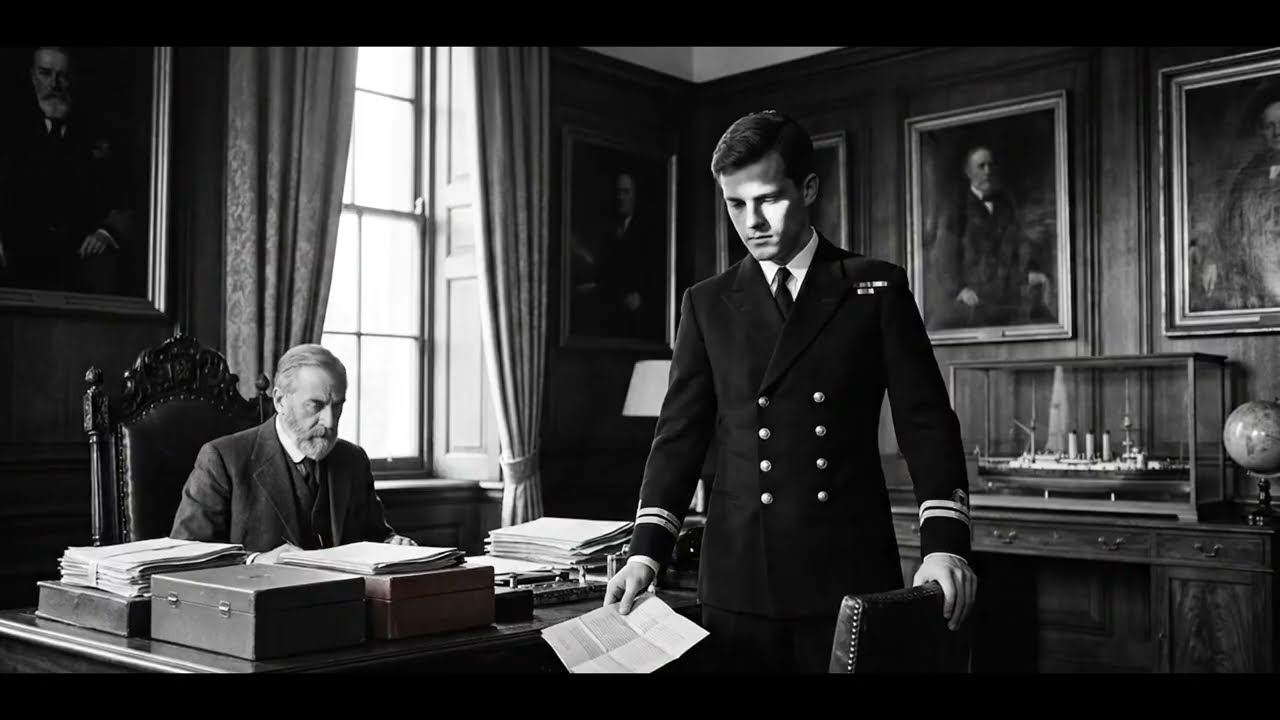
At home during the summer of 1942, there was one piece of good news. On July 4, Marina gave birth to their third child, a boy. They named him Michael. The other two children, Edward and Alexandra, were six and five. Seven weeks later, in the last week of August, George travelled north. He was heading to Iceland to inspect RAF units stationed there and boost morale. Cranborne later told the House of Lords that he had been looking forward to this trip with great eagerness. His squadron leader, Ferguson, fell ill and was taken off the flight. He was replaced by another officer, a young man in the Royal Canadian Air Force named Michael Strutt, who was also a qualified air gunner. That substitution cost him his life.
The flying boat took off from Cromarty Firth at 1:05 p.m. towards a cloud base at 500 feet. The aircraft was a Short Sunderland Mark III, a four-engined flying boat with the serial number W4026. It belonged to No. 228 Squadron RAF, part of Coastal Command. The squadron was based that summer at Oban on the west coast for anti-submarine patrols. The aircraft had come from Oban that morning to collect the royal party from the seaplane station at Inverness. Its tanks were filled for Iceland, about 2,500 gallons in the wings.
It was not certain until the last moment exactly who would pilot the aircraft. The crew composition changed several times before takeoff, and one account has it that the final places were settled by drawing lots among the ground crew. If that is true, the men tossed a coin for the chance to fly a prince to Iceland, and the winners died. Fifteen men boarded the aircraft. The captain was Flying Officer Frank McKenzie Goyen, an Australian serving in the RAF. The Secretary of State for Air later described him as having exceptional experience in this type of aircraft. With him, listed as first pilot, was Wing Commander Thomas Lortton Mosley, the officer commanding the squadron. Remember that well because it will become the focus of the entire questioning later. The second pilot was Flying Officer Sydney Wood Smith of the RAAF. The navigator was Flying Officer George Richard Saunders.
More of the crew. Flight Sergeant William Royston Jones, flight engineer. Flight Sergeant Charles Norman Lewis, airframe fitter. Flight Sergeant Ernest James Hoddinott, wireless operator and air gunner. Sergeant Edward Francis Blacklock of the RNZAF, wireless operator and air gunner. Sergeant Arthur Roland Cutt, same role. Sergeant Leonard Edward, fitter. And in the tail, in the rear turret, a 21-year-old from Grangemouth in Stirlingshire named Andrew Simpson Wilson Jack.
The Duke’s own party consisted of four people, himself among them. Flying Officer, the Reverend Michael Strutt, standing in for the sick equerry, and Aircraftman First Class John Walter Hales, his personal servant, and his private secretary, Lieutenant John Lowther of the Royal Naval Volunteer Reserve. John Lowther. Three years earlier, his name had been on the list of the household that was going to Yarralumla.
They took off at five past one. Some accounts say ten past. The weather was foggy with low cloud at about 500 feet, and the aircraft flew on instruments from the moment it left the water. The Air Ministry, announcing the loss that day, stated that His Royal Highness was attached to the Inspectorate of the RAF and was on his way to Iceland on an official mission. When the memorial was erected four years later, someone carved a different phrase into the granite. On a special mission. Special mission. Four words that were probably nothing more than ordinary Air Ministry language, but they have kept the conspiracy industry burning for 80 years.
The plan was simple, the plan every crew used. Head northeast, staying over water, roughly parallel to the east coast of Scotland until Duncansby Head at the far north of the country. Then turn northwest and head for Iceland. Over water the whole way. Over water. Nothing to hit. The aircraft did not do that. At some point after takeoff, it turned inland over the hills of Caithness. No one has ever established why. The board of inquiry used three words about that turn that have kept this story alive for 84 years: for reasons unknown.
In the rear turret, Jack felt what was happening. He said so under oath four days later. He told the board: As we were going along, the cloud got thicker. I felt the aircraft losing height after about 20 minutes. The pilot was apparently trying to get below the cloud base. That is the heart of it, an entirely ordinary decision. In thick cloud with a base at 500 feet above what you believe is open sea, you descend to regain visibility. Pilots did it every day of that war. It only kills you if you are not where you think you are.
They descended from about 2,000 feet. Below them, invisibly, was ground rising towards a hill called Eagle’s Rock, about four miles southwest of the village of Dunbeath. The aircraft cleared a height called Donald’s Hill at about 700 feet with the ground directly beneath it, then the hillside rose in front of it. It struck at 1:42 p.m. at an elevation of between 650 and 700 feet above sea level, 37 minutes after leaving the water. Sinclair, speaking to parliament later, only said the crash occurred about half an hour after takeoff, while other accounts put the time at just before 2:00. 1:42 is the most precise and reliable time we have.
The four engines were running at full power at the moment of impact. That was established later from the propellers. That means the aircraft was flying normally, obeying its controls, until the second it hit. No engine failure, no fuel exhaustion, nothing the board found wrong with the machine. The aircraft exploded. Two thousand five hundred gallons of fuel ignited at once, and the wreckage slid down the slope inverted and burned. Below, in the fog, a farmer named David Morrison and his son Hugh heard an aircraft where no aircraft should be. They heard it pass low overhead. Then they heard the explosion. Morrison described what they found when they finally climbed up there in one dry sentence that saves a full page. He said the aircraft caught fire on crashing, and one part was still burning when we arrived.
Hugh Morrison took his motorcycle and rode to the nearest telephone to summon the district doctor and police. A search party of local men and military personnel gathered, and it took them about two hours to climb to the wreckage. Some of the men were in the middle of the fire. Others had been thrown clear. The Duke of Kent was among those thrown clear. They carried what they found down the hill on stretchers, man after man, to the waiting ambulances below. Then the ambulances faced eight miles of narrow road before reaching a paved one. Fourteen of the 15 men on that aircraft were dead. The turret at the tail had separated from the aircraft.
The rear turret broke away from the aircraft, and the 21-year-old inside it was still alive. That is the entire mechanism of what happened. The tail separated on impact and was thrown clear of the fire that consumed everything forward of it. Andrew Jack came to with burns on his face and back and a head injury, in fog on open moorland, in a place he had never seen, with 14 dead men behind him. So he started walking. He walked all night. He covered several miles across peat and heather in thick fog, crossing footbridges in the dark with no idea where he was going.
The next day, August 26, someone found him. A farming family named Sutherland found him on their remote property at Renscerie and gave him help. The report says he was in a state of extreme exhaustion. The local doctor was said to be amazed that he had managed to walk that far in that condition. He was taken to the large hospital at Wick, and two senior RAF officers came to visit him in his bed. He is said to have been made to sign the Official Secrets Act. No document supports that, but the visit is widely documented.
Three days later, on August 29, he gave evidence to the board of inquiry as the eighth witness. His statement survives and it is short. I am an air gunner in 228 Squadron. He told them we took off at about 13:00 hours, and the cloud was about 500 feet. The captain, Squadron Leader Goyen, who was flying the aircraft, told us there was a lot of cloud about. I was in the rear turret. As we went along, the fog got thicker. I felt the aircraft losing height after about 20 minutes. The pilot appeared to be trying to get below the cloud. I remember nothing after that. Asked who was navigating, he said he did not know. Asked who was sitting in the second pilot’s seat, he said he did not know that either.
He went on to an ordinary career and extraordinary silence. He was commissioned as a pilot officer in January 1945, remained in the RAF until 1964, and retired as a flight lieutenant. He died in Brighton on March 22, 1978, aged 56. In all those years, he said almost nothing in public about August 25, 1942. He confided that he did not accept the verdict, that Frank Goyen could not be blamed for any serious error of judgement in flying the aircraft, and then he fell silent. Whatever he thought he knew, he took it with him to Brighton and kept it there for 35 years.
On the same day Andrew Jack appeared before that inquiry, the Duke of Kent was buried. The funeral was held at St George’s Chapel, Windsor, on Saturday, August 29, 1942, four days after the crash. The Duchess of Kent entered the chapel between Queen Elizabeth and Queen Mary. As the coffin was lowered onto the purple-draped platform, she knelt and prayed. Queen Mary held the King’s arm during the service. King George VI and the Duke of Gloucester wept openly, and when the coffin descended into the royal vault, the King scattered earth upon it himself. On the cover were flowers cut from the garden at Coppins and his own cap. Noël Coward was present. He had spent the week trying to hold himself together, and he wrote about the moment he broke. When the coffin passed with the Coppins flowers and Prince George’s cap on it, he wrote: That finished me. I gave up all pretence then and just stood with the tears streaming down my face.
Ten days later, Winston Churchill gave a tribute in the House of Commons. Churchill said his dominating wish had been to render useful service to his King and country in this time when we are all under trial. He noted that the Duke had given up a higher rank to do welfare work in the RAF, and he offered an idea aimed at a country losing a war. He said: There is something about death on active service that makes it different from the common or ordinary death of the natural span of life. That was the point. The Duke of Kent was the first member of the British royal family to be killed on active service since Prince Maurice of Battenberg in October 1914, and by a longer count, the first in over 400 years. In the worst summer of the war, that fact was of great value to a government that needed the country to feel it was in a united effort.
One MP refused to take part. John McGovern protested that parliament was mourning a single royal death while ignoring the large numbers of men of all classes dying week after week. He was right, and he was also alone in his position.
The inquiry blamed the dead captain for deviating from his flight plan for unknown reasons. Then the report disappeared. The court sat on August 28, sat in full on August 29, and concluded its work on September 1. The crash site was cleared by the 16th. On October 7, 1942, the Secretary of State for Air, Sir Archibald Sinclair, published the findings in a written answer to an MP. There were five points. The accident occurred because the aircraft flew on a course other than that laid down in the flight plan given to the pilot, and at too low an altitude to clear the high ground on the course. Responsibility for this serious error of navigation rested with the captain of the aircraft. The weather encountered would not have presented difficulties to an experienced pilot. Examination of the propellers showed the engines were running at power when the aircraft struck the ground. All the occupants were on duty at the time.
A more detailed version circulated since adds the most important phrase. The captain changed the flight plan for unknown reasons and descended through cloud without ascertaining that he was over water. The official answer is navigational error followed by a descent below safe altitude. In modern terms, an airworthy aircraft was flown into a hill. Look at everything that finding leaves hanging. It does not explain why the course was changed. It does not explain why the descent was made. It does not explain who was actually holding the controls. It does not explain who was navigating. The entire verdict rests on three words admitting that the essential question was never answered. Then the papers vanished.
The board of inquiry report cannot be found in the British public records. A journalist was told by the Public Record Office in 1990 that it was missing. A suggestion that it had been moved to the Royal Archives at Windsor was denied by the Royal Archives themselves. When a retired investigator named Michael Morgan published a full investigation in 2024, he stated that the report could not be found in the United Kingdom at all. He obtained a copy from the Australian archives, from the casualty file of the Australian second pilot. The witness statements, technical assessments, photographs, weather data, and post-mortem reports vanished with it. So did the original flight plan Goyen was given, the one document that might settle whether he deviated from it or was handed a bad one.
Missing war files are common. This degree of absence is rare, and it is the vacuum into which theories have flowed. There are four theories and they deserve ordering. The extra body. Jack’s niece said many years later that her uncle told her father there was one person too many on the aircraft. Separately, a man described as an air force researcher claimed he found a woman’s body at the site and was told to remove it and tell no one. Both accounts rest on a single witness and appeared decades later. Against them stand 14 names, each recorded as a death in the district of Latheron. All are buried in a known grave, with no extra certificate, no unexplained coffin, no anomaly in the war graves register. Morgan’s explanation is grim and ordinary. In a fuel fire of that intensity, remains were burned and torn apart, and recovery was incomplete.
The Swedish money. The claim is that a briefcase chained to the Duke’s wrist contained hundred-kronor notes, worthless in Iceland, proving the real destination was Sweden. No police inventory was ever produced. There is no photograph, no identified person who found it. The farmer who reached the wreckage described the scene in detail and mentioned nothing of the sort. This theory rests on nothing.
The peace mission. The most famous version says the flight was to collect Rudolf Hess and take him to neutral Sweden for talks. The background is not fiction. The Duke had documented pre-war contacts with Ribbentrop, with Alfred Rosenberg, and with Princess Stephanie von Hohenlohe. In July 1939, he had raised the idea of direct negotiation with Hitler with his brother the King. But this theory in particular dies on one unanswerable fact. Rudolf Hess was held at Maindiff Court in Abergavenny in Monmouth from June 26, 1942, until he was moved to Nuremberg. On August 25, 1942, he was in documented custody in South Wales. There is no gap in the record. A Sunderland flight engineer also noted that taking off from the loch in question with a full aircraft would have been difficult at best, and the tanks were full for Iceland.
Sabotage. There is a claim of a German report received in December 1942 alleging internal sabotage. It is cited without any supporting archive, and even on its face it is a German rumour with no evidence. The physical findings refute it anyway. Four engines at full power, controls intact. An aircraft flying a normal course for 37 minutes. Sabotage that allows the aircraft to fly normally and then directs it into a hill is wishful thinking, not a mechanism.
That leaves the answer no one wants because there is no villain in it. The most technically credible commentator on this crash was Roy Conyers Nesbit, a former RAF navigator, who argued in 1990 that a fault in a new gyromagnetic compass caused the course error. Morgan reached the same conclusion from a different direction and pointed to the variation setting corrector, the device that calibrates the compass for local magnetic variation. Morgan said the holy grail would be finding a piece of the compass. A compass reading wrongly, a crew believing they were over the sea. A descent below a 500-foot cloud base exactly as they had trained. That is the only explanation that accounts for every physical finding and requires no cover-up at all.
There is another question still open that has nothing to do with conspiracy theories. Wing Commander Thomas Mosley, the squadron commander, was on board and listed as first pilot. He outranked Goyen and had less experience on that type of Sunderland. Researchers have asked whether Goyen was effectively forced into the second seat while his commander flew. If so, the blame was placed on the wrong man. Morgan described it as a travesty of justice. An Australian pilot carrying the blame for 84 years for a change of course no one can explain, based on words in a report no one can find.
For 40 years he was a brave prince who died on duty, and then suddenly he became something else entirely. First, what that did to the woman he left behind. Marina was 35. Prince Edward was six and became the second Duke of Kent the moment his father hit the hillside. Alexandra was five. Michael was seven and a half weeks old. Her homeland was under enemy occupation, and there was no provision of any kind for a royal duke’s widow. The Civil List payments that had supported the family simply stopped on the day he died.
She went to the crash site herself. She visited the families of the other men who died. She went to see Andrew Jack more than once, trying to find out what had actually happened up there. It was never established what he told her, if he told her anything. The phrase special mission carved on the memorial stone is said to have come from something he said to her.
In 1947, she sold his private collection. It was exhibited at Christie’s over four days in March and raised £92,541. Attendance was a record for the house. His friends bid so aggressively that the dealers gave up and sat down. A collection of Dresden figures sold for £945. A Queen Anne silver salver from 1711 weighing 81 ounces sold for 11 guineas an ounce. The paintings alone on the final day raised £16,998. Across the whole sale, his possessions sold for three times what he had paid for them. Three times. Of everything said about the Duke of Kent, this is the only claim anyone ever tested, and it proved true. That eye was real.
The stated reason for the sale was lack of space. She no longer had a London house and was living at Coppins, and there was not enough room. One biographer says she was the only war widow in Britain whose estate had to pay death duties, though he gives no figure and no contemporary reports of the sale mention taxes at all. What is certain is that the auction raised more than the entire net value of his estate. She trained as a nurse and served for the rest of the war years. She remained in royal service for 26 years. She never remarried. She died at Kensington Palace of a brain tumour on August 27, 1968, aged 61. Two days later, she was removed from the vault at Windsor and taken to the royal burial ground at Frogmore to be buried beside him, 26 years after her widowhood, given just two days.
The second thing that happened to him, which shaped his name for 40 years after the crash, was that he continued to be remembered exactly as the death notices described him: gay, brave, cultured, a prince who died on duty in the worst year of the war. That version was manufactured through the exaggerated respect of a press that published nothing, and a palace that had been quietly managing his affairs since he was 26. Then, beginning in 1979 and continuing to 2007, a handful of popular books and one newspaper article assembled a completely opposite man. The addict, the blackmailed, the cross-dressing prince arrested on the street. That version was manufactured by repetition too, one unsourced sentence in one book becoming, through repeated copying, a fact everyone knows.
Both were inventions, and the evidence when you actually look at it supports a third man, sadder than either. He was intelligent and no one benefited from it. He had an eye that outperformed experts at auction. Languages and music, and exquisite taste in furnishing a home. He was the only one of his brothers who did anything resembling ordinary work. Walking through British factories for the Home Office to see how people earned a living. He was weak and charming, and his brother’s letters prove he was loved. He got involved in something that nearly killed him at 26, and a family that discussed nothing spent months quietly pulling him out of it. And finally, during the war, at 39, he found real work and threw himself into it until it killed him.
Viscount Cranborne, who watched him do it, said the truest thing ever said about him. Cranborne told the House of Lords that his main preoccupation was that he could not do more. In June 2024, letters no one outside the family had ever seen began to be published, and the correction began. New women appeared in the records. Old certainties collapsed. Eighty-two years after his death, someone finally did for the second invented prince what no one had done for the first.
That leaves the hill. There are two stones there, placed by the Office of Works in 1946. The first is a granite cross bearing his name, his ranks, the names of his companions, and the phrase on a special mission. Someone carved the word special incorrectly. So it reads wrongly, and no one has ever corrected it. The second stone stands further north, placed deliberately out of sight of the first, to mark the exact spot where they found his body. Out of sight. That is where this family has always put the parts it cannot use. A brother at Wood Farm. An addiction in a country house no one dares name. A child in Bern under an assumed family name. A file no one can find in Britain, surfacing in a casualty file in Australia. And a prince lying in the heather in the fog on a hill he was never supposed to fly over, four miles from a village he had never heard of. Below, a flying boat that should have been over open water burned itself out of existence.