Bob Moore was one of the most recorded bass players in history, performing on an estimated 17,000 songs. His lines anchored records by Elvis Presley, Patsy Cline, Roy Orbison, and Roger Miller, helping define the polished sound known as the Nashville Sound. Born in East Nashville on November 30, 1932, Moore grew up during the Great Depression. Raised by his grandmother, he never knew his father.
At age 10, he chose the double bass, an instrument that required immense physical strength to play, especially in an era before amplification. As a teenager, he played in honky-tonks and dive bars, learning to slap the bass so it could be heard over noisy crowds. By 15, he was on the road with Paul Howard’s Arkansas Cotton Pickers, traveling in packed sedans, sharing beds in boarding houses, and playing four-hour shows. The experience taught him timekeeping and the harsh realities of the music business.
He watched the star get the steak dinner while the band got a sandwich. He was the mechanic who fixed the car but was never allowed to drive it. In his early 20s, Moore joined the band of Red Foley, one of America’s biggest stars. Foley gave him crucial advice: to succeed in Nashville, he had to be a businessman, not just a musician.
That advice shaped his career, but it also introduced him to a system where session players could not own the product they helped create. By the mid-1950s, Moore developed a signature style, incorporating melodic, walking bass lines from R&B and jazz into country music. He experimented with microphone placement and string types to engineer his tone into a precision tool. In 1956, Nashville became the center of a recording boom.
The labels needed hit records fast, which gave rise to a small group of elite session musicians known as the Nashville A-Team. The group included guitarist Chet Atkins, pianist Floyd Cramer, and drummer Buddy Harmon. Moore was the spine of the operation. Working from head arrangements, the group could hear a song once and construct a complete, radio-ready arrangement on the spot.
Moore developed the “tic-tac bass” technique, doubling his upright bass line with a six-string bass guitar to create the crisp click that became a secret weapon of the Nashville Sound. In 1960, Elvis Presley returned from the Army, anxious about whether he could still compete. He booked RCA Studio B and called in the A-Team. During those sessions, Moore played the creeping, stalking bass line on “Fever” that supported one of Presley’s most sensual vocal performances.
Presley reportedly looked at Moore after the take and said, “Man, that’s it. That’s the feeling. ” It was a moment of validation for the bass player, but it also deepened a central contradiction in his life. He was working alongside the King of Rock and Roll, yet he would never receive the recognition or royalties of a star.
At his busiest, Moore spent 12 or more hours a day in the studio, six or seven days a week, playing on hundreds of records per year. He wrapped his fingers in athletic tape to prevent his skin from splitting. He lived on aspirin and coffee, driven by the fear of the silence that follows a freelancer who turns down a session. Despite his success, he described the strange experience of driving home at 2 a.
m. , turning on the radio, and hearing the records he had just made, with only the star’s name mentioned on air. He was a ghost driving a Cadillac, a wealthy man whose contributions were owned by everyone and credited to no one. His work with Roy Orbison on “Crying” in 1961 was another masterclass in dynamic control.
Moore built the bass line from a whisper to a thundering climax. Orbison left as a superstar. Moore left with a check for three hours of labor. In 1965, he recorded with Roger Miller on “King of the Road.
” The song needed no drummer and no rhythm guitar, only Miller’s voice, his finger-snaps, and Moore’s bass. Moore played a sliding, swaggering line that functioned as a duet partner to the vocal. The song became a global hit, earning five Grammy Awards and making Miller a wealthy household name. Moore received his standard session fee.
He argued privately that he had effectively written the hook and deserved a co-writer credit. The industry’s answer was silence. The work-for-hire contract was ironclad. He had sold his genius for an hourly wage.
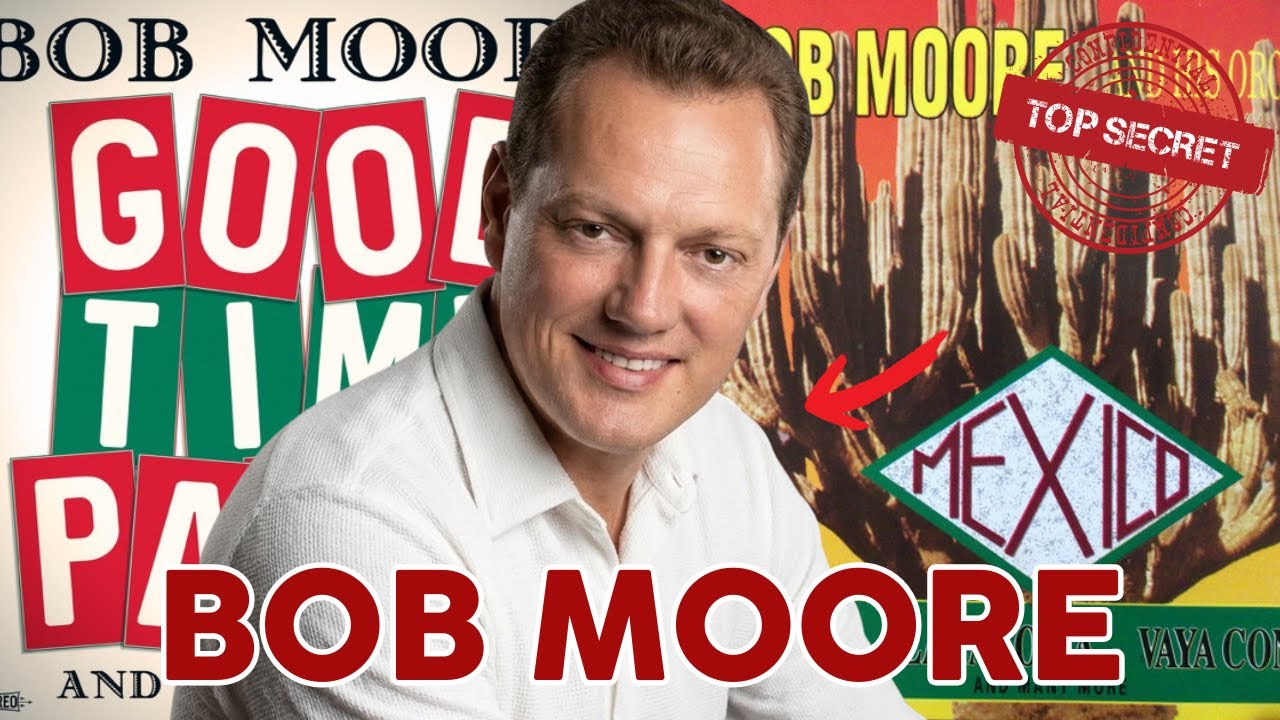
In 1961, Moore released an instrumental under his own name. “Mexico” climbed to number seven on the Billboard Hot 100 and reached number one in Germany. For a brief period, he was a pop star, touring and accepting gold records in Europe. But the follow-ups did not match the success, and he chose to return to the security of the studio.
By the late 1960s, the cultural tide turned. The Nashville Sound was seen by younger audiences as square. Yet Bob Dylan specifically requested the A-Team when he came to Nashville to record “Blonde on Blonde. ” Dylan was reportedly astonished by musicians who could lock into a groove so quickly and improvise with such precision.
In the early 1970s, the Outlaw Country movement rejected the polished sound Moore represented. The most culturally relevant music was now being made by artists who actively did not want him. The phone stopped ringing as often. He was still first call for legends like Johnny Cash and Dolly Parton, but the gaps in his calendar grew.
By the late 1970s, synthesizers and digital recording technology began to replace the live-room process. Producers wanted the precision of a click track, not the swing of a human heartbeat. Moore described this era as soulless work, playing alone in a booth to a machine rather than feeding off the energy of other musicians in the room. There is a documented anecdote from this era that captures the friction.
During a session for Crystal Gayle, a young producer repeatedly stopped the tape, complaining that Moore’s bass line was too busy, then too slow, then just wrong. Moore put his bass down, walked into the control room, and stared at the producer. “Son,” he said, “I have played on 17,000 records. I have played for Elvis Presley.
I have played for Patsy Cline. I think I know what a bass line sounds like. ”
He was right, but being right no longer mattered. The industry only cared about what he could do for them today, and today they wanted him to sound like a machine.
The financial reality of his career became a quiet obsession. Every Christmas, he heard “Rockin’ Around the Christmas Tree” and “Jingle Bell Rock,” both of which featured his playing. He had been paid roughly $41. 50 for the 1957 session that produced “Jingle Bell Rock.
” He received nothing from the millions of dollars in royalties those songs generated every year. He argued to anyone who would listen that the session players were co-creators, not just hired hands. A song like “King of the Road,” he contended, was a hit because of the arrangement the band created on the spot. The legal system was deaf to his pleas.
The contracts were clear. He was labor, not management. By the 1990s, the live session was dead. Recording had become fragmented, with the drummer on Monday, the bass player on Tuesday, and the singer in another state.
Moore gradually withdrew from the scene, not because he could no longer play, but because the joy had been extracted from the process. In his later years, he became a living artifact, revered by history buffs and treated as a museum piece by the active industry. In 2007, the Musicians Hall of Fame and Museum in Nashville inducted the Nashville A-Team, finally acknowledging the players. The award was a vindication, but it arrived 50 years late.
He spent his final years giving interviews, correcting the romantic mythology of the golden era. The sessions were not magical spiritual experiences, he said. They were work. “We were tired.
We were hungry. We were trying to get it done so we could go home. ”
Bob Moore died on September 22, 2021, at the age of 88. His death did not trigger a national news cycle or street vigils, but among musicians, producers, and historians, the loss was deeply felt.
The muscle memory of 17,000 songs was gone. His life remains a cautionary tale about the exploitation of labor in the arts. He died without the royalties he deserved. Artistically, however, his legacy is enduring.
His bass lines are woven into the culture, present in weddings, Christmas parties, and lonely bars. He was the keystone of the Nashville Sound, invisible but essential. If you removed him, the whole structure would have collapsed.