Bass Reeves was born into slavery in Crawford County, Arkansas, in the summer of 1838. He was named after his grandfather, Bass, and took the surname Reeves from the Arkansas politician who claimed to own him, William Steele Reeves. When Reeves was still a boy, around 1846, the family that owned him moved their plantation south to Grayson County, Texas, where he grew up and eventually became the personal servant to his enslaver’s son, George Reeves. George Reeves would later become a colonel in the Confederate Army and raise a cavalry regiment to fight a war whose central purpose was to keep men like Bass in bondage.
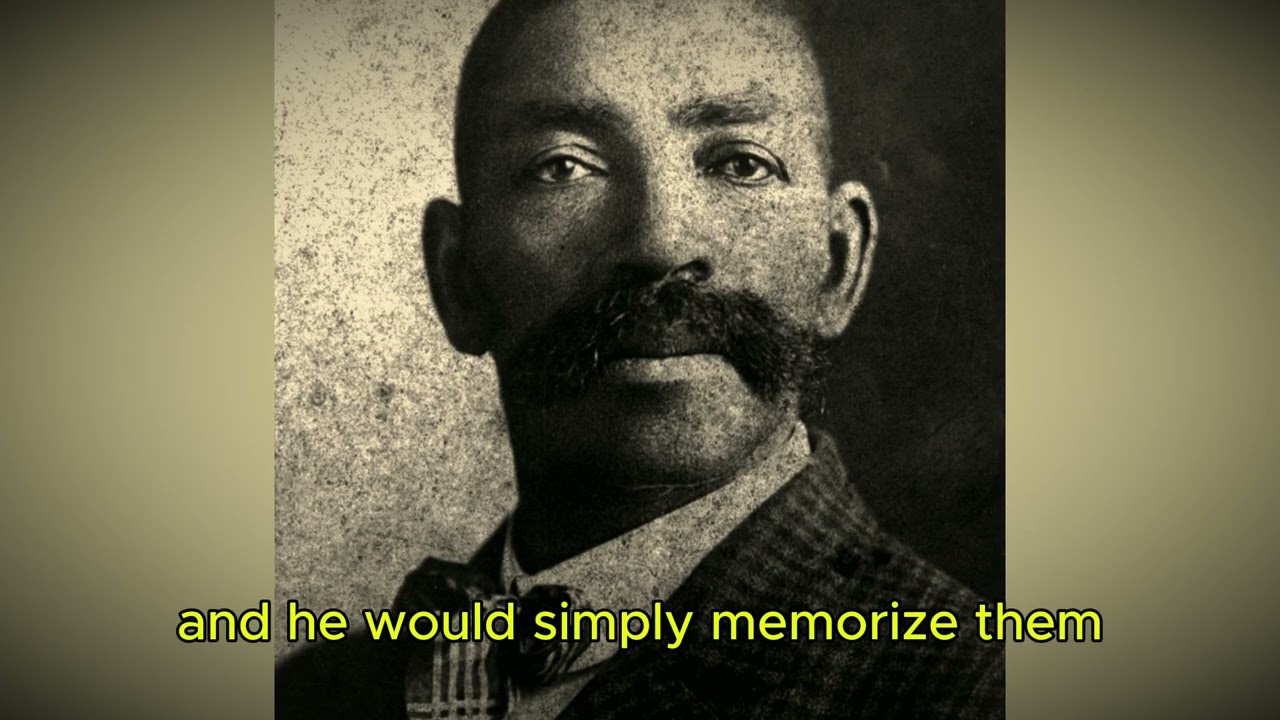
It is said that Bass rode alongside him, carrying his gear and caring for his horse. Historians cannot confirm the battles Bass saw, but they do know how his Confederate service ended, in a dispute over a card game that escalated into a fistfight. A man in Bass’s position raising his hands against the man who owned him had committed an act he might not survive. He ran.
A lone Black man on foot, with no map and no destination, he fled north into a harsh landscape. This was the 1860s, and freedom was not waiting over the next hill. He aimed for the only place where the men who wanted him might not be able to follow, the Indian Territory. The Indian Territory was a vast expanse of more than 75,000 square miles, covering what is now most of Oklahoma.
Under treaty, it belonged to the Cherokee, Choctaw, Chickasaw, Muscogee, and Seminole nations, peoples who had been forced from their eastern homelands decades earlier. Each had its own government, laws, and courts. But there was a critical gap in that system. Tribal courts could only arrest and try their own citizens.
A white killer, a Black thief, or any fugitive who was not a member of one of those nations could cross into the territory and remain almost beyond the reach of justice. Hundreds of outlaws, horse thieves, and whiskey smugglers fled there. This was the land Bass Reeves fled to in his twenties. He did not just hide there; he learned it.
He lived among the Cherokee, Creek, and Seminole. Over the years, he learned to speak many of their languages fluently, despite the fact that he could not read a single word of English and never learned to read or write his entire life. He learned the land itself, which water was safe, how to read a three-day-old trail, how to disappear into the wilderness, and how to find a man trying to vanish into it as well. Every skill that would one day make him the most feared lawman on the frontier, he first learned as a fugitive.
Freedom came in 1863, when President Lincoln’s Emancipation Proclamation reached the wild country. Bass Reeves was no longer a fugitive or a slave, but simply a man. He settled near Van Buren, Arkansas, bought land, farmed it, and married a Texas woman named Jennie. Together they raised a family of ten children, five sons and five daughters, on a small farm in a quiet corner of a violent century.
For about ten years, that was his life. But occasionally, posses of deputy marshals passed through, heading west to the Indian Territory to try to bring outlaws to justice. They needed someone who knew that country, who spoke its languages, and understood its hidden places. Bass Reeves said he knew the area “as the cook knows her kitchen.
” He began accompanying them as a guide and scout, and the men charged with capturing America’s worst criminals gradually realized he was better at their job than they were. In 1875, everything changed with the arrival of one man in Fort Smith, Arkansas. His name was Isaac Parker, known to history as the Hanging Judge. The federal government had finally decided the lawlessness in the Indian Territory was intolerable, and President Ulysses Grant gave Parker the mandate to subdue it.
Parker took over the federal court at Fort Smith, which had jurisdiction over that vast, out-of-control 75,000-square-mile region. His court became notorious for the number of men it condemned, and the Fort Smith gallows became a legend in its own right. But a court ruling was worthless until it was enforced. Every warrant was just a name on paper until a deputy volunteered to ride into the territory, usually alone or nearly alone, and find the man named on it.
Parker hired about 200 men for this dangerous work. Before the region was finally controlled, more than 120 deputy marshals were killed doing this job, not injured, killed. Deputies themselves called an area about 80 miles west of Fort Smith the “dead line,” because once you crossed it, you were alone in outlaw country, and your odds of coming back were slim. Among the 200 men Parker hired in 1875 was a Black farmer from Van Buren who could not read the warrants.
Bass Reeves was 37 years old. He was commissioned as a United States Deputy Marshal, becoming one of the first Black men to serve as a federal lawman west of the Mississippi. Among the original 200 deputized by Parker in 1875, Bass Reeves is the only one on record who started then and was still on the job when it all ended more than 30 years later. He outlasted them all.
He was not the only non-white lawman in that region. There were other Black deputies and Native deputies as well. A lawman named Grant Johnson, of African and Native American descent, made a name for himself there. There was also a respected Choctaw policeman named Charles LeFlore, who rode with Reeves and made arrests.
The Five Tribes kept their own courts and police to protect their people, and outlaws and victims alike were Black, white, and Native. This was not a simple story of one race against another. It was a struggle between law and chaos, and the distinction that made Bass Reeves remarkable was not that he was the only one doing this work, but that he did it the longest and, by most accounts, better than almost anyone else. Reeves could not read warrants, so he had someone read the stack of warrants aloud, again and again, until he memorized every name, crime, description, and face.
When he carried dozens of warrants in his coat, he kept them all in his head. In over 3,000 arrests, he never once brought in the wrong person due to a mistaken name. If a suspect could not read, Reeves had a third party read the papers aloud to make sure he had the right man. His work was grueling.
When a deputy left Fort Smith to hunt in the territory, he did not leave for hours; he left for months. Reeves would ride out on a wagon with a cook who also guarded camp, and at least one other person, disappearing into the territory for weeks at a time. The route stretched west past Fort Reno, Fort Sill, and Anadarko, a circuit of more than 800 miles. At the end, he would bring back a string of prisoners, from whiskey runners and horse thieves to killers.
Physically, he was a giant for that century, standing six feet two inches and weighing about 190 pounds of muscle. Those who knew him swore he had almost supernatural strength and could handle two grown men at once with his bare hands. He rode large horses, often chestnut and gray, and kept a huge dog in camp to help guard prisoners at night. He loved animals, dogs and horses alike.
He carried two Colt revolvers with their grips pointing forward, allowing him to cross-draw quickly with either hand. He was exceptionally ambidextrous and could shoot a revolver or rifle accurately with either hand. With his Winchester rifle, according to men who saw it, he could knock a target off the back of a galloping horse at a quarter of a mile. Witnesses also said that in the final moments before a shootout, when other men were trembling, Bass Reeves would quietly sing a gentle song right before the violence began.
A story tells of Reeves and a group of deputies spending hours trying to flush out a stubborn fugitive. When the man finally broke and ran across open ground, all the deputies fired at him at once, and all of them missed. One seasoned marshal, known as Bud Ledbetter, finally yelled across the field, “Catch him, Bass. ” The chase ended.
When other professional shooters miss a moving target, and the solution is to turn and call your name, it tells you everything about your reputation. What made Bass Reeves dangerous was not his shooting but his investigative skill. He was a master of disguise, not just wearing a different hat but becoming different characters. He would go out disguised as a cowboy, a farmer with an ox wagon, a preacher, or an outlaw looking to join a gang.
His most famous story, of appearing as a ragged tramp with three bullet holes in his hat, walking 28 miles across the scorched prairie with his feet bleeding inside cut-up boots, was one such disguise. He approached a woman on her porch, who, seeing his condition, gave him water and a place to sit in the shade. He told her, in a weak tired voice, that he was fleeing from an outlaw who put the three holes in his hat and nearly killed him. Her heart went out to him.
She understood what it meant to run from the law, because her own two sons were wanted outlaws hiding under her roof, with a bounty on their heads large enough to change their poor family’s life forever. She fed the stranger and let him rest. When her sons rode home that evening, she introduced the ragged man as an old friend, and the three men began quietly discussing a job they might do together, a partnership. An outlaw helping two others escape the noose.
They slept that night trusting him. They woke up handcuffed to their beds, and the ragged tramp who could barely walk the day before marched the two men 28 miles across the prairie to a lawman’s camp. According to accounts, their mother followed for the first three miles, cursing him the whole way. One time, he left his horse behind and approached a hideout disguised as an exhausted old farmer whose wagon was allegedly stuck on a stump.
When the outlaws came out to help the peaceful old man free his wagon, they found he was holding two pistols and had a very different plan for their afternoon. For more than 30 years, Bass Reeves knew that country like he knew his own neighborhood. He knew the settlers by name, which families lived where, who could be trusted, and to which cabin a fugitive might run. Well before the term existed, he was doing something close to community policing, mentally mapping not just the land but its people.
He treated ordinary people in the region, of any color, with a simple kindness that made them willing to talk to him. His kindness was as essential a tool as his Winchester. He preferred to outsmart you rather than outgun you, to bring you in alive and let the court decide your fate, rather than leave you dead in the dirt. But the country tried to kill Bass Reeves many times and never succeeded.
The closest he came was on a whiskey-running trail in 1884. In his own account, given in a newspaper interview in 1906, he was riding in the Seminole country chasing four men with warrants when he met three brothers named Brunter, wanted for horse stealing, robbery, and murder. This time, the outlaws saw him first. Three drawn pistols pointed at one lawman.
They ordered him off his horse and away from his gun. By the laws of that country, Bass Reeves should have died there on that trail. Instead, he calmly pulled out the warrants for their arrest, showed the paper to the three men who had him captured, and asked them, in a calm serious voice, what day it was. When they asked why it mattered, he told them he needed the correct date for his records, so he could write it on their arrest warrants when he brought them in.
The Brunter brothers found this hilarious. A dead man facing three times his own number, quietly doing his paperwork. They laughed and, for a moment, dropped their guard to look at the warrant. The confrontation ended almost before it began.
When it was over, the Brunter brothers decided not to rob any more travelers in Indian Territory, and Bass Reeves rode off to serve the other four warrants he had come for. If you asked those who studied his life about his most famous gunfight, they would tell you about a man named Jim Webb. Webb was a foreman on a huge cattle ranch in Chickasaw country, a hard and dangerous man in his own right. The story began, ironically, with a grass fire.
A Black preacher farming a small plot next to the ranch let a fire get out of control, burning a cross on ranch land. The argument over it ended with a man dead and a murder warrant issued in the name of Jim Webb. Bass Reeves took the warrant and, the first time he pursued Webb, caught him, got him mounted, and arrested him. But Webb escaped and disappeared back into the countryside, still free and still wanted for murder.
Most men would have let it go, but Reeves did not. It took about two years. Finally, Bass Reeves cornered Jim Webb in a rural store near the Arbuckle Mountains. Webb saw the lawmen coming, grabbed his rifle, and ran.
What followed was not a quick clever end. It was a long, brutal long-range rifle duel between two strong men firing at each other for all they had. It ended as such battles end, at long range, with one man still standing. As the story was told, the dying outlaw, finally spent, told Bass Reeves he had never seen shooting like that in his life, then handed his pistol to the lawman who had beaten him.
It was a final gesture of respect from one powerful man to another at the end of a two-year hunt. That was Bass Reeves. He would outsmart you if he could, and if he couldn’t, he would never stop coming for you. For more than 30 years, men shot at Bass Reeves countless times.
They put holes in his hat. There are accounts of a bullet cutting away his bridle, of another cutting his belt. Outlaws ambushed him. According to some accounts, there were deliberate attempts to assassinate him.
None of them hit him. Not one bullet touched him in 32 years. One white settler described the reputation this man built, saying he was simply the most feared marshal that country had ever known. Reports said that when fugitives learned Bass Reeves held their papers, they chose to surrender rather than run, because fleeing from this particular deputy usually ended badly.
To the people of the region, he seemed untouchable, like a figure from a story. But there were two moments that wounded Bass Reeves in ways no outlaw ever could. The first was on the road, an accident. His camp cook, a man named William Leach, Reeves, and a horrible incident with a gun took a man’s life.
The full truth of what happened that day was buried with the men who were there. What is known is the consequence. The lawman who brought 3,000 people to justice was arrested, and tried for murder, in a case recorded as “United States vs. Bass Reeves.
” The greatest deputy judge Parker’s court ever produced stood in the defendant’s box before the judge himself, his life now in the hands of 12 strangers deciding whether to believe him. He was acquitted, the court believing it was an accident, but he had stood on the other side of the law he had served. The second moment came in 1902. Bass Reeves was an old man by the standards of the era, still riding and working.
A warrant for murder arrived at the marshal’s office. The name on it, read aloud to Bass Reeves, was the name of his own son, Bennie Reeves. No one wanted to serve that warrant. The other marshals, men who had worked alongside Reeves and respected him more than almost anyone else, stood holding a paper with the name of Bass Reeves’ son on it.
None of them could bring themselves to go after the old man’s son. The task fell to the chief marshal. Bass Reeves stepped forward and took the warrant from the other man’s hand. He said he would serve it himself.
It took Reeves about two weeks to track his son through the same wilderness he had chased strangers through for thirty years. He brought his son to jail and delivered him to the same court he had served his entire life. Bennie Reeves was tried, convicted, and sentenced to life in prison. The only mercy the record allows is this: Bennie Reeves entered prison, served eleven years, was released, and by all accounts lived the rest of his days as a good, law-abiding man.
He was later pardoned. But Bass Reeves, the father who served the warrant, did not live long enough to see his son come home. For 30 years, Bass Reeves had been the constant. Judges came and went, deputies died, and the wild country gradually filled with farms, fences, and railroad towns.
But time is the one outlaw no one escapes. In 1907, the Indian Territory and Oklahoma Territory were joined to form the new state of Oklahoma. The chaos Bass Reeves had fought his whole life had been subdued. He was nearly 70, a living legend, the last of Parker’s original 200 men.
And here is where the erasure began. Oklahoma became a state, and there was no place in the new order for a Black man carrying a federal marshal’s badge. Under the new state’s laws, the most effective lawman in the region could not continue doing the work he did better than anyone else. His federal commission ended.
The man who made 3,000 arrests was made a patrolman in Muskogee, Oklahoma. The badge that meant so much to him was taken away, not because he failed, not because he was too old to shoot straight, but because of the color of his skin. Even then, even reduced to a city patrol in his late sixties, Bass Reeves was the same man. The Muskogee police chief, a man named Bud Ledbetter who had ridden with him and watched him work, said the old deputy never hesitated to face any man.
During the two years Reeves patrolled Muskogee, the district he watched reportedly had no notable crimes. No one wanted to be the outlaw who tested Bass Reeves. He kept patrolling until his health failed and he had to resign. The man no bullet could kill was finally brought down by his own body.
In 1910, Bass Reeves was diagnosed with Bright’s disease, kidney failure. It was the only enemy his shooting, cunning, and powerful physique could not overcome. On January 12, 1910, in Muskogee, Oklahoma, Bass Reeves died, in his early seventies. A man born into slavery died a legend of the American West, in his own bed.
When he died, the local papers at least recognized what the world had lost. The Muskogee Times-Democrat wrote that in the early days when outlaws swept the country, Reeves would lead whole gangs of wanted men into Fort Smith, often alone, on charges ranging from whiskey running to murder. The paper wrote a line that remains striking: no story of the long war between government officers and outlaws in the Indian Territory could be complete without mentioning the man who died the day before. No story of the West could be complete without him.
Yet for most of the next century, the story of the West was told again and again, in thousands of books and thousands of films, and he was entirely absent. How did that happen? His files, arrests, case records, and newspaper articles existed in archives in Fort Smith and elsewhere all along. No one burned his records.
The problem was that for a very long time, no one who had the power to tell America’s story wanted to look. At the very time Bass Reeves was doing the real work, the country was busy inventing a fictional version of it. Dime novels turned real gunmen into cartoon heroes. Radio, Hollywood, and the Western that America came to love told the story of the white-hat, lone hero, quick-draw cowboy with one color.
A handful of frontier gunmen became famous in every home in America. A Black deputy who out-arrested them, outlasted them, and faced more dangerous men than most of them ever dreamed of, never got a single dime novel, radio serial, or movie. There was simply no room in that story for a historical figure who was one of the most dangerous, smartest, toughest lawmen ever, a Black man born into slavery. The makers of that fiction ignored him, not by suppression, but by silence, by simply never mentioning his name.
A name never spoken, generation after generation, vanishes just as surely as if the records had burned, perhaps worse, because the evidence was there all along. There is a final twist in the story, one that must be handled carefully. You were asked to remember a lawman who rode the frontier, a man bullets could not kill. Add the rest of the details.
Bass Reeves often worked with a Native companion. He rode large distinctive horses, and some accounts describe a pale white horse. He was known throughout the region for his fairness and refusal to break the law even while enforcing it. There are tales of him leaving a small token, a kind of calling card.
In 1933, a radio show aired about a masked hero who rode the frontier on a great white horse with a faithful Native American companion, a man who was unstoppable and lived by a code of justice that was never broken. It was called “The Lone Ranger. ” There is no letter, no document, no admission from the creators of that character saying they based it on Bass Reeves. It is not a proven fact.
Anyone who says it is a settled fact is going beyond what the evidence allows. But serious historians, including a man named Art Burton who spent years researching Bass Reeves in the archives, looked at the list of similarities, the pale horse, the Native companion, the token, the invincibility, the same region of land, and believe that the most famous masked hero in American popular culture was built, at least in part, on the real actions of a Black deputy marshal whose name the country refused to speak at the time. America took the story of a real Black hero, covered his face with a white mask, and sold it to itself for generations while the man himself lay in obscure silence in Muskogee, Oklahoma. The story does not end there.
Over the past few decades, historians have returned to those archives that were there all along. Art Burton wrote books that presented the evidence to the modern reader. Other researchers followed, and little by little, the name America spent a century refusing to mention began to reappear. In books, in documentaries, in television series watched by millions of people who had never heard of him.
In Fort Smith, Arkansas, not far from the old courthouse, a statue stands on a horse, bronze, of a Black deputy mounted and urging his horse forward, guarding the land he devoted his life to bringing peace to. A man born as property now stands tall in bronze, in the heart of an American city, his name there for all to read. The statue was not built in his lifetime. It was built about a hundred years too late.
But it was built. There is the image from the beginning. The ragged man on the porch, in torn boots and a hat with three bullet holes, handed a cup of water by a stranger who did not know him. That was Bass Reeves’ life in a way.
A man the world always underestimated. A man who was always far more than he was allowed to appear. A man who did the hardest and most dangerous work in the country in disguise. For a hundred years, he was absent from a story he should have been at the center of.
They gave him water and did not ask his name. Now you know his name. Bass Reeves. The best way to erase a man is to stop mentioning him.
The best way to bring him back is to refuse to stop.