In the winter of 1810, a young woman from southern Africa boarded a ship bound for London, leaving behind everything she had ever known. Her name was Sarah Bartman, though the men who controlled her had already renamed her Saartjie, a diminutive form of her name in Dutch. She was twenty-one years old, and she was traveling to England to be exhibited as a human curiosity. Sarah had been born in 1789 in the Camdeboo Valley, in the eastern part of what was then the Cape Colony.
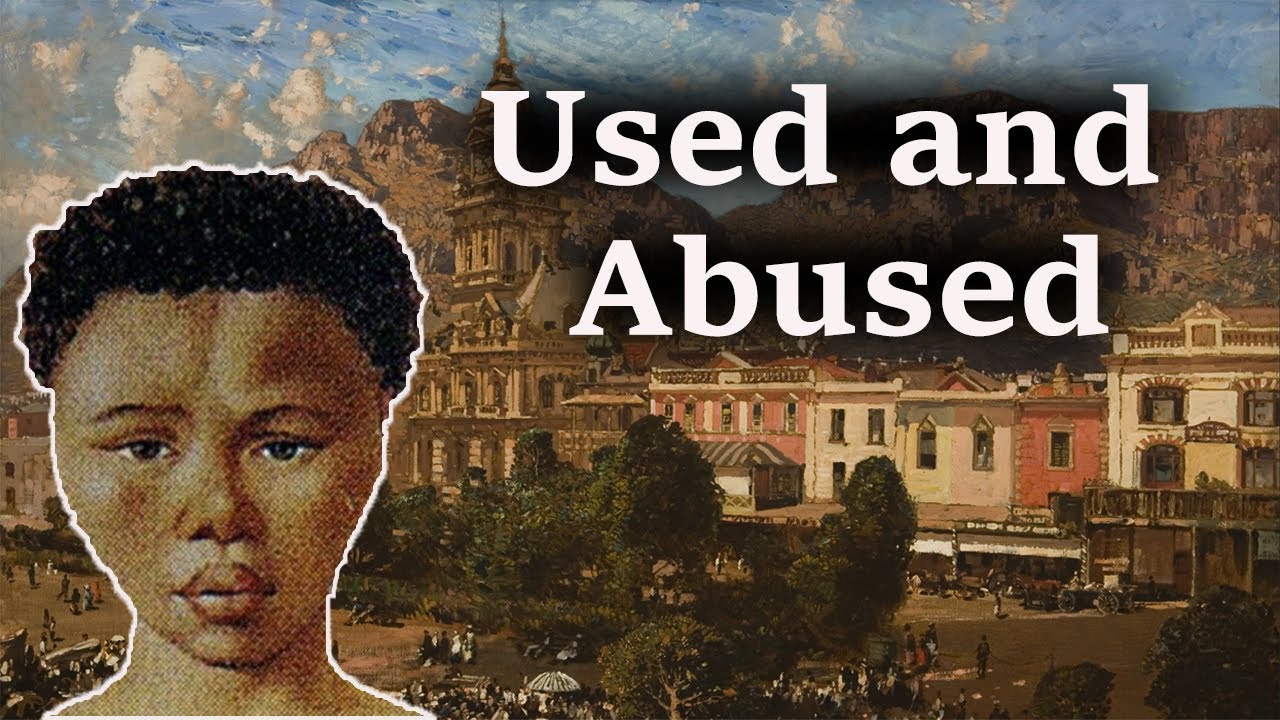
She belonged to the Khoikhoi, a pastoral people who had herded cattle in the region for generations. But colonization had destroyed that way of life. Her parents were enslaved and forced to work on a colonial farm. Her mother died when Sarah was just two years old.
When she was a teenager, her father was killed by Bushmen while working as a cattle driver. Sarah married young, as was customary, and gave birth to a child who died shortly after being born. In the early 1800s, a free Black trader named Peter Cesars came across Sarah and convinced her to move to Cape Town, which had recently come under British control. Whether she was truly persuaded or simply forced is unclear, but given her circumstances, it is unlikely she had much choice.
She worked in Cape Town for two years, first as a nursemaid and then as a servant. Though she was not legally enslaved, in practice her life was little different from that of the enslaved people around her. It was during this time that colonists killed her fiancé. Sarah eventually came to work in the household of Peter’s brother, Hendrik Cesars, in a region outside Cape Town now known as Woodstock.
There she worked as a wet nurse, a difficult job typically taken by the poorest women, breastfeeding the children of others. She became involved with a poor Dutch soldier named Hendrik van Jong, but the relationship ended when his regiment left the city. For years, she continued working as a servant, enduring one heartbreak after another. Then she met William Dunlop, a Scottish military surgeon who also supplied British showmen with rare animals.
Sarah had a condition called steatopygia, which caused a buildup of fat in her buttocks, a trait common among her people. In early nineteenth-century Britain, where crowds were fascinated by the strange and unusual, Dunlop recognized that her body could make him a great deal of money. He pressured her to come to England and exhibit herself at a circus. Sarah initially refused.
She understood that she would be exposing herself and surrendering her dignity. But Dunlop persisted, and eventually, worn down by a life of poverty and loss, she agreed. She made one condition: that Hendrik Cesars accompany her. Hendrik, who was drowning in debt and unable to pay his creditors, agreed to go.
On the 29th of October 1810, Sarah signed a contract agreeing to work as a servant and to exhibit herself for entertainment purposes. She was illiterate, and the contract was written in English, so she could not read what she was signing. She kept no copy of it. The men could modify it as they pleased, which protected them from legal trouble later.
The contract contained two promises that gave Sarah some hope: after five years, she would be allowed to return to South Africa, and she would receive a portion of the show’s earnings. In November 1810, Sarah arrived in London. Dunlop had already prepared everything. She was exhibited at the Egyptian Hall in Piccadilly Circus, locked in a cage about a meter and a half high.
For two shillings, crowds could watch her sing, walk, and display her body. Visitors could even poke her with sticks. Wealthier patrons paid extra for private shows at their own homes. Flyers advertising the exhibition read: “Saartjie is 22 years old, is 4 ft 10 in high, and has a good capacity.
She lived in the occupation of a cook at the Cape of Good Hope. ”
Before long, the African Association, an abolitionist society, learned of the ill treatment Sarah was suffering and took the case to court. One of the campaign’s leaders was Zachary Macaulay, a hugely influential figure in the anti-slavery movement who had helped pass the 1807 Slave Trade Act. The trial took place on the 24th of November 1810, its purpose being to determine whether Sarah was exhibited with her consent or under duress.
Despite the association presenting strong evidence, Sarah testified that she was not under restraint, had not been sexually abused, and had come to London of her own free will. It should be noted that William Dunlop was in the room while she made this statement. The signed contract, which she could not read, also worked against her. The case was dismissed, and Dunlop and Cesars faced no charges.
The contract was amended, and Sarah supposedly became entitled to more profits, better clothes, and normal living conditions. Whether these promises were ever kept remains unknown. The trial, however, made her shows even more popular. Sarah traveled all over Great Britain and as far as Ireland.
She was baptized in Manchester in 1814. Then William Dunlop died, and a man named Henry Taylor brought Sarah to Paris. Taylor had heard about her for years, as her fame had spread across Europe, and he thought the French public should have the chance to see her as well. Sarah became involved with French society and even attended gatherings at the famous Café de Paris.
But a few weeks after arriving in France, she was sold to an animal trainer named S. Réaux, who was also the founder and professor of comparative anatomy at the Museum of Natural History. In Paris, Sarah was exhibited as if she were a circus animal, locked in a cage beside attractions like baby rhinoceroses. She was presented nearly naked, and there is some evidence that a collar was sometimes placed around her neck.
She was more enslaved than she had ever been in England. She refused to appear entirely nude and always insisted on wearing a small apron-like garment. Only once was she presented fully naked, and she knew it was beneath her dignity. French scientists were fascinated by her.
The naturalist Georges Cuvier, along with fellow anatomists, zoologists, and physiologists, examined her. According to some accounts, Cuvier believed Sarah was a missing link between animals and humans in Europe. This was a time when racial studies were beginning to emerge, and Sarah’s treatment may have contributed to their development. Her time in France lasted around fifteen months.
She lived in terrible conditions, was deeply miserable, and remained extremely poor. She was sexually abused and became pregnant. Her son, named Okuro, died at age five for unknown reasons. On the 29th of December 1815, at the age of twenty-six, Sarah Bartman died in Paris.
The cause of death remains debated. Records state it was an inflammatory disease derived from a smallpox case, but others suggest alcoholism, pneumonia, or syphilis. After her death, Cuvier obtained her remains from local authorities and dissected her body, searching for the cause of death. He preserved various parts of her corpse.
At the time of her death, Sarah was described as an intelligent woman for her time and culture. Besides her native language, she spoke Dutch fluently and could hold conversations in both French and English. Her remains were displayed at the Musée de l’Homme until 1937 and later at another museum until 1974. Thanks to years of campaigning and a request from South Africa’s former president Nelson Mandela, Sarah Bartman’s remains were finally returned to her native country on the 9th of August 2002, which is also Women’s Day in South Africa.
She was buried in the Eastern Cape Province, where she belonged.