In the criminal life he knew, the narrator insisted, there were men who stood apart. Not merely men who broke laws, but men who were genuinely dangerous, figures whose reputations preceded them. Some he knew personally. Others he knew only through the accounts of his father, who lived to be 103 and had known many of them himself, or through conversations over the years in social clubs.
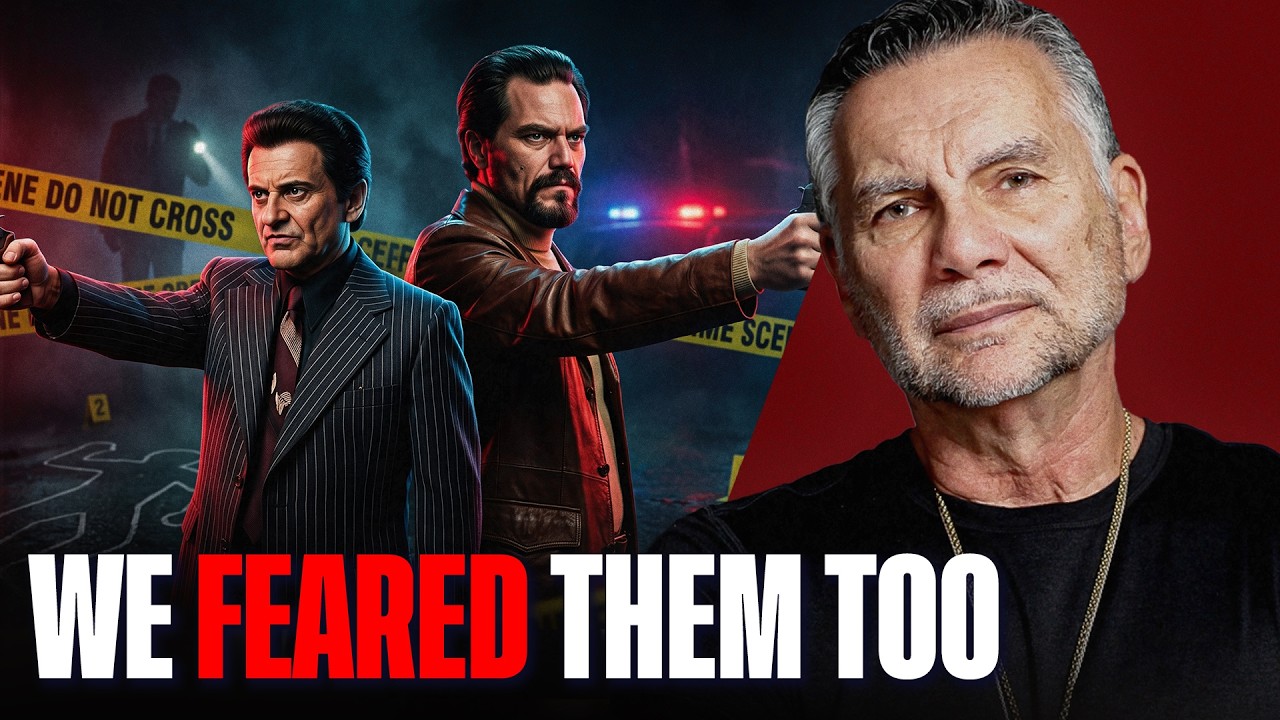
From that collective memory, he drew a list of fifteen men he considered the most dangerous he was aware of. Anthony Senter was among them. Allegedly responsible for more than ten murders, Senter was one half of the Gemini Twins, the pair that operated under the Gambino family captain Roy DeMeo. DeMeo ran a crew that stole cars by the dozens, chopping them up for parts, and his men had once stolen two Jaguars from the narrator when he kept a place in Queens.
He called DeMeo and had them back by evening. The men who took them were the same crew that perfected a brutal method of disposing of victims, a method Senter helped execute with considerable skill. Joey Testa, the other half of the Gemini Twins, was inseparable from Senter in life and in crime. Together they perfected the crew’s gruesome trade.
Testa’s methodical, cold style made him deadly effective. Stories claimed he struck terror even into fellow mobsters, but that, the narrator said, was not how that life worked. A made man had nothing to fear from another made man without an order from the top. The only person a man truly feared in that life was his own boss, who held life and death power over him.
If a man knew someone intended to kill him, he acted first rather than waiting. Tommy DeSimone was a Gambino man from a different crew, the man inspired in Joe Pesci’s fictional character in Goodfellas. DeSimone was alleged to have killed more than ten men, and some said the real tally was far higher. The narrator had met DeSimone on a few occasions but did not know him well.
He warned against trusting the numbers attributed to such men by law enforcement or informants, who tended to exaggerate. What mattered was the bottom line: DeSimone was a man you did not mess with. Eventually he disappeared, killed, as men like him so often were. Some of the most dangerous men he named were before his time.
Joseph “The Animal” Barbosa allegedly killed more than twenty men. An enforcer for the Patriarca family in New England, Barbosa earned his nickname through sheer savagery, becoming one of Boston’s most feared killers. His intimidation went beyond killing, as he terrorized anyone who crossed him. The narrator’s father had spoken of him.
In 1976, after turning government witness, Barbosa was gunned down in San Francisco in a mob hit. Sammy “The Bull” Gravano admitted to participating in nineteen murders, though he did not pull the trigger in all of them. He rose to underboss of the Gambino family, though the narrator disputed the common claim that Gotti promoted him because of those kills; Gotti promoted him because he believed he deserved the position. Gravano’s mix of intelligence and violence made him invaluable, and he orchestrated murders at the highest level of the Gambino regime.
The narrator noted, carefully, that he did not know if that was true either. He described Gravano as a friend now, someone who had spoken openly about what he did, expressed remorse, and tried to turn his life around. He included Gravano on the list partly because everyone would ask why he had been left off. Frank “The Dasher” Abbandando was alleged to have killed fifty or sixty or more men.
He was one of Murder Inc. ’s most feared killers, earning his nickname for the speed and efficiency of his murders. Murder Inc. was the killing organization put together for Lucky Luciano and the Syndicate, responsible for at least four or five hundred contract killings, with some saying as many as a thousand.
Abbandando was linked by law enforcement to more than sixty killings, making him one of the Syndicate’s most active executioners. He was convicted and executed in the electric chair in 1942. Abe “Kid Twist” Reles was tied to as many as eighty-five murders through his own testimony. A Murder Inc.
hitman who specialized in strangulation and ice pick killings, Reles confessed to numerous murders and implicated dozens of others. As a key government witness, he helped bring down Murder Inc. by detailing over eighty-five mob killings. In 1941, under police guard, he fell from a hotel window.
Whether he jumped, fell, or was pushed was never settled; the narrator doubted he simply fell. Rumor had it someone reached him even in protective custody. Harry “Happy” Maione, another Murder Inc. figure with more than twenty murders, was known for his brutality and his loyalty to the Syndicate.
He participated in numerous contract hits across New York, favoring gruesome methods, often stabbing or beating victims before finishing them off. Like many of his peers, he was convicted and executed in the electric chair in 1942. Harry “Pittsburgh Phil” Strauss was credited with more than one hundred murders, making him Murder Inc. ’s most prolific executioner.
He was equally deadly with ice picks, guns, strangulation, or even fire. The narrator found such methods incomprehensibly ugly; it was one thing to put a gun to a man’s head and fire, and another entirely to labor over a murder with an ice pick or a rope. Strauss was convicted and executed in 1941, remaining one of the most prolific hitmen in American mob history. Louis “Lepke” Buchalter oversaw Murder Inc.
and directly ordered dozens of killings. He was one of the founders of the organization, which Luciano wanted in part to minimize random violence on the streets. With Meyer Lansky and others, Lepke built a nationwide killing squad that sent contract killers across the country. Though called a mob boss, Lepke was Jewish, not Italian, and was never a made man.
For about eleven or twelve years, the organization ran until Reles began informing. Buchalter was the only major mob boss executed in the electric chair, put to death in 1944. Roy DeMeo needed no introduction. His crew was credited with anywhere from seventy to two hundred murders in total.
DeMeo’s men perfected dismemberment as a method of disposal, making victims vanish without a trace. He was a Gambino captain and led the most feared killing squad of his era. In 1983, DeMeo himself was murdered, left in the trunk of his own car, almost certainly on orders from his own family. He had been getting too wild, and in that life, a loose cannon did not last.
Discipline was everything; when a man stopped following orders, the people around him grew nervous and found a way to remove him. Richard “The Iceman” Kuklinski was convicted of five murders and claimed many more, with some saying over a hundred. The narrator doubted the stories that he had worked closely with Roy DeMeo, which had emerged largely through the movie The Iceman. Kuklinski was infamous for experimenting with cyanide and freezing bodies to obscure the time of death, adding a chilling layer to his reputation.
Many of his claims remained disputed, but his image as a remorseless contract killer made him a dark legend in mob history. Anthony “Gaspipe” Casso, the Lucchese underboss, admitted to at least thirty-six murders and ordered many more once he became an informant. He was one of the most sadistic mafia killers in American history. The narrator said much of what was reported about Casso was true, including that he put NYPD detectives on his payroll and used them to track and even execute targets.
He disputed Casso’s claim that he invented the gas tax scheme, saying that operation was never really his and was run far better by others for a long time. Captured in 1993, Casso became a government witness but was deemed too violent and manipulative. He was thrown out of witness protection, his testimony discarded, and he spent the rest of his life behind bars. Charlie Carneglia was a Gambino enforcer the narrator knew and liked personally.
He was suspected in numerous murders, including of law enforcement officers, with estimates ranging from over twenty to as many as two hundred sixty. He was feared for disposing of bodies in acid and served as a personal hitman for the Gotti faction. Convicted in 2009, Carneglia remained one of the deadliest confirmed killers in the Gambino family’s modern history. The narrator was reluctant to speak ill of a man he had met and liked, but acknowledged he was brutal.
Albert Anastasia, the last on the list, was part of Murder Inc. and took it over entirely after Lepke departed. Known as the Lord High Executioner and the Mad Hatter, he personally killed or ordered dozens of hits, with his tally often cited at well over one hundred. He was infamous for sudden, ruthless violence and was feared even within the mob.
In 1957, Anastasia was assassinated in a Manhattan barber chair, one of the most dramatic mob hits in history, shot while he sat getting a shave. The narrator would not name the shooters, though he said he knew one of the alleged killers very well. Pressed about Greg Scarpa, a man known to be very bad indeed, the narrator said Scarpa was in his family and his own crew. He knew him very well and would not put a tally on how many men Scarpa killed.
Scarpa was a capable man in that regard, a cold man, not someone you wanted to be around all the time. That, he said, was all he needed to say.