In the spring of 1883, a well-dressed woman walked into the Von Mell jewelry store in St. Petersburg and introduced herself as the wife of a famous psychiatrist. She selected jewels worth around thirty thousand rubles, explained that her husband would pay upon delivery, and gave an address. When the jeweler arrived at the doctor’s residence with the goods, the woman met him at the door, took the collection, and said she wanted to wear the pieces that evening.
She persuaded him to wait in the doctor’s office for payment. The doctor soon appeared, confused, and denied any knowledge of the purchase or the woman. The jeweler insisted on his money, and the doctor, convinced the man was insane, had his orderlies remove him and place him in a mental hospital. Before disappearing with the jewels, the woman went to the doctor, apologized, and claimed she was the wife of a man named Von Mell whose elderly husband had lost his mind over buying diamonds.
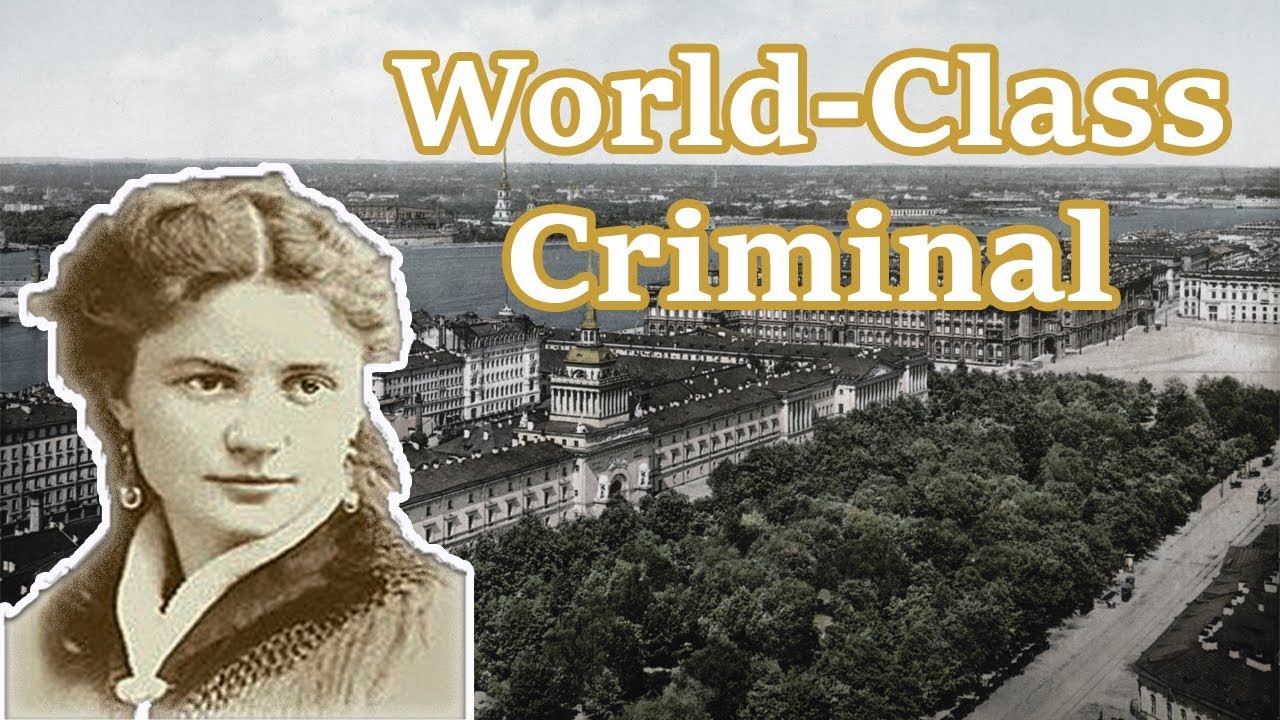
She paid for the jeweler’s treatment and vanished. The woman was Sofiya Bluestein, better known as Sonya the Golden Hand, and by that time she had already built a reputation as one of the most skilled and daring thieves in the Russian Empire. Her origins are difficult to trace. She was born in the Warsaw district of Powązki, possibly around 1846, though no reliable record confirms the date.
She said little about her own past, and few documents survive. It is likely she learned to steal as a child in a poor region where smuggling and robbery were common ways to survive. Despite her lack of money, she developed a love for fine dresses, gold, and diamonds. At fifteen she left home to marry a tradesman, and during that marriage she gave birth to a daughter named Tsui Areva.
The marriage failed, possibly because of her infidelity or because she simply took her husband’s money and disappeared. Her second husband was Mikael Bluestein, a professional card sharper involved in theft and fraud. It was he who taught Sonya the professional techniques of crime. During this marriage she gave birth to a second daughter, Taba.
Once she gained enough experience, she left him and began working alone. Another account claims Bluestein, enraged after discovering Sonya’s crimes with other male partners, killed an elderly rich widow during a robbery and was sentenced to life in penal servitude on Sakhalin Island, where he died shortly after. The lack of records makes it impossible to confirm which story is true, but the marriage ended, and Sonya built her own criminal career. She was described by many as beautiful, though some witnesses said she was simply pretty.
What mattered more was her natural gift for manipulation. She could convince people to obey her, and she used that ability to rise through the criminal world until she became known as the queen of St. Petersburg’s underworld. She spoke five languages fluently and had mastered the manners of the upper class, which allowed her to convincingly play roles that were not her own.
She used fake documents to claim the title of Baroness and proudly called herself an aristocrat of the criminal world. Her methods were varied and often clever. She grew long fingernails to hide small precious stones. She carried a specially designed dress bag that could hold large quantities of stolen goods.
She used a trained monkey during negotiations with jewelers, letting the animal swallow precious stones while the store owner was distracted, then retrieving them at home. She also worked hotels: early in the morning, elegantly dressed, she would enter the rooms of wealthy guests and take valuables in plain sight. If someone woke up, she pretended to have entered the wrong room. Sometimes she went further, seducing a rich man, spending the night, and leaving at dawn with his belongings.
In May 1883, the jewelry store robbery showed how smoothly her cons could run. In October 1884, she targeted a banker named Mr. Dogmirov. While he was having a drink at a cafe, she approached him and introduced herself as Mrs.
Sophia San Donato. During pleasant conversation, she mentioned she was leaving for Moscow that evening on the same train. The banker suggested they travel together, and she agreed. In the sleeping compartment, they talked, laughed, and shared chocolates.
When the banker woke, Sonya was gone, along with his money and securities totaling forty-three thousand rubles. In August 1885, a jewelry store manager recommended a collection of adornments worth twenty-two thousand three hundred rubles to a woman he believed was a baroness named Sophia Buksgevden. The woman was Sonya. The treasures were packed for her, but before paying she claimed she had forgotten her money at home.
She left in a hurry, promising to return shortly. The jeweler was not convinced, so she gave the names of two relatives, including her father, as a guarantee. She never returned. When the store owner reported the robbery, police discovered that the relatives were hired actors found through a newspaper advertisement.
Despite her success, Sonya preferred to work alone. She did, however, form a gang and became a member of the prestigious criminal club in Moscow known as the Red Jacks. She was extremely stealthy, and even when police managed to bring her to trial, she often escaped without being caught. When she was finally captured for the first time, she made the front page of every Russian newspaper.
She was locked in Smolensk prison, where she charmed the guards by reading verses in different languages, telling stories about distant countries, and narrating her adventures. Eventually one guard fell in love with her, helped arrange her escape, and planned to run away with her. He was caught, judged, and punished, but Sonya got away and returned to her illicit lifestyle. The public adored her.
She was recognized on the streets so often that crowds sometimes pushed aside police to help her escape. But her fame began to interfere with her work. She also grew sentimental with age and started to feel sympathy for her victims. She returned five thousand rubles to a widow she had robbed after learning the woman had two daughters.
At the theater, she stole a gold watch from an actor during a performance, felt such guilt that she made sure it was returned to him as if he had simply lost it. In a young man’s hotel room, she found a letter to his mother about needing three hundred rubles to pay for his sister’s medical treatment. She left a five hundred ruble note in his hand and slipped out. She also spent enormous sums on her two daughters’ education, sending both to France, where they became involved in musical comedy.
She carefully hid her real work from them, wanting to keep them from following her path. It was love that brought her down. She fell for a pickpocket named Volodya Gocha Bridge, known on the streets as Wolf Bromberg. He gambled heavily and spent much of her fortune.
To maintain their lifestyle, Sonya was forced to take bigger risks, and her nerves began to show. She made more mistakes during cons and thefts, and eventually the authorities caught up with her. She was tried for robbery and sentenced to penal servitude on Sakhalin Island. As she was being transferred from prison to the ship, thousands of people filled the streets of Odessa and cheered for her as if she were a hero.
Her young lover, ironically, later became a well-off landowner in the south of Russia. Sonya attempted to escape from Sakhalin three times and was recaptured each time. According to one source, she became the owner of a class pub and entertained local residents. In 1890, the writer and doctor Anton Chekhov met her.
By then, after another failed escape attempt in which she disguised herself as a soldier, she had been moved to solitary confinement and clamped in leg irons. Chekhov wrote that looking at her, it was impossible to believe she had once been beautiful enough to charm her prison guards. She spent her final years grieving over her daughters, who disowned her when they learned the truth about her craft.
Sofiya Bluestein died in 1902 on Sakhalin Island and was buried there.