By the summer of 1971, the Western was a genre in its final decline. Studios that had built their empires on stagecoaches and Stetsons watched audiences drift toward science fiction, paranoia thrillers, and counterculture road movies, while a new generation of directors dismantled the genre from within. Some of them produced the most quietly devastating Westerns of the decade. Almost nobody saw them.
Thirteen films were buried by bad timing, hostile critics, indifferent studios, or an audience that had simply moved on. Peter Fonda’s directorial debut arrived that summer, two years after Easy Rider had made him a counterculture icon. Universal expected another lightning strike, a motorcycle picture for the drive-in crowd. Instead, Fonda delivered a meditative Western about regret, return, and stillness.
He and Warren Oates played two drifters who circle back after years of absence to the wife Fonda had abandoned. Verna Bloom gave the role a steady, unsentimental gravity. Vilmos Zsigmond, shooting the year before Deliverance, turned nearly every frame into something between a memory and a mirage. The film had no interest in plot momentum.
It moved the way a long afternoon moves, and that pace cost it any chance of finding its viewers in the year of The French Connection and A Clockwork Orange. Universal cut its losses fast. The picture was demoted to second feature status, ran for a few weeks on the bottom of double bills, and slipped off drive-in marquees within a single summer. Critics returned to it later.
The cinematography aged into something close to legend, and a small devoted following grew up around bootleg prints before home video made it findable. Its original commercial life, however, ended the moment it stopped being convenient to a programmer’s schedule. Frank Perry’s Doc discarded the familiar Tombstone myth entirely. Stacy Keach played Doc Holliday as a man held together by tuberculosis, self-medication, and a refusal to lie down yet.
Harris Yulin’s Wyatt Earp was a calculating local politician with no obvious moral center. Faye Dunaway’s Kate Elder was given a face and temper no studio publicity department of the previous forty years would have allowed near a lobby card. Audiences who walked in expecting John Ford walked out somewhere else entirely. The film arrived in the same season as Robert Altman’s McCabe and Mrs.
Miller and shared its project of stripping the gold leaf off a national myth. Pete Hamill’s screenplay refused the conventional gunfight beats. The famous OK Corral confrontation was staged not as a set piece, but as a brief, ugly, almost embarrassing exchange. There was no swelling score, no slow walk into the street, no moment of frontier justice.
United Artists could not figure out how to sell what it had. Reviews were divided, the Ford-era audience refused to follow, and the film slipped out of circulation so completely that a generation of Western fans grew up without knowing it existed. Gene Hackman had just won the Oscar for The French Connection. Oliver Reed was a dominant force in European cinema.
Candice Bergen had been a fixture of American film for half a decade. Together in 1971, they met the most concentrated critical demolition of any Western that year. Hackman played a wealthy and openly cruel cattle baron whose wife, played by Bergen, was taken by a wandering outlaw played by Reed. What began as a captivity narrative shifted gradually into an indictment of the man supposedly doing the rescuing.
Hackman’s character became the genuine threat, his pursuit framed less as justice than as a long-form expression of ownership. The film refused to soften any of it. Violence arrived without the genre’s usual cushioning of bravura editing or musical signaling. Reviewers responded with contempt and disgust.
Studio support evaporated. American screens switched to safer titles before the second weekend was over. By 1985, the most stacked Western cast of its season was sitting in dollar bin VHS racks, sleeves sun-faded, with no one asking for it. In the spring of 1972, with American boys still being pulled out of small towns by the Vietnam draft, Robert Benton released his directorial debut about two Civil War teenagers heading west to dodge a different war’s call-up.
The timing was eerie. The release was disastrous. Audiences were at the multiplex that summer watching The Godfather, and Benton’s melancholy little picaresque slipped into theaters and out again before anyone really noticed. He had written Bonnie and Clyde five years earlier and knew exactly what he was doing with a picture this small.
Jeff Bridges and Barry Brown played the leads, with Bridges fresh off The Last Picture Show. Benton’s Kansas was dust, indifference, and small mean violences. There were no speeches, no swelling score to tell you how to feel about a long shot of a riverbank. The picture drifted rather than built, the way the protagonists themselves did.
Paramount had no marketing instinct for it, and within a few weeks it had drifted off the schedule the way underrated novels drift off bestseller lists. That same year, Dick Richards delivered a coming-of-age Western the studio had bought expecting Summer of ’42 on horseback. Gary Grimes played Ben Mockridge, a starry-eyed boy who signs onto a cattle drive expecting glory and finds dust, casual brutality, and a trail boss with no time for romance. Billy Green Bush played the foreman as a man who had run out of patience for any version of the West that did not involve getting cattle from one place to another.
Men died without ceremony, and not all of them were bad men. The result was a coming-of-age picture whose central lesson was that the thing the boy had been coming-of-age toward was not worth the journey. The 1972 audience promised a romantic adventure did not return for a second weekend. Reviews were better than the box office, but better did not save the picture.
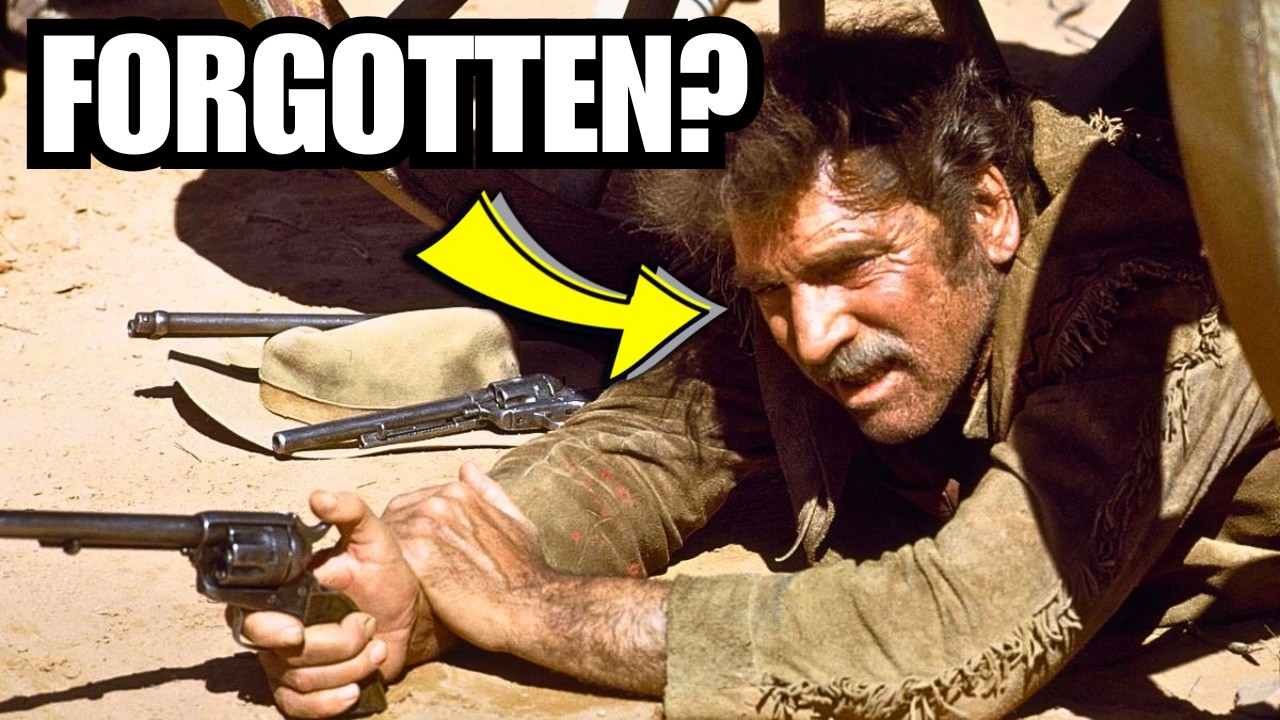
The bleaky Western slipped into the cinematic graveyard it had effectively earned. It rarely surfaced on television, was inconsistently issued on home video, and the half century since has done nothing to widen its audience. Robert Aldrich’s Ulzana’s Raid had Burt Lancaster above the title and a script with the moral seriousness audiences were supposed to be hungry for in 1972. Lancaster played a weathered army scout assigned to track an Apache war party led by Ulzana, who had broken from the reservation and was moving across Arizona with calculated brutality.
Bruce Davison played the idealistic young lieutenant who arrived from West Point convinced that humane warfare was possible. The film’s dramatic engine was the slow erosion of that conviction, and the equally slow recognition that the violence on both sides was not the result of misunderstanding, but of incompatible commitments. Audiences walked out of preview screenings, and word of those walkouts traveled before the picture had finished its first theatrical week. Critics divided sharply over whether the project was a humanist masterpiece or an exercise in nihilism dressed in cavalry uniform.
The Vietnam reading was unavoidable. The director gave conflicting answers in interviews. By 1981, a chopped-up version of the American cut was airing on UHF channels in the late-night slot between insurance commercials and reruns of half-forgotten cop shows. Stan Dragoti’s Dirty Little Billy threw out a century of dime novels and matinee posters.
Michael J. Pollard played Billy the Kid not as a juvenile gunslinger awaiting his legend, but as a confused, slightly frightened kid in a town that had no use for him. The frontier town was shot like a wet animal pen, the streets ankle-deep in something gray and cold. There was no John Ford composition, no establishing shot framed for the eventual poster.
Columbia released it briefly, attempted no real marketing campaign, and let it slip from the schedule once the first weekend’s numbers came in. The picture became a holy grail for Western completists, surfacing intermittently on cable, briefly on VHS, more reliably as a half-rumored title that the genre’s archivists keep recommending to one another. Dennis Hopper, four years after Easy Rider, played a young outlaw trying to live straight in James Frawley’s Kid Blue. The frontier had been replaced by a wage economy that could not tolerate a man like the protagonist any better than the old wilderness ever could.
There was no longer a horizon to ride toward, only a foreman, a clock, and a paycheck small enough to make ordinary virtue feel like a kind of theft. Ben Johnson played a local sheriff, and Peter Boyle appeared as a self-styled spiritual visionary. The release was a quiet collapse. Reviews were mixed, the ad campaign was confused, and the picture left theaters without the kind of cult buzz that often saved a Hopper-adjacent project.
Frawley never directed a theatrical Western again. Lee Marvin’s The Spikes Gang assembled a story that worked best when read as a sour fairy tale. Marvin played a wounded outlaw found by three farm boys played by Gary Grimes, Ron Howard, and Charles Martin Smith. They nurse him back to health and in return receive an education in the trade he practices.
The picture refused the conventional moral arc. The boys are not redeemed, and Spikes is not softened. What the project sketched instead was the slow erosion of three fundamentally decent kids by a mentor whose own decency, if it ever existed, had been used up well before the first scene. United Artists released the picture into a market saturated with disaster pictures.
The box office was poor. The reviews split. The project disappeared from the conversation within a season and never quite came back. Frank Perry’s Rancho Deluxe limped into theaters in 1975.
A neo-western about two modern-day cattle rustlers drifting through Montana with no particular plan and less urgency, it had a screenplay by Thomas McGuane, a soundtrack by Jimmy Buffett, and a cast led by Jeff Bridges and Sam Waterston. Slim Pickens showed up as the cattleman dispatched to track them down. The audience promised a comedy western was given something stranger and quieter. The audience that wanted neo-counterculture cinema was given a film with no particular politics.
The picture played the way it should have always been understood, as its own thing, and almost nobody on the original sales floor knew what to do with it. Kirk Douglas directed and starred in The Man from Posse in 1975, playing Howard Nightingale, an ambitious US Marshal pursuing a charming train robber played by Bruce Dern across the Arizona Territory in the run-up to a planned Senate campaign. The pursuit went about as expected for two-thirds of the running time. Then the capture fell apart.
Strawhorn turned out to know more about the Marshal’s political ambitions than the Marshal had counted on, and what looked like a triumph of frontier law became a slow, painful exposure of the calculations behind it. Bicentennial-era audiences watching in the long shadow of Watergate were not necessarily ready for another story about how the men who rise are the men who hide the most. Paramount could not get traction on the marketing campaign. Critics were respectful but not enthusiastic.
Within a month of release, the picture had vanished from American screens. Charlton Heston and James Coburn starred opposite each other in Andrew V. McLaglen’s The Last Hard Men. Heston played Sam Brigade, a retired Arizona lawman dragged out of his quiet last years to chase down an escaped killer played by Coburn.
The script, adapted from a Brian Garfield novel, leaned on the inevitability of the chase. The actors, in their physical weariness and the small kindnesses they extended each other in their few moments of shared screen time, leaned on something larger. There is a quiet scene midway through the film where Heston, dust-caked and tired, stops his horse and looks across a sun-bleached plain, and the camera holds on his face long enough that the audience is meant to read the entire genre’s exhaustion into the shot. Most of them never showed up to find out.
By 1977, Star Wars had rewritten what an American multiplex audience would line up for, and the dusty lawman-and-killer Western stopped being a viable studio investment almost overnight. Alan J. Pakula’s Comes a Horseman arrived in late 1978. Jane Fonda played Ella Connors, a struggling rancher being squeezed off her Montana land by a cattle baron played by Jason Robards.
James Caan played Frank Athearn, a haunted veteran returning from the Pacific who comes to her assistance and gradually to her side. Gordon Willis shot the picture almost entirely in the so-called golden hour, turning the Montana landscape into something a viewer can almost reach into. Many of the most important scenes happen at the threshold between exterior and interior, with characters framed in doorways looking out at the land they are about to lose or about to fight for. The cumulative effect, watched now, is of a film that already knows it is a goodbye.
The film arrived to respectful but underwhelmed reviews, played a moderate first run, and quietly closed out the decade for a kind of American film that, by the next summer, the multiplex had effectively stopped making. These were not B movies or cheap programmers. They starred Hackman, Lancaster, Fonda, Marvin, Coburn, Caan, and Bridges, all at the peak of their craft, working with directors who treated the genre as serious adult drama.
They lost mostly to disaster pictures, blockbusters, and changing tastes, and they slipped into a quiet kind of obscurity that even die-hard Western fans rarely correct.