On February 26, 2025, a maintenance worker approached a quiet house outside Santa Fe, New Mexico, and found the bodies of Gene Hackman and his wife, Betsy Arakawa. Hackman was ninety-five; Arakawa was sixty-five. They had been married for thirty-three years. The news circled the globe within hours, and the first explanations came quickly: no signs of foul play, no carbon monoxide, nothing that would suggest a sudden, shared tragedy.
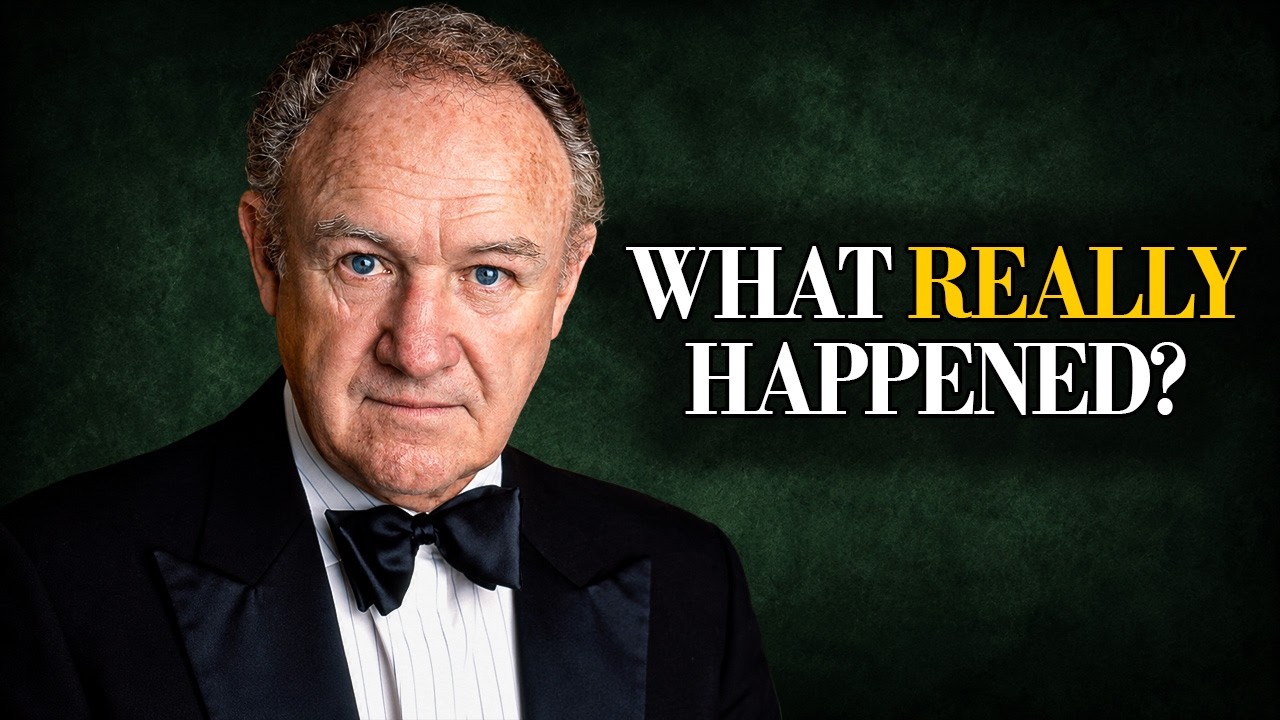
It took investigators days to reconstruct what actually happened, working backward through pacemaker data, emails, store receipts, and a single phone call. The truth was harder to accept than any gas leak. They had not died together. Hackman had been dead for roughly eight days before anyone found him, and his wife had been dead for more than two weeks.
To understand how that could happen, you have to go back to the ending most people remember. In 2004, Hackman starred in a small political comedy called Welcome to Mooseport, opposite Ray Romano. He was seventy-four. There was no farewell tour, no final speech, no last walk down a red carpet.
The film came out, and then he simply stopped. For years, fans assumed he had grown tired of Hollywood, the way a person tires of a city they have lived in too long. That assumption made sense. Hackman had never enjoyed celebrity, and he had spent decades living far from Los Angeles.
But boredom was not what ended his career. His heart was. In a 2009 interview with Empire magazine, Hackman explained that a stress test taken in New York was the straw that broke the camel’s back. Doctors had been watching his heart for years.
In 1990, he had undergone angioplasty for congestive heart failure, and afterward he described the pressure of film work as something his body could no longer carry. The year 2004 was not even the first time he had quit. He had walked away once before, in 1977, and then come back. Retirement was not a sudden vanishing act; it was a door he had already tried to close once, finally shut by a medical test.
Almost nobody noticed what came next. Hackman never announced his retirement. He told Reuters in 2008 that he had not held a press conference to announce it, and he said that while promoting a book. The man who had supposedly disappeared was doing press, just not for films.
He had become a novelist, and his writing life had not started after Hollywood; it had started in the middle of it. While preparing to play opposite Tom Cruise in The Firm, Hackman needed to learn to scuba dive, so he was introduced to a Santa Fe neighbor named Daniel Lenihan, a National Park Service underwater archaeologist. Santa Fe sits in the high desert, nowhere near an ocean, so Lenihan took one of the most famous actors in America to a public swimming pool about nine feet deep. That was where the friendship began.
Over lunches, the two men talked about the adventure writers they had loved as boys, and Hackman later told AARP that they realized they both loved Hemingway and Melville. His suggestion was simple: let’s write a novel together. The result was Wake of the Perdido Star, published in 1999 while Hackman was still making films. Then came Justice for None in 2004, the same year his acting career ended, and Escape from Andersonville, a Civil War novel, in 2008.
They wrote in separate chapters and traded pages back and forth until a book took shape. Hackman did not stop at partnerships. In 2011, he published a Western on his own, Payback at Morning Peak, and in 2013 a police thriller called Pursuit. A man in his eighties with two Academy Awards on the shelf was writing crime fiction longhand, and that detail leads to the person the public almost completely overlooked.
Hackman wrote by hand, and his wife typed it all up. Betsy Arakawa was a classical pianist he had married in 1991. She turned his handwritten drafts into manuscripts, edited them, and gave him her notes. In the acknowledgements of Justice for None, the co-authors thanked her for stepping in when their disagreements got heated.
She had her own life as well. In 2001, she co-founded a Santa Fe linens and home furnishings store called Pandora’s with her close friend Barbara Lenahan, and she ran it until her death. She and Hackman were also business partners in a local Asian restaurant called Jinja, where she helped shape the menu. The story people told themselves, of a lonely old actor living with his memories, was wrong in the most basic way.
He had not disappeared. He had built a small, tight world, and one person sat at the center of it. The second layer of the retirement was a voice. Most people believed Hackman never worked in entertainment again after 2004, and that was almost true.
The exceptions reveal what still mattered to him. In 2007, he narrated four episodes of America’s Game: The Super Bowl Champions. In 2016, he narrated a World War II documentary called The Unknown Flag Raiser of Iwo Jima, and in 2017 its companion film We the Marines. Those last two were not random.
Long before Hollywood, Hackman had joined the United States Marine Corps as a teenager after lying about his age. Decades later, the man who had refused every role put on the table stepped into a recording studio for one subject: he lent his voice to the Marines. In a 2011 conversation with GQ, he had hinted that about the only way he would act again was if a project could be done in his own home. Everything Hackman chose after Hollywood happened close to home: the novels written at his desk, the restaurant in his town, the store his wife ran, the friend down the road.
In March 2024, photographers caught one of the last public images of the couple, Gene and Betsy holding hands outside a restaurant in Santa Fe. He was ninety-four, she was sixty-four. It looked like the most ordinary photograph in the world, a couple leaving lunch. Less than a year later, that photograph took on a very different meaning because it showed how little of their life anyone outside the house could see.
The reconstruction of the final days began with Betsy. On February 9, she picked up one of their dogs, Zena, from a Santa Fe veterinary hospital after a procedure. On February 11, the record becomes remarkably clear. Late that morning, she exchanged emails with a massage therapist.
In the afternoon, she went to a grocery store, then a pharmacy, then a pet food store. At 5:15 in the evening, her car entered the gated community. After that, investigators found almost nothing. Around that time, she called a concierge medical service in Santa Fe.
She was not an established patient there. The doctor who founded the service said she described feeling congested but did not sound seriously ill, and she asked about hyperbaric oxygen therapy. She booked an appointment for 1:15 that afternoon. She never came and did not answer their follow-up call.
Records released later showed that in those days she had been searching online for information about flu-like symptoms and breathing techniques. The autopsy named the cause: hantavirus pulmonary syndrome, a rare disease contracted from rodent urine, droppings, or saliva. New Mexico’s chief medical investigator, Dr. Heather Jarrell, explained how it behaves.
For roughly three to six days, it can feel like the flu, then move into the lungs, filling them with fluid. Without treatment, a person can die within a day or two. Health officials later found rodent droppings and nests in outbuildings on the property, though no signs of rodent activity inside the main house. According to the CDC, New Mexico recorded 122 hantavirus cases and 52 deaths between 1993 and 2022.
Betsy died first, around February 11 or shortly after. That left Jean, as the record shows. His pacemaker logged its activity day after day. Investigators found it recorded activity on February 17, followed by an abnormal rhythm on February 18, the last record of his heart.
Officials believe he died around that day, roughly a week after his wife. His cause of death was heart disease, with Alzheimer’s disease as a significant contributing factor. The autopsy showed he was in the advanced stages of Alzheimer’s. He tested negative for hantavirus.
He had no food in his stomach, though he was not dehydrated. For about a week, a ninety-five-year-old man in advanced Alzheimer’s was alone in the house after the person who ran his daily life had died. Dr. Jarrell said at a news conference that it is quite possible he was not aware she was deceased.
The careful wording matters. Nobody knows what he understood in those days. Zena, the dog in the crate, also died. Two other dogs survived.
Betsy’s last known activity was February 11. Hackman’s heart stopped around February 18. They were found on February 26, fifteen days after Betsy’s last known activity and about eight days after Hackman’s death. In a gated community, with friends nearby, a store she co-owned in town, and a neighbor who had written three books with him, more than two weeks passed.
The quiet life they had built was not neglect, nor was it a tragedy waiting to happen. It was exactly what Hackman had wanted since 2004: distance from Hollywood, privacy from cameras, a world small enough to control. For twenty years that distance protected him. For fifteen days, it kept everyone out.
Even after the deaths, the pull toward privacy did not disappear. Hackman’s estate went to court to try to block the public release of the autopsy and investigative records. A New Mexico judge ruled that the records could be released with sensitive images obscured. Some questions still do not have answers.
The exact day Betsy died remains uncertain, and investigators have described the timeline in careful terms. What Hackman understood in that final week will never be established. Five novels, a scuba friendship that became a writing partnership, a restaurant, a pianist who typed every handwritten page, and a voice lent to the Marines he joined as a teenager made up a second life that was full and chosen. But it rested on one quiet condition nobody outside the house could see.
Everything depended on two people staying well. When that condition broke, there was no one left inside to tell the world.