In early November of the year 2000, a sixteen-year-old girl from Allentown, Pennsylvania, did not come home. Her name was Tiffany Bradley. On the eighth of November, her family reported her missing. A few days later, the phone rang for one of her cousins.
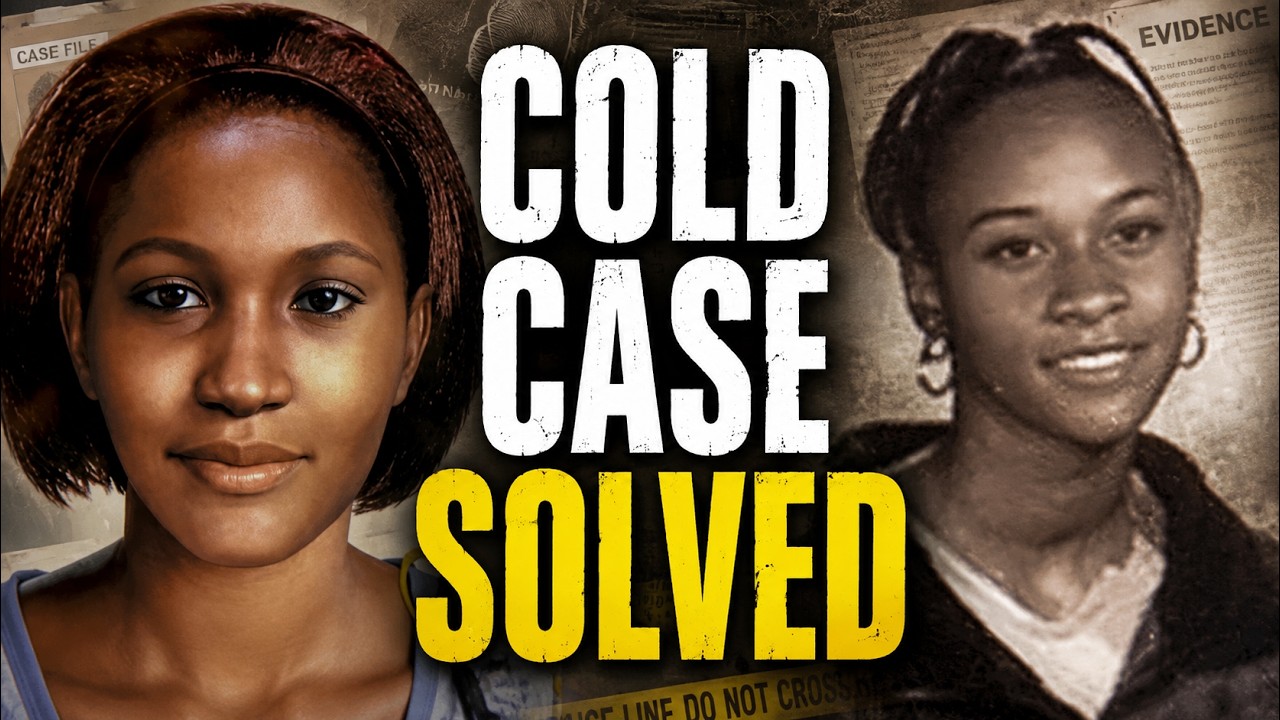
It was Tiffany, calling from Syracuse, New York, a couple of hundred miles from home. She sounded all right. She told her cousin not to worry. She said she was fine.
She said she knew the people she was with. She said she would call back later, that she had to go. Then she hung up. Tiffany never called back.
Not that night, not the next day, not ever. That call, a girl saying she was fine and she had to go, was the last thing her family would ever hear from her. To the people who knew her, Tiffany was not a statistic. She was an athlete who played basketball for her school.
She had joined ROTC. A cousin would later describe her simply as a sweet, cute, incredibly athletic girl from an ordinary family and an ordinary life in Allentown. But in the fall of 2000, that ordinary sixteen-year-old had been pulled out of that life, carried from Pennsylvania to New York, and then on toward Boston, in the hands of people who meant to sell her. That is the truth investigators would eventually land on.
Tiffany was a child, and she was being trafficked. When she called her cousin from Syracuse and said she was fine, that she knew the people she was with, she almost certainly did not understand what was happening to her, or where it was about to take her. Five days after she was reported missing, it took her somewhere there was no coming back from. On the thirteenth of November, in the city of Chelsea, Massachusetts, just across the water from Boston, police were called to a parking lot outside a building called the Soldiers Home.
Under a blanket, they found the body of a young woman. She had been murdered, and whoever had done it had made certain, on purpose, that she could not be identified. There were no fingerprints to take. There was no face to photograph.
The officers in that lot were standing over a human being and could not answer the first question every case begins with: Who is she? And this was the year 2000. The tools that would one day answer that question did not exist yet in any form that could help her. They had to call her something, so they named her for the city where she was found: Chelsea Jane Doe.
A medical examiner did what could be done, documenting and preserving a body that had been stripped of nearly every clue to its own identity. But the one thing that mattered most, her name, stayed out of reach. She went into the record as an unknown, a young woman, race and rough age and little else. Then something happened that almost never happens in a case like this.
They found her killer, fast. His name was Eugene McCollum. On the surface, he did not look like anyone’s idea of a monster. He was a high school graduate and a former high school baseball player, well-groomed, the kind of man people around him described as a typical local guy.
Underneath that surface, something had come apart years before. His brother had been stabbed to death in a bar, and McCollum would later describe himself as a kind of ticking time bomb. In August of 2001, less than a year after the murder, police pulled McCollum over in South Boston. He was driving a stolen car, and there was a warrant out on him.
That ordinary traffic stop was the thread that started to pull everything loose. Detectives began to look hard at him for the Chelsea case, but suspicion was not proof, and McCollum was not going to walk in and hand them a confession that held up. So they watched him. They waited.
And at one point, sitting in an officer’s presence, McCollum lifted a soda bottle, drank from it, and set it back down. That was the mistake. That was all they needed. They took the bottle, lifted his DNA off the glass his lips had just touched, and matched it to evidence left on the murdered girl.
Investigators also found security camera footage that showed him disposing of her body. The story he told them was built to make her sound like nobody, that she was just someone he had picked up in Boston, brought back to his small room at the Lynn YMCA, and argued with over money. What he actually did to a trafficked child hundreds of miles from her home was monstrous by any measure. And she was not the only person he killed.
McCollum was also responsible for the death of a Boston man named John Layden. He was convicted, and he would grow old and die behind bars. Now consider what had just happened. The system had convicted a man of murdering a specific girl.
It had taken his freedom for good for ending hers, and not one person involved could name her. The victim at the center of the entire case was still Chelsea Jane Doe. They had caught the man who took her life. They still had no idea whose life it was.
The case closed on one question and stayed wide open on another. Closed on who did it. Open on who she was. The murder was solved.
The girl was not. A killer was named and locked away while his victim stayed a stranger, filed under the name of a city she had never lived in and only happened to die in. Four hundred miles away in Allentown, a family was waiting. They knew Tiffany was missing.
Someone had filed a report the moment she did not come home. What they did not know was that she was already gone, that she had been gone since that November, that she was lying in a medical examiner’s office in Massachusetts under a name that was never hers. And the years began to stack up. One turned into five.
Five turned into ten. Birthdays arrived and passed. The world kept moving. And the question just hung in the air of that family year after year with no answer.
Where is Tiffany? They did not let go of her. They kept asking, kept hoping the way families in these cases so often do, that one day a phone would ring and someone would finally be able to tell them what had happened to their girl. But the call never came.
In Massachusetts, meanwhile, investigators refused to let her go either. Over the years, they worked every angle the era allowed. They checked her against dental records. They ran her through missing persons files.
Her case was featured in the media as one of the region’s enduring unidentified victims, the girl from Chelsea that nobody could name, in the hope that somewhere out there someone would recognize her. Nothing landed. The same cruelty that ended her life had erased the ordinary ways of learning who she was. So it became two halves of the very same tragedy worked in two different states by people who never knew the halves belonged together.
In Massachusetts, a victim with no name. In Pennsylvania, an absence with no answer. And for a quarter of a century, nothing was able to reach across the space between them. For twenty-six years, that is where it sat.
Then the science caught up to her. By the 2020s, a method called investigative genetic genealogy was quietly cracking cases everyone had written off. It did not go looking for the victim in a database, because she was never in one. It did something cleverer.
It took her DNA and climbed outward through her family tree, cousin by distant cousin, matching against genealogy records, narrowing the branches until all the lines started pointing at one family. This was slow, patient work. It meant building a family tree for a stranger from the ground up, tracing lines through birth and marriage and death records, chasing branches that dead ended and starting again. An FBI cold case team, working with Massachusetts State Police, took Tiffany’s profile and began that climb.
Branch by branch, the tree narrowed. And then it handed them a brother. From that one living relative, the whole picture snapped into focus. The girl in the Chelsea parking lot, the nameless body a man had been convicted of killing, was Tiffany Bradley, the sixteen-year-old who had called her cousin from Syracuse and said she had to go.
The missing girl from Allentown whose family never stopped waiting. After twenty-six years, Chelsea Jane Doe had a name again. And somewhere in Tiffany’s family, a phone finally rang. Twenty-six years after they reported a girl who did not come home, someone from law enforcement was on the other end of the line, able at last to say the words they had almost stopped letting themselves hope for.
They found her. They knew who she was. In June of 2026, investigators stood in front of cameras and said it out loud. And then Tiffany’s family stepped up to speak.
They did not talk about DNA. They did not talk about the man in prison. They talked about her. Her niece, Shakira Wiggins, called it a miracle.
She said it was amazing that after twenty-six years, people still cared enough to give Tiffany her name and bring her back to her family. Then her aunt, Janet Bradley Knight, said the thing that stayed with you long after the cameras were gone. She thanked them from the bottom of her heart for not letting her baby be a box on a shelf. And the Chelsea police chief, Keith Horton, put words to the silence the family had lived inside.
Through all those years, he said, they never gave up hope of one day learning the truth and getting the answers they deserved. Nothing could undo what they had endured. But now, after nearly twenty-six years, they could finally have some closure. There is one more thing worth saying, because Tiffany is not the only one.
All over the country, the remains of thousands of people sit unidentified in medical examiner’s offices and in cold case files. Each of them somebody’s child. Each of them a name that fell out of the record. For decades, a body with no fingerprints, no face, and no database match simply stayed a stranger forever.
Genetic genealogy is changing that now, one person at a time, quietly handing names back to families who had stopped believing they would ever get one. Tiffany is one of those names come back. And every time it happens, another family somewhere is about to get the call the Bradleys waited twenty-six years to receive. Eugene McCollum is still in prison.
This story was never really about him. It is about a sixteen-year-old girl who played basketball, joined ROTC, and picked up a phone in Syracuse to tell her cousin she was fine right before she vanished into twenty-six years of silence. She was somebody’s daughter, somebody’s niece, somebody the world lost track of so completely that even in death she was reduced to a placeholder, a Jane Doe, a body with a city’s name pinned to it because no one had her own. Not anymore.
She is Tiffany Bradley, a sixteen-year-old girl from Allentown, Pennsylvania, who is finally more than a case number and a borrowed city’s name. And after twenty-six years in the dark, the one thing no one could ever really take from her, her own name, belongs to her again. And this time it stays.