On the evening of Wednesday, June 2, 1943, the authorities in Aliceville, Alabama, told everyone to stay off the streets. Aliceville had 1,475 people, a cotton mill, a few sawmills, and a Frisco railroad line. The people did not stay home. They climbed the lumber pile beside the tracks so they could see over the soldiers lining the road.
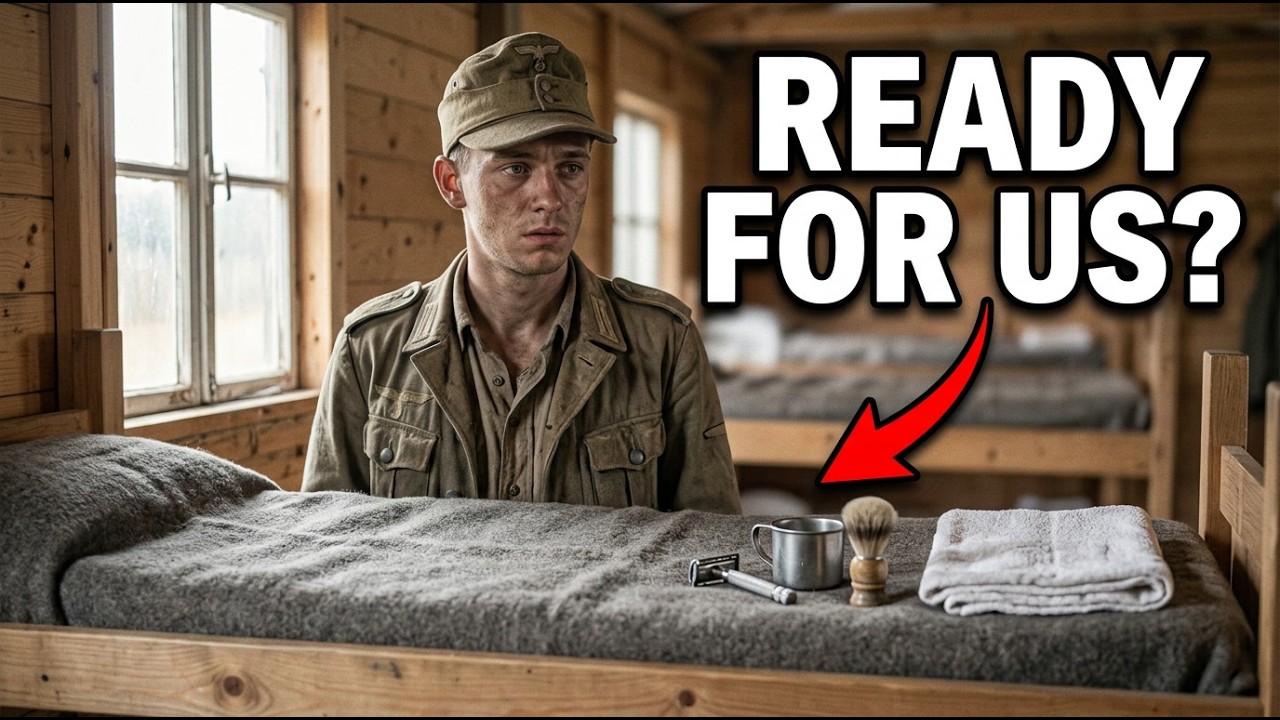
A train stopped where the line crossed the highway. The doors opened, and the men who stepped down were from Rommel’s Africa Corps. They formed up and marched more than a mile to the new camp, singing. At the end of that road, inside barracks that had been built for them over the winter, a towel and a shaving kit were waiting on every bunk.
The men on that train had been fighting in Tunisia only three weeks earlier. In the second week of May, the whole of Army Group Africa, well over 200,000 Germans and Italians, had surrendered in northern Tunisia. The Allies suddenly had more prisoners than they could hold in North Africa or Britain, so the captives were sent to America in the holds of cargo ships that had brought supplies across the Atlantic and were sailing back empty. One of the men on the June train was Hans Koppera, drafted into the army against his will and captured in North Africa.
In an interview recorded in 1994, he remembered the crossing. In one room, he said, they crowded seven hundred people. You could not even sit. There was no toilet, only tin boxes.
Everyone was wet, soaked with urine. It was an awful trip. The ships came into ports like Norfolk, Virginia. From the docks, the prisoners were put not into freight cars but into Pullman coaches, passenger cars with seats and windows.
One of them later called it the Mercedes of trains. Hermann Blumhart, another Africa Corps man who came through Norfolk in 1943, had never heard the name of the place the train was taking him. Nobody in Germany had. It was a cotton town of 1,500 people that happened to sit on a railroad.
The Corps of Engineers had started building the camp in August 1942 under a Major Carl Shriver. By December, the camp was activated with Colonel F. A. Prince in command.
There were ten guard towers, a double fence of barbed wire, searchlights and sirens, and inside the wire around four hundred frame buildings on several hundred acres. The barracks were twenty feet by one hundred, fifty men each, with mess halls, a hospital, workshops, and chapels. It was built for six thousand prisoners, four times the population of the town it was named after, and run by close to one thousand American soldiers and civilians. For the better part of six months, it stood there without a single prisoner, waiting for a war in Africa to end.
The townspeople on the lumber pile had watched it go up all winter, and now they were about to see who it was for. One man, recorded in the same oral history project half a century later, said that in his mind, like a lot of people in Aliceville, he did not know what kind of devils was going to get off that train. Guys with horns on their heads. The Africa Corps had been the most talked about German soldiers of the war.
The newsreels called them Nazi supermen. A woman remembered that the people of Aliceville were scared to death. Another woman said she had three brothers overseas at the same time, so they did not like them, and that was just the way they felt. Then the doors slid back, and the men who climbed down were kids, the townspeople said, and they had been sick in the hold for weeks.
Some were wounded, some still in bandages. One woman remembered maggots in the wounds. One man said he had not known whether he was going to be mad at them or not. But when he saw them, they were just a bunch of whipped kids.
Haggard-looking, another voice on the tape says, washed up and beat, and you kind of had to feel sorry for them. Thomas Sweet was one of the guards at the camp. As he told it, the Geneva Convention had been drilled into them before a single prisoner arrived, in lectures, and the rules were posted in the recreation hall and in the officers club. The prisoners, he said, had to be treated the same as you would treat your own fellow soldiers.
The convention the United States had signed in Geneva in 1929 and ratified in 1932 says it in so many words. Article 10: prisoners shall be lodged in buildings or barracks, and as regards dormitories, the surface, the air, the arrangement and material of bedding shall be the same as for the troops at base camps of the detaining power. Article 11: the food ration shall be equal in quantity and quality to that of troops at base camps. Whatever an American recruit found in his barracks in 1943, the army read that to mean a German prisoner was to find in his.
When the column came in through the gate, the barracks were fresh and clean. They had towels and shaving equipment for each one of them on each one’s bunk. Hans Kopera, who had crossed the Atlantic soaked in urine three weeks before, said it was really a sort of heaven. The prisoners washed, and then the guards opened the mess hall.
Walter Fellhalter, who arrived that summer, remembered a piece of white bread, American white bread and peanut butter. He had no idea what a peanut was, and it was the best dinner he ever had. Ever after, when he thought about the good times, he thought about peanut butter. The director of the museum in Aliceville put the reason for all of it plainly.
The United States government had resolved to maintain a high level of treatment for prisoners in the hope that the countries holding American men would do the same for them. Within a few weeks, the problem in Aliceville was too much food. Kopera said the boys came to him every day and asked him to tell the Americans they did not want so much ham. An American sergeant heard him and told him not to say anything to the captain about throwing it away.
Take it, he said. Make a hole in the sand and put it in the sand. So they buried the ham. Corn they did not care for either, and the corn kept coming, so they buried that too.
And then they got caught because corn grows. The prisoners were paid eighty cents a day for their labor, the War Department rate for a working prisoner, and by September they were working at a sawmill just outside the wire. Within two months they had an orchestra. Within a year they had three, with instruments made in the camp, donated by the town, or sent by the YMCA.
They opened a school with courses from pottery to mathematics, some of them taught by staff from the University of Alabama, and they played soccer almost every day. On September 17, 1943, an Army photographer named Ed Potter spent a day inside the wire, and the captions on his pictures are still in the National Archives. Three members of the crack Nazi Africa Corps enjoy an American pause that refreshes. A German prisoner repairs his own shoes with real American leather.
A German doctor and a German laboratory technician give medical attention to a fellow prisoner at the camp hospital. The captions were written for readers at home, and the third one was plain fact. Diphtheria was in the camp that fall, and fifty-one men were hospitalized with it. Inside the compounds, the hard Nazis ran their own order, and one of the camp’s doctors, Stephen Fleck, later spoke of two or three deaths a month among men suspected of wavering in their Nazi enthusiasm.
That is a different story from Aliceville. The camp closed on September 30, 1945. The buildings were taken down and sold for scrap, and of some four hundred buildings, what is left today is a stone chimney from the club for the non-commissioned officers. On October 7, 1989, a group of former prisoners came back to Aliceville for a reunion the town organized.
Herman Blumhardt, the man who had never heard of the place on the train out of Norfolk, came with his accordion. He had emigrated to the United States in the 1950s and settled in Niles, Michigan. The town opened a museum in 1995 in the old Coca-Cola bottling plant on Broad Street, and one visitor in ten who comes to see it is German. The lumber pile by the tracks is gone, and so is the camp.
And what people in Aliceville still describe, eighty years on, is the thing that was waiting for them when the road ended. A towel, a razor, and a bunk that was ready before the enemy walked in.