Seven gunmen rode into a small Mexican village and became immortal, but the performers who brought them to life could not outrun time. Every major cast member of The Magnificent Seven has now died. Some became Hollywood legends. Some carried private battles far from the screen, and some left much sooner than anyone expected.
When the film opened in 1960, no one could have known that its ensemble of actors would go on to shape careers that defined an era of American cinema. Eli Wallach was forty-five when he played Calvera, the bandit leader at the center of the film. Calvera jokes with the very villagers he is robbing, and every word he speaks feels dangerous. Wallach gave the character a charm that kept him from becoming a simple Western villain.
Calvera never questions his right to take whatever he wants, and he treats fear and violence as practical tools rather than moral choices. That confidence makes him frightening. Wallach gave him quick eyes, sudden flashes of cruelty, and a strange sense of humor that made every encounter unpredictable. The seven gunmen were not fighting a faceless enemy.
They were confronting a man intelligent enough to understand weakness and arrogant enough to believe he could always control it. Wallach died on June 24, 2014, at the age of ninety-eight. After The Magnificent Seven, he became unforgettable as Tuco in The Good, the Bad and the Ugly and appeared in films including The Misfits and Lord Jim. Robert Vaughn was only twenty-eight when he played Lee, the gunfighter who looks composed on the outside while fear quietly tears through him underneath.
Lee stands apart from the others because he is painfully aware that something inside him has changed. The confidence that once made him dangerous is failing, and he knows it. Vaughn let that fear appear through restless eyes and hesitation rather than dramatic confession. When Lee finally chooses to stand with the others, the courage matters because the audience understandsexactly what it costs him.
Vaughn died on November 11, 2016, at the age of eighty-three after a battle with leukemia. He later became internationally famous as Napoleon Solo in The Man from U. N. C.
L. E. and continued working across film, television, and theater while earning a doctorate in communications. James Coburn was thirty-two when he played Britt, the quiet blade among the seven.
His long frame, weathered face, and effortless physical control made Britt seem like he had been riding through Westerns for years. He speaks little because he does not need to prove himself with words. In one of the film’s most memorable moments, Britt calmly accepts a challenge from another gunfighter and demonstrates that his knife can be deadlier than a pistol. Coburn played the scene with stillness and a faint half-smile, making the danger feel even greater.
Coburn died on November 18, 2002, at the age of seventy-four from a heart attack. He later appeared in The Great Escape and Our Man Flint and earned an Academy Award for Affliction. Rosenda Monteros was twenty-five when she played Petra, who brings the human heart of the village into the film. Petra is gentle but never passive.
She cares for the children, survives the fear created by Calvera’s raids, and gradually allows herself to believe that life might become something more than waiting for the next attack. Her relationship with Chico gives that hope a personal shape. Where he begins obsessed with becoming a legendary gunman, Petra represents belonging, love, and a life rooted in community rather than endless violence. Monteros died on December 29, 2018, at the age of eighty-three.
She continued working in Mexican cinema, international films, and theater. Charles Bronson was thirty-nine when he played Bernardo O’Reilly, one of the hardest men among the seven. He signs on partly because he needs the money, joking about how little value society places on men who live by the gun. Once he reaches the village, something changes.
The local children begin to idolize him, treating him not as a killer but as a hero. Bronson handled those scenes with restraint. Bernardo remains gruff, but small smiles and moments of protectiveness reveal a man who may have spent years pretending he no longer needed family. Bronson died on August 30, 2003, at the age of eighty-one from pneumonia.
He later became an international star through The Dirty Dozen, Once Upon a Time in the West, and the Death Wish series. Horst Buchholz was twenty-sevenwhen he played Chico, the youngest of the seven and a farmer’s son desperate to prove he belongs beside men whose reputations already sound like legends. At first, Chico wants the image of the life more than he understands its cost. He boasts and pushes himself forward, driven by the fear that returning to ordinary work would mean admitting he is ordinary too.
As the fight with Calvera grows more dangerous, his ideas about heroism change. He witnesses death, responsibility, and sacrifice while his growing affection for Petra introduces another possibility: courage might not mean becoming a famous gunfighter. It might mean choosing a life worth staying for. Buchholz died on March 3, 2003, at the age of sixty-nine.
After The Magnificent Seven, he appeared in films including One, Two, Three and Life is Beautiful. Jorge Martínez de Hoyos was forty when he played Hilario, one of the villagers who begins the story feeling powerless and gradually discovers that fear does not have to remain permanent. Hilario lives under the constant threat of Calvera’s raids, knowing each harvest can be taken and each act of resistance may bring terrible consequences. Yet he is among the men willing to travel to the border and seek help, a decision that sets the entire story in motion.
Martínez de Hoyos gave him quiet dignity rather than theatrical bravery. Hilario listens, worries, hesitates, and slowly moves from dependence on the seven toward a willingness to defend his own home. He died on May 6, 1997, at the age of seventy-six. Beyond The Magnificent Seven, he built a long career in Mexican cinema and international productions, including The Professionals.
Steve McQueen was thirty when he played Vin Tanner, the watchful gunfighter beside Chris who can appear completely relaxed while noticing every detail around him. Even inside an ensemble crowded with strong personalities, his screen presence keeps pulling the eye toward him. Vin does not need long speeches. McQueen gave him small movements, checking the coffin, handling shotgun shells, scanning a room, that make the character seem constantly alert without ever looking nervous.
Vin is cool but not empty. His dry humor and quiet loyalty define his relationship with Chris. He understands the danger perfectly and chooses to remain anyway. McQueen died on November 7, 1980, at the age of fifty from mesothelioma, a cancer often associated with asbestos exposure.
He became one of the defining movie stars of his generation through The Great Escape, Bullitt, and The Thomas Crown Affair. Brad Dexter was forty-three when he played Harry Luck, who joins theseven convinced there must be more to the job than anyone is admitting. Harry cannot believe Chris would risk his life for poor villagers without some hidden reward waiting at the end. In his mind, there must be gold somewhere.
Dexter never made him purely greedy. Harry feels like a survivor who has learned to distrust noble motives because the world has punished them too often. That is why his eventual transformation matters. By the final battle, the man who came searching for secret treasure discovers a cause worth sacrificing himself for.
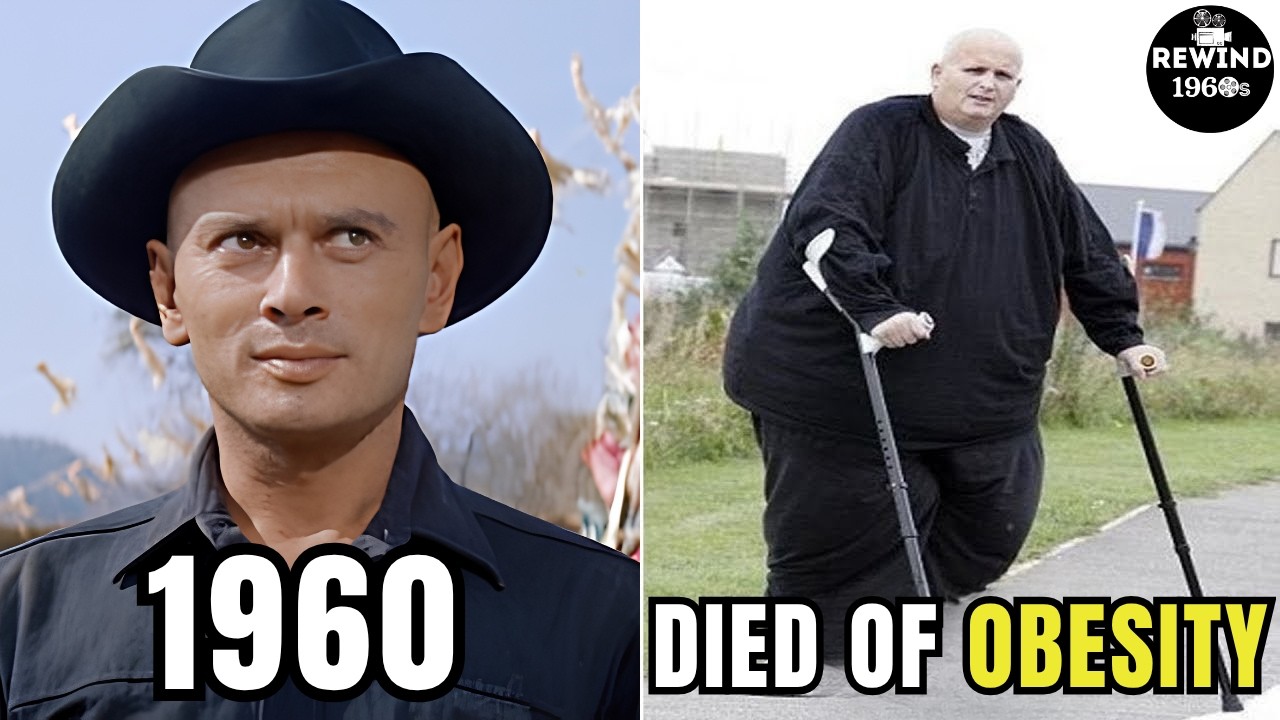
Dexter died on December 11, 2002, at the age of eighty-five from emphysema. His career included Run Silent, Run Deep and The Asphalt Jungle, and he later worked as a producer and briefly as Frank Sinatra’s bodyguard. Yul Brynner was forty when he played Chris Adams, the still center of the film and the black-clad gunfighter whose authority comes from the feeling that he has already decided what kind of man he wants to be. From the moment he volunteers to drive a hearse through a hostile crowd, the audience understands his code.
He does not need applause and he is not chasing money. As leader of the seven, Chris must hold together men with different motives, fears, and personalities while accepting responsibility for villagers who have placed their trust in him. Beneath the confidence is melancholy. He understands that the world is changing and men like him may soon have nowhere left to belong.
Brynner died on October 10, 1985, at the age of sixty-five after developing lung cancer. Beyond The Magnificent Seven, his career included The King and I and Westworld. The village is quiet now, and every one of these performers has taken their final ride. But Chris, Vin, Britt, Bernardo, Chico, Calvera, and the people they fought to protect still live wherever the film is watched again.
Their stories continue long after the final shot fades.